How to Test Coriander Leaves for Adulteration (Copper Sulfate Spray, Chemical Preservatives, Excessive Pesticides)
⚡ Quick 60-Second Coriander Leaves (Cilantro) Purity & Dye Verdict
Malachite Green / Copper Sulfate Dyes & Contaminated Irrigation: Bunches of wilted coriander are submerged in copper sulfate or green dye to restore artificial freshness, posing gastrointestinal and liver toxicity risks.
Dampen a white cotton ball with liquid paraffin or mineral oil and wipe both sides of the coriander leaves and stems. A green dye stain on the cotton proves artificial Malachite Green coloring.
Submerge a sprig in a bowl of warm water with a splash of vinegar. Authentic coriander releases zero color into water. If the water clouds green or turquoise within 5 minutes, chemical colorants are present.
Crush a leaf between your fingertips. Fresh coriander explodes with a clean, sharp, citrusy herbal aroma. Chemically treated foliage smells metallic, dull, muddy, or lacks botanical fragrance entirely.
To learn more about food safety tests and home adulteration detection, read our guides on Bottle Gourd (Lauki) and Tomato.
Drop Coriander Leaves (Cilantro) photo here to test purity
or click to browse • Supports JPG, PNG, WEBP • Paste with Ctrl+V
Inspection Guide
Click to enlarge
Coriander Leaves Chemical Treatment Detection
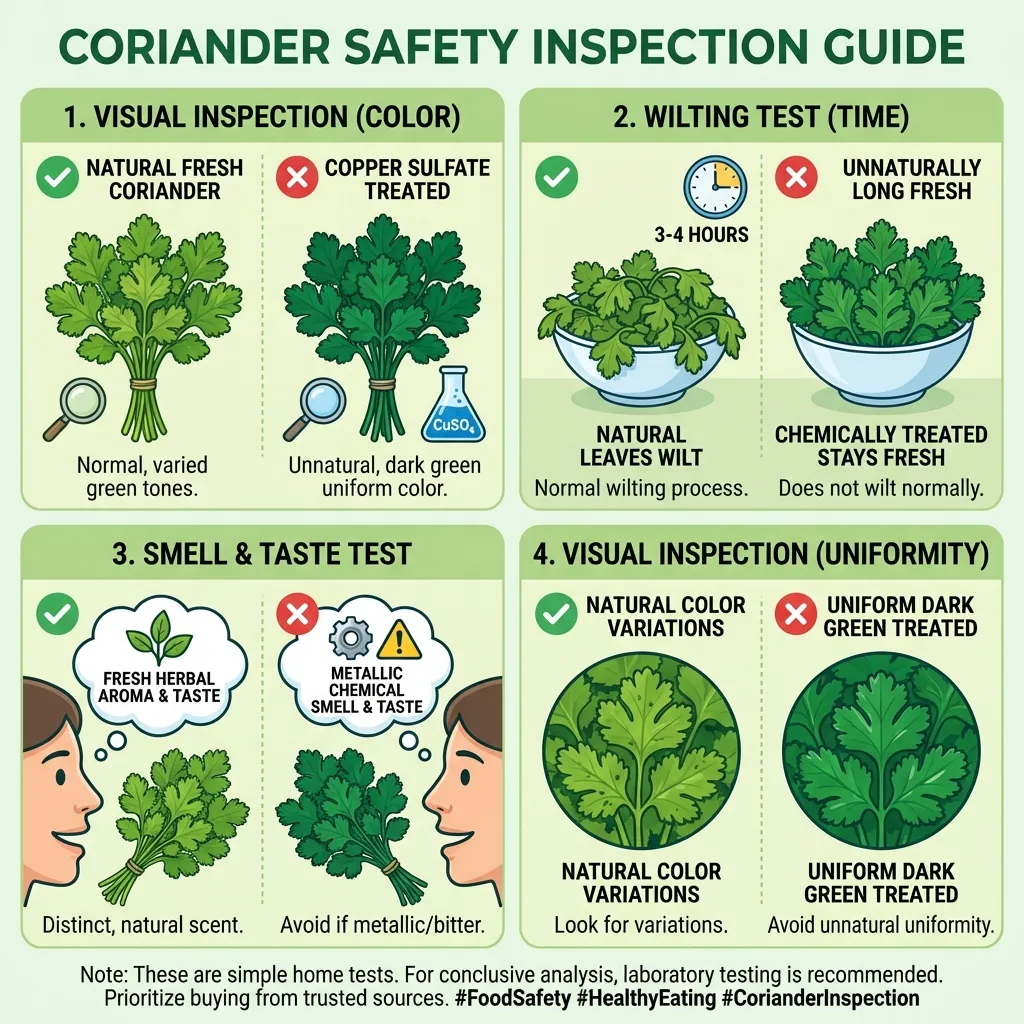
Coriander (cilantro/dhania) leaves are sprayed with copper sulfate to keep them looking fresh and dark green for extended periods.
1. The Color Test:
Natural fresh coriander has a bright to medium green color with natural variations - some leaves darker, some lighter, slight yellowing on older leaves is normal. Copper sulfate-treated coriander leaves are unnaturally dark green, almost bluish-green, with uniform color across all leaves.
2. The Wilting Test (Time-based):
Buy fresh coriander and observe at room temperature. Natural coriander leaves should start wilting within 3-4 hours without water/refrigeration. Copper sulfate-treated leaves remain fresh, crisp, and upright even after 12-24 hours at room temperature, which is highly unnatural.
3. The Smell and Taste Test:
Wash a leaf and smell it, then taste a tiny piece raw. Natural coriander has a distinctive fresh, herbal, slightly citrusy aroma and flavor. Chemically treated coriander has a metallic, bitter, or chemical smell and taste. The characteristic coriander aroma is weak or masked.
4. The Visual Inspection (Uniformity):
Examine the bunch closely. Natural coriander has color variations - different shades of green, some yellowing on outer leaves, natural imperfections. Chemically treated coriander looks "too perfect" with uniform dark green color and no natural aging signs.
5. The Insect Damage Check:
Look for small holes or minor insect bites on leaves. Natural coriander with minimal pesticide has some insect activity. Perfectly pristine leaves with zero damage indicate excessive chemical use (pesticides or copper sulfate).
6. Shared Herb Adulterations:
Artificial greening with toxic dyes or copper compounds is also a major concern for other herbs. Check out our safety guide for Curry Leaves.
Quick Safety Tips
- Check for unnatural dark or bluish-green color
- Wilting test - natural coriander wilts in 3-4 hours
- Taste for metallic or chemical flavor
- Soak in salted water 20 mins, rinse 3 times before use
Primary Chemical Concerns
Health Risks & Impacts
Multilingual Local Names
Common Storage Pests
Aphids / Leaf Miners
medium riskTiny insects that suck sap or create "trails" inside the leaves.
Detection
- Small sticky spots on leaves
- Winding white trails inside the leaf structure
Prevention
- Wash thoroughly before storage
- Store in a dry paper towel inside a container
Corrective Action: What to do?
Pinch off heavily infested leaves; the rest is safe after a thorough soak.
Regulatory Corner: FSSAI (Food Safety and Standards Authority of India) / FSS (Contaminants, Toxins and Residues) Reg. 2011
Regulation: Food Safety and Standards (Food Products Standards and Food Additives) Regulations 2011, Clause 2.3.1
Legal Limit:Malachite green & copper sulfate: Strictly prohibited (0.0 ppm - Zero tolerance); Lead MRL: Max 0.3 ppm; Cadmium MRL: Max 0.2 ppm; Microbiological: Salmonella & E. coli Nil in 25g
Report Adulteration to FSSAI (Food Safety and Standards Authority of India) / FSS (Contaminants, Toxins and Residues) Reg. 2011