How to Test Curry Leaves for Adulteration (Malachite Green, Copper Sulfate, Pesticide)
⚡ Quick 60-Second Curry Leaf Chemical Dye & Pesticide Verdict
Malachite Green Greening & Systemic Insecticide Residue: Fresh curry leaves are heavily sprayed with persistent organophosphates (Chlorpyrifos) and frequently soaked in toxic Malachite Green dye to preserve vibrant green appearance.
Dip a clean white cotton swab in water or rubbing alcohol and rub firmly across both sides of a leaf. Any bright emerald green transfer confirms illegal Malachite Green dye.
Immerse a handful of leaves in lukewarm water for 5 minutes. If the water develops a green or oily tint, surface dyes or heavy pesticide foliar sprays are present.
Crush 2-3 leaves between your fingertips. Genuine curry leaves release an intense, pungent herbaceous aroma. Faint scent with a chemical or plastic undertone indicates stale, chemically preserved foliage.
To learn more about food safety tests and home adulteration detection, read our guides on Henna (Mehendi) and Fennel Seeds (Saunf).
Drop Curry Leaves photo here to test purity
or click to browse • Supports JPG, PNG, WEBP • Paste with Ctrl+V
Inspection Guide
Click to enlarge
Curry Leaves (Kadi Patta) Purity & Dye Audit
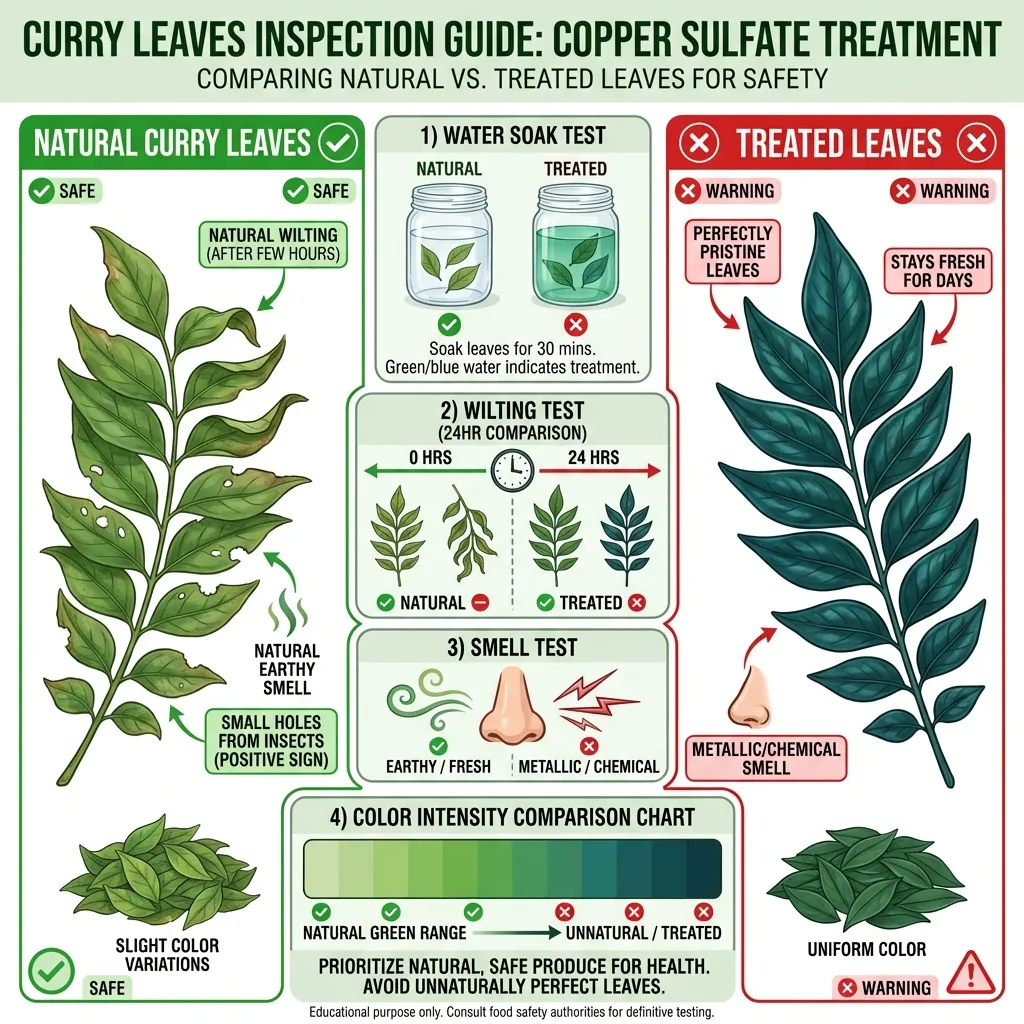
Curry leaves are high-risk herbs often sprayed with Malachite Green or Copper Sulfate to maintain a dark, vibrant green look even after they have lost their freshness and aroma.
1. The Cotton Rub Test:
Rub a wet cotton ball on the surface of the green leaves. If the cotton picks up a green or bluish-green tint, artificial dye has been applied. Natural curry leaves do not rub off.
2. The Water Wash:
Soak a handful of curry leaves in a bowl of warm water for 15 minutes. If the water turns green or bluish-green, artificial coloring (Malachite Green/Copper Sulfate) is confirmed.
3. The Aroma and Texture:
Fresh curry leaves have a powerful, unique, and pungent citrusy-herbal aroma. If the leaves look bright green but have no scent or smell slightly like chemicals/laboratory, they have been chemically "refreshed." Fresh leaves should also be slightly flexible; dyed old leaves are often brittle.
4. The Stem Color:
Examine the stems. Naturally fresh curry leaves have a light green to brownish stem. If the stems show a suspicious bluish-green tint, it indicates the absorption of chemical dyes or copper solutions.
5. Herb Adulteration Risks:
This color enhancement technique is also widely used on other fresh herbs; learn how to identify it using our guide on Coriander Leaves and Leafy Greens.
Quick Safety Tips
- Perform the cotton rub test for Malachite Green detection
- Avoid leaves that look "too vibrant" or bluish-green
- Wash thoroughly and soak in salt water for 20 minutes to reduce pesticide load
- Select leaves with a strong, natural citrusy-herbal aroma
Primary Chemical Concerns
Health Risks & Impacts
Multilingual Local Names
Common Storage Pests
Citrus Butterfly Larvae
low riskSmall caterpillars that feed on the leaves of the curry plant.
Detection
- Small holes on the leaves
- Sticky residue or bird-dropping-like caterpillars
Prevention
- Wash thoroughly before storage
- Inspect for holes
Corrective Action: What to do?
Discard heavily eaten leaves; the rest are safe if washed well.
Regulatory Corner: FSSAI (Food Safety and Standards Authority of India) / Codex Alimentarius (MRLs)
Regulation: Food Safety and Standards (Contaminants, Toxins and Residues) Regulations 2011, Schedule 2 (Pesticide Residues in Fresh Herbs)
Legal Limit:Extraneous matter: Max 1.0%; Organophosphate & synthetic pyrethroid residues: Below statutory MRL limits (0.05–0.5 ppm); Synthetic copper sulfate / Malachite green leaf brightening wash: 0.0%
Report Adulteration to FSSAI (Food Safety and Standards Authority of India) / Codex Alimentarius (MRLs)