Corn Quality & Purity Tests: Detect Aflatoxin Mold & Spoiling
⚡ Quick 60-Second Sweet Corn Purity & Aflatoxin Verdict
Tartrazine (Yellow 5) Kernel Dyeing & Fungal Mycotoxins: Cobs are soaked in yellow dye solutions to simulate golden sweet corn varieties, and sweet corn cobs can harbor toxic fumonisin and aflatoxin mycotoxins.
Puncture a fresh kernel with your thumbnail. Pure sweet corn spurts milky juice with clean, natural vegetal sweetness. Corn soaked in artificial saccharin water tastes cloying and metallic on the tongue tip.
Rub a damp white paper towel over the yellow kernels. Natural carotenoid pigment is locked within the kernel pericarp; bright yellow dye transferring to paper indicates synthetic Tartrazine (Yellow 5) dyeing.
Inspect the silk and tip under 365nm UV light. Bright greenish-yellow fluorescence (BGYF) or black powdery fungal heads along the cob indicate dangerous mycotoxin-producing Aspergillus or Fusarium molds.
To learn more about grain and vegetable safety, read our guides on Wheat Flour, Cabbage, and Tomato Ketchup.
Drop Corn photo here to test purity
or click to browse • Supports JPG, PNG, WEBP • Paste with Ctrl+V
Inspection Guide
Click to enlarge
Corn Aflatoxin & Mold Audit
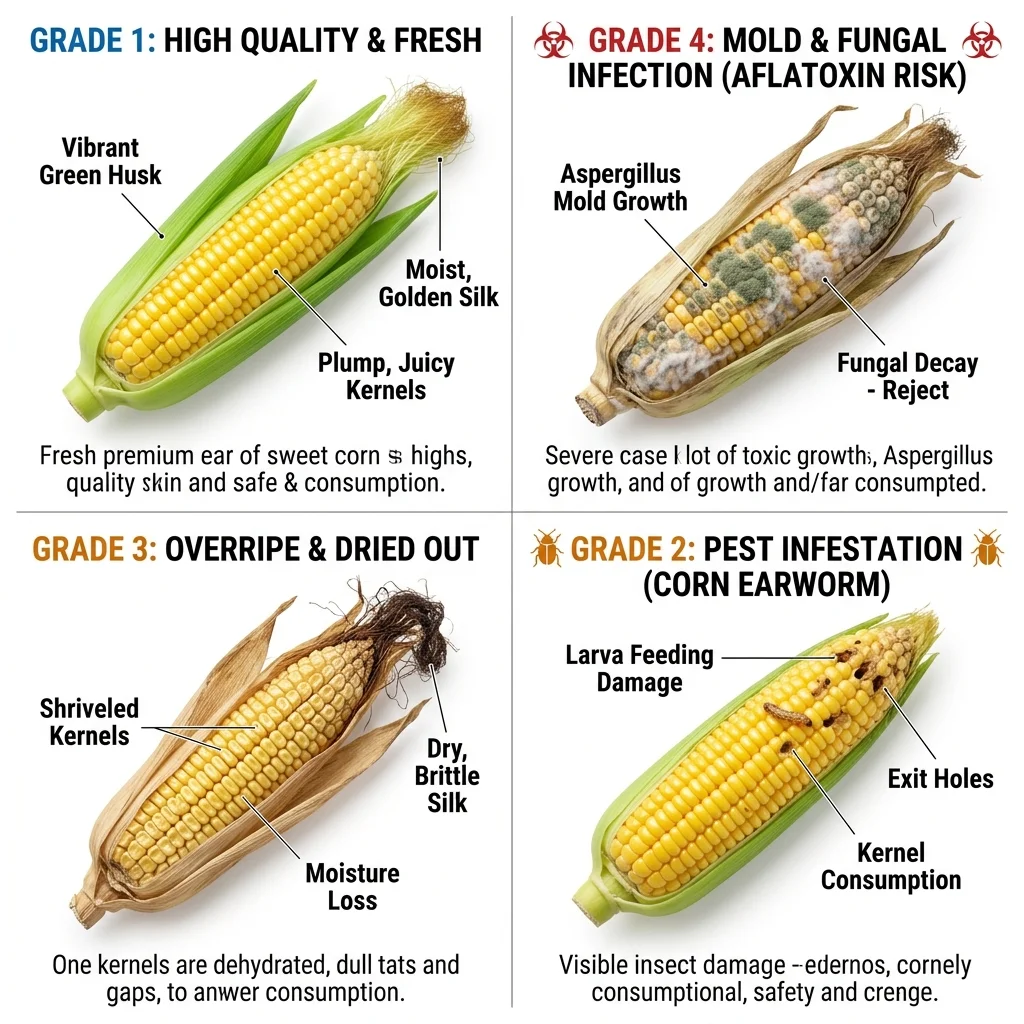
Corn (Zea mays), or maize, is a major global staple. However, corn is highly susceptible to contamination by Aspergillus molds, which produce aflatoxins. These are tasteless, odorless, heat-resistant chemical toxins that represent some of the most potent natural carcinogens known. Cooking or boiling does not destroy aflatoxins.
1. The Silk and Tip Inspection (Mold Growth):
Peel back the green outer husk slightly at the tip of the cob. Look closely at the silk and the top kernels. If you see any fuzzy, powdery, blue-green, yellow-green, or grey mold growth, discard the entire cob immediately. Do not simply cut off the moldy tip, as mycotoxin threads can spread invisibly throughout the cob.
2. The Husk and Silk Hydration:
Fresh, healthy cobs have tight, bright green husks and moist, golden-brown or pinkish silk. If the husk is dry, straw-colored, or loose, and the silk is dark brown, dry, and brittle, the corn is old, stale, and highly prone to mold propagation.
3. The Kernel Plumpness and Color:
The kernels should be plump, tightly packed in straight rows, and release a milky fluid when punctured. If the kernels are shriveled, indented (dent corn), or have dark brown/black discolorations, the corn is stale, diseased, or has begun to decay.
4. The Odor and Moisture Test:
Sniff the cob. Fresh sweetcorn has a mild, sweet, grassy scent. If you detect a musty, moldy, earthy, or sour chemical smell, the cob has been infected with mold or treated with preservative sprays to mask aging.
Click to enlarge
Corn Freshness & Kernel Density Test
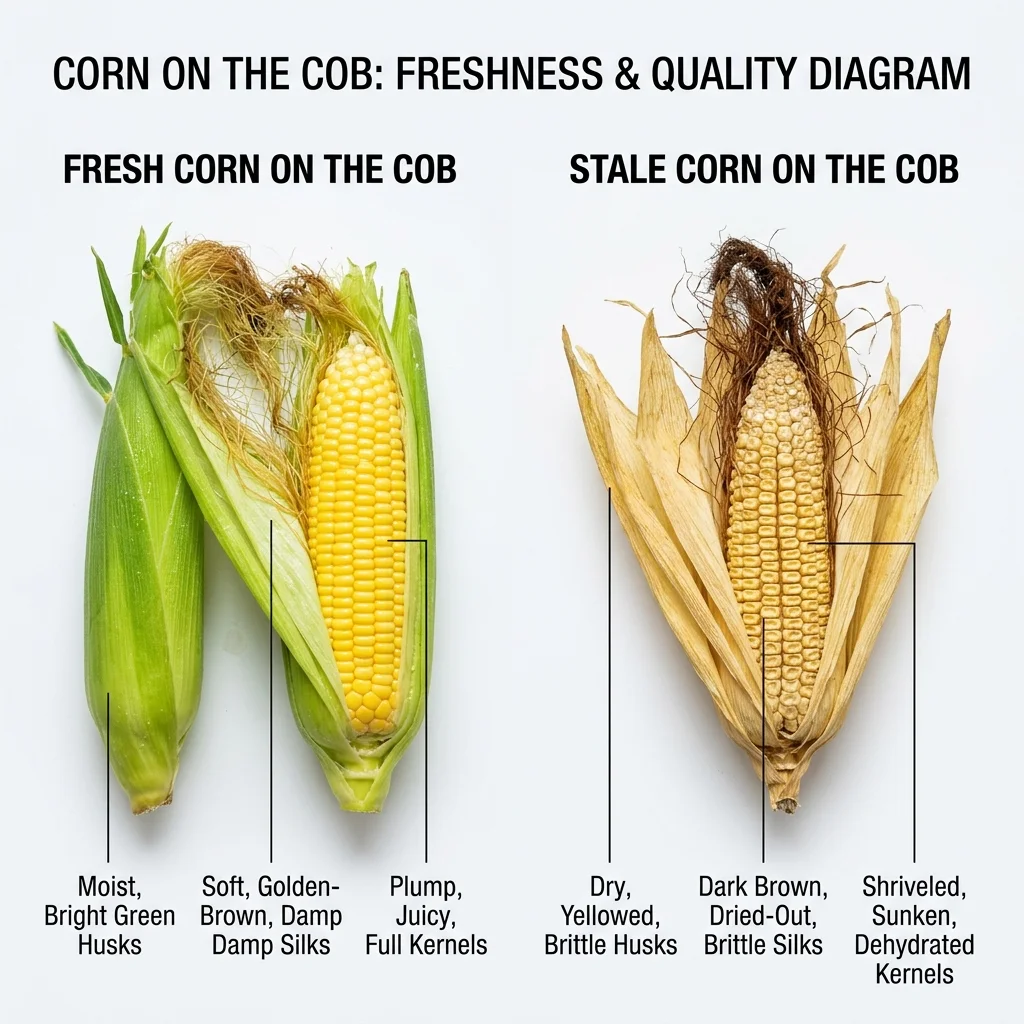
Freshness ensures juicy, sweet kernels rather than starchy, dry corn.
1. Silk Condition:
Fresh cobs have sticky, damp, golden-brown silk at the tip. Dry, black, or dusty silk indicates old stock.
2. Husk Color & Moisture:
The husk must be pale green, damp, and fit tightly. Dry, papery, yellow-brown husks indicate dehydration.
3. Kernel Plumpness:
Kernels should be fully rounded, shiny, and tight. Shriveled or indented kernels indicate sugars have turned to starch.
4. Puncture Test:
Press a fingernail into a kernel. It should burst easily, releasing a sweet, milky white juice. Stale kernels are tough and release clear or paste-like starch.
Quick Safety Tips
- Discard the entire cob if any fuzzy green or yellow-green mold is visible
- Never eat sweetcorn with a musty, moldy, or sour aroma
- Avoid cobs with dry, brittle silk and yellowing, loose husks
- Cook corn thoroughly, but know that cooking does not neutralize aflatoxins if mold was present
Primary Chemical Concerns
Health Risks & Impacts
Multilingual Local Names
Common Storage Pests
Corn Earworm (Helicoverpa zea)
medium riskCaterpillars that tunnel into the tip of the cob to feed on developing kernels, leaving entry holes and frass.
Detection
- Small hole at the tip of the husk with brown chewing residue (frass)
- Larval feeding damage and presence of a striped caterpillar at the tip
Prevention
- Select cobs with tightly closed husks at the tip
- Inspect the tip before purchasing
Corrective Action: What to do?
Cut off the damaged tip area; the remaining kernels are safe to eat if no mold has developed.
Fall Armyworm (Spodoptera frugiperda)
high riskVoracious invasive caterpillar that chews through corn whorls, husks, and developing cobs, leaving ragged holes and wet frass.
Detection
- Inverted Y-shaped marking on caterpillar head capsule
- Deep feeding gouges across rows of kernels beneath the husk
- Heavy moist larval excrement accumulating around the silk base
Prevention
- Purchase whole cobs with tightly wrapped, undamaged green husks
- Carefully peel husk tips to inspect for larval tunneling before purchase
Corrective Action: What to do?
Discard cobs showing deep larval tunneling, as caterpillar wounds invite secondary Aspergillus fungal mold infection.
Maize Weevil (Sitophilus zeamais)
medium riskSnout beetle pest that attacks mature corn cobs and stored dry grains, boring clean round emergence holes into kernels.
Detection
- Small round exit holes (1-1.5 mm) in corn kernels
- Presence of powdery white grain dust (frass) inside storage bins
- Small reddish-brown beetles crawling on dried cobs or kernels
Prevention
- Store dried corn in hermetically sealed, airtight containers below 12% moisture
- Freeze suspect grain kernels at -18°C (0°F) for 72 hours to kill weevil eggs and larvae
Corrective Action: What to do?
Heavily infested dry corn must be discarded; lightly infested grain can be heat-treated or frozen and sifted.
Regulatory Corner: US FDA (CPG Sec. 555.400 / 21 CFR 165) / FSSAI (Food Products Standards) Reg. 2.4.6
Regulation: FDA Compliance Policy Guides Sec. 555.400 & FSSAI (Food Products Standards) Regulations 2011
Legal Limit:Total Aflatoxins: Max 20.0 ppb (FDA) / 15.0 ppb (FSSAI); Fumonisin (B1+B2): Max 2.0 ppm; Synthetic artificial dyes (Tartrazine): Prohibited on fresh corn cobs (0.0 ppm)
Report Adulteration to US FDA (CPG Sec. 555.400 / 21 CFR 165) / FSSAI (Food Products Standards) Reg. 2.4.6