Are Kiwis Safe to Eat? Pesticide, Ripeness & Wax Tests — Complete Guide
⚡ Quick 60-Second Kiwi Fruit Ripeness & Wax Verdict
Clean 15 & Artificial Gassing: Kiwifruit is classified on the EWG Clean 15 due to its fuzzy protective skin. However, imported commercial kiwis are frequently subjected to synthetic wax dips and ethylene gassing to force premature softness.
Press gently with your thumb on the fruit surface. Naturally ripe: yields with slight, springy give. Rock hard: immature (needs 2–3 days in paper bag). Mushy/bruised: overripe or fermenting.
Natural kiwi skin has coarse, dry, bristly brown fuzz. If the skin feels unnaturally smooth, shiny, or greasy, it has been treated with industrial paraffin coatings.
Examine the circular stem button. Safe kiwi: dry and clean. Discard if you observe white, blue, or grey fuzzy fungal mold (Botrytis cinerea) or sour fermented odor.
Drop Kiwi photo here to test purity
or click to browse • Supports JPG, PNG, WEBP • Paste with Ctrl+V
Inspection Guide
Click to enlarge
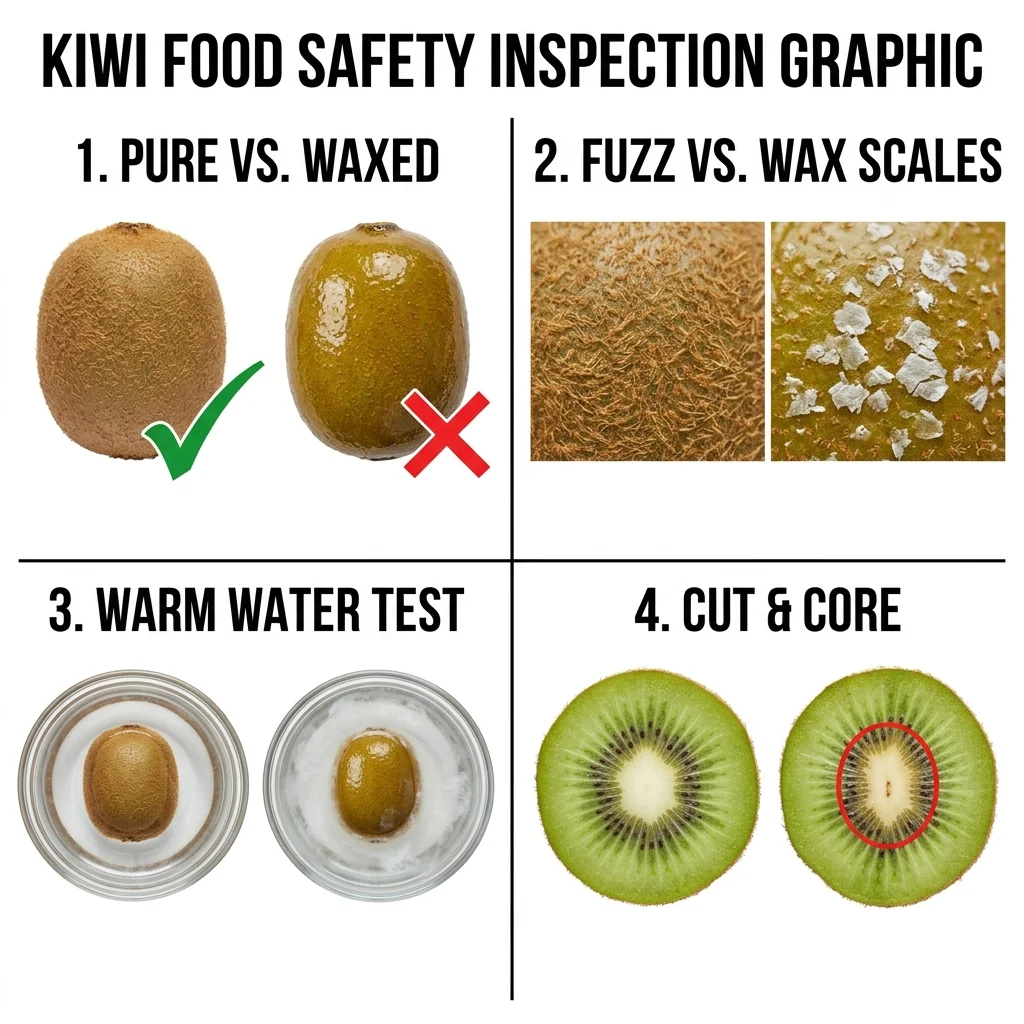
Kiwi Pesticide & Safety Inspection — 5 Home Tests
While kiwis are generally clean of pesticides in the US due to their inclusion in the Clean 15, they are frequently treated with post-harvest waxes and chemical ripening agents. Here is how to inspect kiwis at home.
1. The Fuzz & Scratch Test (Natural vs Waxed Skin):
Rub the skin gently. ✅ Ripe, natural kiwi skin has a rough, velvety brown fuzz. ❌ A smooth, slightly sticky, or shiny glossy appearance indicates that a heavy coat of synthetic wax has been applied. Scrape the skin with a fingernail; if a white, flaky substance accumulates, it is paraffin wax.
2. The Hot Water Melting Test (Wax Detection):
Place the kiwi in a bowl and pour hot (not boiling, approx 60°C) water over it. Let it sit for 60 seconds. ✅ Water remains clear with no oily film. ❌ An oily sheen or whitish cloudy film forms on the skin, confirming a heavy layer of synthetic wax.
3. The Stem End Smell Test (Gassing Check):
Sniff the fruit near the stem end. ✅ A faint, sweet, fruity kiwi aroma. ❌ Absolutely no scent despite the fruit feeling soft to the touch, indicating it was prematurely harvested and mealy-ripened using ethylene gas.
4. The Squeeze Test (Ripeness Audit):
Gently squeeze the kiwi between your thumb and forefinger. ✅ Yields slightly to gentle pressure = ripe and sweet. ❌ Rock hard = unripe. ❌ Extremely soft or mushy with skin indentation = overripe or decaying from inside.
5. The Cut & Core Inspection:
Slice the kiwi in half. ✅ Bright green or golden yellow flesh with a soft white center core and tiny black seeds. ❌ A hard, white, fibrous center core that is difficult to slice indicates an artificially ripened kiwi that was picked too early. ❌ Dark, watery spots around the core indicate decay.
Click to enlarge
How to Tell If a Kiwi Is Ripe — and When to Discard
Kiwis do not get sweeter after harvest, but they do soften. Store them properly to preserve quality.
Ripeness Stages:
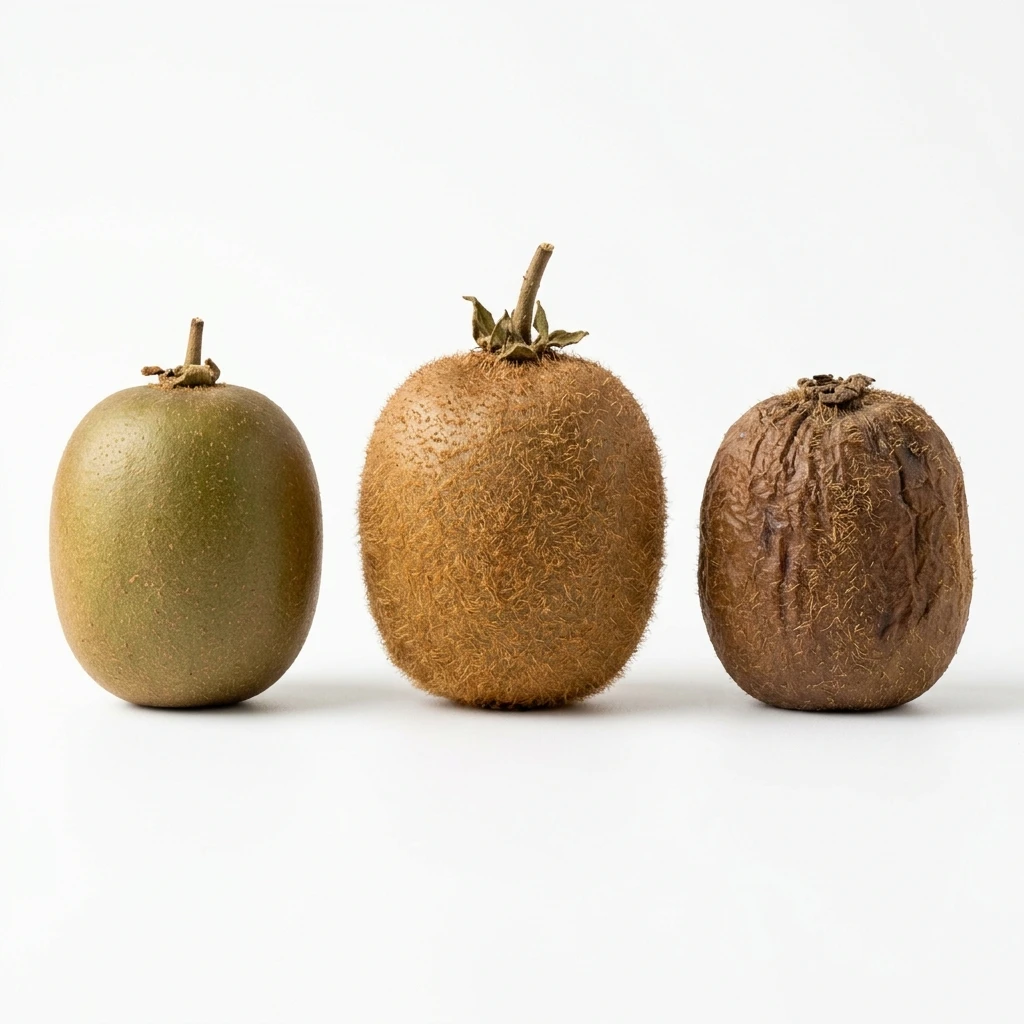
✅ Firm (newly bought): Can be stored at room temperature for 3-5 days. To speed up ripening, place in a paper bag with an apple or banana.
✅ Yields to gentle pressure: Peak ripeness. Sweet and juicy. Eat immediately or store in the refrigerator for up to 7 days.
⚠️ Mushy, wrinkled skin: Overripe. Flesh will be fermented and sour. Use immediately in smoothies or discard.
❌ Black/grey mold at the stem end: Botrytis gray mold decay. Discard the entire fruit immediately as the mold penetrates deep inside.
Quick Safety Tips
- Look for organic kiwis to avoid post-harvest wax and fungicides
- Perform a warm water wash to dissolve paraffin wax before eating
- If eating the skin for extra fiber, always scrub with baking soda or peel it entirely
- Check the Clean 15 blog post for low-pesticide details: <a href='/blog/clean-15-pesticide-guide/'>Clean 15 Pesticide Guide</a>
Primary Chemical Concerns
Health Risks & Impacts
Multilingual Local Names
Common Storage Pests
Botrytis Gray Mold (Botrytis cinerea)
high riskA common post-harvest fungal disease that causes kiwis to rot from the stem end during storage.
Detection
- Greyish-white fuzzy mold forming at the stem attachment point
- Water-soaked, soft, and wrinkled skin radiating from the stem
- Flesh beneath the mold is mushy, watery, and smells fermenting
Prevention
- Keep kiwis dry during storage; high humidity accelerates gray mold
- Check batches regularly and isolate any fruit showing mold immediately
Corrective Action: What to do?
Discard the infected kiwis immediately. The fungal spores travel fast and can contaminate the entire batch.
Regulatory Corner: US FDA / USDA / Codex Standard 292-2008 (Kiwifruit)
Regulation: 21 CFR Part 112 (Produce Safety) & Codex Alimentarius Fresh Fruit Standards
Legal Limit:Minimum Soluble Solids (Brix): 6.2% at harvest / 9.5% at retail; Calcium Carbide & artificial toxic ripening: 0.0%; Synthetic petroleum wax: 0.0%
Report Adulteration to US FDA / USDA / Codex Standard 292-2008 (Kiwifruit)