How to Test Papaya for Adulteration (Calcium Carbide, Ethephon, Sunset Yellow)
⚡ Quick 60-Second Papaya Ripening & Latex Verdict
Premature Calcium Carbide Ripening: Papayas picked too green are treated with industrial carbide or ethephon. Unripe pulp contains irritating latex that induces uterine contractions and GI distress.
Press the stem end gently. Tree-ripened papaya yields softly with a sweet tropical perfume. Chemically forced papaya is rubbery with a chemical scent.
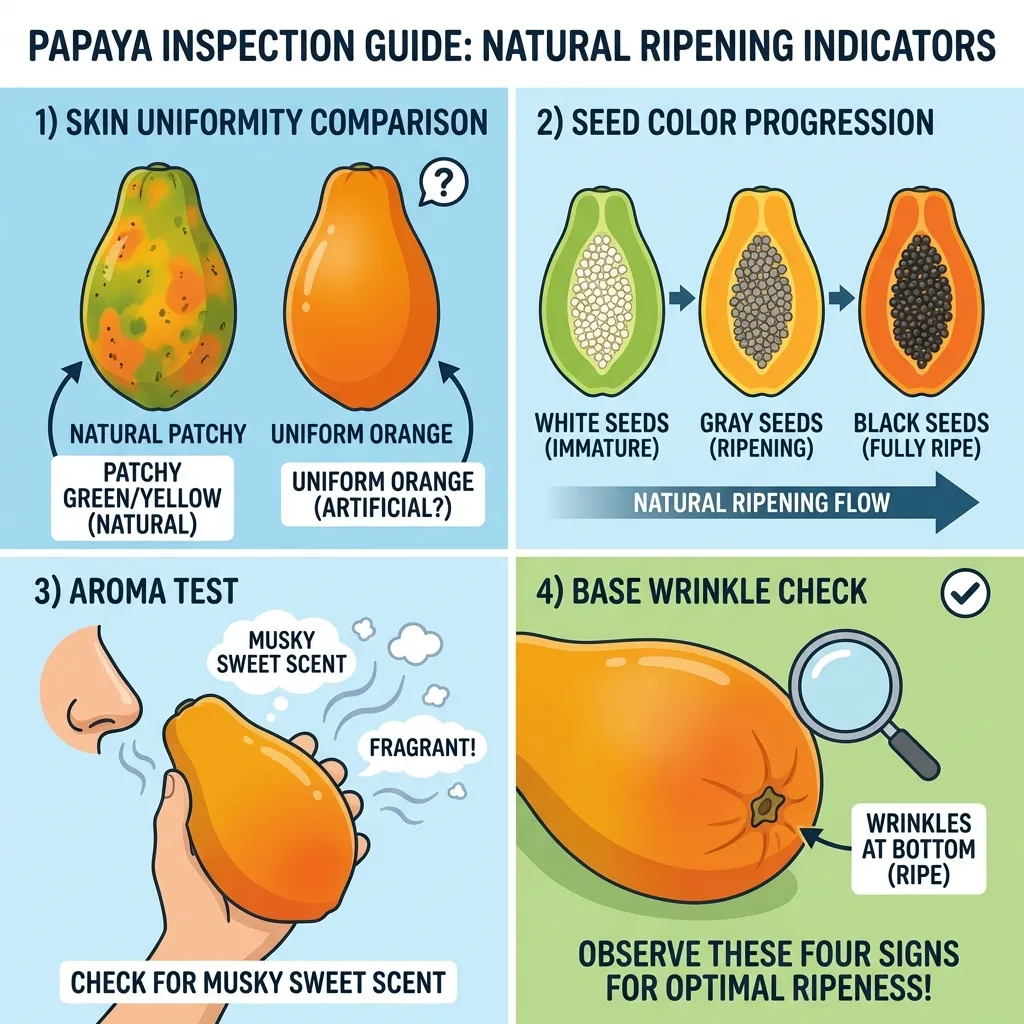
Naturally ripe papayas show smooth orange-yellow transitions from the base up. Carbide papayas exhibit patchy yellow blotches over hard green skin.
Cut open. Naturally ripe fruit has jet-black or dark brown gelatinous seeds. White or pale green seeds reveal premature forced harvesting.
To learn more about food safety tests and home adulteration detection, read our guides on Banana and Apple.
Drop Papaya photo here to test purity
or click to browse • Supports JPG, PNG, WEBP • Paste with Ctrl+V
Inspection Guide
Click to enlarge
Papaya Purity & Ripening Audit
Papayas are often ripened artificially with Calcium Carbide ("Masala") or treated with dyes to make the skin look more "yellow" and the flesh more "orange."
1. The Skin Texture & Latex Check:
Gently scratch the skin of the papaya. A naturally ripening papaya will release a small amount of white, sticky "latex." If a very soft, "ripe-looking" papaya releases no latex or a watery liquid, it was likely ripened artificially.
2. The Internal Color Gradient:
Cut the papaya in half. Naturally ripened papaya has a color gradient from the outer flesh to the seeds. If the outer flesh is bright orange but the inner part near the seeds is hard or pale, it indicates uneven chemical ripening.
3. The Cotton Rub Test (Skin Dye):
Rub a wet cotton ball on the yellow skin. If the cotton picks up an orange or yellow tint, artificial dyes have been applied to make under-ripe fruit look ready for sale.
4. The Seed Appearance:
In naturally ripened papayas, the seeds are dark black and have a gelatinous coating. In carbide-ripened ones, the seeds may still be slightly brownish or white despite the fruit being soft.
5. Ripening and Dyeing Risks:
Ripening chemicals and artificial cosmetic dyes are shared risks among papayas and mangoes. Check out our guide for Mango.
Click to enlarge
Papaya Freshness, Ripeness & Anthracnose Spoilage Audit
Papaya is a delicate tropical climacteric fruit that softens rapidly after harvest. Choosing the optimal ripeness stage and detecting fungal rot is essential for both flavor and digestive safety.
1. The Stem Scratch & Milky Latex Audit:
Make a tiny scratch near the stem shoulder with your fingernail. A naturally mature tree-ripened papaya bleeds a small droplet of thick, sticky white latex rich in active papain enzymes. If a soft, apparently 'ripe' fruit yields zero latex or only a clear watery fluid, it was plucked rock-hard green and chemically forced with calcium carbide gas.
2. Anthracnose Lesions (Colletotrichum gloeosporioides):
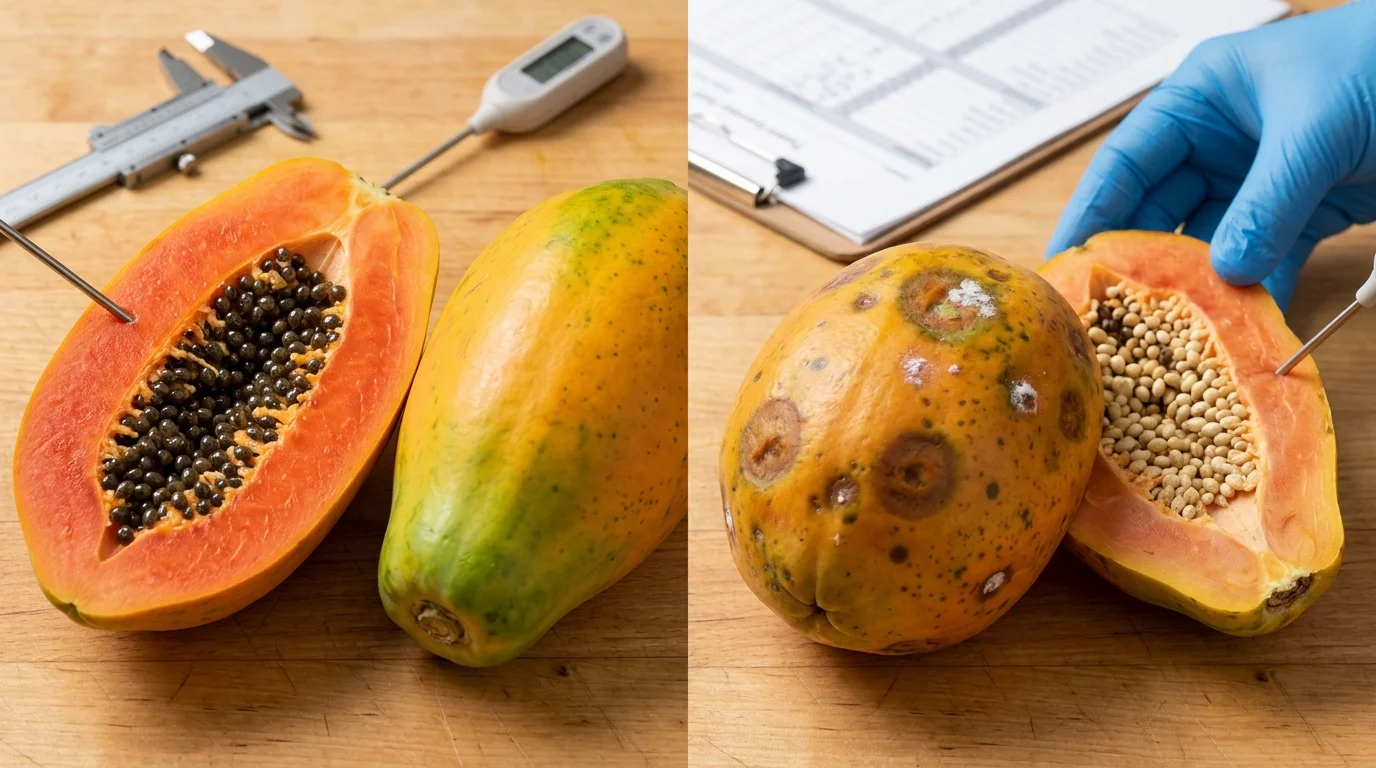
Carefully inspect the yellow skin for small, circular, sunken water-soaked brown spots. In warm humid conditions, these expand rapidly into large black craters with pinkish-orange fungal spore rings in the center. Discard fruit when lesions penetrate beneath the peel into the pulp.
3. The Jet-Black Seed Ripeness Indicator:
Slice the papaya open lengthwise. Naturally ripe, tree-matured papayas contain hundreds of glistening, plump, jet-black seeds enclosed in slippery gelatinous sacs (arils). If the seeds are whitish-grey or pale tan and dry, the fruit was harvested prematurely and will have poor nutritional quality and bitter astringent flavor.
4. Chilling Injury in Cold Storage:
Never refrigerate hard, unripe papayas below 10°C (50°F). Chilling permanently damages ripening enzymes, turning the skin mottled greyish-brown while the flesh remains rubbery, water-soaked, and fails to develop sweetness.
5. Storage Protocol:
Allow green or half-yellow papayas to ripen at room temperature (22–25°C) in a loosely folded brown paper bag. Once 80% golden-yellow with gentle springiness upon palm pressure, consume immediately or refrigerate ripe cut slices in an airtight glass container for up to 3–4 days.
Quick Safety Tips
- Perform the scratch test for natural latex
- Avoid papayas with an unnaturally uniform, "painted" yellow skin
- Check for internal color uniformity - hard cores in soft fruit are a sign of gas ripening
- Wash the outer skin thoroughly before cutting
Primary Chemical Concerns
Health Risks & Impacts
Multilingual Local Names
Common Storage Pests
Fruit Flies
low riskSmall insects that can lay eggs in the soft skin or entry points.
Detection
- Small soft spots on the skin
- Tiny insects around the fruit
Prevention
- Store in a cool, well-ventilated area
- Keep dry
Corrective Action: What to do?
Cut away soft spots; discard if internal rot is visible.
Regulatory Corner: FSSAI (Food Safety and Standards Authority of India) / Codex Alimentarius (CXS 183-1993)
Regulation: Food Safety and Standards (Prohibition and Restrictions on Sales) Regulations 2011, Regulation 2.3.5: Artificial Ripening & Contaminants
Legal Limit:Calcium Carbide (CaC2): 0.0% (Zero tolerance); Ethephon max residue limit: 2.0 ppm; Thiabendazole post-harvest fungicide: Max 5.0 ppm; Papaya seeds as black pepper adulterant: 0.0%
Report Adulteration to FSSAI (Food Safety and Standards Authority of India) / Codex Alimentarius (CXS 183-1993)