¿Los kiwis son seguros? Pesticidas, Madurez y Cera — Guía Completa
⚡ Veredicto Rápido de 60 Segundos: Madurez y Ceras en el Kiwi
Fruta Clean 15 y Cera Postcosecha: El kiwi se clasifica en la lista Clean 15 de bajo pesticida. Sin embargo, kiwis comerciales importados son sometidos a baños de cera sintética y maduración forzada con etileno.
Presione suavemente con el pulgar. Maduro natural: cede con ligera elasticidad. Muy duro: inmaduro (dejar 2 días con una manzana). Blando aguado: sobremaduro o fermentando.
La piel natural del kiwi tiene un vello marrón áspero y seco. Si se siente resbaladizo, grasoso o con brillo artificial, fue tratado con ceras de parafina industrial.
Revise el botón circular del tallo. Debe estar limpio y seco. Deseche si observa moho algodonoso blanco o gris (Botrytis cinerea) o aroma a fermento agrio.
Drop Kiwi photo here to test purity
or click to browse • Supports JPG, PNG, WEBP • Paste with Ctrl+V
Inspection Guide
Click to enlarge
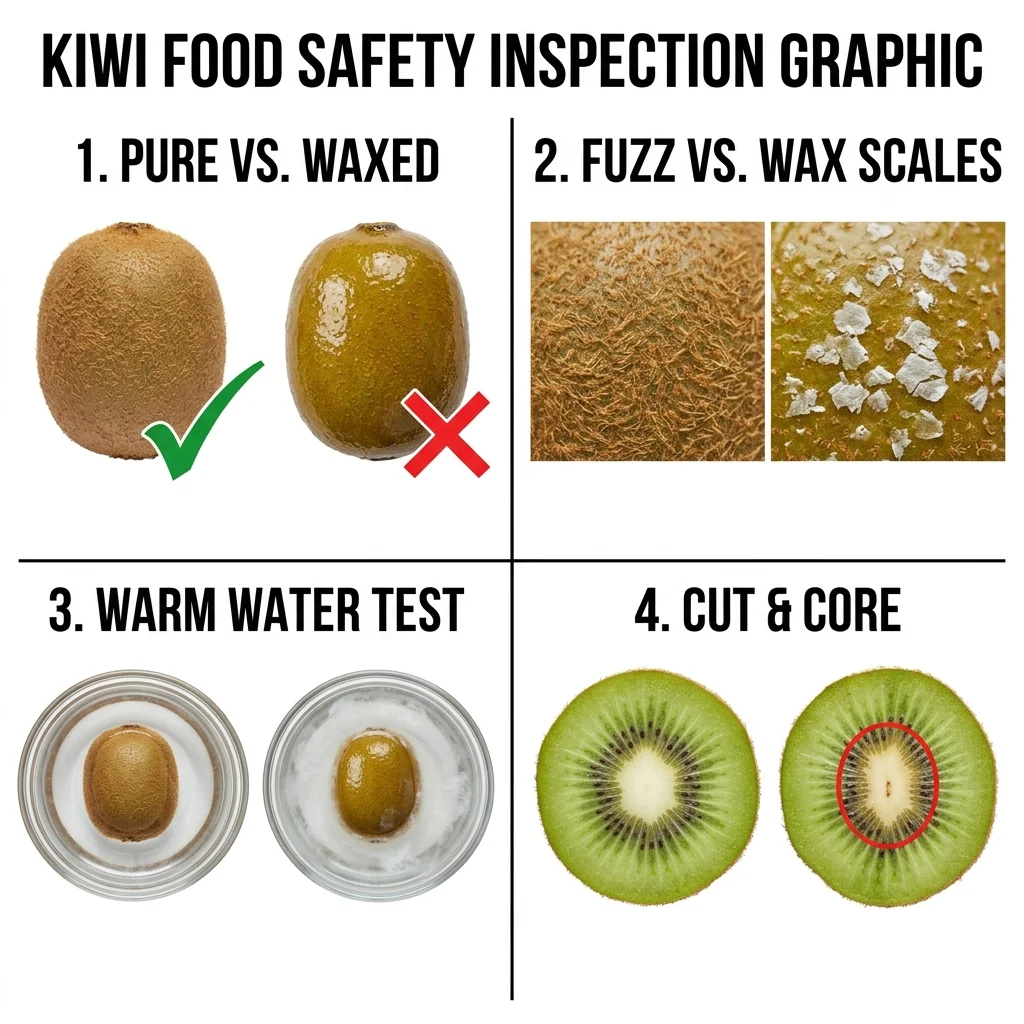
Inspección de seguridad y pesticidas de kiwi: 5 pruebas caseras
Si bien los kiwis generalmente están libres de pesticidas en los EE. UU. debido a su inclusión en Clean 15, con frecuencia se tratan con ceras poscosecha y agentes químicos de maduración. A continuación se explica cómo inspeccionar los kiwis en casa.
1. La prueba Fuzz & Scratch (piel natural versus piel encerada):
Frote la piel suavemente. ✅ La piel madura y natural del kiwi tiene una pelusa marrón áspera y aterciopelada. ❌ Una apariencia suave, ligeramente pegajosa o brillante indica que se ha aplicado una capa espesa de cera sintética. Raspar la piel con la uña; si se acumula una sustancia blanca y escamosa, es cera de parafina.
2. Prueba de fusión de agua caliente (detección de cera):
Coloque el kiwi en un bol y vierta agua caliente (no hirviendo, aproximadamente a 60°C) sobre él. Déjalo reposar durante 60 segundos. ✅El agua permanece clara y sin película aceitosa. ❌ Se forma un brillo aceitoso o una película blanquecina y turbia en la piel, lo que confirma una capa pesada de cera sintética.
3. Prueba de olor del extremo del vástago (verificación de gases):
Huele la fruta cerca del extremo del tallo. ✅ Un ligero aroma a kiwi, dulce y afrutado. ❌ Absolutamente ningún olor a pesar de que la fruta se siente suave al tacto, lo que indica que fue cosechada prematuramente y madurada en harina usando gas etileno.
4. La prueba de compresión (auditoría de madurez):
Aprieta suavemente el kiwi entre el pulgar y el índice. ✅Cede ligeramente a una suave presión = maduro y dulce. ❌ Duro como una roca = inmaduro. ❌ Extremadamente suave o blanda con hendiduras en la piel = demasiado madura o en descomposición por dentro.
5. La inspección de corte y núcleo:
Corta el kiwi por la mitad. ✅ Pulpa de color verde brillante o amarillo dorado con un núcleo central blanco suave y pequeñas semillas negras. ❌ Un núcleo central duro, blanco y fibroso que es difícil de cortar indica un kiwi madurado artificialmente que se recogió demasiado pronto. ❌ Las manchas oscuras y acuosas alrededor del núcleo indican descomposición.
Click to enlarge
Cómo saber si un kiwi está maduro y cuándo desecharlo
Los kiwis no se vuelven más dulces después de la cosecha, pero sí se ablandan. Guárdelos adecuadamente para preservar la calidad.
Etapas de madurez:
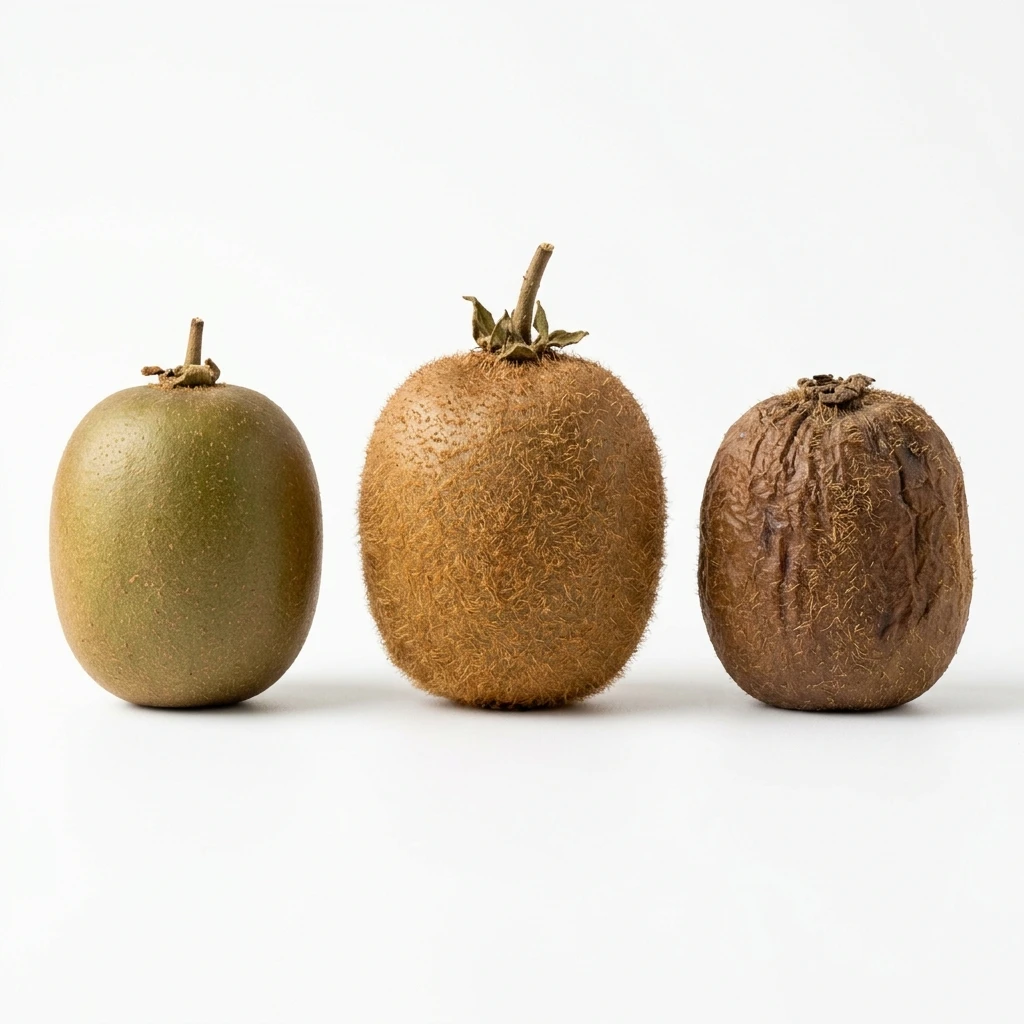
✅ Firme (recién comprado): Se puede conservar a temperatura ambiente durante 3-5 días. Para acelerar la maduración, colóquelo en una bolsa de papel con una manzana o un plátano.
✅ Rinde a una presión suave: Maduración máxima. Dulce y jugosa. Consuma inmediatamente o guárdelo en el refrigerador hasta por 7 días.
⚠️ Piel blanda y arrugada: Demasiado madura. La pulpa quedará fermentada y agria. Úselo inmediatamente en batidos o deséchelo.
❌ Moho negro/gris en el extremo del tallo: Pudrición del moho gris Botrytis. Deseche toda la fruta inmediatamente ya que el moho penetra profundamente en su interior.
Quick Safety Tips
- Busca kiwis ecológicos para evitar ceras y fungicidas poscosecha
- Realice un lavado con agua tibia para disolver la cera de parafina antes de comer.
- Si comes la piel para obtener más fibra, siempre frótala con bicarbonato de sodio o pélala por completo.
- Consulte la publicación del blog de Clean 15 para obtener detalles sobre pesticidas bajos: <a href='/blog/clean-15-pesticide-guide/'>Guía de pesticidas Clean 15</a>
Primary Chemical Concerns
Health Risks & Impacts
Multilingual Local Names
Common Storage Pests
Botrytis Gray Mold (Botrytis cinerea)
high riskA common post-harvest fungal disease that causes kiwis to rot from the stem end during storage.
Detection
- Greyish-white fuzzy mold forming at the stem attachment point
- Water-soaked, soft, and wrinkled skin radiating from the stem
- Flesh beneath the mold is mushy, watery, and smells fermenting
Prevention
- Keep kiwis dry during storage; high humidity accelerates gray mold
- Check batches regularly and isolate any fruit showing mold immediately
Corrective Action: What to do?
Discard the infected kiwis immediately. The fungal spores travel fast and can contaminate the entire batch.
Regulatory Corner: Codex Alimentarius (Norma 292-2008) / US FDA
Regulation: Normas de Calidad para el Kiwi Fresco y Buenas Prácticas Agrícolas
Legal Limit:Sólidos Solubles Mínimos (Brix): 6.2% en cosecha / 9.5% al consumidor; Carburo de Calcio: 0.0%; Ceras sintéticas de petróleo: 0.0%
Report Adulteration to Codex Alimentarius (Norma 292-2008) / US FDA