
How to Test Apple for Adulteration (Paraffin Wax, Shellac, Diphenylamine)
⚡ Quick 60-Second Apple Safety & Wax Coating Verdict
Synthetic Wax & Fungicide Risk: Commercial apples are regularly coated with petroleum-based paraffin wax, carnauba, and morpholine to extend shelf life for up to 12 months, trapping systemic pesticides like Diphenylamine (DPA) onto the peel.
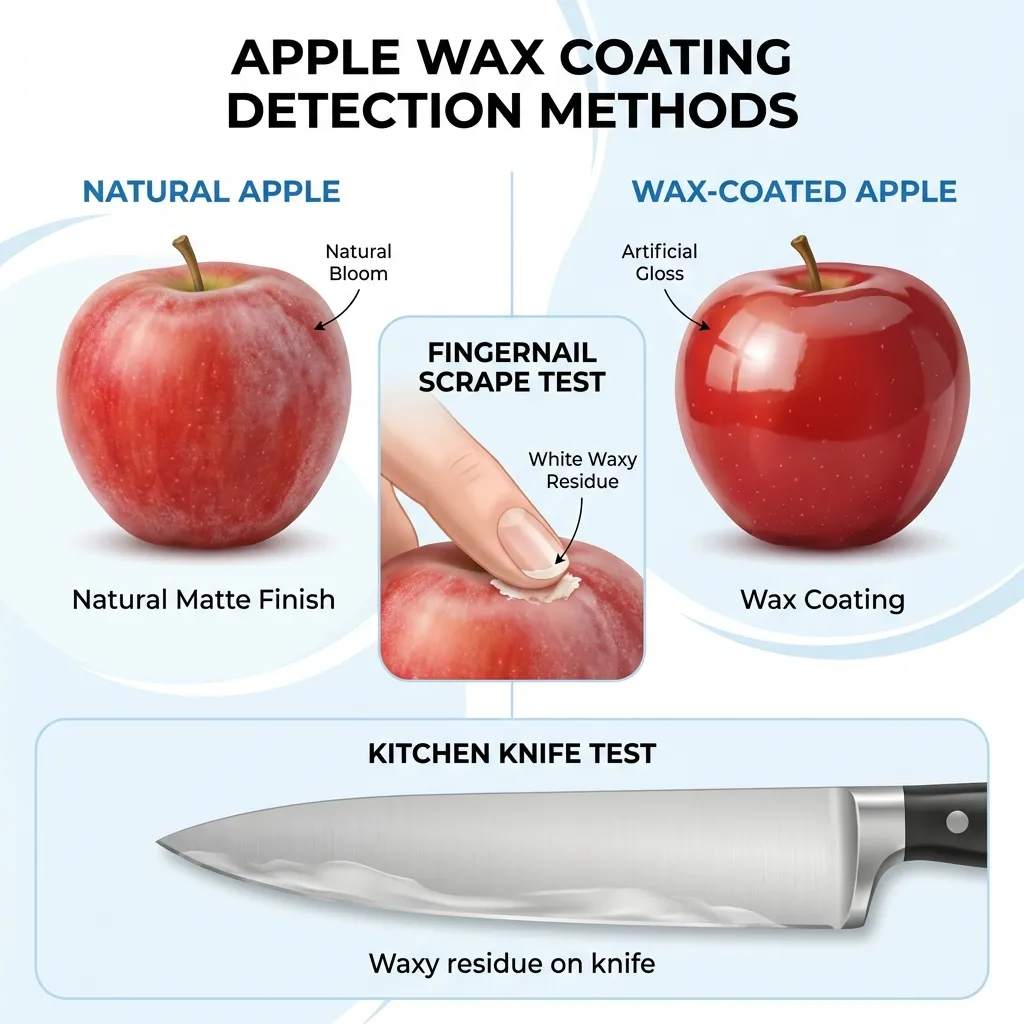
Gently run the dull edge of a knife across the apple skin. If white flaky powder or curling shavings peel off, the fruit is heavily coated in artificial wax. Natural apples produce minimal to no flaky residue.
Place the apple in a bowl of warm water (approx 50°C) for 1 minute. Wax melts and turns into a milky, cloudy white film on the surface of the skin and water.
Sprinkle 1 tsp baking soda + 1 tbsp lemon juice directly onto the apple skin. Scrub gently with a soft brush and rinse in warm water to strip wax and dissolve surface fungicides.
Drop Apple photo here to test purity
or click to browse • Supports JPG, PNG, WEBP • Paste with Ctrl+V
Inspection Guide
Click to enlarge
Apple Purity & Wax Audit
Apples are almost universally coated with wax to prevent moisture loss during long-term cold storage. While some wax is food-grade, it can trap heavy pesticide residues and fungicides like DPA.
1. The Scrape Test (Wax Detection):
Gently scrape the skin of the apple with a dull knife. If a white, flaky, or powdery substance comes off, it is an industrial or food-grade wax coating. Natural apples have a very thin, non-flaky oil layer.
2. The Hot Water Test:
Dip an apple in hot (not boiling) water for 5 seconds. If a white, cloudy film develops on the surface, it is a clear sign of wax coating. Pure, un-waxed apples will not show this film.
3. The Surface Shine:
Naturally fresh apples have a slight matte or natural sheen. If the apple is mirror-glossy and feels "slippery" or "greasy" to the touch, it has likely been treated with industrial paraffin or shellac.
4. The Core Integrity:
Cut the apple in half. The core should be clean. If the area around the seeds looks "watery," brownish, or smells slightly of chemicals, the apple has been in cold storage for too long and may contain high levels of DPA.
Quick Safety Tips
- Perform the scrape test - white flakes indicate industrial wax
- Avoid apples with a mirror-glossy, "greasy" surface
- Soak in warm water with baking soda and salt for 15 minutes to dissolve wax and pesticides
- Prefer organic apples or peel the skin if you suspect heavy waxing
Primary Chemical Concerns
Health Risks & Impacts
Multilingual Local Names
Common Storage Pests
Codling Moth
medium riskThe "worm in the apple" that bores into the core.
Detection
- Small entry hole on the skin
- Internal browning and larvae in the core
Prevention
- Inspect for skin damage before buying
- Store in the refrigerator
Corrective Action: What to do?
Cut away the affected parts; the rest of the apple is safe to eat.
Regulatory Corner: FSSAI (Food Safety and Standards Authority of India) / US FDA (21 CFR 172.210)
Regulation: Food Safety and Standards (Food Products Standards) Regulations 2011, Clause 2.3.6 & FDA CPG Sec. 510.150: Surface Coatings on Fresh Fruit
Legal Limit:Non-food grade / industrial petroleum wax: 0.0% (Zero tolerance; only food-grade carnauba/shellac with mandatory labeling allowed); Diphenylamine (DPA): Max 5.0 ppm; Captan: Max 5.0 ppm; Lead: Max 0.2 ppm
Report Adulteration to FSSAI (Food Safety and Standards Authority of India) / US FDA (21 CFR 172.210)