How to Test Orange for Adulteration (Citrus Red No. 2, Paraffin Wax, Ethylene Gas)
⚡ Quick 60-Second Orange Citrus Red No. 2 Dye Verdict
Citrus Red No. 2 Dye & Ethylene De-greening: Early season green oranges are gassed with ethylene to remove chlorophyll and dipped in carcinogenic Citrus Red No. 2 coal-tar dye to look ripe.
Moisten a white cotton pad in rubbing alcohol and rub the orange peel firmly for 15 seconds. In naturally ripe oranges, the pad stays clean. In dye-treated oranges, the cotton turns bright reddish-orange.
Inspect the circular button where the stem was attached. In naturally tree-ripened oranges, the button is creamy white or dry tan. If the button is dyed bright orange like the peel, it was soaked in a chemical dye bath.
Drop in water. Naturally juicy ripe oranges have thick dense pulp and sink or float low. De-greened, dry, fibrous premature fruit floats high on the water.
To learn more about food safety tests and home adulteration detection, read our guides on Avocado and Dragon Fruit.
Drop Orange photo here to test purity
or click to browse • Supports JPG, PNG, WEBP • Paste with Ctrl+V
Inspection Guide
Click to enlarge
Orange Purity & Coloring Audit
Oranges are often treated with Citrus Red No. 2 dye to improve the color of the skin, especially in green-tinged varieties, and coated with wax to prevent moisture loss.
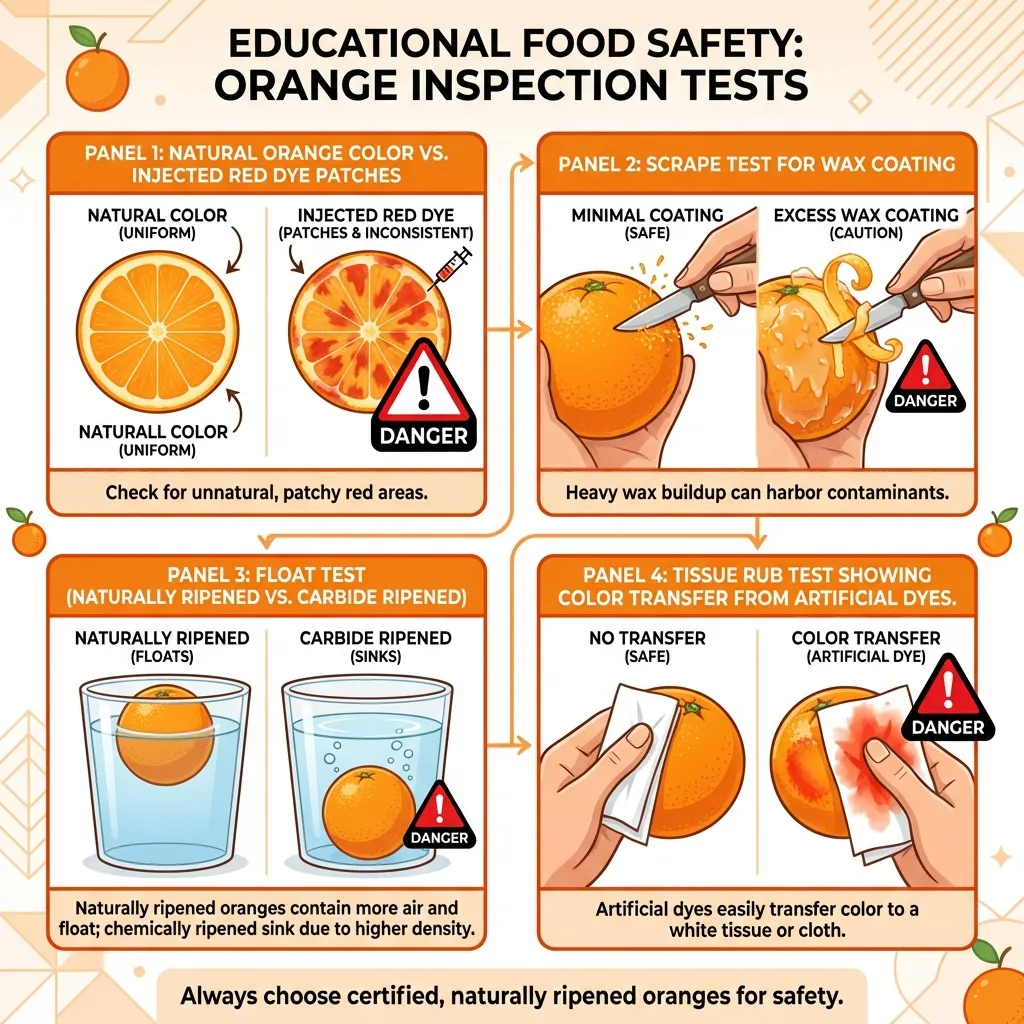
1. The Cotton Rub Test (Dye Detection):
Soak a cotton ball in water or liquid paraffin and rub the surface of the orange. If the cotton picks up an orange or red tint, the skin has been artificially colored. Natural oranges will not bleed color.
2. The Scrape Test (Wax Detection):
Gently scrape the skin with a dull knife. If a white, flaky, or powdery substance comes off, it is an industrial or food-grade wax coating.
3. The Stem Inspection:
Look at the stem of the orange. A naturally ripened orange has a stem that is slightly brown and dried. If the orange is bright orange but the stem is vibrant green, it has likely been treated with ethylene gas for artificial ripening.
4. The Water Soak (Chemical Check):
Soak the orange in warm water for 10 minutes. If the water becomes oily or develops a chemical smell, it indicates heavy fungicide (Biphenyl) treatment.
Quick Safety Tips
- Perform the cotton rub test - natural skin color does not transfer
- Scrape to check for waxy coatings
- Avoid oranges with a green stem but perfectly orange body (artificial ripening)
- Wash with a mix of baking soda and vinegar to remove surface chemicals
Primary Chemical Concerns
Health Risks & Impacts
Multilingual Local Names
Common Storage Pests
Fruit Flies
low riskSmall insects attracted to the sugars of ripe citrus.
Detection
- Small hovering insects
- Soft, fermented spots on the skin
Prevention
- Store in a cool, ventilated place
- Keep dry
Corrective Action: What to do?
Discard fruit with soft spots or fermented smell.
Regulatory Corner: US FDA / FSSAI (Citrus Standards)
Regulation: FDA 21 CFR 74.302 (Citrus Red No. 2) & FSSAI (Food Products Standards) Regulations
Legal Limit:Citrus Red No. 2 dye: Strictly Prohibited in India; US FDA allows max 2.0 ppm in peel only with mandatory 'Color Added' store labeling (0.0 ppm in edible pulp); Thiabendazole fungicide: Max 10.0 ppm
Report Adulteration to US FDA / FSSAI (Citrus Standards)