Kiwis são Seguros? Pesticidas, Maturidade e Cera — Guia Completo
⚡ Veredito Rápido de 60 Segundos: Maturação e Cera no Kiwi
Fruta Clean 15 e Enceramento: O kiwi é classificado na lista Clean 15 de baixo teor de agrotóxicos. No entanto, kiwis comerciais importados recebem banhos de cera sintética e maturação forçada com gás etileno.
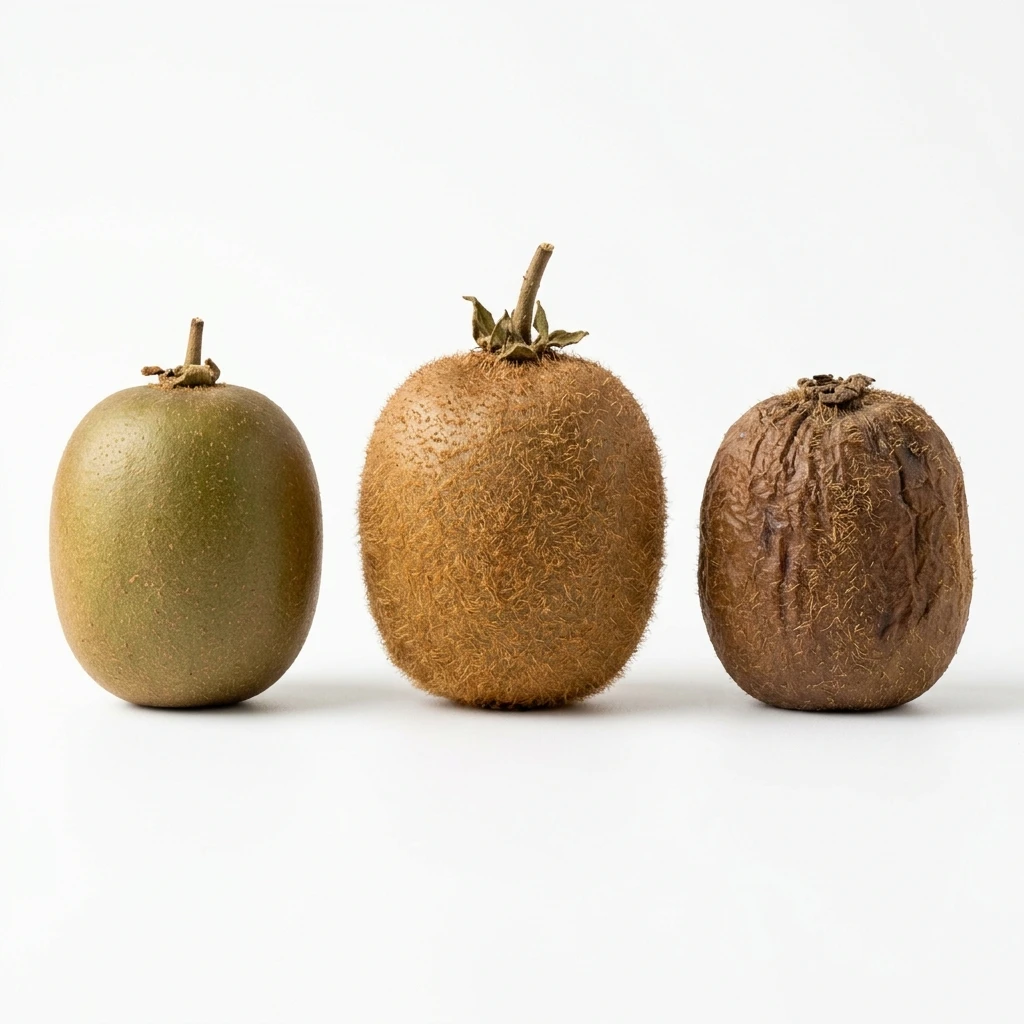
Pressione suavemente. Maduro natural: cede com leve elasticidade. Duro como pedra: imaturo (deixe 2 dias num saco de papel com uma maçã). Muito mole/aguado: fermentando.
A casca natural do kiwi tem pelos castanhos secos e ásperos. Se a pele estiver lisa, brilhante ou gordurosa, foi tratada com ceras de parafina industrial.
Verifique o botão do caule. Deve estar limpo e seco. Descarte se observar mofo cinzento/branco (Botrytis cinerea) ou cheiro azedo.
Drop Kiwi photo here to test purity
or click to browse • Supports JPG, PNG, WEBP • Paste with Ctrl+V
Inspection Guide
Click to enlarge
Inspeção de pesticidas e segurança de kiwi – 5 testes domésticos
Embora os kiwis sejam geralmente livres de pesticidas nos EUA devido à sua inclusão no Clean 15, eles são frequentemente tratados com ceras pós-colheita e agentes químicos de maturação. Veja como inspecionar kiwis em casa.
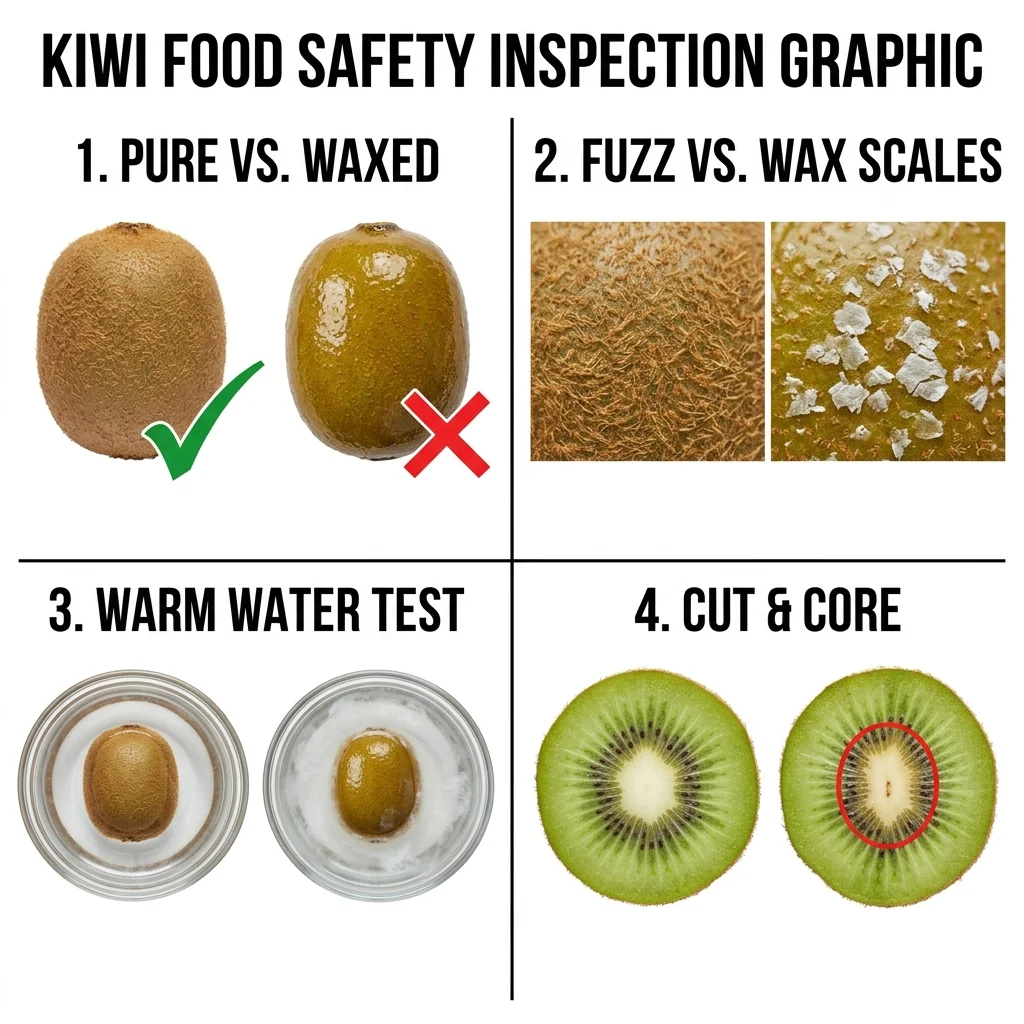
1. O teste Fuzz & Scratch (pele natural vs encerada):
Esfregue a pele suavemente. ✅ A pele madura e natural do kiwi tem uma penugem marrom áspera e aveludada. ❌ Uma aparência lisa, ligeiramente pegajosa ou brilhante indica que uma camada espessa de cera sintética foi aplicada. Raspe a pele com a unha; se uma substância branca e escamosa se acumular, é cera de parafina.
2. O teste de fusão com água quente (detecção de cera):
Coloque o kiwi em uma tigela e despeje água quente (não fervendo, aproximadamente 60°C) sobre ele. Deixe descansar por 60 segundos. ✅ A água permanece límpida, sem película oleosa. ❌ Forma-se na pele um brilho oleoso ou uma película turva esbranquiçada, confirmando uma espessa camada de cera sintética.
3. O teste de cheiro da extremidade da haste (verificação de gaseamento):
Cheire a fruta perto da ponta do caule. ✅ Um aroma fraco, doce e frutado de kiwi. ❌ Absolutamente nenhum cheiro, apesar da fruta parecer macia ao toque, indicando que foi colhida prematuramente e amadurecida com gás etileno.
4. O teste de compressão (auditoria de maturação):
Aperte suavemente o kiwi entre o polegar e o indicador. ✅ Rende ligeiramente à pressão suave = maduro e doce. ❌ Duro como pedra = verde. ❌ Extremamente macio ou pastoso com reentrâncias na pele = maduro demais ou em decomposição por dentro.
5. A inspeção de corte e núcleo:
Corte o kiwi ao meio. ✅ Polpa verde brilhante ou amarelo dourado com núcleo central branco e macio e pequenas sementes pretas. ❌ Um núcleo central duro, branco e fibroso que é difícil de fatiar indica um kiwi amadurecido artificialmente que foi colhido muito cedo. ❌ Manchas escuras e aquosas ao redor do núcleo indicam deterioração.
Click to enlarge
Como saber se um kiwi está maduro – e quando descartá-lo
Os kiwis não ficam mais doces após a colheita, mas amolecem. Armazene-os adequadamente para preservar a qualidade.
Estágios de maturação:
✅ Firme (recém-comprado): Pode ser armazenado em temperatura ambiente por 3-5 dias. Para acelerar o amadurecimento, coloque uma maçã ou banana em um saco de papel.
✅ Rende-se a uma pressão suave: Pico de maturação. Doce e suculento. Coma imediatamente ou guarde na geladeira por até 7 dias.
⚠️ Pele mole e enrugada: Muito madura. A carne ficará fermentada e azeda. Use imediatamente em smoothies ou descarte.
❌ Mofo preto/cinza na extremidade do caule: Deterioração do mofo cinza Botrytis. Descarte a fruta inteira imediatamente, pois o mofo penetra profundamente em seu interior.
Quick Safety Tips
- Procure kiwis orgânicos para evitar cera e fungicidas pós-colheita
- Faça uma lavagem com água morna para dissolver a cera de parafina antes de comer
- Se comer a pele para obter fibras extras, sempre esfregue com bicarbonato de sódio ou descasque-a completamente
- Confira a postagem do blog Clean 15 para obter detalhes sobre baixo teor de pesticidas: <a href='/blog/clean-15-pesticide-guide/'>Guia de pesticidas Clean 15</a>
Primary Chemical Concerns
Health Risks & Impacts
Multilingual Local Names
Common Storage Pests
Botrytis Gray Mold (Botrytis cinerea)
high riskA common post-harvest fungal disease that causes kiwis to rot from the stem end during storage.
Detection
- Greyish-white fuzzy mold forming at the stem attachment point
- Water-soaked, soft, and wrinkled skin radiating from the stem
- Flesh beneath the mold is mushy, watery, and smells fermenting
Prevention
- Keep kiwis dry during storage; high humidity accelerates gray mold
- Check batches regularly and isolate any fruit showing mold immediately
Corrective Action: What to do?
Discard the infected kiwis immediately. The fungal spores travel fast and can contaminate the entire batch.
Regulatory Corner: Codex Alimentarius (Norma 292-2008) / ANVISA / US FDA
Regulation: Padrões Internacionais de Qualidade para Kiwi Fresco
Legal Limit:Sólidos Solúveis Mínimos (Grau Brix): 6.2% na colheita / 9.5% ao consumidor; Carbureto de Cálcio: 0.0%; Ceras sintéticas de petróleo: 0.0%
Report Adulteration to Codex Alimentarius (Norma 292-2008) / ANVISA / US FDA