How to Test Cabbage for Adulteration (Formalin, Organophosphate Pesticides, Chlorpyrifos)
⚡ Quick 60-Second Cabbage Pesticide & Tapeworm Verdict
Systemic Organophosphates & Wastewater Coliform (Taenia solium): Cabbage heads trap heavy pesticide sprays between layers, and irrigation with untreated sewage introduces infectious tapeworm cysticerci.
Always peel off and discard the outer 3 to 4 loose leaves. Over 80% of agricultural spray residues and pathogenic bacteria are concentrated on the outermost wrapper leaves.
Slice the head in half and examine the central stem and inner veins. If you see black or dark brown V-shaped lesions on veins (Xanthomonas campestris), internal rot is present.
Never consume raw street cabbage salads. Tapeworm eggs (Taenia solium) survive simple cold water washing and cause neurocysticercosis. Cook cabbage to at least 75°C core temperature.
To learn more about food safety tests and home adulteration detection, read our guides on Spinach and Broccoli.
Drop Cabbage (Patta Gobi) photo here to test purity
or click to browse • Supports JPG, PNG, WEBP • Paste with Ctrl+V
Inspection Guide
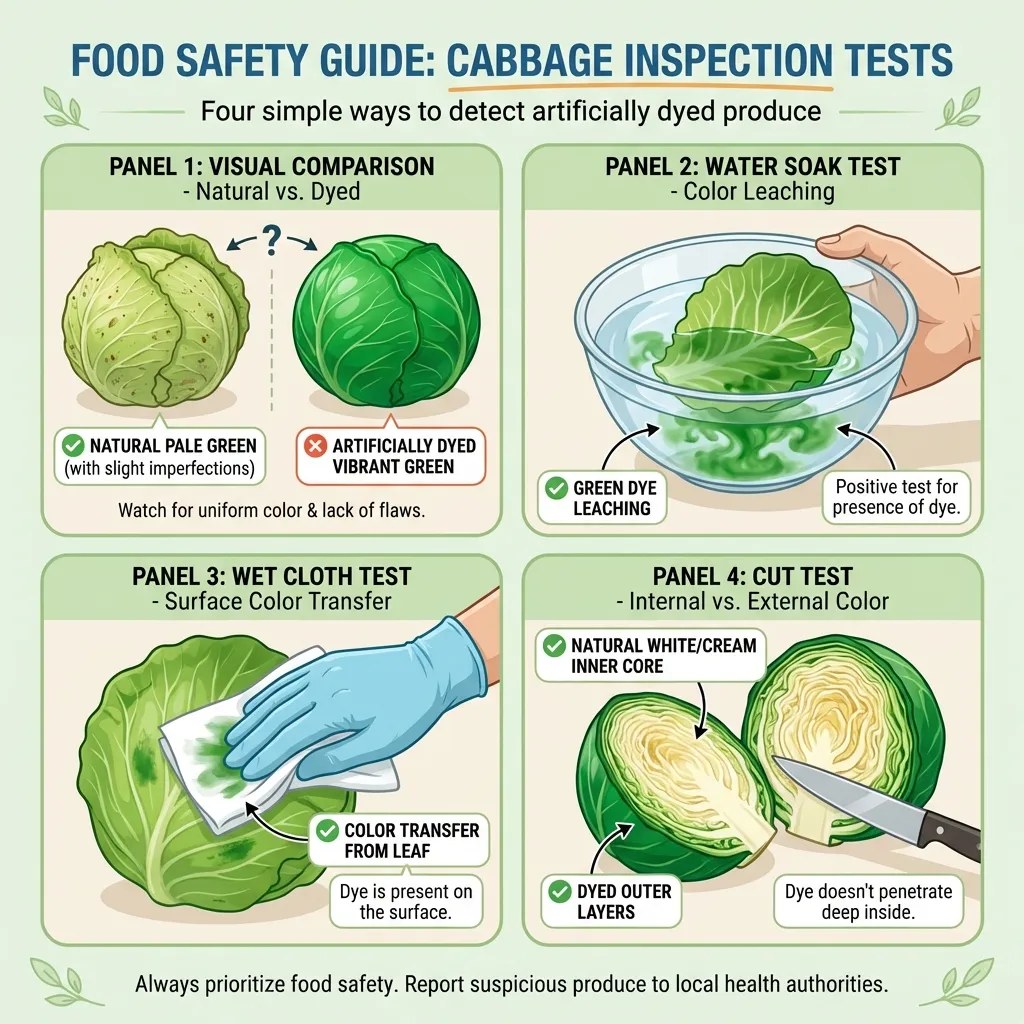
Click to enlarge
Cabbage Safety & Chemical Inspection
Cabbage is often sprayed with Formalin to keep it looking fresh during transport and may harbor high levels of systemic pesticides.
1. The Scent Test (Formalin):
Smell the base (stalk) of the cabbage. Pure cabbage has a mild, earthy, or slightly sulfuric smell. A sharp, chemical, or "pungent hospital-like" odor indicates Formalin treatment.
2. The Visual Layer Check:
Observe the outer leaves. If they look unnaturally glossy and don't wilt even in heat, it may be due to chemical preservatives.
3. Pesticide Residue Check:
Look for white, chalky, or powdery deposits in the crevices of the leaves. These are often residues of harmful pesticides.
4. The Water Immersion Test:
Soak the cabbage in water. If the water becomes oily or has a chemical smell, it indicates heavy surface pesticide load.
Quick Safety Tips
- Smell the stalk for sharp chemical odors (Formalin)
- Remove the outermost 3-4 layers of leaves
- Soak in salt/baking soda water for 20 minutes
- Check for white powdery pesticide residues
Primary Chemical Concerns
Health Risks & Impacts
Multilingual Local Names
Common Storage Pests
Diamondback Moth (Plutella xylostella)
medium riskSmall green larvae that feed on the inner leaves, creating "window-pane" holes.
Detection
- Small, pale green caterpillars
- Fine webbing between leaves
- Irregular holes in the inner layers
Prevention
- Inspect the core before purchase
- Wash leaves individually
- Store in the refrigerator
Corrective Action: What to do?
If a few caterpillars are found, remove the affected leaves and soak the rest in salt water. If the cabbage is heavily riddled with holes and larvae frass, **discard the entire head** as it may harbor bacteria.
Regulatory Corner: FSSAI (Food Safety and Standards Authority of India) / US FDA
Regulation: Food Safety and Standards (Contaminants, Toxins and Residues) Regulations 2011, Schedule 2 & FDA 21 CFR Part 112
Legal Limit:Chlorpyrifos: Max 0.05 ppm; Quinalphos: Max 0.01 ppm; Banned persistent organochlorines (DDT, HCH): 0.0 ppm; Pathogenic E. coli / Salmonella: Zero tolerance
Report Adulteration to FSSAI (Food Safety and Standards Authority of India) / US FDA