Testes de Qualidade e Pureza do Milho Verde: Detectar Mofo por Aflatoxinas, Corantes e Deterioração
⚡ Veredito Rápido de 60 Segundos: Pureza e Micotoxinas no Milho Verde
Adulteração por Corantes Amarelos e Micotoxinas Tropicais: Espigas colhidas há dias perdem o viço e frequentemente são imersas em água com corante amarelo sintético (Tartrazina) e adoçantes artificiais para simular milho verde fresco. Em climas quentes e úmidos, a infestação por fungos Aspergillus e Fusarium gera aflatoxinas e fumonisinas altamente estáveis ao calor.
Pressione um grão do meio da espiga. O milho verde fresco e leitoso rompe facilmente liberando um suco claro e doce natural. O milho passado fica farinhento e borrachoso.
Passe um papel toalha branco úmido sobre os grãos amarelos. Se o papel manchar de amarelo intenso, houve aplicação clandestina de corante alimentar artificial.
Afaste a ponta da palha. Cabelos marrom-claros e úmidos indicam frescor; bolor cinzento, verde-oliva ou rosado exige descarte imediato de toda a espiga.
Para saber mais sobre a segurança de grãos e vegetais, leia nossos guias sobre Farinha de Trigo, Repolho e Ketchup de Tomate.
Drop Milho / Milho Verde photo here to test purity
or click to browse • Supports JPG, PNG, WEBP • Paste with Ctrl+V
Inspection Guide
Click to enlarge
Auditoria de Pureza, Fungos e Corantes no Milho Verde
O milho (Zea mays) é base alimentar e agrícola crucial no Brasil. No entanto, por ser colhido com alto teor de umidade, o milho verde é extremamente vulnerável a fungos filamentosos que liberam micotoxinas termoestáveis indetectáveis pelo paladar.
1. Teste da Unha no Ponto de Espiga Leitoso:
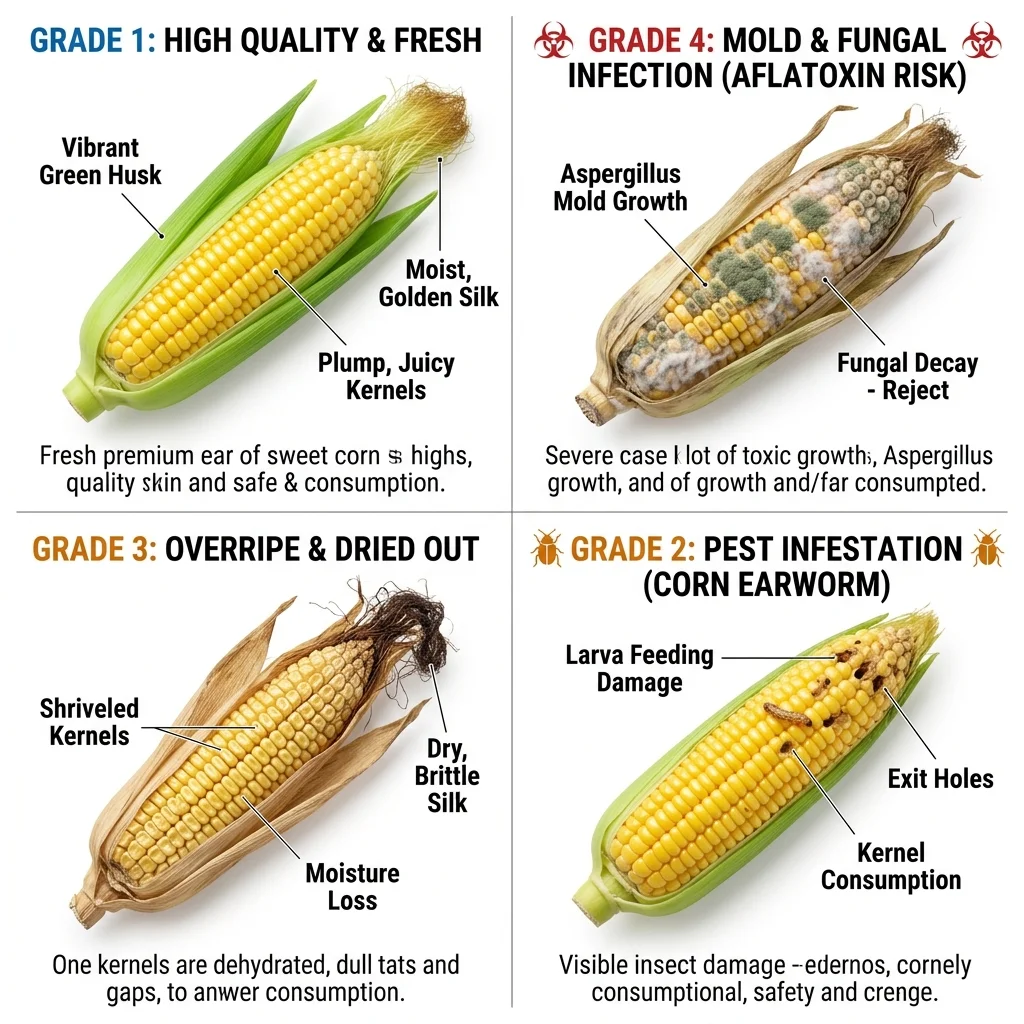
Pressione a unha no centro de um grão. No milho verde fresco ideal, a casca estoura com um jato de líquido leitoso, translúcido e doce. Grãos endurecidos, secos ou que liberam pasta branca pastosa já passaram do ponto, convertendo os açúcares solúveis em amido insolúvel.
2. Teste do Papel Toalha para Corante Tartrazina:
Esfregue uma toalha de papel branco umedecida com água morna sobre os grãos amarelos. O carotenoide natural do milho está firmemente preso na epiderme e não migra para o papel. Manchas amarelas vívidas no papel revelam banho em tartrazina (amarelo crepúsculo/tartrazina) para maquiar espigas velhas e desbotadas.
3. Análise dos Cabelos da Espiga e Ponta Fúngica:
Puxe levemente as palhas protetoras na ponta. O cabelo fresco deve estar úmido, pegajoso e em tons de castanho-dourado ou avermelhado. Se os cabelos estiverem secos, pretos como carvão ou cobertos por pó verde-azulado (Aspergillus) ou felpudo esbranquiçado, a espiga inteira deve ser rejeitada.
4. Teste de Odor e Detecção de Lagarta-do-Cartucho:
Cheire a base e a ponta da espiga. O milho fresco tem perfume de relva verde, fresco e suavemente adocicado. Qualquer cheiro de mofo, terra úmida ou vinagre azedo aponta contaminação microbiana. Verifique se não há orifícios com fezes escuras e serragem deixados pela lagarta-do-cartucho (Spodoptera frugiperda).
Click to enlarge
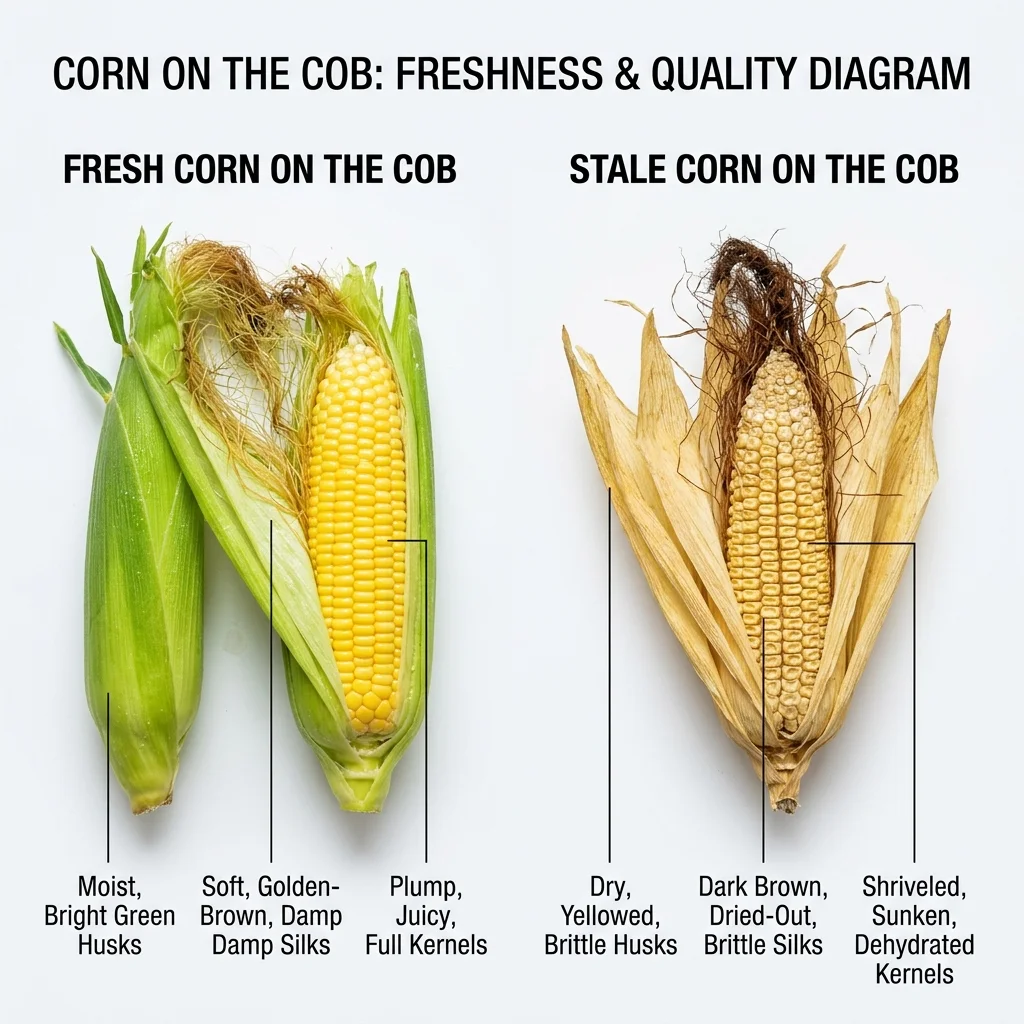
Guia de 4 Estágios de Frescor e Maturação do Milho
Poucas horas após a colheita, o milho verde inicia a respiração celular que converte rapidamente açúcares em amido.
4 Estágios de Frescor:
✅ Estágio Leitoso Ideal (Fresco): Palha verde-clara bem ajustada e úmida. Cabelos flexíveis e castanho-dourados. Grãos túrgidos que estouram liberando leite doce e perfumado.
⚠️ Estágio Pastoso (Sobremaduro / Velho): Palha amarelada nas pontas, cabelos secos. Os grãos perdem a turgidez e o suco interno transforma-se em massa farinhenta sem a doçura característica.
⚠️ Espiga Dentada e Desidratada: Grãos enrugados com concavidade central evidente (milho dentado). Textura coriácea e dura que exige cozimento prolongado; sabor amiláceo sem brilho.
❌ Bolor Fúngico e Podridão (Descarte): Manchas de mofo verde-oliva (Aspergillus), esbranquiçado ou rosado (Fusarium). Odor de mofo e podridão. Risco severo de aflatoxinas termoestáveis. Rejeição obrigatória.
Dica de Conservação: Guarde o milho sempre com a palha inteira na gaveta de legumes da geladeira (2–5°C) e consuma em até 72 horas para reter a suculência e os açúcares naturais.
Quick Safety Tips
- Descarte a espiga inteira se encontrar qualquer bolor verde ou cinza na ponta
- Desconfie de milho cozido de rua excessivamente amarelo com caldo amarelo-vivo
- Nunca consuma espigas com cheiro azedo ou de mofo; ferver não elimina as aflatoxinas
- Dê preferência a espigas com palhas verdes viçosas e cabelos úmidos e elásticos
Primary Chemical Concerns
Health Risks & Impacts
Multilingual Local Names
Common Storage Pests
Lagarta-do-Cartucho / da Espiga (Spodoptera frugiperda / Helicoverpa zea)
medium riskLagarta que invade a espiga pelo cabelo e devora as pontas dos grãos tenros, deixando galerias e dejetos escuros.
Detection
- Furos de entrada na palha superior
- Excrementos marrons acumulados nos cabelos
- Presença da lagarta visível
Prevention
- Selecionar espigas com pontas bem formadas
- Descartar espigas com cascas violadas
Corrective Action: What to do?
Corte a ponta danificada com folga de 2 cm; se houver mofo adjacente, descarte toda a espiga.
Gorgulho do Milho (Sitophilus zeamais)
medium riskBesouro pequeno que perfura os grãos secos de milho em silos e depósitos, consumindo o endosperma.
Detection
- Grãos com pequenos furos redondos
- Pó amiláceo no fundo da embalagem
Prevention
- Armazenar em recipientes herméticos em local seco
- Evitar grãos úmidos
Corrective Action: What to do?
Descarte os grãos perfurados e infestados; não consuma material contaminado.
Bolor Toxigênico (Aspergillus flavus / Fusarium verticillioides)
high riskFungos filamentosos produtores de aflatoxinas e fumonisinas em condições tropicais de alta umidade.
Detection
- Mofo felpudo verde-amarelado ou rosado nos grãos
- Odor característico de mofo úmido ou terra
Prevention
- Secagem adequada pós-colheita
- Armazenamento refrigerado das espigas frescas
Corrective Action: What to do?
Descarte a espiga inteira imediatamente; ferver ou cozinhar não destrói as toxinas.
Regulatory Corner: ANVISA (RDC 729/2022) / MAPA (Ministério da Agricultura, Pecuária e Abastecimento) / Codex Alimentarius
Regulation: Resolução RDC nº 729/2022 da ANVISA (Limites Máximos Tolerados de Contaminantes em Alimentos)
Legal Limit:Aflatoxinas totais (B1+B2+G1+G2): Máx. 20,0 µg/kg (milho em grão); Fumonisinas (B1+B2): Máx. 2,0 mg/kg; Corantes artificiais em espigas in natura: Proibição absoluta (0,0%)
Report Adulteration to ANVISA (RDC 729/2022) / MAPA (Ministério da Agricultura, Pecuária e Abastecimento) / Codex Alimentarius