How to Test Chayote for Adulteration (Surface Pesticides, Preservative Sprays, Internal Rot)
⚡ Quick 60-Second Chayote (Chow Chow) Wax & Purity Verdict
Industrial Mineral Wax Polishing & Chemical Greening: Chayote squashes are coated with non-food grade mineral waxes to prevent shriveling during long cold chains, and washed in chemical brighten solutions.
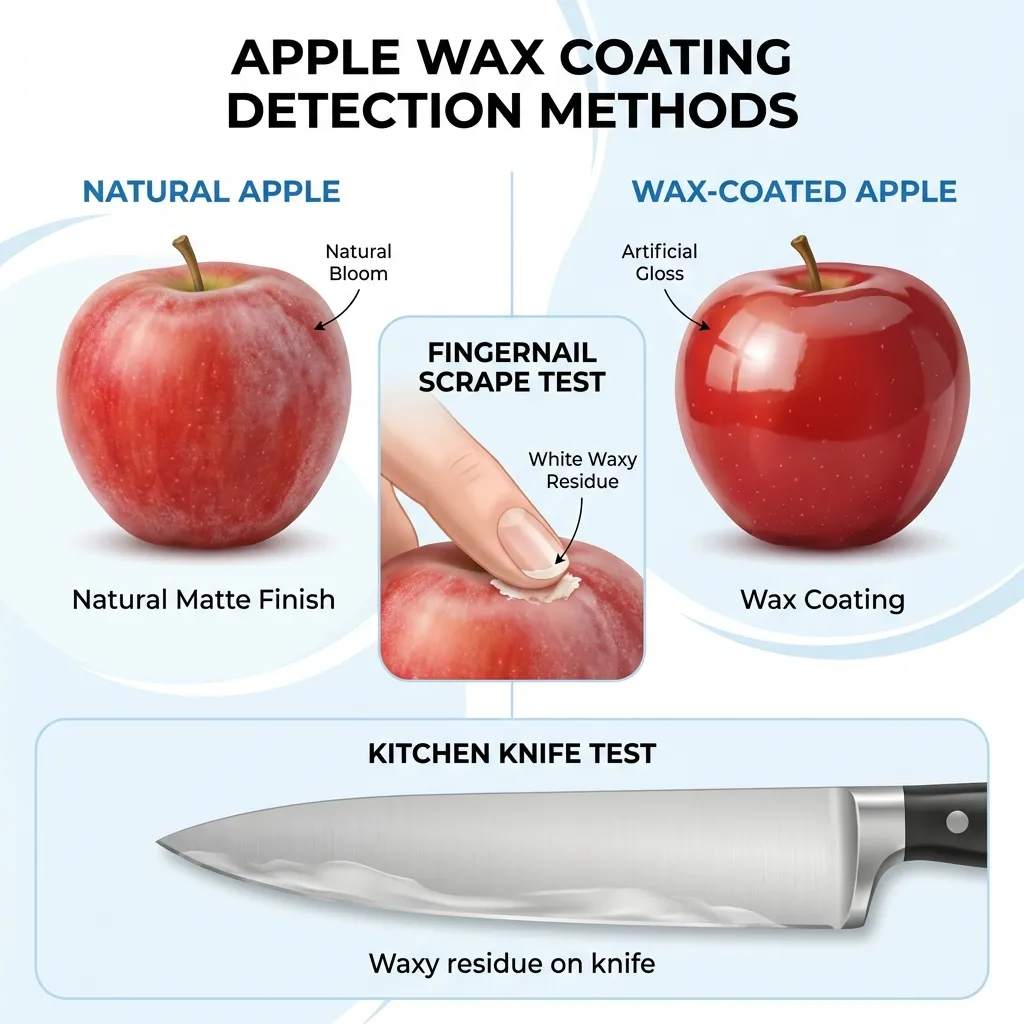
Gently scrape the outer furrowed skin with a table knife. If a thick, cloudy, waxy film flakes off onto the blade, the chayote has been coated with artificial wax polish to mask age and moisture loss.
Immerse the squash in 60°C hot water for 3 minutes. Non-food grade petroleum waxes melt and rise to the water surface, forming floating greasy oil slicks and a distinct paraffin smell.
Cut the squash in half through its single central seed. Fresh high-quality chow chow has crisp, translucent white flesh that exudes clear moisture and a seed firmly bonded to the pulp.
To learn more about food safety tests and home adulteration detection, read our guides on Ridge Gourd (Turai) and Ivy Gourd (Tindora).
Drop Chayote (Chow Chow) photo here to test purity
or click to browse • Supports JPG, PNG, WEBP • Paste with Ctrl+V
Inspection Guide
Click to enlarge
Chayote (Chow Chow) Quality Check
Chayote (Chow Chow) is a hard vegetable but can suffer from internal spoilage or high pesticide residues on its deep-ridged skin.
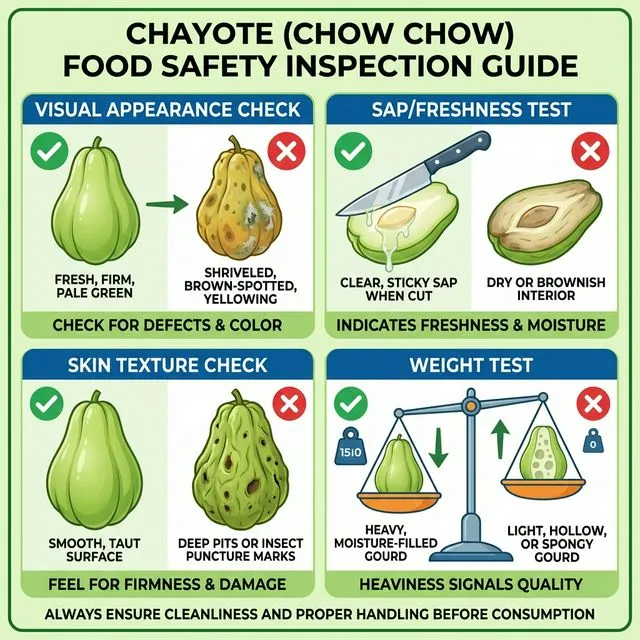
1. The Squeeze Test:
Firmly press the chayote. It should be rock hard. Any soft spots, especially near the base, indicate internal decay and fungal growth.
2. The Skin Ridge Inspection:
Examine the ridges carefully. High pesticide residue can often be found trapped in the tight creases. Check for any white or bluish powdery residue.
3. The Internal Core Check:
Cut the chayote. The flesh should be crisp, white to pale green, and the single large seed should be moist. If the center is brown, black, or mushy, discard it.
4. The Appearance Scan:
Fresh chayote has a bright, light green color. Avoid ones that look shriveled, have deep dark brown pits, or have turned yellowish.

Click to enlarge
Chayote (Chow Chow) 4 Freshness Stages & Spoilage Signs
Chayote is a naturally long-lasting gourd, but excess humidity, high heat, or prolonged storage can cause rapid deterioration.
4 Stages of Chayote Freshness:
✅ Rock Hard & Glossy Skin (Peak Freshness): The fruit is completely firm to the touch with vibrant pale-green skin and no blemishes. Best choice for curries, stir-fries, soups, and sambar.
⚠️ Wrinkled Skin & Slight Softening (Moderate Aging): The skin begins to crease and lose moisture. It is still edible and safe, but should be cooked immediately as texture turns fibrous.
⚠️ Sprouting from Basal Cleft (Viviparous Sprouting): Chayote has a single internal seed that often sprouts directly while still inside the fruit. The squash is still safe to eat if firm; simply trim off the green shoot and peel slightly thicker.
❌ Dark Watery Decay & Foul Odor (Spoiled): The basal cleft turns black, soft, and leaks unpleasant slimy fluid. Fungal mycelium penetrates the core. Discard immediately.
Storage Recommendation: Avoid sealing in airtight plastic bags which trap moisture. Wrap loosely in dry paper towels or newspaper and store in the vegetable crisper drawer at 10–13°C (50–55°F) for up to 3–4 weeks.
Quick Safety Tips
- Choose hard, vibrant light-green fruits
- Scrub the ridges thoroughly with a brush
- Check for soft spots indicating spoilage
- Internal browning means the fruit is old
Primary Chemical Concerns
Health Risks & Impacts
Multilingual Local Names
Common Storage Pests
Melon Fruit Fly (Bactrocera cucurbitae)
high riskPests that lay eggs inside the fruit, causing rapid internal rot.
Detection
- Tiny pin-sized holes on the skin
- Brown, mushy spots around puncture marks
- Internal browning
Prevention
- Check for skin punctures before buying
- Store in a cool, dry place
- Consume fresh
Corrective Action: What to do?
If you find internal rot or larvae, **discard the vegetable**. The puncture marks often introduce bacterial rot that makes the fruit unsafe.
Regulatory Corner: FSSAI (Food Safety and Standards Authority of India) / Codex Alimentarius (Codex Stan 216-1999)
Regulation: Food Safety and Standards (Food Products Standards and Food Additives) Regulations 2011, Clause 2.3.1
Legal Limit:Mineral hydrocarbon wax / liquid paraffin: Prohibited (0.0%); Approved food-grade wax (carnauba/beeswax): Permitted only with clear label declaration; Heavy metals (Lead): Max 0.1 ppm
Report Adulteration to FSSAI (Food Safety and Standards Authority of India) / Codex Alimentarius (Codex Stan 216-1999)