Jicama Safety & Quality Guide: Identify Toxic Parts & Pure Root
⚡ Quick 60-Second Jicama Purity & Sulfite Bleaching Verdict
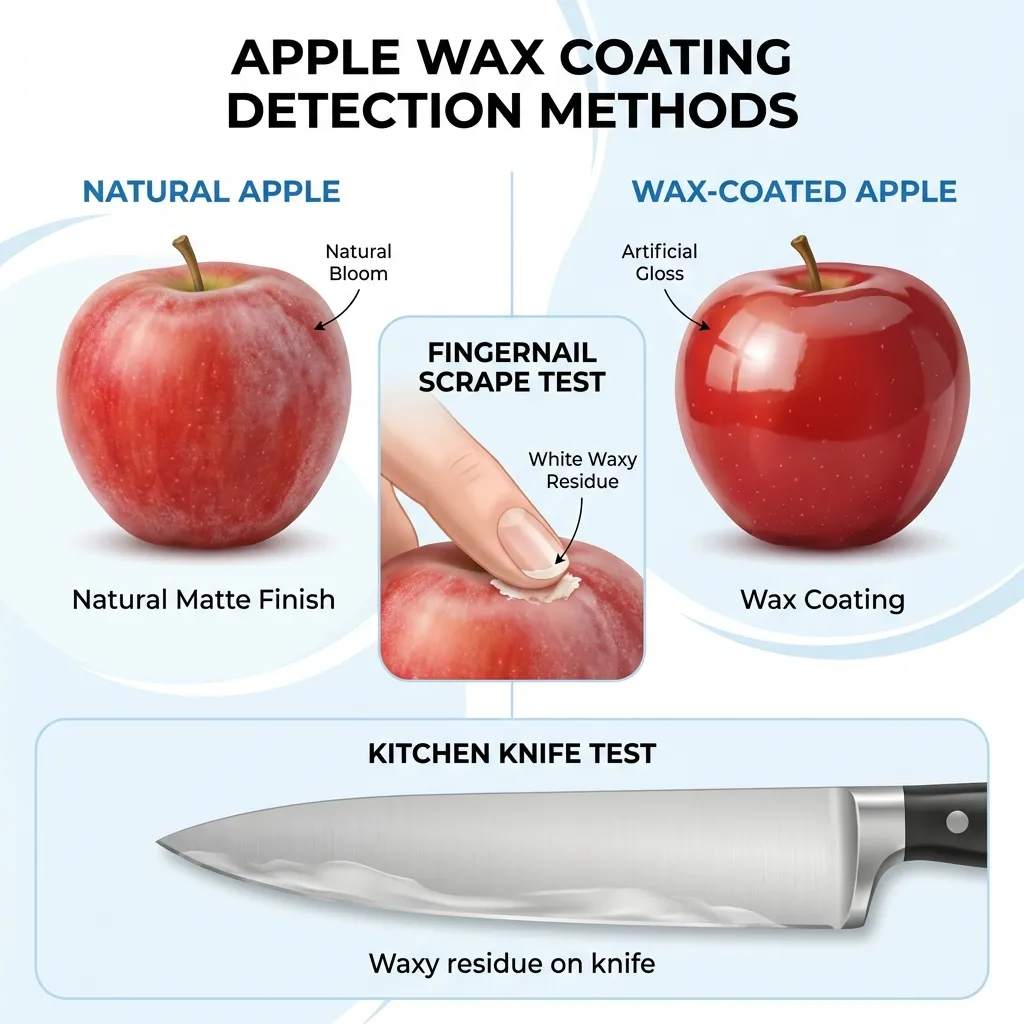
Sulfite Bleaching Baths & Paraffin Waxing: Pre-cut jicama sticks are dipped in sodium metabisulfite to stop natural enzymatic browning, while whole tubers are coated in petroleum wax to prevent moisture loss.
Leave a freshly cut jicama slice on the counter for 45 minutes. Untreated jicama shows subtle starch drying and slight off-white oxidation. Slices that remain glaringly paper-white and dripping wet have been sulfite-bleached.
Scrape the outer brown tuber skin with a paring knife. A thick flaking of cloudy paraffin wax indicates non-food grade artificial waxing applied to seal aging storage tubers.
Bite or snap a piece. High-quality jicama is crisp, refreshing, and dense with a mild sweetness resembling water chestnut. Spongy, rubbery, or chemical-tasting jicama has suffered freeze-damage or chemical baths.
To learn more about root vegetable safety, read our guides on Potato and Carrots.
Drop Jicama photo here to test purity
or click to browse • Supports JPG, PNG, WEBP • Paste with Ctrl+V
Inspection Guide
Click to enlarge
Jicama Toxic Parts & Purity Audit
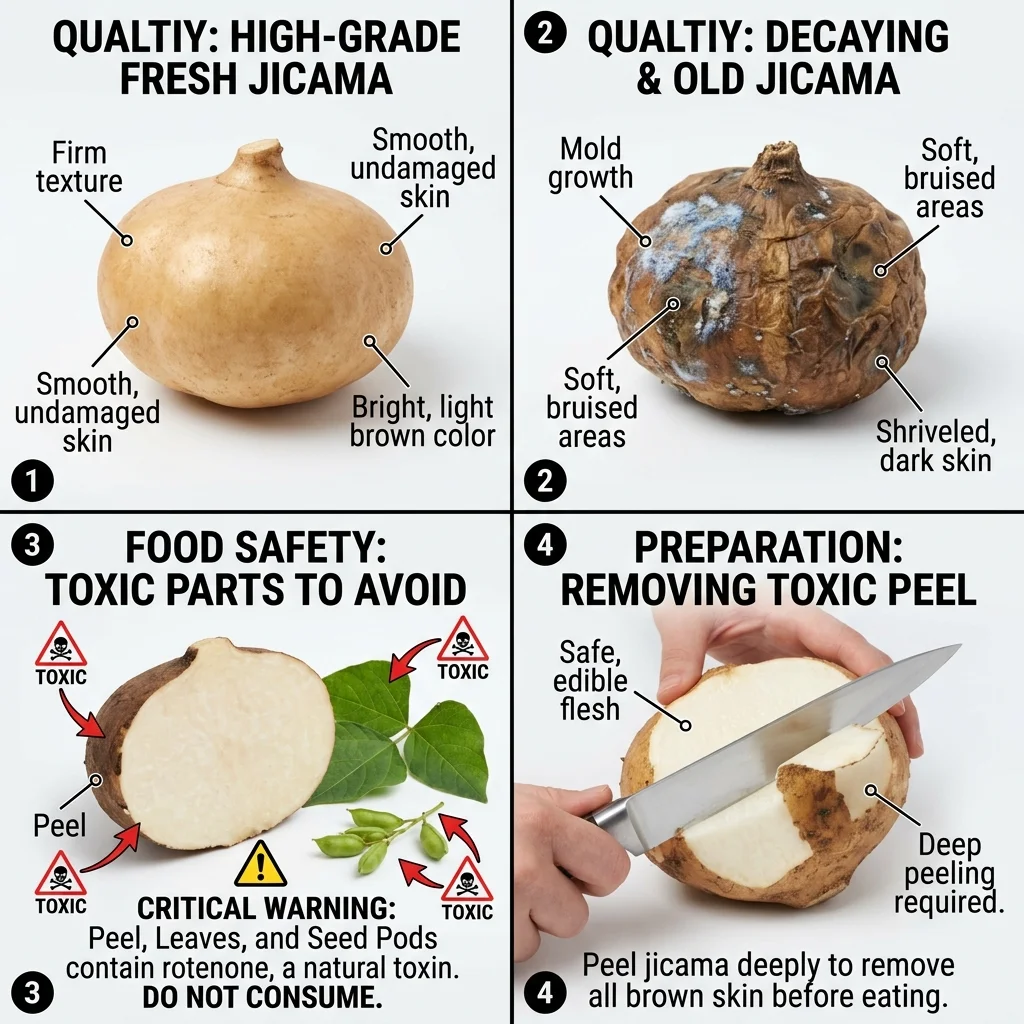
Jicama (Pachyrhizus erosus), a popular Mexican turnip, is prized for its crisp, sweet, watery flesh. While the fleshy root is completely safe and highly nutritious, the rest of the plant—including the skin, seeds, leaves, and pods—contains rotenone, a potent natural pesticide and neurotoxin used commercially as a fish poison. Consuming non-root parts is highly dangerous.
1. The Deep Peeling Test:
Because rotenone is concentrated just beneath the tough brown paper-like skin of the jicama root, the skin should never be eaten. Always peel jicama deeply, removing the outer tan layer and the fibrous under-layer until only the translucent white flesh remains.
2. Visual Husk and Skin Integrity:
Inspect the root. A healthy jicama is firm, dry, and has a smooth, tan-colored skin. Avoid roots with soft spots, wet patches, or black mold, as decay can draw toxins or bacteria into the edible flesh.
3. Seed and Leaf Identification:
Never buy or consume jicama roots that are sold with their green seed pods or leaves attached. The pods look similar to green beans but are highly toxic. If you grow jicama at home, keep pets and children away from the above-ground foliage.
4. Woody Core Check:
Cut the root in half. The flesh should be uniformly white and crisp like an apple. If you see thick, dark brown or reddish woody fibers radiating from the center, the root is old, woody, and will be tough and tasteless, though not toxic.
Click to enlarge
Jicama Freshness & Skin Check
Freshness ensures a crisp, sweet texture rather than a woody, dry mouthfeel.
1. Skin Dryness & Texture:
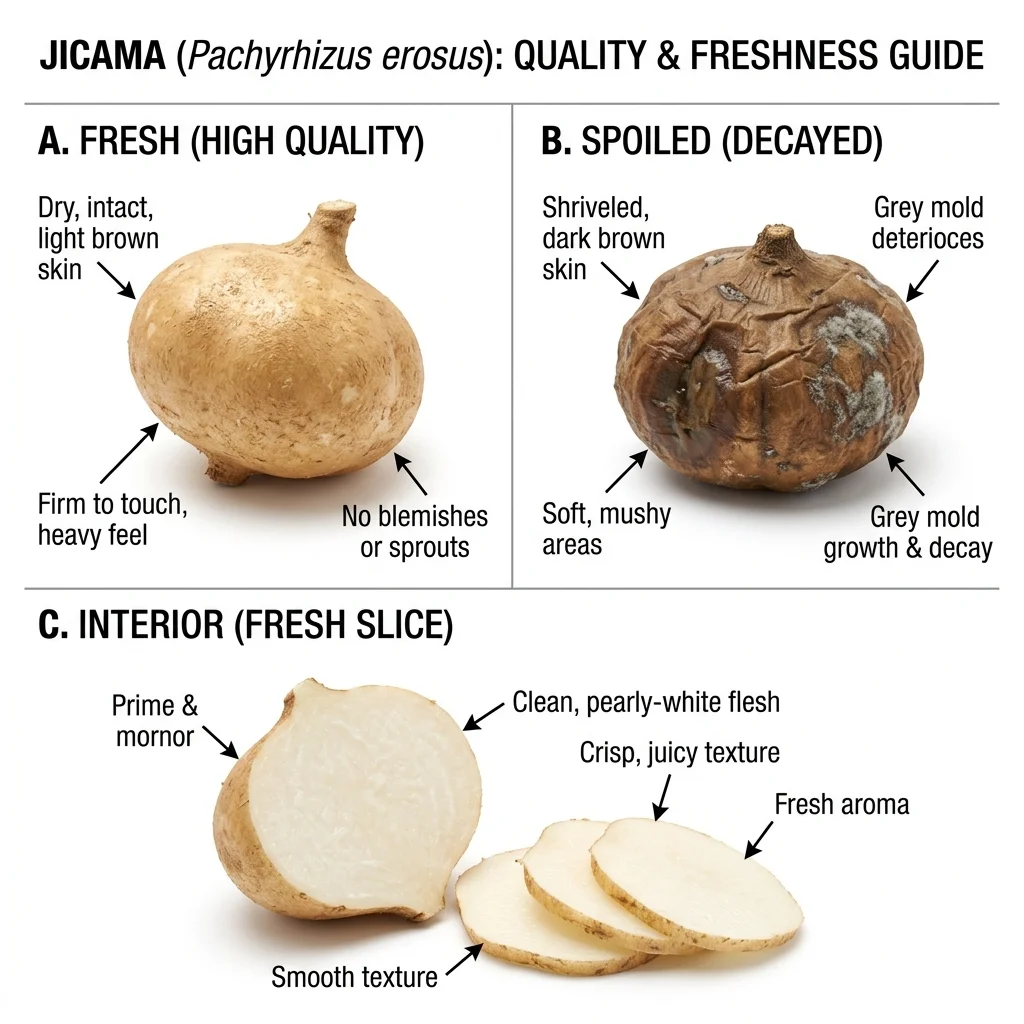
Fresh jicama has dry, clean, light-brown skin. Wet, sticky, or slimy skin indicates poor storage and bacterial decay.
2. Squeeze Firmness:
Gently press the root. It should feel rock-hard. Spongy, soft, or shriveled jicama has lost its moisture and is stale.
3. Cut Color & Aroma:
Upon slicing, the flesh must be crisp, snowy white, and yield a mild, sweet, starchy scent. Dull, yellowing, or translucent spots indicate internal damage.
4. Weight Check:
Quality jicama feels heavy for its size, indicating it is full of crisp juice. Lightweight roots are dry and fibrous.
Quick Safety Tips
- Always peel the brown skin deeply before eating raw or cooked
- Never eat or handle the toxic leaves, seeds, or pods of the jicama plant
- Keep raw jicama skin and plant debris away from dogs, cats, and livestock
- Wash the peeled root thoroughly with cold water before slicing
Primary Chemical Concerns
Health Risks & Impacts
Multilingual Local Names
Common Storage Pests
Wireworms
low riskLarvae of click beetles that tunnel into root crops, introducing fungal decay.
Detection
- Small, round entry holes on the tan skin of the root
- Dark, narrow tunnels visible in the white flesh upon cutting
Prevention
- Select roots with smooth, unbroken skin and no puncture holes
- Store in a cool, dry, well-ventilated space
Corrective Action: What to do?
Cut away and discard any tunneled sections; the surrounding white flesh remains safe to eat.
Regulatory Corner: US FDA (21 CFR 182.3766 - Sodium Metabisulfite) / Codex Alimentarius (Codex Stan 193-1995)
Regulation: FDA 21 CFR 182.3013 (Prohibition of sulfites on fresh produce served raw) & Codex Stan 193
Legal Limit:Sulfites on fresh vegetables served raw: Prohibited (0.0 ppm - FDA banned); Lead MRL: Max 0.1 ppm; Cadmium MRL: Max 0.1 ppm; Mineral wax: Prohibited (0.0%)
Report Adulteration to US FDA (21 CFR 182.3766 - Sodium Metabisulfite) / Codex Alimentarius (Codex Stan 193-1995)