How to Test Cumin Seeds for Adulteration (Charcoal Dust, Coal Tar Dye, Grass Seeds)
⚡ Quick 60-Second Cumin Seeds (Jeera) Purity Verdict
Charcoal-Coated Grass Seeds & Sawdust: Unscrupulous traders coat wild grass seeds (Carum roxburghianum) or spent cumin with charcoal dust, asphalt pitch, or black stone powder.
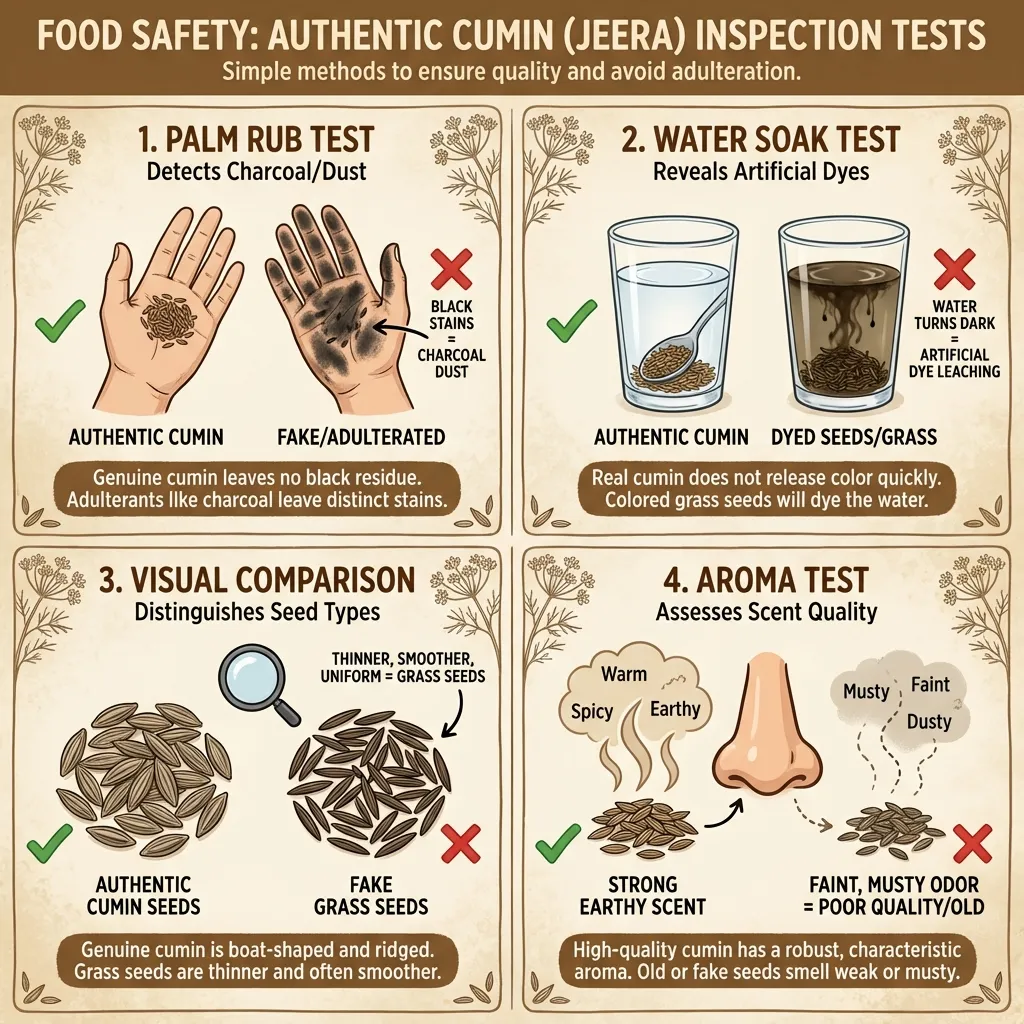
Rub a pinch of cumin seeds vigorously between your palms for 15 seconds. If your palms turn black or charcoal-smudged, seeds are artificially dyed.
Drop 1 tsp into a glass of warm water. Pure jeera settles slowly while maintaining clear water. Charcoal-coated fake seeds quickly turn the water inky dark grey.
Crush 3–4 seeds with your thumbnail. Pure cumin releases a pungent, warm, earthy fragrance. Wild grass substitutes lack aroma and taste woody.
To learn more about food safety tests and home adulteration detection, read our guides on Chili Powder (Lal Mirch) and Black Pepper (Whole).
Drop Cumin Seeds (Jeera) photo here to test purity
or click to browse • Supports JPG, PNG, WEBP • Paste with Ctrl+V
Inspection Guide
Click to enlarge
Cumin Seeds (Jeera) Purity & Dye Audit
Cumin seeds are often adulterated with cheaper grass seeds dyed to look like jeera or coated with charcoal dust to hide signs of age and mold.
1. The Rub Test (Dye/Dust Detection):
Rub a handful of cumin seeds vigorously between your palms. If your palms turn black or greyish, artificial charcoal dust or coal-tar dyes have been applied. Natural cumin remains dry and does not rub off color.
2. The Water Soak (Color Bleed):
Soak a spoonful of cumin seeds in warm water for 15 minutes. If the water turns black or dark brown immediately, suspect artificial coloring. Natural cumin leaches very slowly and turns the water a pale yellow-brown.
3. The Shape and Aroma Check:
Pure cumin seeds are slightly curved, elongated, and have a powerful, earthy, and nutty aroma when crushed. If the seeds are very thin, straight, or lack aroma even when crushed, they may be dyed grass seeds.
4. The Grit and Stone Check:
Spread the seeds on a white plate. Look for small, matching-colored stones or greyish grit. Some retailers add stone dust or small pebbles to increase the weight of the spice.
Quick Safety Tips
- Perform the palm rub test - black/grey hands indicate charcoal dust
- Avoid seeds that release dark color instantly into water
- Crush a few seeds to verify the characteristic earthy aroma
- Select seeds that are slightly curved; avoid very straight "grass-like" seeds
Primary Chemical Concerns
Health Risks & Impacts
Multilingual Local Names
Common Storage Pests
Cigarette Beetle
medium riskA common pest that can infest stored spices, including cumin seeds.
Detection
- Small holes in the seeds
- Fine dust at the bottom of the container
Prevention
- Store in an airtight glass jar
- Keep in a cool, dry place
Corrective Action: What to do?
Discard infested samples; the beetles can spread to other spices quickly.
Regulatory Corner: FSSAI (Food Safety and Standards Authority of India) / ISO 6465
Regulation: Food Safety and Standards (Food Products Standards) Regulations 2011, Clause 2.9.8: Cumin (Jeera) Whole and Powder
Legal Limit:Extraneous matter: Max 3.0% by weight; Non-volatile ether extract: Min 15.0%; Volatile oil: Min 1.5% (v/w); Artificial coal-tar dyes, charcoal dust, grass seed coating: 0.0%
Report Adulteration to FSSAI (Food Safety and Standards Authority of India) / ISO 6465