How to Tell if Cheese is Bad: Detect Processed Fillers & Toxic Mold
⚡ Quick 60-Second Cheese Purity & Analog Verdict
Palm Oil Cheese Analogs & Starch Bulking: Many commercial shredded and sliced cheeses are cheese analogs (palm oil, starch, and emulsifying salts) sold deceptively as 100% dairy cheese.
Heat a slice at 180°C for 3 minutes. Genuine dairy cheese melts smoothly into a stretchable, glossy layer with natural oil release. Analogs melt into a stiff, waxy, rubbery mass.
Drop 1 drop of iodine onto cold cheese. Pure cheese stays golden-yellow. If the drop turns dark blue-black, cheap starch filler has been added.
Leave at room temperature for 1 hour. Pure aged cheese softens with delicate natural butterfat sweat. Analog cheese remains rigid, plastic-like, and dry.
To learn more about dairy safety, read our guides on Milk and Butter.
Drop Cheese photo here to test purity
or click to browse • Supports JPG, PNG, WEBP • Paste with Ctrl+V
Inspection Guide
Click to enlarge
Cheese Purity & Filler Audit
Cheese (queso) is a nutrient-dense, high-fat dairy product, but it is also highly susceptible to adulteration and contamination. Pre-shredded cheese is frequently treated with high amounts of anti-caking agents like cellulose (wood pulp) and starches. While a small amount is legally allowed to prevent clumping, independent testing reveals many brands exceed safety guidelines to artificially increase the product's weight. Furthermore, processed cheese products are heavily cut with vegetable fats, water-retaining starches, and emulsifying salts, while mold growth on cheese can range from highly beneficial to dangerously toxic.
1. The Starch/Flour Shredded Cheese Test (Iodine Test):
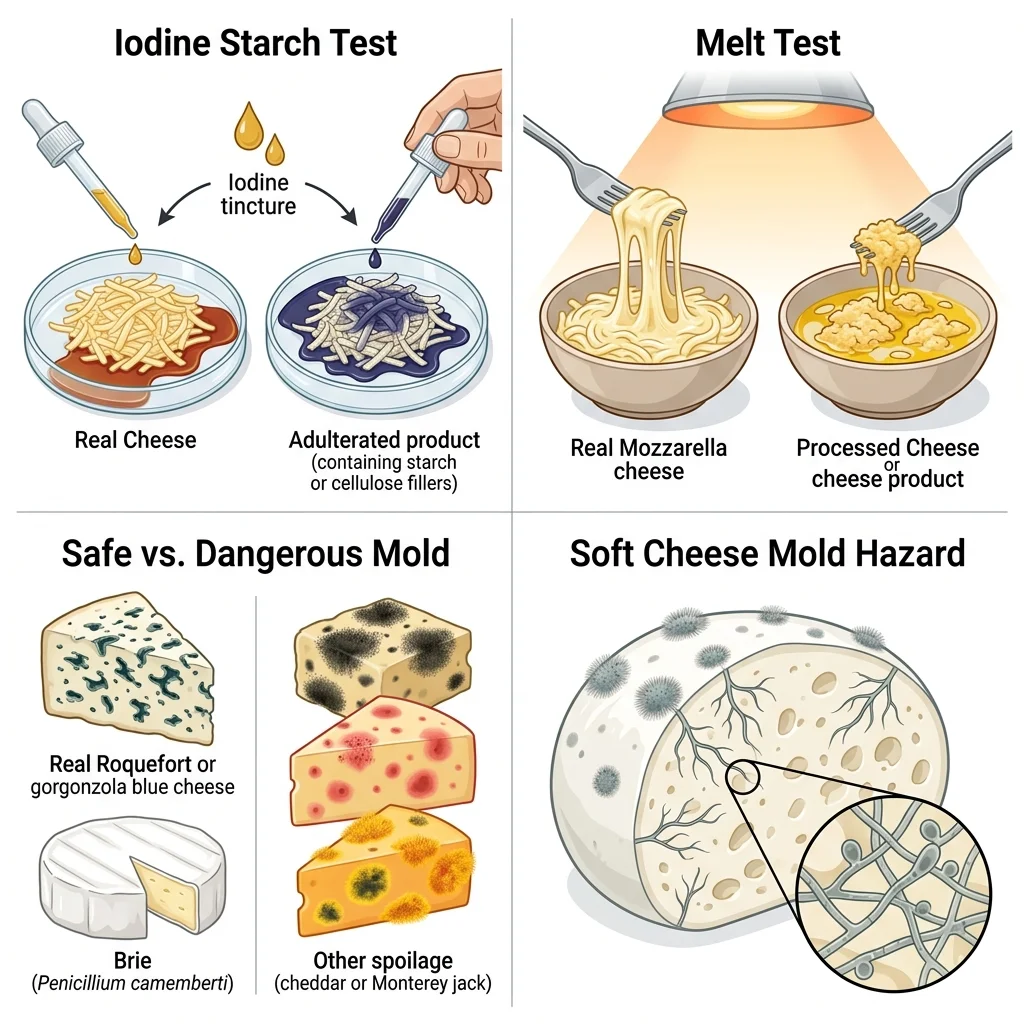
Pre-shredded cheese (such as Cheddar, Mozzarella, or Parmesan) is often cut with cheap starches (potato starch or cornstarch) to add weight. Mix a tablespoon of shredded cheese with two tablespoons of warm water in a glass, stir well, and add a drop of tincture of iodine. Pure cheese contains no starch and will remain brown or yellow. If the mixture turns a dark blue, blue-black, or deep purple, the cheese has been heavily adulterated with starch or flour fillers.
2. The Melt & Sweat Purity Test:
Place a slice of cheese or a tablespoon of shreds in a pan and apply medium heat. Real, pure cheese (made from milk, cultures, and salt) melts smoothly, flowing evenly into a creamy, stretchy texture while releasing a rich, milky, buttery aroma. Processed cheese or 'cheese products' containing high vegetable oil cuts and emulsifiers will either refuse to melt, sweating out a heavy, greasy pool of yellow oil while remaining rubbery, or melt into a flat, plastic-like sheet that smells chemically sweet.
3. Noble Mold vs. Toxic Mold Identification:
Understand which molds are safe. 'Noble mold' (such as Penicillium roqueforti or Penicillium camemberti) is intentionally introduced and safe to eat in cheeses like Roquefort, Blue, Gorgonzola, Brie, and Camembert. However, fuzzy black, bright yellow, red, or wild orange molds growing on any cheese are highly toxic and produce dangerous mycotoxins. On hard block cheeses (like Cheddar or Parmesan), you can safely cut away mold (cut at least 1 inch around and below the mold spot). On soft cheeses (like Mozzarella, Ricotta, Cream Cheese, or Cottage Cheese), mold roots easily penetrate the entire cheese; if any mold appears, the whole container must be discarded.
4. Dryness & Texture Audit:
Pure aged cheese has a natural, slightly uneven, crumbly, or firm texture. If the cheese feels sticky, slimy, or has an wet, oily sheen at room temperature, it has been adulterated with water-retaining vegetable fats or starches.
Click to enlarge
Cheese Freshness & Spoilage Audit
Freshness ensures you avoid eating harmful bacteria and carcinogenic fungal toxins.
1. Sour Ammonia Odor:
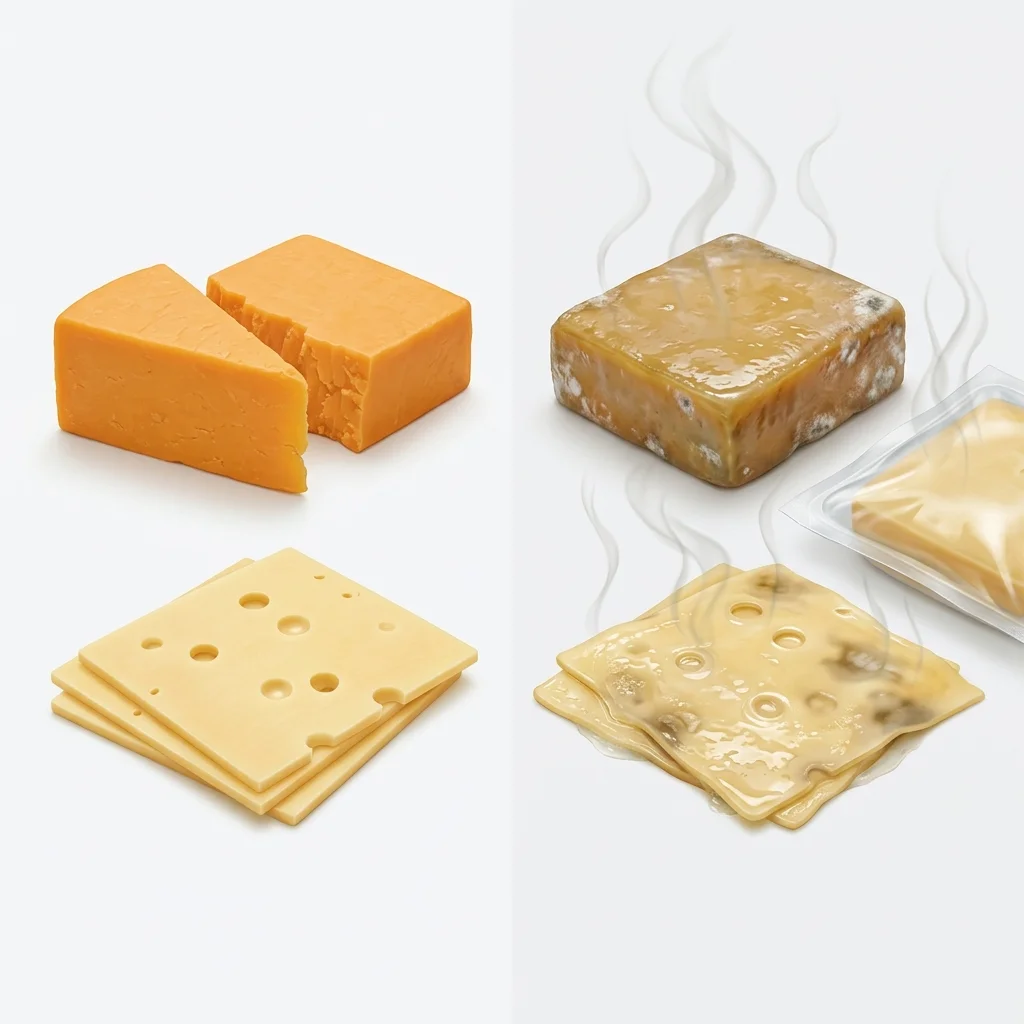
Sniff the cheese. A sharp, pungent, ammonia-like smell (especially in soft cheeses like Brie) is a clear indicator of over-fermentation and spoilage.
2. Slippery Slimy Film:
Touch the surface of sliced or block cheese. A slippery, slimy, or sticky film indicates active bacterial spoilage. Do not eat.
3. Bloated or Puffed Packaging:
Inspect the retail package. Avoid cheese packages that are puffed up or bloated, indicating active, gas-producing bacterial growth inside.
Quick Safety Tips
- Perform the iodine test on shredded cheese: a blue-black color change reveals hidden starch or flour fillers
- Heat a sample: pure cheese should melt smoothly and stretch, rather than sweating out heavy oil or remaining rubbery
- For hard cheeses, cut away mold 1 inch around the spot; for soft cheeses, discard the entire container immediately
- Reject any cheese that has a slimy surface film, feels sticky, or smells strongly of sour ammonia
Primary Chemical Concerns
Health Risks & Impacts
Multilingual Local Names
Regulatory Corner: FSSAI (Food Safety and Standards Authority of India) / US FDA
Regulation: Food Safety and Standards (Food Products Standards) Regulations 2011, Clause 2.1.14: Cheese & FDA 21 CFR Part 133
Legal Limit:Moisture: Max 43.0% (Cheddar) / 54.0% (Mozzarella); Milk fat in dry matter: Min 48.0% (Cheddar); Palm oil cheese analogs / non-dairy fat: 0.0%; Sorbic acid / preservatives: Max 1000 ppm
Report Adulteration to FSSAI (Food Safety and Standards Authority of India) / US FDA