How to Test Mustard Seeds for Adulteration (Argemone Seeds, Rapeseed Adulteration, Foreign Seeds)
⚡ Quick 60-Second Mustard Seeds Purity Verdict
Deadly Argemone mexicana Contamination: Wild prickly poppy (Argemone) seeds mimic black/brown mustard seeds. Argemone contains sanguinarine alkaloid, causing epidemic dropsy, heart failure, and glaucoma.
Examine under light. Pure mustard seeds have a smooth, spherical surface with uniform skin. Argemone seeds have a dull, rough, wrinkled surface with a pointed tail.
Crush a seed on white paper with your thumbnail. Pure black mustard seed has a bright yellow interior. Argemone seed has a white or pale interior.
Roll seeds on an inclined paper sheet. Smooth spherical mustard seeds roll smoothly. Angular, rough argemone seeds tumble irregularly.
To learn more about food safety tests and home adulteration detection, read our guides on Coriander Seeds (Dhania) and Poppy Seeds (Khus Khus).
Drop Mustard Seeds photo here to test purity
or click to browse • Supports JPG, PNG, WEBP • Paste with Ctrl+V
Inspection Guide
Click to enlarge
Mustard Seeds Toxic Argemone Detection
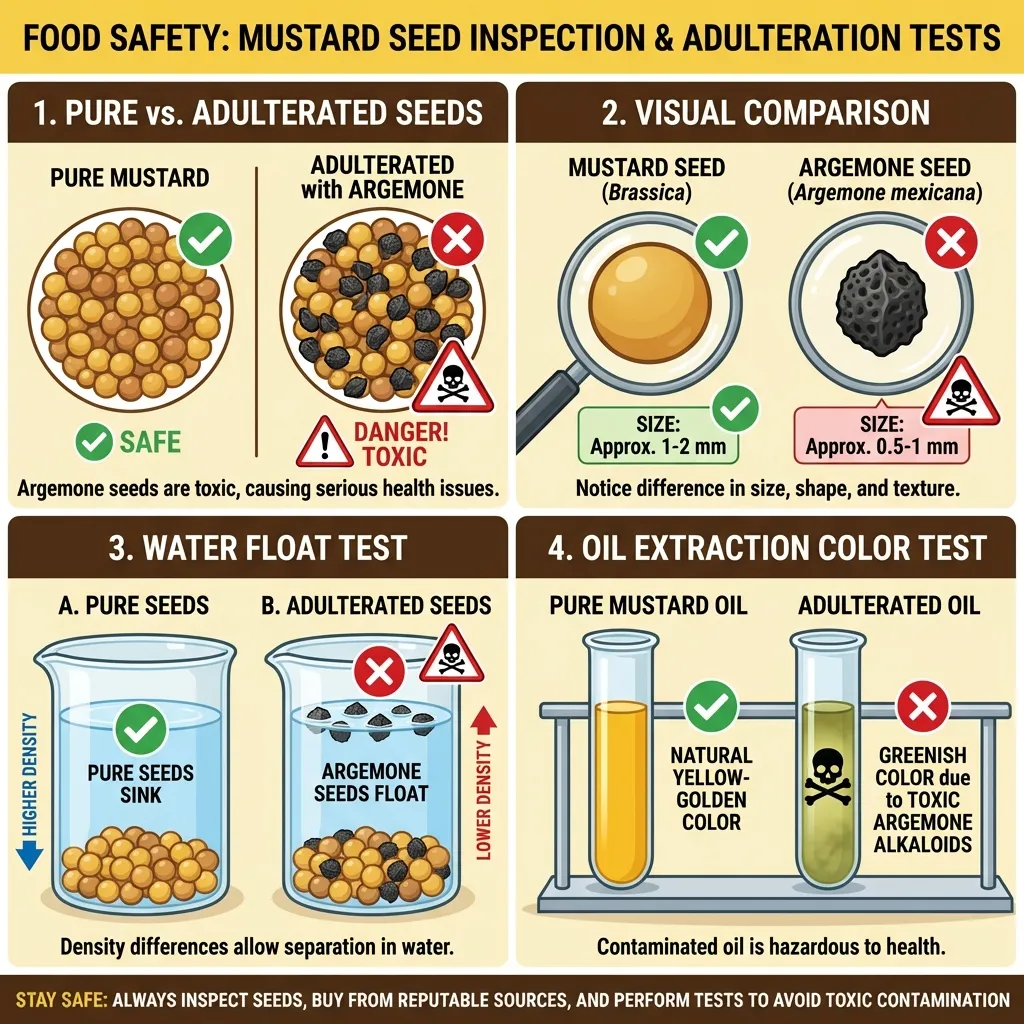
Mustard seeds are dangerously adulterated with argemone seeds (Mexican poppy seeds), which are HIGHLY TOXIC and can cause epidemic dropsy, a fatal condition. This is one of the most dangerous food adulterations.
1. The Visual Inspection (Critical):
Spread mustard seeds on a white surface and examine closely. Pure mustard seeds (yellow/brown varieties) are round, smooth, and uniform in appearance. Argemone seeds are:
- Smaller and angular (not round)
- Black or dark brown in color
- Rough, pitted texture (not smooth)
- Irregular shape compared to round mustard seeds
Even a few argemone seeds in a batch is DANGEROUS.
2. The Size and Shape Test:
Compare seed sizes. Mustard seeds are uniformly round and about 1-2mm diameter. Argemone seeds are smaller, angular, and have an irregular shape. If you see smaller, angular black seeds mixed in - DO NOT CONSUME.
3. The Water Float Test:
Put seeds in water. Mustard seeds have specific density and float pattern. Argemone seeds may float differently or settle differently due to different density. While not definitive, this can help separate them for visual identification.
4. The Oil Extraction Color Test (Advanced):
If you extract oil (by crushing seeds), pure mustard oil is clear yellow to golden color. Oil from argemone-contaminated seeds has a greenish tinge due to toxic alkaloids (sanguinarine). This is a definitive test but requires oil extraction.
5. The Taste Test (USE EXTREME CAUTION - ONLY TINY AMOUNT):
Pure mustard seeds have characteristic pungent, spicy, slightly bitter taste. Argemone seeds taste extremely bitter with a different, unpleasant bitterness. If you detect unusual bitter taste, STOP and discard. DO NOT USE for cooking.
CRITICAL WARNING: Argemone seed contamination has caused mass poisoning incidents. Even small amounts are dangerous. If you suspect contamination, DISCARD ENTIRE BATCH.
Quick Safety Tips
- CRITICAL: Check for small, angular, black argemore seeds
- Visual inspection is essential - spread and examine closely
- Buy certified mustard seeds from reputable sources only
- If oil has greenish tinge - DISCARD (argemone contamination)
Primary Chemical Concerns
Health Risks & Impacts
Multilingual Local Names
Common Storage Pests
Indian Meal Moths
medium riskSmall moths whose larvae create webbing and feed on seeds.
Detection
- Fine webbing or clumps of seeds
- Presence of small flying moths around the pantry
Prevention
- Store in airtight containers
- Place a bay leaf inside the jar
Corrective Action: What to do?
Sieve the seeds and freeze for 48 hours to kill larvae; discard if webbing is extensive.
Regulatory Corner: FSSAI (Food Safety and Standards Authority of India) / Prevention of Food Adulteration Act
Regulation: Food Safety and Standards (Food Products Standards) Regulations 2011, Clause 2.9.15: Mustard (Rai, Sarson) Whole and Powder
Legal Limit:Total ash: Max 6.5%; Non-volatile ether extract: Min 28.0%; Volatile oil (Allyl isothiocyanate): Min 0.4%; Argemone mexicana seeds (sanguinarine toxin): 0.0% (Absolute zero tolerance — causes epidemic dropsy)
Report Adulteration to FSSAI (Food Safety and Standards Authority of India) / Prevention of Food Adulteration Act