Como Saber se o Queijo está Ruim: Detectar Espessantes e Mofo Tóxico
Detecte enchimentos de amido/celulose em queijo ralado, verifique a pureza do derretimento e identifique mofo tóxico no queijo.
Para saber mais sobre a segurança dos laticínios, leia nossos guias sobre Iogurte, Leite e Manteiga.
Drop Queijo photo here to test purity
or click to browse • Supports JPG, PNG, WEBP • Paste with Ctrl+V
Inspection Guide
Click to enlarge
Auditoria de pureza e enchimento de queijo
O queijo (queso) é um produto lácteo rico em nutrientes e com alto teor de gordura, mas também é altamente suscetível a adulteração e contaminação. O queijo pré-ralado é frequentemente tratado com grandes quantidades de agentes antiaglomerantes como celulose (polpa de madeira) e amidos. Embora uma pequena quantidade seja legalmente permitida para evitar aglomeração, testes independentes revelam que muitas marcas excedem as diretrizes de segurança para aumentar artificialmente o peso do produto. Além disso, os produtos de queijo processado são fortemente enriquecidos com gorduras vegetais, amidos que retêm água e sais emulsionantes, enquanto o crescimento de fungos no queijo pode variar de altamente benéfico a perigosamente tóxico.
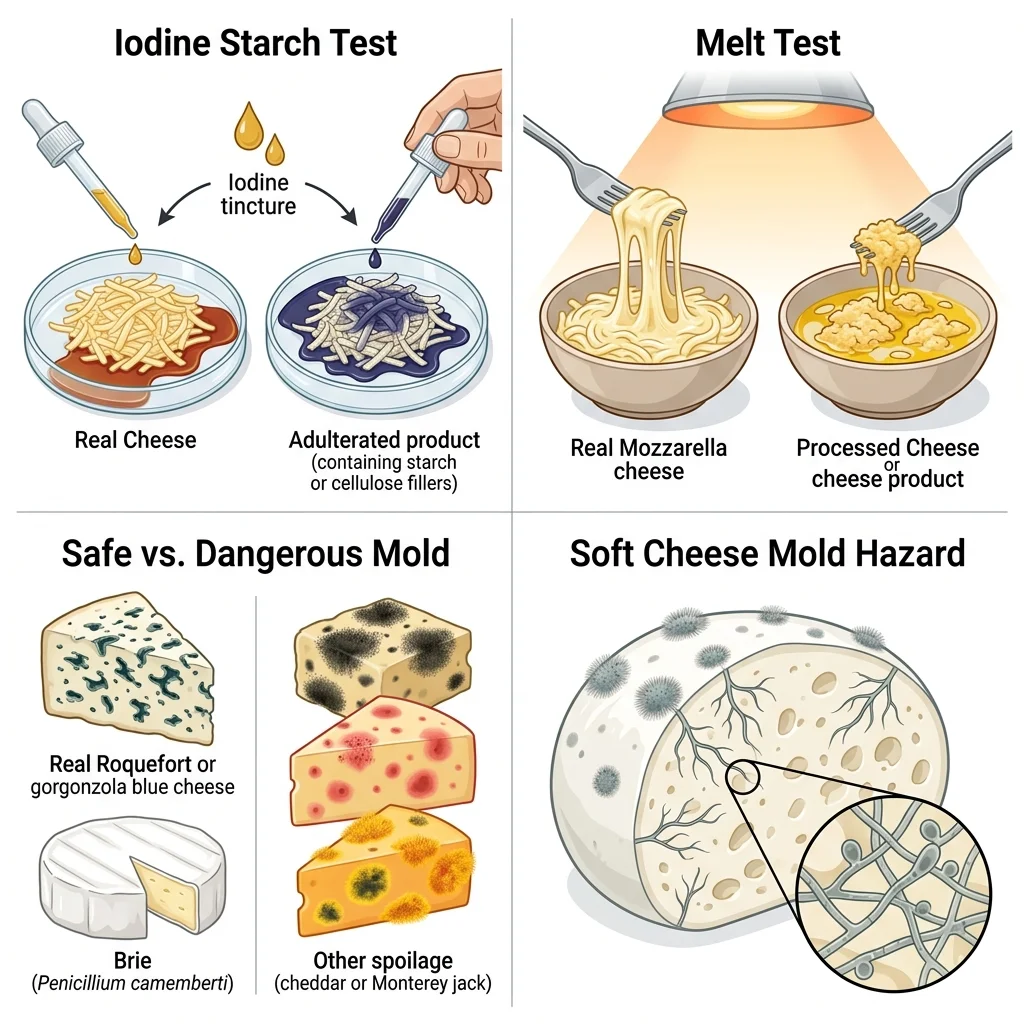
1. O teste de queijo ralado de amido/farinha (teste de iodo):
Queijo pré-ralado (como Cheddar, Mussarela ou Parmesão) costuma ser cortado com amidos baratos (amido de batata ou amido de milho) para adicionar peso. Misture uma colher de sopa de queijo ralado com duas colheres de água morna em um copo, mexa bem e adicione uma gota de tintura de iodo. O queijo puro não contém amido e permanecerá marrom ou amarelo. Se a mistura ficar azul escura, preta azulada ou roxa profunda, o queijo foi fortemente adulterado com amido ou farinha.
2. O teste de pureza de fusão e suor:
Coloque uma fatia de queijo ou uma colher de sopa de pedaços em uma panela e leve ao fogo médio. O queijo verdadeiro e puro (feito de leite, culturas e sal) derrete suavemente, fluindo uniformemente em uma textura cremosa e elástica, enquanto libera um aroma rico, leitoso e amanteigado. Queijo processado ou “produtos de queijo” contendo cortes com alto teor de óleo vegetal e emulsificantes se recusam a derreter, exalando uma poça pesada e gordurosa de óleo amarelo enquanto permanecem emborrachados, ou derretem em uma folha plana, semelhante a plástico, com cheiro quimicamente doce.
3. Identificação de Molde Nobre vs. Molde Tóxico:
Entenda quais moldes são seguros. 'Mofo nobre' (como Penicillium roqueforti ou Penicillium camemberti) é introduzido intencionalmente e seguro para consumo em queijos como Roquefort, Blue, Gorgonzola, Brie e Camembert. No entanto, bolores difusos pretos, amarelos brilhantes, vermelhos ou laranjas selvagens que crescem em qualquer queijo são altamente tóxicos e produzem micotoxinas perigosas. Em queijos duros (como Cheddar ou Parmesão), você pode cortar o mofo com segurança (cortar pelo menos 2,5 cm ao redor e abaixo do local do mofo). Em queijos de pasta mole (como mussarela, ricota, cream cheese ou queijo cottage), as raízes do mofo penetram facilmente em todo o queijo; caso apareça algum mofo, todo o recipiente deve ser descartado.
4. Auditoria de secura e textura:
O queijo puro envelhecido apresenta textura natural, ligeiramente irregular, quebradiça ou firme. Se o queijo parecer pegajoso, viscoso ou apresentar um brilho úmido e oleoso à temperatura ambiente, ele foi adulterado com gorduras vegetais ou amidos que retêm água.
Click to enlarge
Auditoria de frescor e deterioração de queijo
O frescor garante que você evite comer bactérias nocivas e toxinas fúngicas cancerígenas.
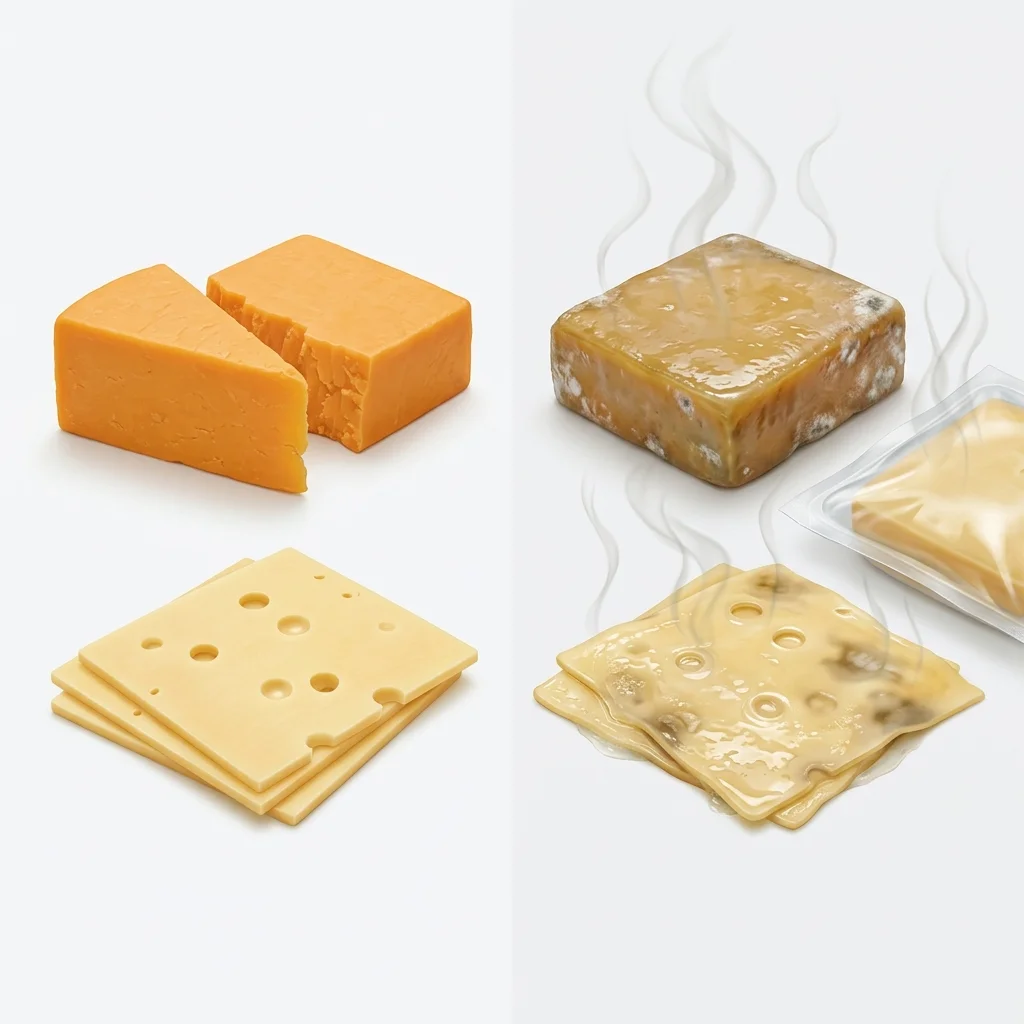
1. Odor ácido de amônia:
Cheire o queijo. Um cheiro forte e pungente de amônia (especialmente em queijos de pasta mole como o Brie) é um claro indicador de fermentação excessiva e deterioração.
2. Filme viscoso escorregadio:
Toque na superfície do queijo fatiado ou em bloco. Uma pel��cula escorregadia, viscosa ou pegajosa indica deterioração bacteriana ativa. Não coma.
3. Embalagem inchada ou inchada:
Inspecione o pacote de varejo. Evite embalagens de queijo que estejam inchadas ou inchadas, indicando crescimento bacteriano ativo e produtor de gás em seu interior.
Quick Safety Tips
- Realize o teste de iodo em queijo ralado: uma mudança de cor azul-preta revela amido oculto ou enchimentos de farinha
- Aqueça uma amostra: o queijo puro deve derreter suavemente e esticar, em vez de suar óleo pesado ou permanecer emborrachado
- Para queijos duros, corte o molde 2,5 cm ao redor do local; para queijos de pasta mole, descarte imediatamente todo o recipiente
- Rejeite qualquer queijo que tenha uma película viscosa na superfície, pareça pegajoso ou cheire fortemente a amônia ácida
Primary Chemical Concerns
Health Risks & Impacts
Multilingual Local Names
Regulatory Corner: FSSAI (Food Safety and Standards Authority of India) / US FDA
Regulation: Food Safety and Standards (Food Products Standards) Regulations 2011, Clause 2.1.14: Cheese & FDA 21 CFR Part 133
Legal Limit:Moisture: Max 43.0% (Cheddar) / 54.0% (Mozzarella); Milk fat in dry matter: Min 48.0% (Cheddar); Palm oil cheese analogs / non-dairy fat: 0.0%; Sorbic acid / preservatives: Max 1000 ppm
Report Adulteration to FSSAI (Food Safety and Standards Authority of India) / US FDA