How to Test Bottle Gourd for Adulteration (Oxytocin, Malachite Green, Cucurbitacin)
⚡ Quick 60-Second Bottle Gourd (Lauki) Cucurbitacin Toxicity Verdict
Lethal Bitter Cucurbitacin Poisoning & Oxytocin Injections: Bottle gourds containing excess bitter cucurbitacin can trigger severe hemorrhagic gastritis and fatalities. Immature gourds are injected with Oxytocin for rapid overnight growth.
Cut a small raw slice from the stem end and taste with your tongue before cooking or juicing. If it tastes even slightly BITTER, spit it out immediately and DISCARD the entire gourd. Never consume bitter lauki juice.
Examine the neck near the stem. Look for tiny dark puncture holes, crusted sap, or sudden localized swelling caused by illegal veterinary Oxytocin hormone injections.
Press gently with your thumb. Fresh natural bottle gourd yields with firm springiness and makes a hollow 'thud' when tapped. Over-fertilized forced gourds feel spongy and waterlogged.
To learn more about food safety tests and home adulteration detection, read our guides on Brussel Sprouts, Coriander Leaves (Cilantro), and Pumpkin (Kaddu).
Drop Bottle Gourd (Lauki) photo here to test purity
or click to browse • Supports JPG, PNG, WEBP • Paste with Ctrl+V
Inspection Guide
Click to enlarge
Bottle Gourd (Lauki) Safety Audit
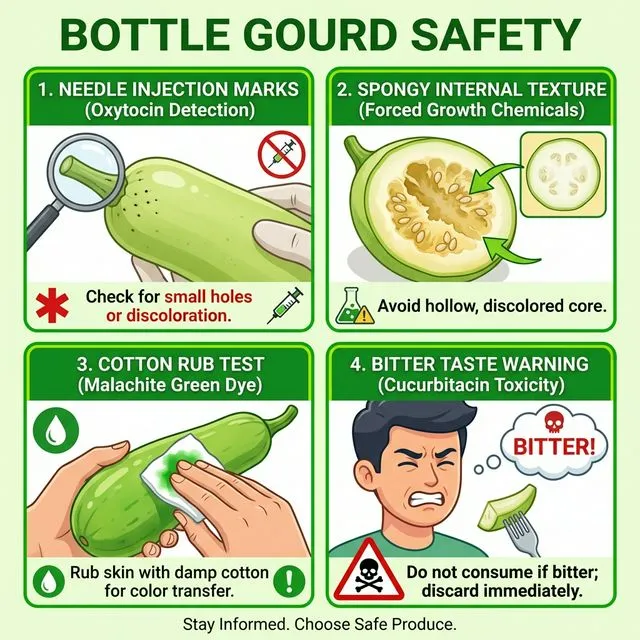
Bottle gourds are high-risk vegetables often treated with growth hormones like Oxytocin or dyed with Malachite Green.
1. The Injection Mark:
Inspect the area near the stem carefully for any tiny pin-prick holes or dark needle marks. These are signs of Oxytocin injections used to make the fruit grow overnight.
2. The Bitter Taste (CRITICAL):
Always taste a tiny raw slice before cooking. If it's bitter, DISCARD IMMEDIATELY. Bitter bottle gourd contains Cucurbitacin, a toxin that can cause severe, sometimes fatal, stomach bleeding.
3. The Cotton Rub Test:
Rub a wet cotton ball on the skin. If it turns green, it's Malachite Green dye used to mask old or pale gourds.
4. The Internal Texture:
Cut the gourd. A naturally grown one is firm and succulent. If the center feels "spongy" or "puffy" while the exterior is large, it indicates forced growth via chemicals.
5. Shared Gourd Risks:
Forced chemical growth and artificial greening are shared risks among gourds. Learn how to verify purity using our home guides for Ridge Gourd, Bitter Gourd, and Ivy Gourd.
Quick Safety Tips
- NEVER consume bitter bottle gourd - it is TOXIC
- Check for needle marks near the stem (Oxytocin)
- Use the rub test for Malachite Green dye detection
- Select medium-sized gourds over unnaturally large ones
Primary Chemical Concerns
Health Risks & Impacts
Multilingual Local Names
Common Storage Pests
Fruit Flies / Melon Flies
medium riskSmall flies that lay eggs under the skin, leading to internal rot.
Detection
- Small dark punctures on the skin
- Watery or soft patches around holes
Prevention
- Inspect skin for punctures before buying
- Store in a cool, ventilated area
Corrective Action: What to do?
Discard if the rot has reached the internal pulp.
Regulatory Corner: ICMR (Indian Council of Medical Research) / FSSAI
Regulation: FSSAI Statutory Health Advisory on Cucurbitaceae Toxicity & Section 18 of Drugs and Cosmetics Act (Ban on Oxytocin misuse)
Legal Limit:Bitter Cucurbitacin D & E toxins: 0.0 ppm (Bitter gourds are medically unsafe for human consumption); Veterinary Oxytocin injections: Strictly Prohibited under law
Report Adulteration to ICMR (Indian Council of Medical Research) / FSSAI