How to Test Bitter Gourd for Adulteration (Malachite Green, Oxytocin, Pesticide)
⚡ Quick 60-Second Karela Purity & Malachite Green Verdict
Carcinogenic Malachite Green Dye & Copper Sulfate Wash: Fresh bitter gourds are dipped in toxic Malachite Green dye and copper solutions to make dull, harvested vegetables look radiant, crisp, and fresh-picked.
Dip a sterile cotton ball in liquid paraffin, rubbing alcohol, or warm water. Rub firmly over the ridges and bumpy skin of the gourd. If the cotton turns green, illegal Malachite Green dye is confirmed.
Submerge the karela in a bowl of warm water for 5 minutes. If the water acquires a bluish-green or bright emerald hue, artificial chemical dyes have been used.
Slice off the top stem. Pure, naturally fresh bitter gourd bleeds clear or pale milky sap. Green liquid oozing from the cut surface indicates dye penetration throughout the vascular tissue.
To learn more about food safety tests and home adulteration detection, read our guides on Cucumber (Kheera) and Moringa Leaves.
Drop Bitter Gourd (Karela) photo here to test purity
or click to browse • Supports JPG, PNG, WEBP • Paste with Ctrl+V
Inspection Guide
Click to enlarge
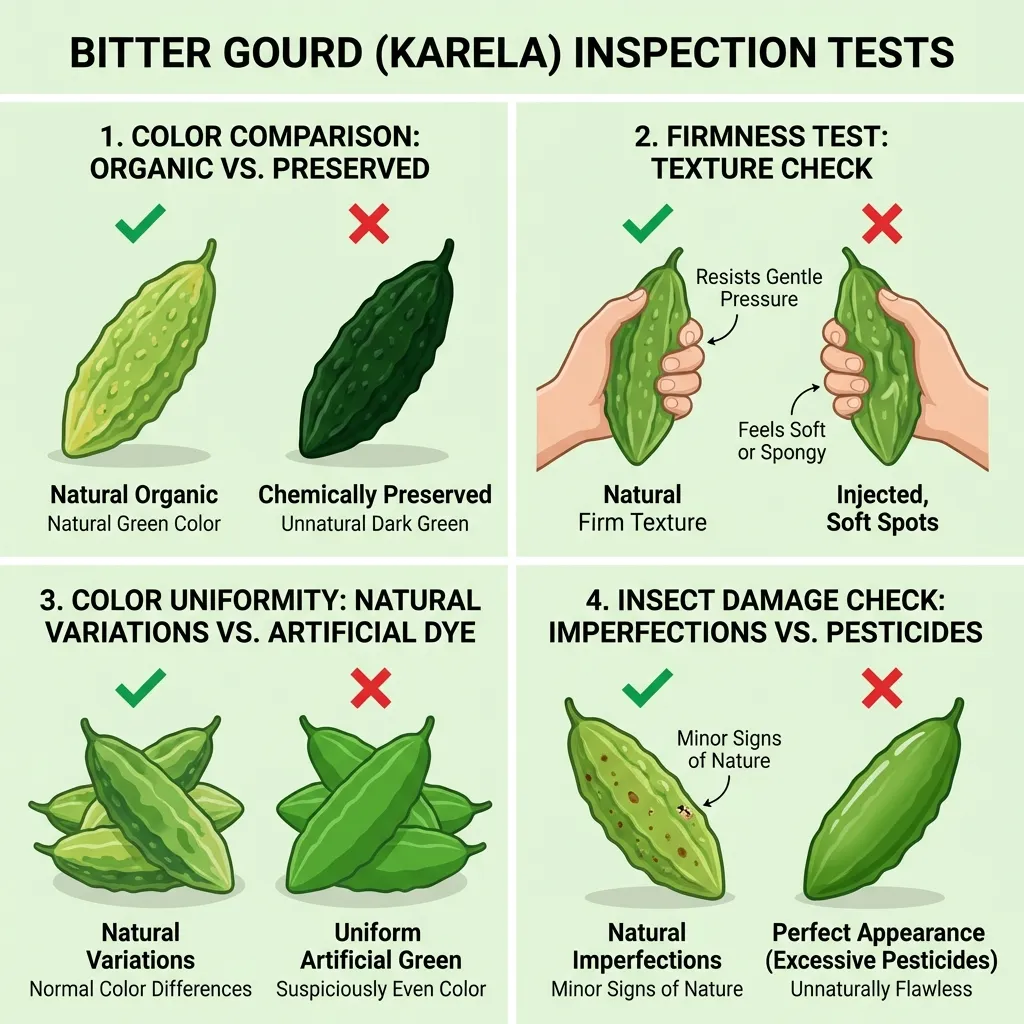
Bitter Gourd (Karela) Purity Audit
Bitter gourds are high-risk vegetables frequently dyed with Malachite Green to look vibrant and fresh, or injected with Oxytocin to double their size overnight.
1. The Cotton Rub Test:
Rub a wet cotton ball on the skin of the karela. If the cotton picks up a green tint, it is coated with Malachite Green, a toxic industrial dye.
2. The Stem Inspection:
Look closely at the stem-end. If you see tiny, dark pin-prick marks, it indicates an injection site for Oxytocin growth hormone.
3. The Water Bleed:
Soak the karela in warm water for 10 minutes. If the vegetable turns the water green, it is artificially colored.
4. Internal Texture:
Cut the karela open. A naturally grown one is firm and has a natural seedy core. If the center feels unusually "spongy" or "puffy" while the exterior is large, it indicates forced chemical growth.
5. Other High-Risk Gourds:
Malachite Green dye is also widely detected in related vegetables. Read our safety guides for Ridge Gourd, Ivy Gourd, and Bottle Gourd to test other gourds before cooking.
Quick Safety Tips
- Perform the cotton rub test for green dye
- Check the stem for injection marks (Oxytocin)
- Select medium-sized gourds - avoid unnaturally large ones
- Soak in salt water to help remove surface chemicals
Primary Chemical Concerns
Health Risks & Impacts
Multilingual Local Names
Common Storage Pests
Melon Fruit Fly (Bactrocera cucurbitae)
medium riskFlies that lay eggs under the skin of gourds and melons.
Detection
- Small sunken spots on the skin
- Larvae inside the fruit when cut
Prevention
- Inspect for skin punctures before buying
- Store in a cool, ventilated area
Corrective Action: What to do?
Discard infested gourds as the internal rot can cause illness.
Regulatory Corner: FSSAI (Food Safety and Standards Authority of India) / Codex Alimentarius (CXS 303-2011)
Regulation: Food Safety and Standards (Contaminants, Toxins and Residues) Regulations 2011, Schedule 2: MRLs in Cucurbits
Legal Limit:Malachite Green dye: 0.0% (Strict zero tolerance; carcinogenic dye); Copper sulfate wash: 0.0%; Chlorpyrifos: Max 0.2 ppm; Imidacloprid: Max 1.0 ppm; Foreign matter / decay: Max 1.0%
Report Adulteration to FSSAI (Food Safety and Standards Authority of India) / Codex Alimentarius (CXS 303-2011)