How to Test Sweet Lime / Mosambi for Adulteration (Calcium Carbide, Wax Coating, Saccharin Injection)
⚡ Quick 60-Second Sweet Lime (Mosambi) Ripening & Sweetener Verdict
Calcium Carbide Ripening & Saccharin Injections: Unripe bitter mosambis are artificially ripened using acetylene gas and injected near the stem button with saccharin syrup to mask natural citrus acidity.
Examine the stem button and peel circumference under bright light. Look for tiny dark puncture holes, localized soft dark rings, or gummy syrup spots that indicate needle injection of artificial sweeteners.
Taste the extracted juice. Naturally sweet mosambi has a balanced, gentle sweetness with subtle citrus aroma. Injected fruit has a cloying, sugary-sweet front taste that turns abruptly bitter and chemical on swallowing.
Rub the peel with a damp tissue. Calcium carbide leaves a distinct grayish chemical film with an acetylene/garlic smell; naturally ripened mosambi has a clean, fragrant citrus zest.
To learn more about food safety tests and home adulteration detection, read our guides on Jackfruit and Lemon.
Drop Sweet Lime / Mosambi photo here to test purity
or click to browse • Supports JPG, PNG, WEBP • Paste with Ctrl+V
Inspection Guide
Click to enlarge
Sweet Lime (Mosambi) Quality Inspection
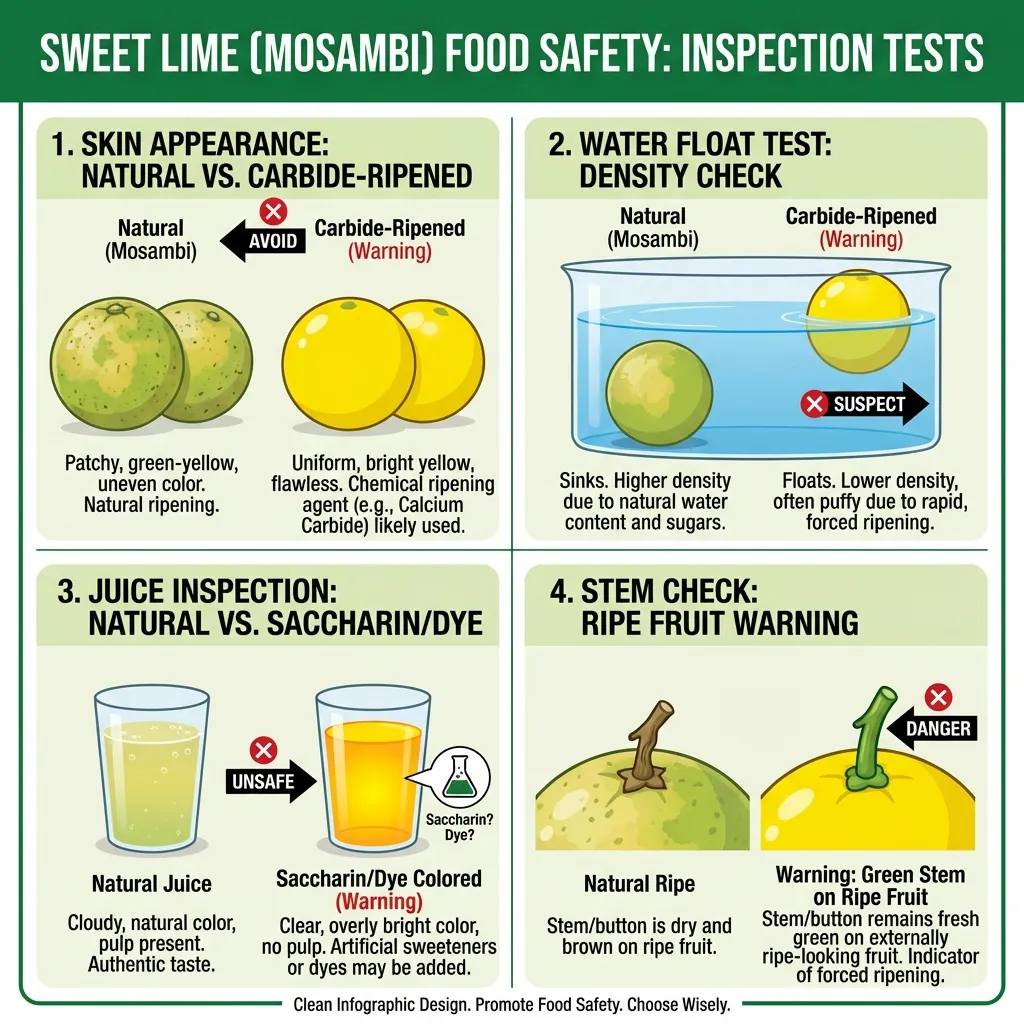
Sweet lime (Mosambi) is frequently ripened with carbide and its juice is sometimes adulterated with artificial sweeteners or dyes.
1. The Skin Color Check:
Natural sweet lime is usually greenish-yellow or has patchy yellow coloring. If the fruit is 100% uniform bright yellow with no green hint and feels very hard, it indicates carbide ripening.
2. The Float Test:
Naturally ripened sweet limes are dense and heavy with juice. When placed in water, they usually sink. Carbide-ripened or "puffy" old fruits often float on the surface due to air pockets.
3. The Juice Taste and Color Test:
Squeeze the juice. Natural Mosambi juice is a pale, slightly cloudy yellowish-green. If the juice is bright orange-yellow or tastes unnaturally sweet (like candy/sugar) without the natural citrus tang, it may have been injected with saccharin or dyes.
4. The Stem Check:
Look at the stem/button at the top. On a naturally ripened fruit, it is usually dry and brown. If the fruit looks fully yellow but the stem remains fresh green, it indicates forced ripening.
5. The Surface Shine (Wax Test):
Run your fingers over the skin. If it's unnaturally glossy or feels slippery/waxy, it has been coated with synthetic wax to extend shelf life. Natural skin is slightly textured and matte.
Quick Safety Tips
- Heavier fruit usually contains more natural juice
- Natural sweet lime sinks in water
- Avoid fruits with fresh green stems on fully yellow skin
- Wash thoroughly to remove surface wax and chemicals
Primary Chemical Concerns
Health Risks & Impacts
Multilingual Local Names
Common Storage Pests
Citrus Fruit Fly
low riskSmall insects that can lay eggs under the skin, leading to internal rot.
Detection
- Tiny entry holes
- Soft, watery patches on the skin
Prevention
- Store in a cool, ventilated place
- Use within 3-5 days
Corrective Action: What to do?
Discard if internal rot or larvae are visible; otherwise, cut away soft spots.
Regulatory Corner: FSSAI (Food Safety and Standards Authority of India) / Codex Alimentarius (Codex Stan 179-1991)
Regulation: Food Safety and Standards (Prohibition and Restrictions on Sales) Regulations 2011, Regulation 2.3.5 & FSS Act 2006
Legal Limit:Calcium carbide (acetylene gas): Completely banned (0.0 ppm); Non-nutritive artificial sweeteners (saccharin, cyclamates): Prohibited in fresh citrus (0.0 ppm); Lead: Max 0.1 ppm
Report Adulteration to FSSAI (Food Safety and Standards Authority of India) / Codex Alimentarius (Codex Stan 179-1991)