
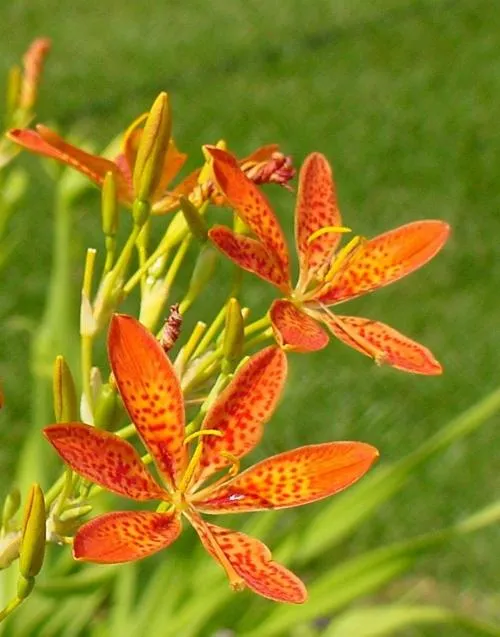
Leopard Lily
Iris domestica (syn. Belamcanda chinensis)
How to Identify Leopard Lily
Care & Growing Guide
Seasonal Blooming & Hardiness
Seasonal Blooming Calendar:
- Peak Bloom: Excellent for cottage gardens, wildflower meadows, and mixed borders. Attracts butterflies and hummingbirds while being largely resistant to deer and rabbits. Provides year-round interest: vibrant fans of foliage in spring, exotic spotted blooms in summer, and unique blackberry-like seed heads for autumn and winter decor. Low-maintenance and highly adaptable to different garden styles.
- Planting Time: Plant container-grown starts in early spring or autumn.
Bloom Timeline
About Leopard Lily
The Leopard Lily, botanically designated as Iris domestica (previously classified as Belamcanda chinensis, and commonly known as the Blackberry Lily or Leopard Flower), is an exceptionally distinct, highly ornamental perennial. Belonging to the family Iridaceae (the iris family, tribe Irideae), this East Asian native is found growing wild across the grassy hillsides, open valleys, and rocky slopes of China, Japan, Korea, India, and Siberia.
Standing 1.5 to 3 feet (45 to 90 cm) tall, this rhizomatous perennial features flat, fan-shaped clusters of erect, sword-like, and glaucous blue-green leaves that closely resemble those of bearded irises. In mid-to-late summer (July through August), tall, branching flower stalks arise, carrying flat, star-shaped flowers measuring 2 inches across. The blossoms are famous for their brilliant orange or yellow petals, heavily decorated with rich reddish-brown or purple spots (giving rise to the 'Leopard' name).
After the flowers fade, they are replaced by large, green, pear-shaped seed capsules. In autumn, these pods split open and curl back to reveal tight, dense clusters of shiny, round, and jet-black seeds that resemble a ripe blackberry, remaining attractive on the stems throughout winter. The radially symmetrical reproductive morphology is represented by the floral formula ⊕ ⚥ P3+3 A3 G̅(3). This states that the flowers are actinomorphic and bisexual. The perianth consists of 6 free, spotted tepals. The androecium has 3 stamens, and the gynoecium has 3 fused carpels forming an inferior ovary.
Cultivating Leopard Lilies is highly rewarding, as they are exceptionally tough, disease-resistant, and low-maintenance. They thrive in full, direct sun to light partial shade and prefer average, moderately fertile, and sharply well-draining sandy loam soils; waterlogged soils will rapidly cause the rhizomes to rot. They are highly cold-hardy across USDA zones 5 through 10 and are easily propagated by dividing the rhizomes in spring or sowing seeds.
Under its classical Chinese name She Gan (射干), the dried rhizomes of this plant have been highly revered in traditional Chinese medicine for over two millennia to treat respiratory issues. Famed in Sanskrit as Devadosha (देवदोष) and in Hindi as Chitrak Lili (चित्रक लिली), it represents bold individuality, transformation, and seasonal beauty.
For pet owners, the Leopard Lily demands high caution. All parts of the plant—most notably the underground rhizomes—are LETHAL & HIGHLY TOXIC to dogs, cats, and horses due to the presence of toxic iridin and saponin glycosides. Ingestion causes severe gastrointestinal irritation (drooling, vomiting, and bloody diarrhea), lethargy, abdominal pain, and coordination loss. For safety guidelines, visit our general Pet Guard page. It is easily distinguished from true lilies by its iris-like flat fan foliage. It looks spectacular in borders beside Amaryllis-hippeastrum-star_lily or Salvia. To learn more about Iridaceae members, browse our Flower Identifier.
For more botanical profiles and flower identification features, see our guides on Leadwort and Leucas Aspera.
Floral Formula & Features
Ebracteate (no bracts), radially symmetrical (actinomorphic), bisexual, 6 tepals in 2 whorls of 3 (perianth not differentiated into sepals and petals), 3 free stamens, 3 fused carpels with inferior ovary, characteristic of Iridaceae
- Scientific Classification and Names: Known scientifically as Iris domestica (formerly classified as Belamcanda chinensis), the Leopard Lily belongs to the Iridaceae family. Its common names are highly descriptive: 'Leopard Lily' refers to the orange-spotted petals, while 'Blackberry Lily' honors the shiny black seed clusters. In Traditional Chinese Medicine, it is known as 'She Gan' (射干). The plant originated in East Asia, spanning from the Himalayas through China to Japan and the Philippines.
- Visual Identification Features: The plant is easily identified by its fan-shaped, iris-like foliage consisting of sword-shaped leaves (ensiform) that grow 10–20 inches long. The flowers are actinomorhic (radially symmetrical), 2–3 inches wide, with six orange tepals covered in reddish-brown spots. The flower stems are branched and can reach 3 feet in height. The most unique ID feature is the blackberry-like cluster of seeds that appears in late autumn after the seed pods dehisce.
- Floral Formula and Botanical Details: The floral formula for Iris domestica is typically expressed as ⊕ ⚥ P3+3 A3 G(3). This denotes a radially symmetrical (actinomorphic) bisexual flower with six tepals arranged in two whorls of three, three distinct stamens, and a syncarpous gynoecium composed of three fused carpels with an inferior ovary. Unlike many common irises, the Leopard Lily lacks the prominent 'falls' and 'standards,' possessing instead six nearly identical tepals.
- Growing Requirements and Hardiness: Leopard Lilies are remarkably easy to grow and are hardy in USDA zones 5 through 10. They prefer full sun to light shade and thrive in well-drained, moderately fertile soil, though they are quite tolerant of poor or sandy soils. Once established, they exhibit excellent drought tolerance. Regular watering during the active growth and flowering season ensures the best display. They are long-lived perennials that can be easily propagated by dividing the rhizomes in spring or by sowing the black seeds.
- Cultural and Medicinal Significance: In China, the rhizomes of Iris domestica have been used for over 2,000 years in Traditional Chinese Medicine (TCM). Known as She Gan, the dried rhizome is utilized to treat respiratory ailments, sore throats, and inflammatory conditions. Culturally, the plant is valued for its unique transition from spotted blooms to blackberry-like seeds, symbolizes resilience and hidden beauty. The dried seed stalks are a staple in autumn-themed ornamental floral design.
- Pet Toxicity and Safety Warning: IMPORTANT: The Leopard Lily is considered TOXIC to pets, including dogs, cats, and horses. Ingestion of the rhizomes or seeds can cause gastrointestinal distress, vomiting, and lethargy due to the presence of certain glycosides and irritant resins. For more detailed safety information and a list of safe alternatives, please consult our Pet Guard Hub. Always keep this plant out of reach of curious animals.
- Common Look-alikes: The Leopard Lily is sometimes confused with Tiger Lilies (Lilium lancifolium) due to the orange-spotted nomenclature, but Tiger Lilies have recurved petals and distinct leaf arrangements on tall stems. It also resembles Iris fulva (Copper Iris), which has brownish-red blooms but lacks the leopard-like spots and the characteristic blackberry seeds. The unique seed clusters of Iris domestica make it easy to distinguish from any other member of the iris family once the pods open.
- Excellent for cottage gardens, wildflower meadows, and mixed borders. Attracts butterflies and hummingbirds while being largely resistant to deer and rabbits. Provides year-round interest: vibrant fans of foliage in spring, exotic spotted blooms in summer, and unique blackberry-like seed heads for autumn and winter decor. Low-maintenance and highly adaptable to different garden styles.
Names in Different Languages
Botanical Classification: Leopard Lily belongs to the Iridaceae family. Learn how to identify its floral symmetry, stamen arrangement, and structural formulas in our Botanical Family Classification Guide.
Toxicity & Safety
Always keep toxic plants out of reach of children and pets. Consult a veterinarian or medical professional immediately if ingestion is suspected.
Frequently Asked Questions
What is Floral Formula?
A floral formula is a symbolic representation of a flower's structure using letters, numbers, and special symbols. It provides a concise way to describe the arrangement and number of floral parts.
This formula describes the flower's symmetry, sepals, petals, stamens, and carpels in a standardized format.
Formula Sequence
- Bract: Br or Ebr
- Bracteole: Brl or Ebrl
- Symmetry: % (Radial) or ⊕ (Bilateral)
- Sex: ♀ (Female), ♂ (Male), or ⚥ (Bisexual)
- Calyx/Sepal: K<number> (Free or Fused)
- Corolla/Petal: C<number> (Free or Fused)
- Androecium: A<number> (Free or Fused)
- Gynaecium: G<number> (Superior or Inferior Ovary)
Symbol Meanings
- Numbers: Indicate quantity of parts
- Parentheses (): Parts are fused together
- Plus (+): Parts in different whorls
- Underline: Superior ovary position
- Overline: Inferior ovary position
- ∞: Numerous parts (too many to count)
Understanding floral formulas helps botanists quickly identify and classify flowers based on their structural characteristics.
Similar Flowers
Discover flowers that share botanical characteristics
Same Genus
2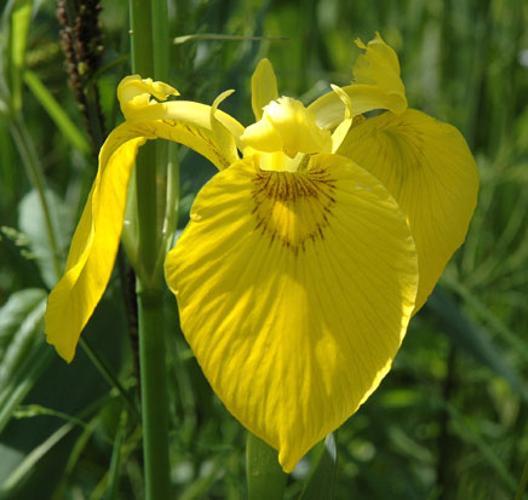
Yellow Iris
Iris pseudacorus
The Yellow Iris, scientifically classified as Iris pseudacorus and commonly known as the Yellow Flag or Water Flag, is a striking, highly vigorous wetland perennial plant belonging to the Iridaceae (iris) family. Native to Europe, Western Asia, and North Africa, this species thrives naturally in...
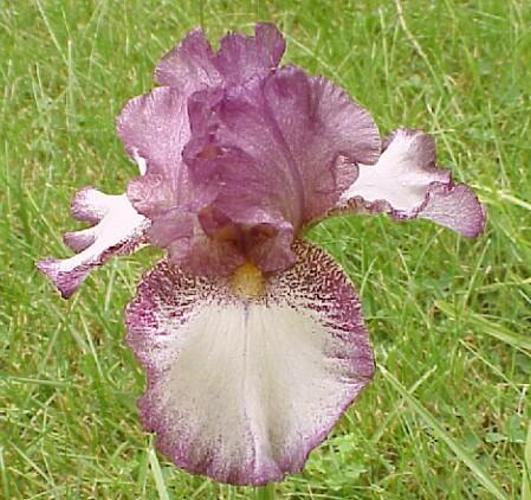
Bearded Iris
Iris germanica
The Bearded Iris, botanically designated under the genus *Iris* (particularly *Iris germanica*), is an exceptionally elegant, highly popular hardy perennial. Belonging to the family Iridaceae (the iris family, tribe Irideae), this spectacular garden favorite is native to the dry, sunny slopes and...
Same Family
3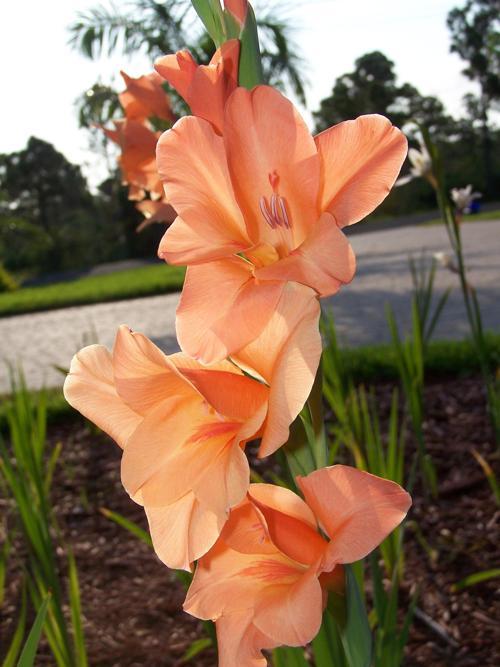
Sword Lily
Gladiolus
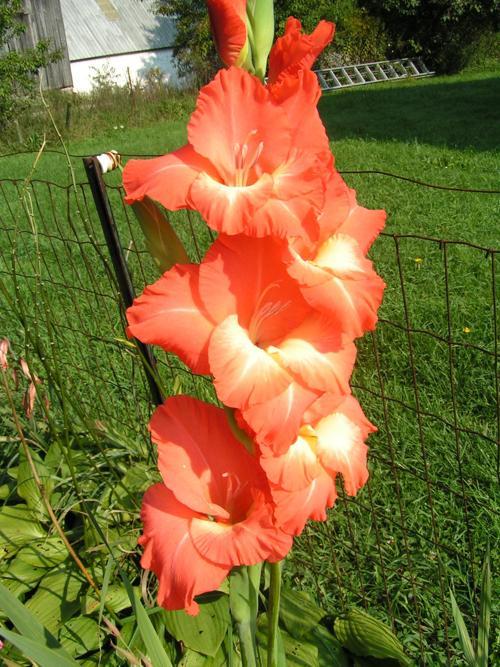
The Sword Lily, botanically classified under the genus Gladiolus and belonging to the family Iridaceae (the iris family), is an exceptionally dramatic, tall, and colorful perennial. Native primarily to the rich grasslands, dry scrub habitats, and mountain valleys of South and East Africa, with a...
Gladiolus
Gladiolus
The Gladiolus, botanically designated as Gladiolus and commonly known as the Sword Lily or simply Glad, is a spectacular cormous perennial belonging to the family Iridaceae (the iris family). Native primarily to the warm, sun-drenched grasslands, savannas, and shrubby valleys (fynbos) of South Af...
Spring Crocus
Crocus vernus
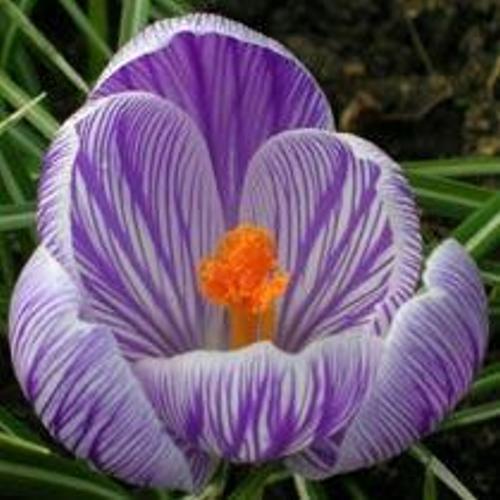
The Spring Crocus (Crocus vernus), also known as the Giant Crocus or Dutch Crocus, is a delicate, diminutive perennial belonging to the Iridaceae (Iris) family. Native to the alpine meadows and woodlands of central and southern Europe, it has become a globally beloved symbol of the end of winter....
Similar Characteristics
4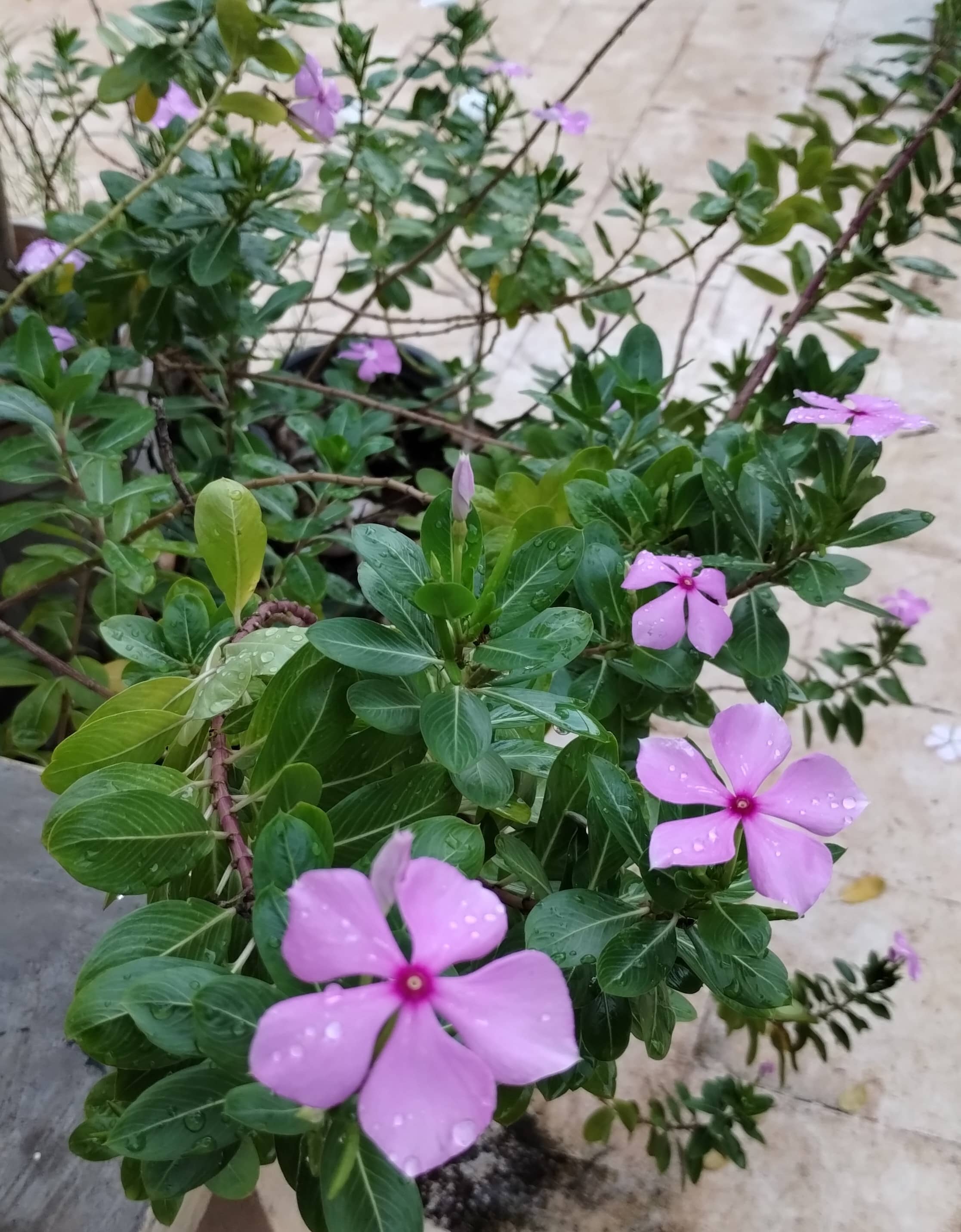
Vinca Rosea
Catharanthus roseus
Vinca Rosea (Catharanthus roseus), widely known as the Madagascar Periwinkle, is a plant of profound duality—equally celebrated as a resilient ornamental and a life-saving pharmaceutical powerhouse. Native to the dry forests of Madagascar but now naturalized across tropical regions worldwide, thi...
Beebalm
Monarda didyma, Monarda fistulosa
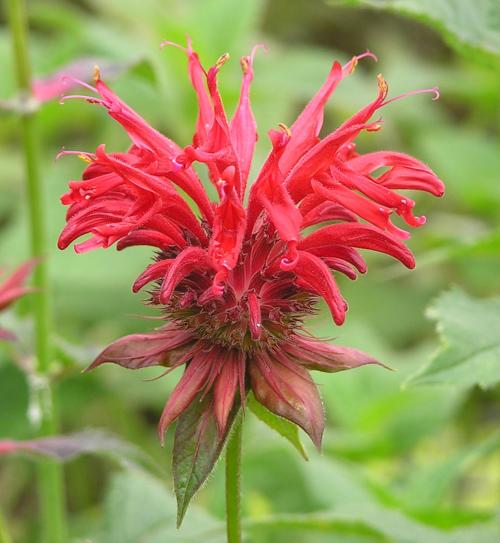
Bee Balm, botanically classified under the genus Monarda within the family Lamiaceae (the mint family), is a spectacular and highly aromatic clump-forming herbaceous perennial. Native to the rich floodplains, moist meadows, woodland margins, and stream banks of eastern North America—ranging from...
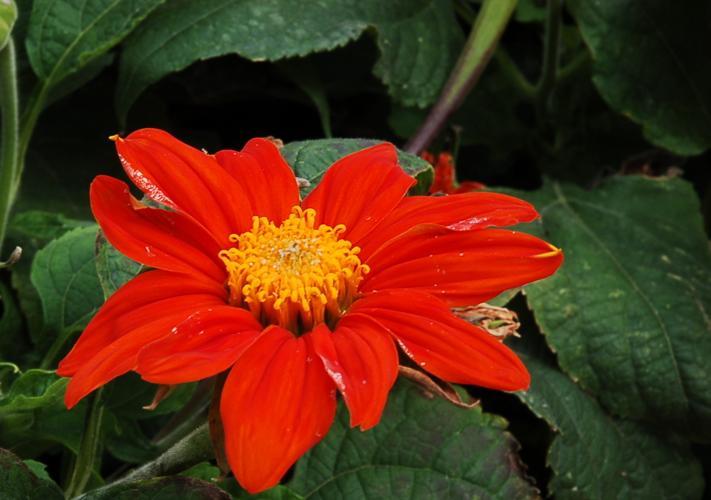
Orange Dahlia
Dahlia × hortensis
The Orange Dahlia, botanically designated under the genus *Dahlia* (particularly hybrids of *Dahlia pinnata*), is an exceptionally spectacular, highly vibrant tuberous perennial. Belonging to the family Asteraceae (the daisy or sunflower family, tribe Coreopsideae), this high-color classic is nat...
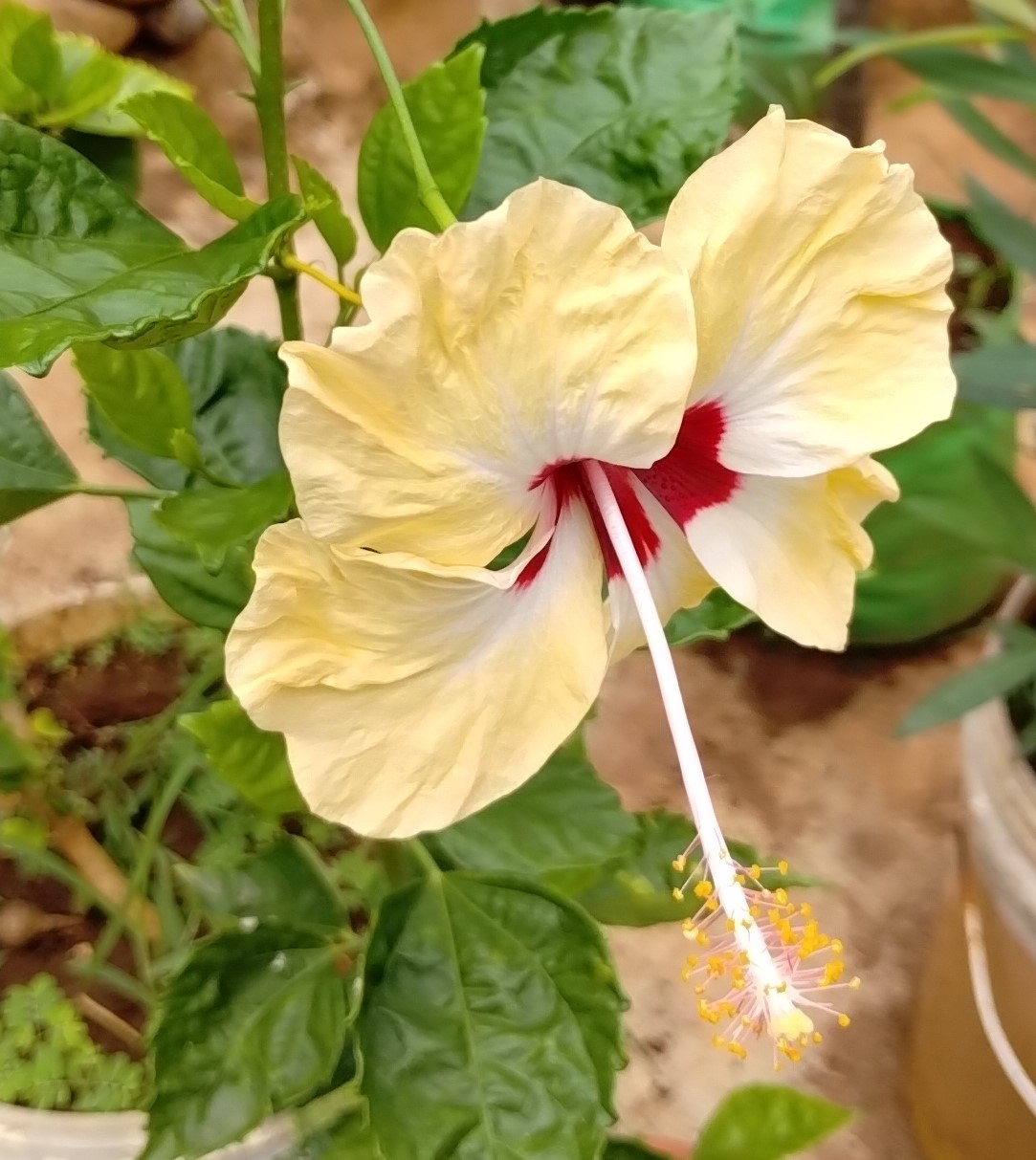
Hibiscus
Hibiscus rosa-sinensis
The Hibiscus, botanically classified as Hibiscus rosa-sinensis and popularly known as the Chinese Hibiscus, China Rose, or Shoe Flower, is a spectacular evergreen flowering shrub belonging to the Malvaceae (mallow) family. Believed to have originated in the warm, humid tropical regions of East As...