
Amaryllis
Hippeastrum
How to Identify Amaryllis
Care & Growing Guide
Seasonal Blooming & Hardiness
Seasonal Blooming Calendar:
- Peak Bloom: Spring to early summer (typically April through June).
- Planting Time: Sow seeds directly outdoors in early spring after the last frost, or transplant nursery starts in late spring.
Bloom Timeline
About Amaryllis
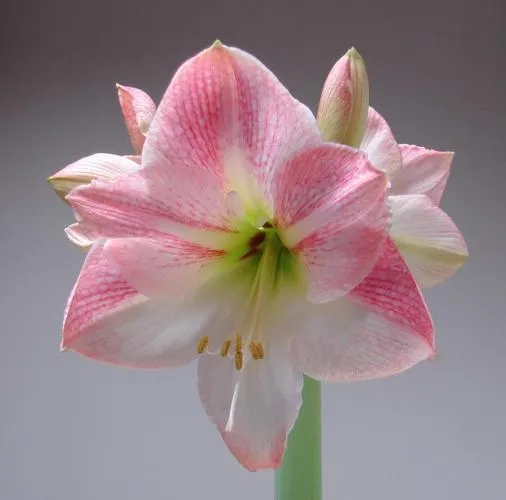
The Amaryllis, botanically classified under the genus Hippeastrum and belonging to the family Amaryllidaceae (the amaryllis family), is an exceptionally spectacular and dramatic bulbous perennial. Native to the warm, tropical and subtropical scrublands, forest margins, and rocky slopes of South America—particularly species-rich regions in Peru, Brazil, and Bolivia—and parts of the Caribbean, this majestic plant has been hybridized extensively. (Note: While commonly sold as Amaryllis, the popular holiday bulbs forced indoors are actually Hippeastrum hybrids, whereas true Amaryllis belladonna is a different species native to South Africa).
This fast-growing bulbous perennial stores immense amounts of energy inside its massive, layered, onion-like bulbs, which measure 2 to 5 inches in diameter. It produces long, strap-shaped, deep green leaves that emerge in arching pairs. During its blooming period (typically winter through early spring when forced indoors), it sends up 1 to 3 thick, green, and completely hollow flower stalks (scapes) standing 1 to 3 feet tall. Each magnificent scape carries a cluster of 2 to 6 large, trumpet-shaped flowers.
Individual blossoms measure an incredible 6 to 10 inches across, featuring 6 broad, star-like petals (tepals) in brilliant shades of scarlet-red, rose-pink, salmon, gold-orange, and pure white. Many modern hybrids showcase beautiful striped, veined, or white-rimmed (picotee) bicolors, opening sequentially over 7 to 10 days. This sequential blooming, combined with their sturdy, vertical stems, makes Amaryllis a premier global winter houseplant and highly prized holiday gift, bringing vibrant tropical warmth to indoor rooms.
The reproductive morphology of individual flowers within the cluster is represented by the floral formula Br ⊕ ⚥ P(3+3) A3+3 G(3). This formula states that the flower cluster is subtended by a protective green bract at the base. The individual blossoms are radially symmetrical (actinomorphic) and bisexual. The perianth comprises 6 petaloid tepals fused at their bases forming a short tube and arranged in two concentric whorls of three. The androecium contains 6 stamens in two whorls of three, and the gynoecium contains 3 fused carpels forming an inferior ovary.
The genus name Hippeastrum translates from Greek to 'Knight's Star Lily' (from hippeus, meaning knight, and astron, meaning star), describing the star-like flower shape. The common name 'Amaryllis' originates from Greek mythology—representing a beautiful shepherdess named Amaryllis who shed her blood to sprout a stunning crimson flower to prove her deep love and determination. Famed in Sanskrit as Sudarshana (सुदर्शन, meaning 'beautiful to look at') and in Hindi as Amarilis (अमरिलिस), it represents splendid beauty, determination, and radiant pride.
For pet owners and veterinarians, Amaryllis represents a severe chemical hazard. The plant is classified as HIGHLY TOXIC & LETHAL TO PETS, including dogs and cats, by the ASPCA. The foliage, stems, and especially the underground bulbs contain high concentrations of toxic phenanthridine alkaloids, primarily lycorine. If chewed or ingested, it triggers severe oral irritation, heavy drooling (salivation), intense vomiting, bloody diarrhea, abdominal pain, dangerous low blood pressure, and tremors. For comprehensive safety guidelines, visit our specific Pet Guard Amaryllis page.
Amaryllis is occasionally confused with true lilies (Lilium) or true Amaryllis belladonna. It is easily distinguished because Hippeastrum possesses a completely hollow, leafless green flower scape, whereas true lilies have leafy stems, and true Amaryllis belladonna produces solid flower scapes and blooms in late summer before its leaves appear. It makes a stunning indoor accent; we recommend pairing it beside other spectacular foliage favorites like Anthurium or Geranium. To explore more forced winter bulbs, check our Flower Identifier.
Floral Formula & Features
Bract present at base of flower cluster, radially symmetrical, bisexual, perianth of 6 tepals in 2 whorls of 3 (appearing as petals), 6 stamens in 2 whorls of 3, 3 fused carpels forming inferior ovary
- Scientific Name & Classification: Hippeastrum (Amaryllidaceae). Globally famed as Dutch Amaryllis, Knight's Star Lily, and Fire Lily.
- Identification Markers: Massive onion-like bulbs, strap-shaped arching leaves, and thick hollow leafless stalks carrying clusters of 6-10 inch trumpet flowers.
- Floral Formula (Br ⊕ ⚥ P(3+3) A3+3 G(3)): Radially symmetrical, bisexual flowers with 6 fused tepals in two whorls, 6 stamens, and an inferior ovary.
- Growing Requirements: Bright indirect sun indoors; rich, highly porous, well-draining soil. Requires a dry, cool, dark dormancy period of 8-10 weeks to rebloom (Zones 9-11).
- Cultural Significance: Name comes from shepherdess Amaryllis in Greek myth. Symbol of pride, splendid beauty, and determination. Highly popular winter holiday gift.
- Safety & Toxicity: HIGHLY TOXIC & LETHAL TO PETS. High concentration of lycorine alkaloids (especially in bulbs), triggering severe salivation, vomiting, diarrhea, and tremors.
- Common Look-alikes: Confused with true lilies or South African Amaryllis belladonna, but easily distinguished by its hollow, completely leafless flowering stems.
- Internal Links: Brings gorgeous winter color to indoor spaces when grouped beside bold potted selections like Anthurium or Geranium; check our Flower Identifier.
Names in Different Languages
Botanical Classification: Amaryllis belongs to the Amaryllidaceae family. Learn how to identify its floral symmetry, stamen arrangement, and structural formulas in our Botanical Family Classification Guide.
Toxicity & Safety
Always keep toxic plants out of reach of children and pets. Consult a veterinarian or medical professional immediately if ingestion is suspected.
Pet Safety Guide: For detailed toxicity symptoms, first-aid measures, and safe garden alternatives, see our full Pet Guard Profile for Amaryllis.
Frequently Asked Questions
What is Floral Formula?
A floral formula is a symbolic representation of a flower's structure using letters, numbers, and special symbols. It provides a concise way to describe the arrangement and number of floral parts.
This formula describes the flower's symmetry, sepals, petals, stamens, and carpels in a standardized format.
Formula Sequence
- Bract: Br or Ebr
- Bracteole: Brl or Ebrl
- Symmetry: % (Radial) or ⊕ (Bilateral)
- Sex: ♀ (Female), ♂ (Male), or ⚥ (Bisexual)
- Calyx/Sepal: K<number> (Free or Fused)
- Corolla/Petal: C<number> (Free or Fused)
- Androecium: A<number> (Free or Fused)
- Gynaecium: G<number> (Superior or Inferior Ovary)
Symbol Meanings
- Numbers: Indicate quantity of parts
- Parentheses (): Parts are fused together
- Plus (+): Parts in different whorls
- Underline: Superior ovary position
- Overline: Inferior ovary position
- ∞: Numerous parts (too many to count)
Understanding floral formulas helps botanists quickly identify and classify flowers based on their structural characteristics.
Similar Flowers
Discover flowers that share botanical characteristics
Same Family
3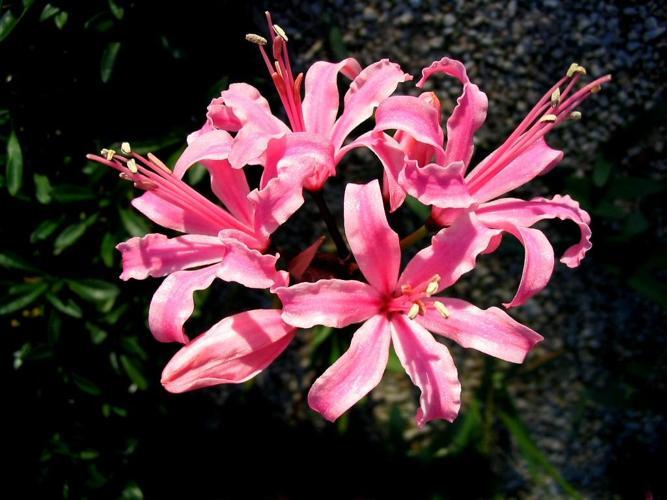
Cape Flower (Red Spider Lily)
Lycoris radiata
The Cape Flower, botanically designated as *Lycoris radiata* and globally celebrated as the Red Spider Lily, Japanese Spider Lily, Hurricane Lily, or Equinox Flower, is an exceptionally dramatic bulbous perennial. Belonging to the family Amaryllidaceae (the amaryllis family, tribe Lycorideae), th...
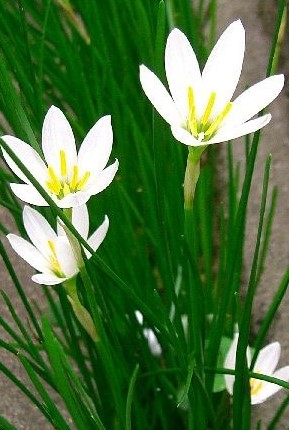
Zephyr Lily
Zephyranthes
The Zephyr Lily, botanically classified under the genus Zephyranthes and belonging to the family Amaryllidaceae (the amaryllis family, tribe Hippeastreae), is an exceptionally charming, low-growing bulbous herbaceous perennial. Commonly known as the Rain Lily, Fairy Lily, Magic Lily, or Atamasco...
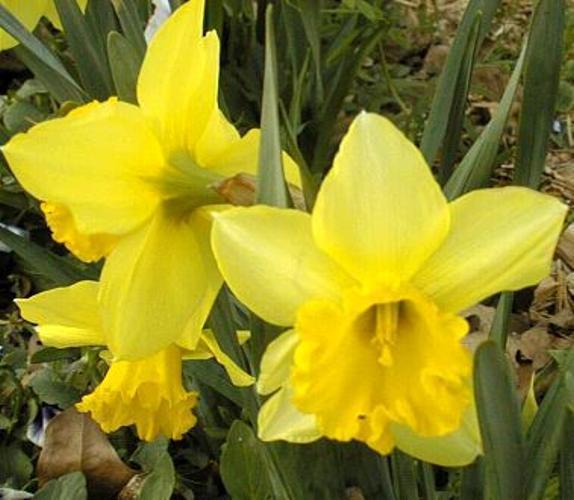
Daffodil
Narcissus pseudonarcissus
The Daffodil, botanically classified under the genus Narcissus and most famously represented by Narcissus pseudonarcissus (the wild daffodil), is a cheerful, spring-flowering bulbous perennial belonging to the Amaryllidaceae (amaryllis) family. Native to the damp meadows, light deciduous woodland...
Similar Characteristics
4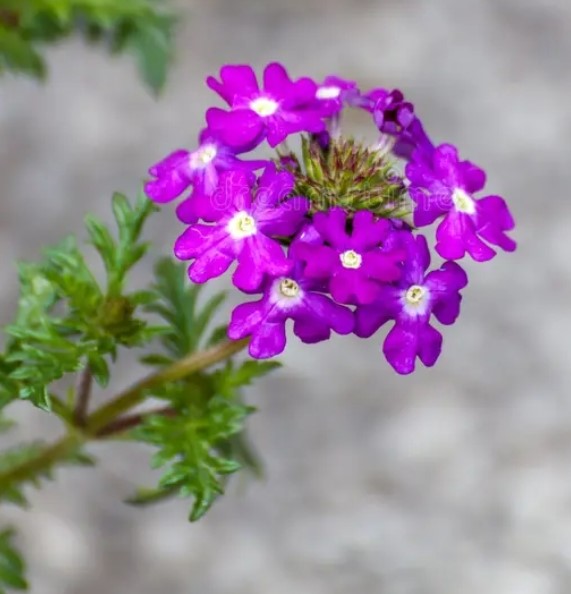
Verbena
Verbena
The Verbena, botanically classified under the genus Verbena and belonging to the family Verbenaceae (the verbena or vervain family), is an exceptionally tough, colorful, and resilient perennial (often cultivated as a warm-season annual in cooler temperate zones). Native primarily to the sunny gra...
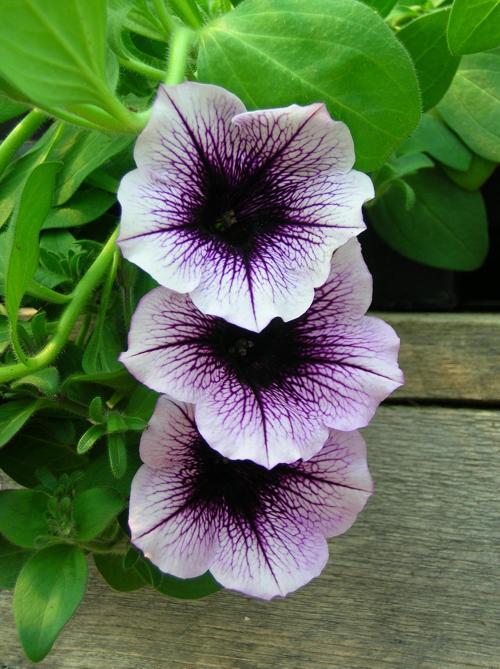
Petunia
Petunia
The Petunia, botanically designated under the genus *Petunia* (particularly the widely grown garden hybrid *Petunia × atkinsiana*), is an exceptionally popular, highly prolific annual or tender perennial. Belonging to the family Solanaceae (the nightshade family, tribe Petunioideae), this South A...
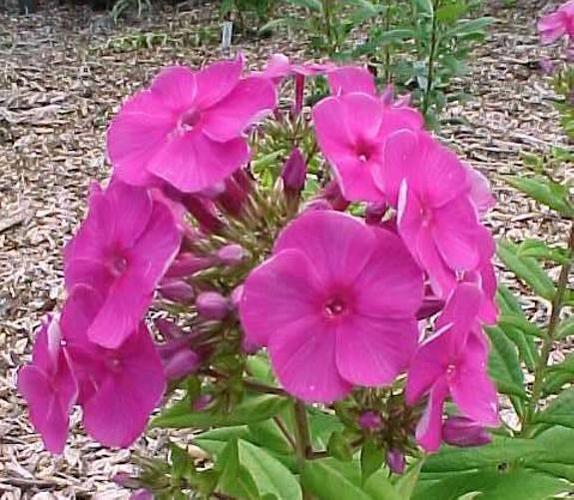
Phlox
Phlox paniculata
The genus Phlox, a cornerstone of the North American garden, encompasses a diverse array of species ranging from low-growing ground covers to towering, stately perennials. Derived from the Greek word for 'flame,' the name perfectly captures the vibrant, fiery intensity of their clustered blossoms...
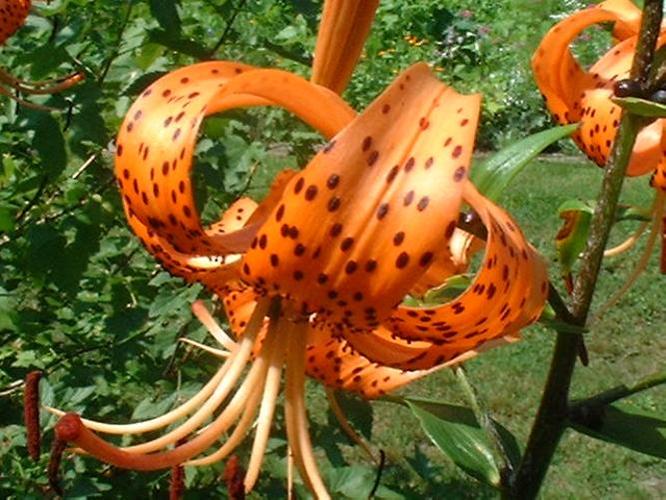
Tiger Lily
Lilium lancifolium
The Tiger Lily (Lilium lancifolium), a standout member of the Liliaceae family, is one of the most recognizable and striking lilies in the world. Native to the temperate regions of Eastern Asia, including China, Japan, and Korea, this herbaceous perennial has captivated gardeners for centuries wi...