
Gladiolus
Gladiolus
How to Identify Gladiolus
TOXIC TO PETS. Contains concentrated systemic saponins (especially in corms), triggering severe drooling, vomiting, diarrhea, and lethargy.
A detailed guide to identifying Gladiolus (Sword Lily) by its key botanical features:
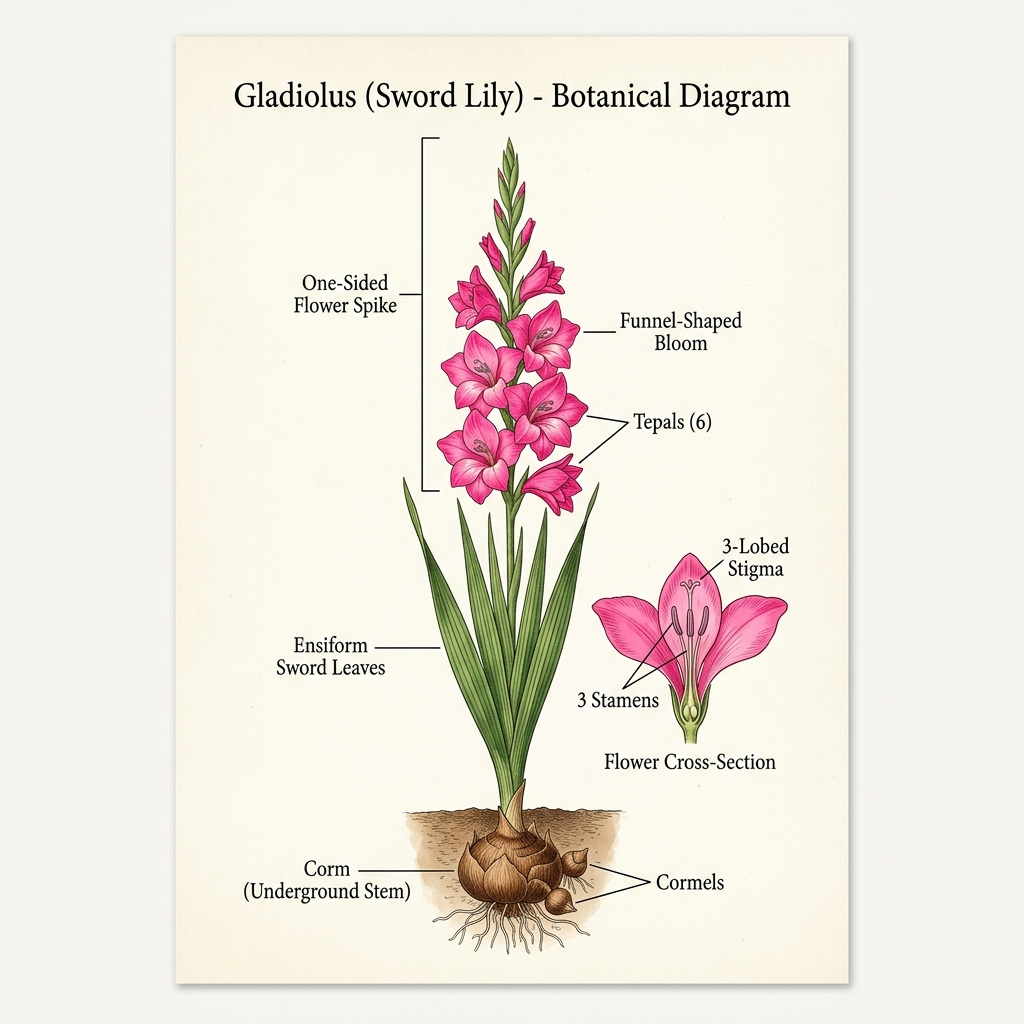
- Ensiform (Sword-shaped) Leaves: Stiff, upright, blade-like green foliage with parallel venation, sheathing the stem at the base like a sword in a scabbard.
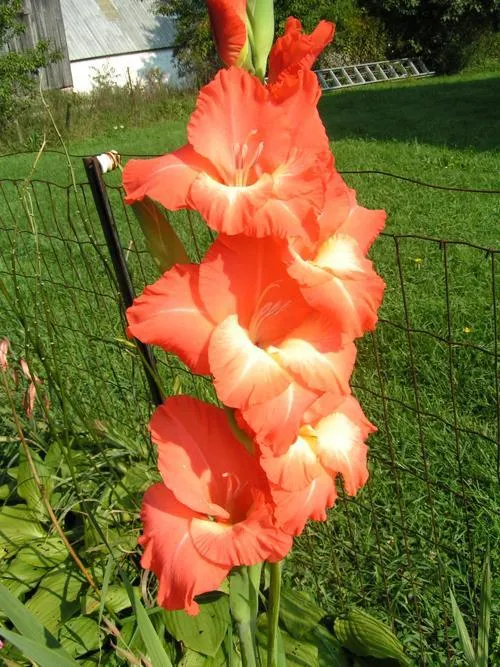
- One-sided (Secund) Flower Spike: Towering, unbranched vertical flower stalks bearing 12 to 30 funnel-shaped blossoms arranged primarily along one face of the stem.
- Sequential Blooming: Trumpet-shaped blooms open progressively in succession from the bottom of the stalk toward the terminal tip over 2 to 3 weeks.
- Floral Anatomy: Individual flowers feature 6 colorful petaloid tepals in two whorls, 3 distinct stamens, and a single style dividing into 3 flattened stigma lobes.
- Underground Corm: Solid, compressed bulb-like stem base wrapped in papery brown fibrous tunics, flanked by miniature daughter cormels and contractile anchor roots.
Horticultural Groups & Types of Gladiolus
- Grandiflora Hybrids (Standard Garden Glads): Large, towering plants (3 to 5 feet) with massive, ruffled blooms (up to 5 inches wide) packed tightly on spikes. Require staking in exposed beds.
- Nanulus (Dwarf / Miniature Glads): Compact cultivars (1.5 to 2.5 feet tall) with smaller, open blossoms and earlier blooming habits; superior winter hardiness.
- Primulinus Hybrids: Distinctive hooded upper petals that arch gracefully over internal stamens, giving blooms an airy, delicate appearance.
- Butterfly & Glamini Varieties: Compact, profusely branched miniature spikes featuring ruffled petals and intensely contrasting throat blotches.
Care & Growing Guide
Gladiolus Care & Growing Guide:
- Light: Full direct sunlight (at least 6 to 8 hours daily) for sturdy, vertical stalks and vibrant petal pigmentation.
- Soil: Rich, fertile, sandy-loam soil with exceptional drainage. Corms will quickly rot in waterlogged or heavy clay soil.
- Watering: Provide about 1 inch of water per week during the active growing season. Water at the base to keep foliage and flowers dry.
- Staking & Cutting: Stake tall Grandiflora spikes when they reach 12 inches to prevent wind breakage. For cut flowers, harvest when only the lowest 1-2 florets show color.
Seasonal Blooming & Hardiness
Seasonal Blooming Calendar (US Hardiness Zones 8-11 as perennial; Zones 3-7 as lifted corm):
- Peak Bloom: Mid to late summer through early autumn (typically July through September; 70-90 days after planting).
- Succession Planting: Plant batches of corms every 10 to 14 days from early spring to early summer for continuous blooms throughout the season.
- Overwintering: In Zones 7 and below, dig up corms after the first frost, cut stems back to 1 inch, cure for 2 to 3 weeks, and store indoors in ventilated bags at 40-50°F (4-10°C).
Bloom Timeline
About Gladiolus
The Gladiolus, botanically designated as Gladiolus and commonly known as the Sword Lily or simply Glad, is a spectacular cormous perennial belonging to the family Iridaceae (the iris family). Native primarily to the warm, sun-drenched grasslands, savannas, and shrubby valleys (fynbos) of South Africa—particularly the species-rich Cape region—with a few species native to the Mediterranean basin, western Asia, and tropical East Africa, this historic genus comprises over 300 wild species and more than 10,000 hybrid cultivars.
This majestic summer perennial grows from an underground corm (a swollen, compressed underground stem, which is distinct from a true bulb) and produces highly characteristic, stiff, erect, and sword-shaped deep-green leaves. From mid-to-late summer (June through September), it sends up tall, dramatic, unbranched flower spikes standing 2 to 6 feet in height (with compact dwarf hybrids reaching 1 to 2 feet). Each spike carries 12 to 20+ funnel-shaped flower buds arranged in an elegant, dense, and one-sided spike.
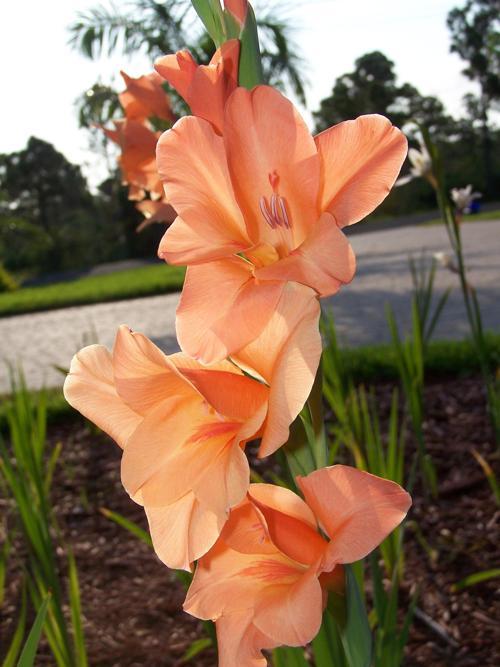
Individual flowers measure 3 to 5 inches across, showcasing wavy, ruffled, or fringed petals in virtually every color of the rainbow and countless striking bicolors, often accented with contrasting throats. The buds open sequentially from the bottom of the spike upward over a period of 7 to 14 days, creating a spectacular, long-lasting display. This sequential blooming habit, combined with their sturdy stems, has made Gladiolus one of the world's premier florist and cut-flower selections.
The reproductive structure of the Gladiolus genus is defined by the zygomorphic floral formula EBr % ⚥ P3+3 A3 G(3). This formula reveals that the flowers are ebracteate, bilaterally symmetrical (zygomorphic), and bisexual. The perianth comprises 6 petaloid tepals arranged in two concentric whorls of three (P3+3), with no structural distinction between sepals and petals. The androecium contains exactly 3 free stamens, and the gynoecium contains 3 fused carpels forming a superior-looking inferior ovary.
The genus name Gladiolus is derived from the diminutive of the ancient Latin word 'gladius,' which means 'little sword,' a direct reference to its sharp, sword-like leaves. Ancient Roman gladiators famously wore gladiolus corms as protective amulets around their necks during combat in the arena to protect them from injury. Famed in Sanskrit as Tarjani Pushpam (तर्जनी पुष्पम्) or Simhi (सिंही) and in Hindi as Talwar Lily (तलवार लिली), it is the August birth flower and a powerful symbol of moral integrity, strength, and remembrance.
For pet owners and veterinarians, Gladiolus represents a significant toxic hazard. The plant is classified as TOXIC TO PETS, including dogs, cats, and horses. Gladiolus foliage and stems contain toxic systemic saponins, and the highest concentration of these compounds is packed within the underground corms. If chewed or swallowed, it triggers severe clinical symptoms, including intense oral salivation (drooling), vomiting, lethargy, bloody diarrhea, and severe abdominal pain. (Note: Since there is no existing pet-guard page in our database, we do NOT include a pet-guard link here.)
Gladiolus is occasionally confused with wild Crocosmias or standard lilies. It is easily distinguished because true Gladiolus species produce rigid, one-sided, vertical spikes of sequential funnel flowers and stiff, upright sword-shaped leaves. It makes a magnificent, high-impact backdrop in formal gardens and borders; we recommend pairing it alongside other classic summer blooms like Chrysanthemum or Dianthus-sweet William. To explore more summer-blooming cormous perennials and cut-flower care, browse our Flower Identifier.
Floral Formula & Features
Ebracteate (no bracts), bilaterally symmetrical (zygomorphic), bisexual, 6 tepals in 2 whorls of 3 (perianth, no distinction between sepals and petals), 3 stamens, 3 fused carpels with inferior ovary
- Scientific Name & Classification: Gladiolus (Iridaceae). Commonly known as Sword Lily, Gladiola, and Glad.
- Identification Markers: Swollen underground corms, stiff sword-shaped leaves, and tall unbranched one-sided spikes of funnel-shaped flowers opening from bottom to top.
- Floral Formula (EBr % ⚥ P3+3 A3 G(3)): Bilaterally symmetrical, bisexual flowers with 6 tepals in two whorls, exactly 3 free stamens, and an inferior ovary.
- Growing Requirements: Full direct sun (6-8 hours daily); fertile, sandy-loam, and exceptionally well-drained soil. Stake tall spikes to prevent wind damage (Zones 8-11).
- Cultural Significance: Famed Roman gladiator amulet worn for victory and strength. August birth flower representing moral integrity, honor, and remembrance.
- Safety & Toxicity: TOXIC TO PETS. Contains concentrated systemic saponins (especially in corms), triggering severe drooling, vomiting, diarrhea, and lethargy.
- Common Look-alikes: Confused with wild Crocosmias or lilies, but easily distinguished by its one-sided towering flowering spikes and sword-shaped leaves.
- Internal Links: Creates a beautiful vertical display when planted at the back of formal beds beside Chrysanthemum or Dianthus-sweet William; find more in our Flower Identifier.
Names in Different Languages
Cultural Etiquette & Gifting: Planning to gift or decorate with Gladiolus? Discover its symbolic meanings, festival traditions, and crucial cultural faux pas across 20+ countries in our comprehensive Global Flower Etiquette Guide.
Botanical Classification: Gladiolus belongs to the Iridaceae family. Learn how to identify its floral symmetry, stamen arrangement, and structural formulas in our Botanical Family Classification Guide.
Toxicity & Safety
Always keep toxic plants out of reach of children and pets. Consult a veterinarian or medical professional immediately if ingestion is suspected.
Frequently Asked Questions
What is Floral Formula?
A floral formula is a symbolic representation of a flower's structure using letters, numbers, and special symbols. It provides a concise way to describe the arrangement and number of floral parts.
This formula describes the flower's symmetry, sepals, petals, stamens, and carpels in a standardized format.
Formula Sequence
- Bract: Br or Ebr
- Bracteole: Brl or Ebrl
- Symmetry: % (Radial) or ⊕ (Bilateral)
- Sex: ♀ (Female), ♂ (Male), or ⚥ (Bisexual)
- Calyx/Sepal: K<number> (Free or Fused)
- Corolla/Petal: C<number> (Free or Fused)
- Androecium: A<number> (Free or Fused)
- Gynaecium: G<number> (Superior or Inferior Ovary)
Symbol Meanings
- Numbers: Indicate quantity of parts
- Parentheses (): Parts are fused together
- Plus (+): Parts in different whorls
- Underline: Superior ovary position
- Overline: Inferior ovary position
- ∞: Numerous parts (too many to count)
Understanding floral formulas helps botanists quickly identify and classify flowers based on their structural characteristics.
Similar Flowers
Discover flowers that share botanical characteristics
Same Family
4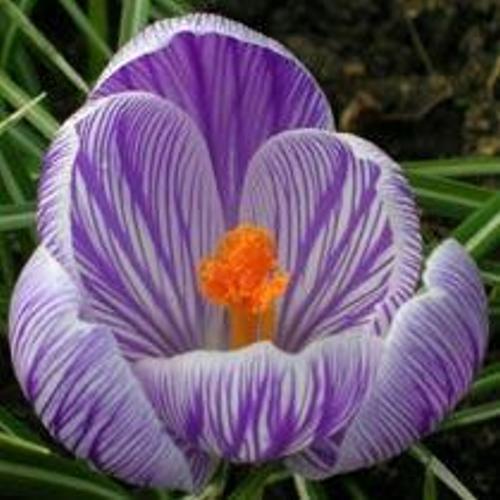
Spring Crocus
Crocus vernus
The Spring Crocus (Crocus vernus), also known as the Giant Crocus or Dutch Crocus, is a delicate, diminutive perennial belonging to the Iridaceae (Iris) family. Native to the alpine meadows and woodlands of central and southern Europe, it has become a globally beloved symbol of the end of winter....
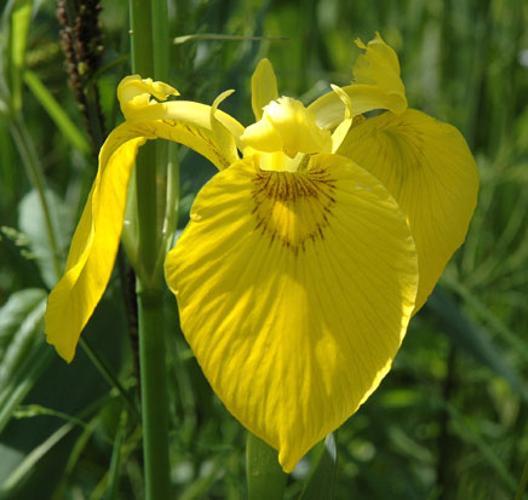
Yellow Iris
Iris pseudacorus
The Yellow Iris, scientifically classified as Iris pseudacorus and commonly known as the Yellow Flag or Water Flag, is a striking, highly vigorous wetland perennial plant belonging to the Iridaceae (iris) family. Native to Europe, Western Asia, and North Africa, this species thrives naturally in...
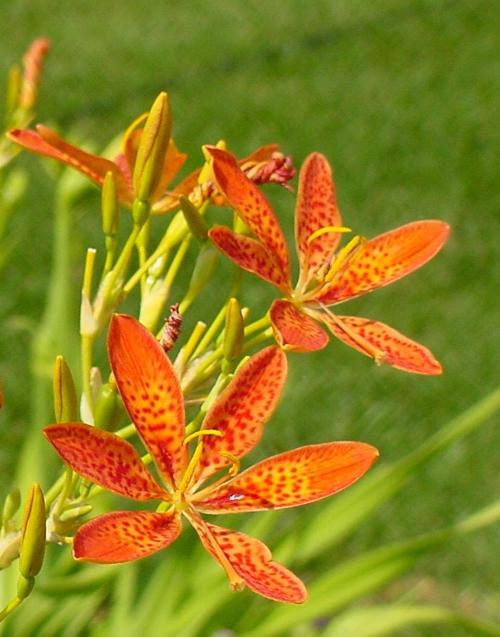
Leopard Lily
Iris domestica (syn. Belamcanda chinensis)
The Leopard Lily, botanically designated as *Iris domestica* (previously classified as *Belamcanda chinensis*, and commonly known as the Blackberry Lily or Leopard Flower), is an exceptionally distinct, highly ornamental perennial. Belonging to the family Iridaceae (the iris family, tribe Irideae...
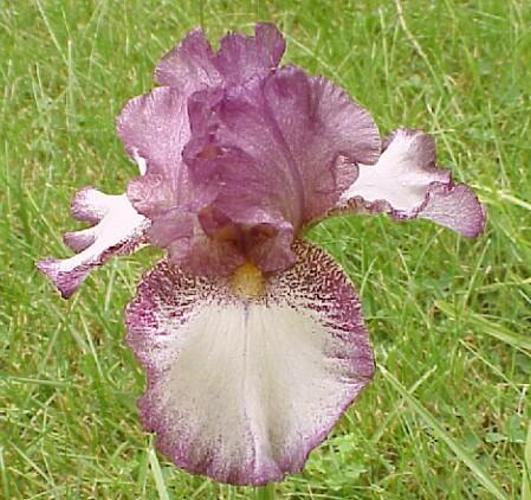
Bearded Iris
Iris germanica
The Bearded Iris, botanically designated under the genus *Iris* (particularly *Iris germanica*), is an exceptionally elegant, highly popular hardy perennial. Belonging to the family Iridaceae (the iris family, tribe Irideae), this spectacular garden favorite is native to the dry, sunny slopes and...
Similar Characteristics
4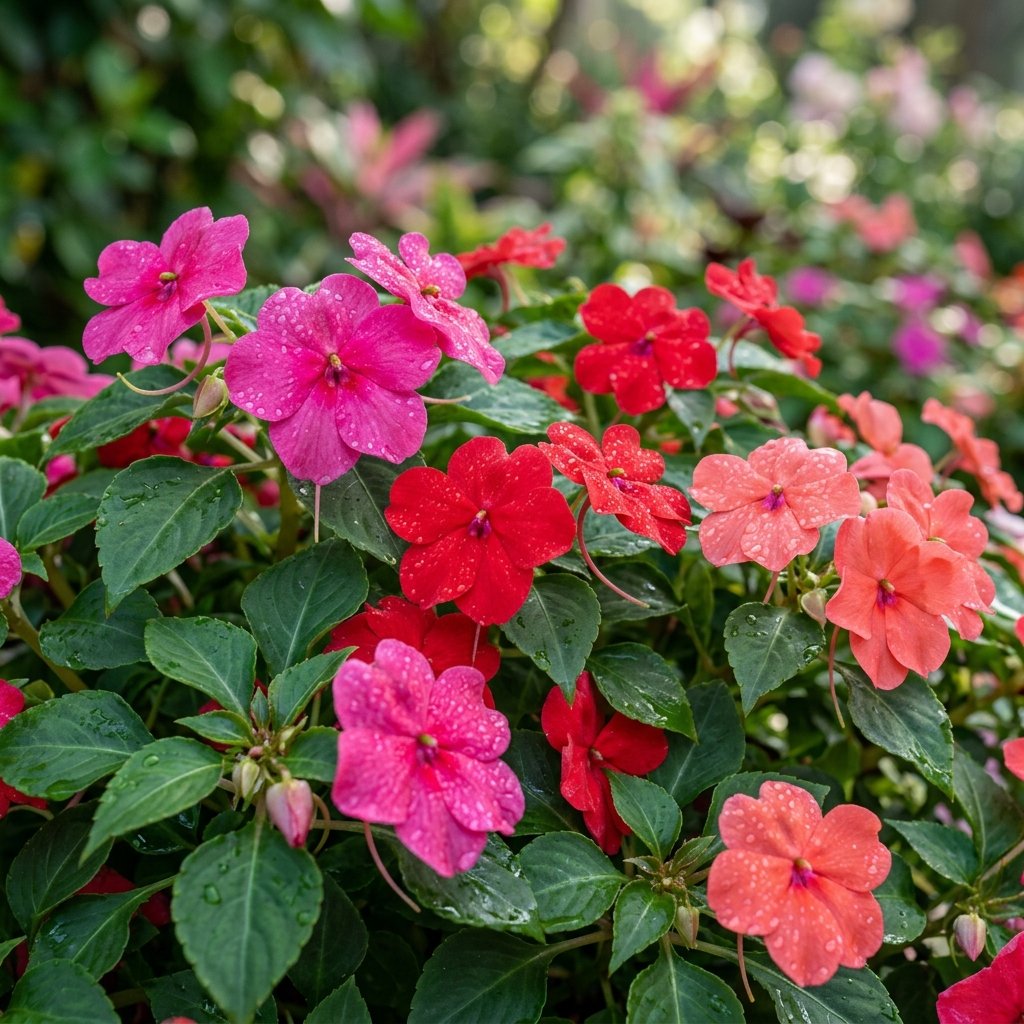
Impatiens Walleriana
Impatiens walleriana
Impatiens Walleriana, botanically classified as *Impatiens walleriana* and universally celebrated across the gardening world as Busy Lizzie, Sultana, or Patient Lucy, is an exceptionally popular, prolific, and shade-tolerant herbaceous perennial commonly cultivated as an annual. Belonging to the...
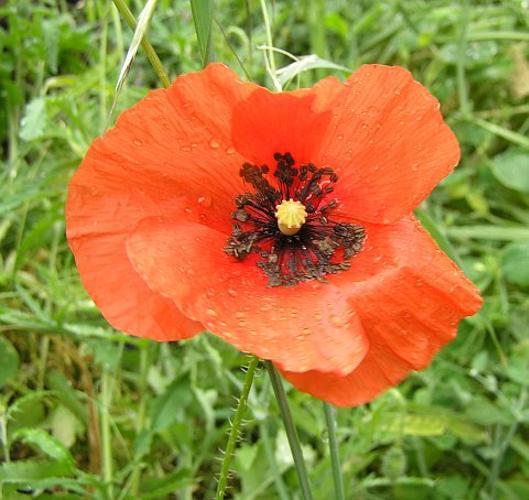
Corn Poppy
Papaver rhoeas
The Corn Poppy, botanically designated as Papaver rhoeas and commonly known as the Field Poppy, Flanders Poppy, or Red Poppy, is an exceptionally iconic, breezy, and resilient annual wildflower. Belonging to the family Papaveraceae (the poppy family, tribe Papavereae), this historically rich plan...
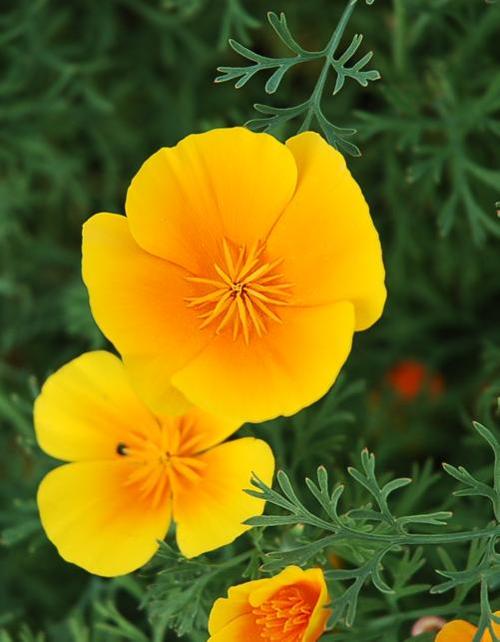
California poppy
Eschscholzia californica
Eschscholzia californica, famously known as the California Poppy or Golden Poppy, is a brilliant wildflower that serves as a luminous symbol of the American West. Belonging to the Papaveraceae (Poppy) family, this resilient species is celebrated for its silky, cup-shaped blossoms that range from...
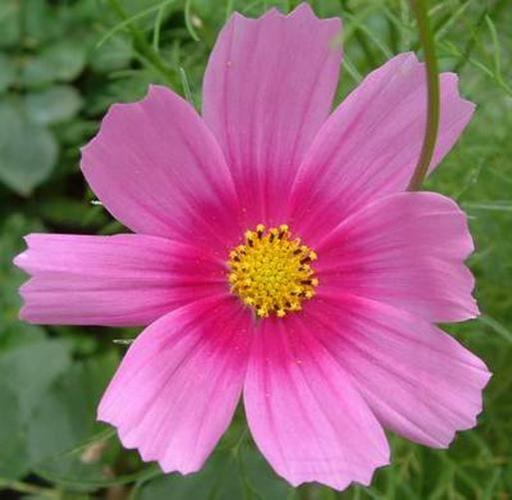
Mexican Aster
Cosmos bipinnatus
The Mexican Aster, botanically designated as Cosmos bipinnatus and commonly referred to as Garden Cosmos or simply Cosmos, is an exceptionally graceful, fast-growing, and heavy-blooming annual. Belonging to the family Asteraceae (the daisy or composite family), this beautiful plant is native to t...