
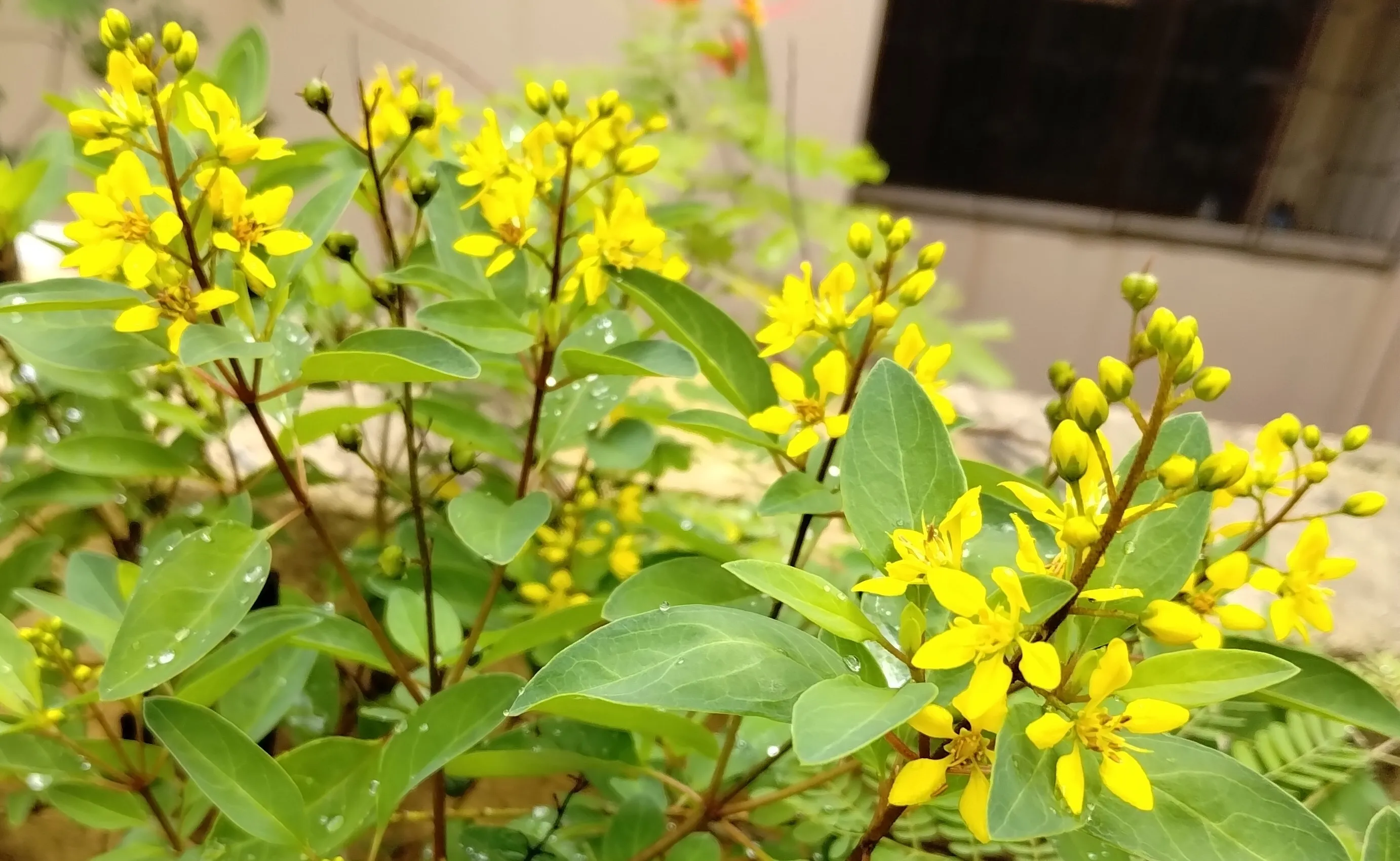
Golden Thryallis
Galphimia gracilis
How to Identify Golden Thryallis
Care & Growing Guide
Seasonal Blooming & Hardiness
Seasonal Blooming Calendar:
- Peak Bloom: Spring to early summer (typically April through June).
- Planting Time: Sow seeds directly outdoors in early spring after the last frost, or transplant nursery starts in late spring.
Bloom Timeline
About Golden Thryallis
The Golden Thryallis, botanically designated as Galphimia gracilis (previously confused with Thryallis glauca, commonly known as Gold Shower, Rain-of-Gold, or Slender Goldshower), is an exceptionally cheerful, fast-growing tropical evergreen shrub. Belonging to the family Malpighiaceae (the acerola or barbados cherry family, tribe Galphimieae), this high-vitality ornamental is native to the warm, dry scrublands, open pine forests, and rocky hillsides of Mexico and Central America, and is cultivated extensively across warm regions worldwide.
Growing 3 to 6 feet (90 to 180 cm) tall and spreading 3 to 4 feet wide, this multi-stemmed, rounded shrub features slender, copper-colored stems clothed in opposite, oval-shaped, and smooth blue-green leaves measuring 1 to 2 inches long. It is globally celebrated for its virtually constant, year-round production of upright, terminal racemes composed of dozens of small, star-shaped, and brilliant golden-yellow flowers measuring 0.75 inches across. Uniquely, as the flowers age, the petals turn a warm, attractive copper-orange color.
Individual flowers display a distinctive five-part structure with 5 bright yellow clawed petals and 10 prominent, reddish-orange stamens. The radially symmetrical reproductive morphology is represented by the family-specific floral formula EBr ⊕ ⚥ K5 C5 A10 G(3). This formula indicates that the flowers are ebracteate, actinomorphic, and bisexual. The calyx contains 5 sepals, and the corolla has 5 free, clawed petals. The androecium contains 10 free stamens, and the gynoecium contains 3 fused carpels forming a superior ovary that matures into a small, dry, three-lobed capsule.
Cultivating Golden Thryallis is remarkably easy, as it is a highly resilient, low-maintenance plant. It requires full, direct sunlight (at least 6 hours daily) to maintain its dense shape and heavy blooming; partial shade will cause the stems to become leggy. Thrives in average, moderately fertile, sandy, and exceptionally well-draining soils with a neutral pH, and is highly heat and drought-tolerant once established. It is extremely frost-sensitive (USDA zones 9 through 11) and will die back to the ground in light freezes, resprouting in spring.
The genus name Galphimia is a creative anagram of Malpighia, celebrating its close relationship to the Acerola cherry family. Famed in Sanskrit as Galphimia (गैल्फेमिया) and in Hindi as Swarn Varsha (स्वर्ण वर्षा, meaning 'gold rain'), it represents joy, constant warmth, and abundant fortune. It is highly valued in traditional homeopathic medicine for treating asthma and allergies.
For pet owners, Golden Thryallis is an exceptionally safe and non-toxic choice. It contains no hazardous alkaloids, making it a highly premium, worry-free evergreen selection for household gardens. For detailed safety guidance and tropical garden layouts, visit our general Pet Guard page. It is distinguished from yellow bells by its rounder bush habit and small clawed petals. It looks spectacular in borders alongside Bougainvillea or Allamanda. For more information on warm-climate shrubs, browse our Flower Identifier.
For more botanical profiles and flower identification features, see our guides on Globe Amaranth (Gomphrena) and Jatropha (Spicy Jatropha).
Floral Formula & Features
Ebracteate (no bracts), radially symmetrical (actinomorphic), bisexual, 5 free sepals, 5 free petals (clawed), 10 free stamens, 3 fused carpels with superior ovary
- Name 'Galphimia' honors Italian botanist Martino Gal fimia. 'Gracilis' means slender or graceful. 'Thryallis' former genus name, still commonly used. 'Rain of Gold,' 'Shower of Gold,' 'Spray of Gold' describe cascading yellow blooms. About 12 Galphimia species, all from Americas
- Flowers 0.5 inches (1-1.5 cm) across, small star-shaped blooms with 5 rounded petals. Bright golden-yellow color. Arranged in terminal racemes 4-6 inches long creating showy sprays. Blooms nearly year-round in tropical climates, primarily spring through fall elsewhere. Individual flowers short-lived but constantly replaced
- Evergreen shrub that blooms continuously in warm conditions. Compact, rounded, bushy growth. Fast-growing, reaching mature size in 2-3 years. Responds well to pruning for shaping. Popular hedge and border plant. Thrives in heat and humidity
- Grows 3-6 feet (1-2 m) tall and wide, typically maintained at 3-4 feet with pruning. Compact, rounded habit. Lifespan of many years (10-20+). Propagated from semi-hardwood cuttings (root easily in 3-4 weeks), seeds, or layering
- Native to Mexico and Central America (Guatemala, Honduras). Found in tropical and subtropical forests, woodland edges. Now widely cultivated in tropical and subtropical regions worldwide, especially southern United States, Caribbean, Southeast Asia
- Requires full sun to partial shade (blooms best in sun). Adapts to most well-drained soils. Drought tolerant once established but blooms better with regular water. Tolerates heat, humidity, and salt spray. Prune to shape. Frost tender (damaged below 32°F/0°C). Zones 9-11
- Excellent hedge, border, foundation, and container plant. Blooms nearly year-round in warm climates. Attracts butterflies, bees, and hummingbirds. Deer resistant. Low maintenance. Fast-growing for quick screening. Compact size ideal for small gardens. Used in traditional medicine for anxiety. Perfect for continuous color in tropical gardens
Names in Different Languages
Toxicity & Safety
Frequently Asked Questions
What is Floral Formula?
A floral formula is a symbolic representation of a flower's structure using letters, numbers, and special symbols. It provides a concise way to describe the arrangement and number of floral parts.
This formula describes the flower's symmetry, sepals, petals, stamens, and carpels in a standardized format.
Formula Sequence
- Bract: Br or Ebr
- Bracteole: Brl or Ebrl
- Symmetry: % (Radial) or ⊕ (Bilateral)
- Sex: ♀ (Female), ♂ (Male), or ⚥ (Bisexual)
- Calyx/Sepal: K<number> (Free or Fused)
- Corolla/Petal: C<number> (Free or Fused)
- Androecium: A<number> (Free or Fused)
- Gynaecium: G<number> (Superior or Inferior Ovary)
Symbol Meanings
- Numbers: Indicate quantity of parts
- Parentheses (): Parts are fused together
- Plus (+): Parts in different whorls
- Underline: Superior ovary position
- Overline: Inferior ovary position
- ∞: Numerous parts (too many to count)
Understanding floral formulas helps botanists quickly identify and classify flowers based on their structural characteristics.
Similar Flowers
Discover flowers that share botanical characteristics
Similar Colors
2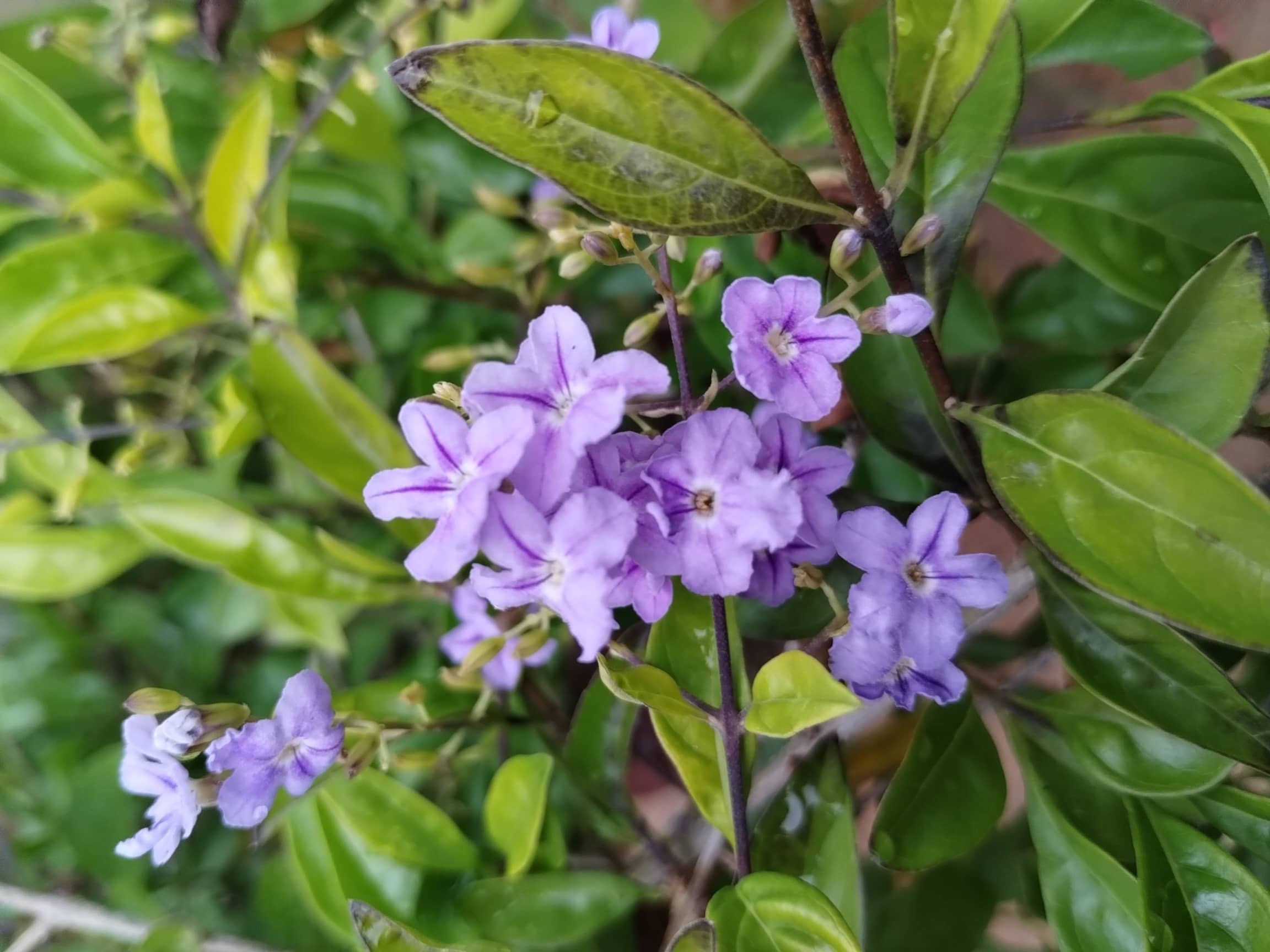
Golden Dewdrop (Duranta)
Duranta erecta
Duranta erecta, commonly known as Golden Dewdrop, Pigeon Berry, or Skyflower, is a sprawling, fast-growing evergreen shrub belonging to the Verbenaceae family. Native to the Americas from Mexico and the Caribbean down to South America, it has been widely introduced across tropical and subtropical...
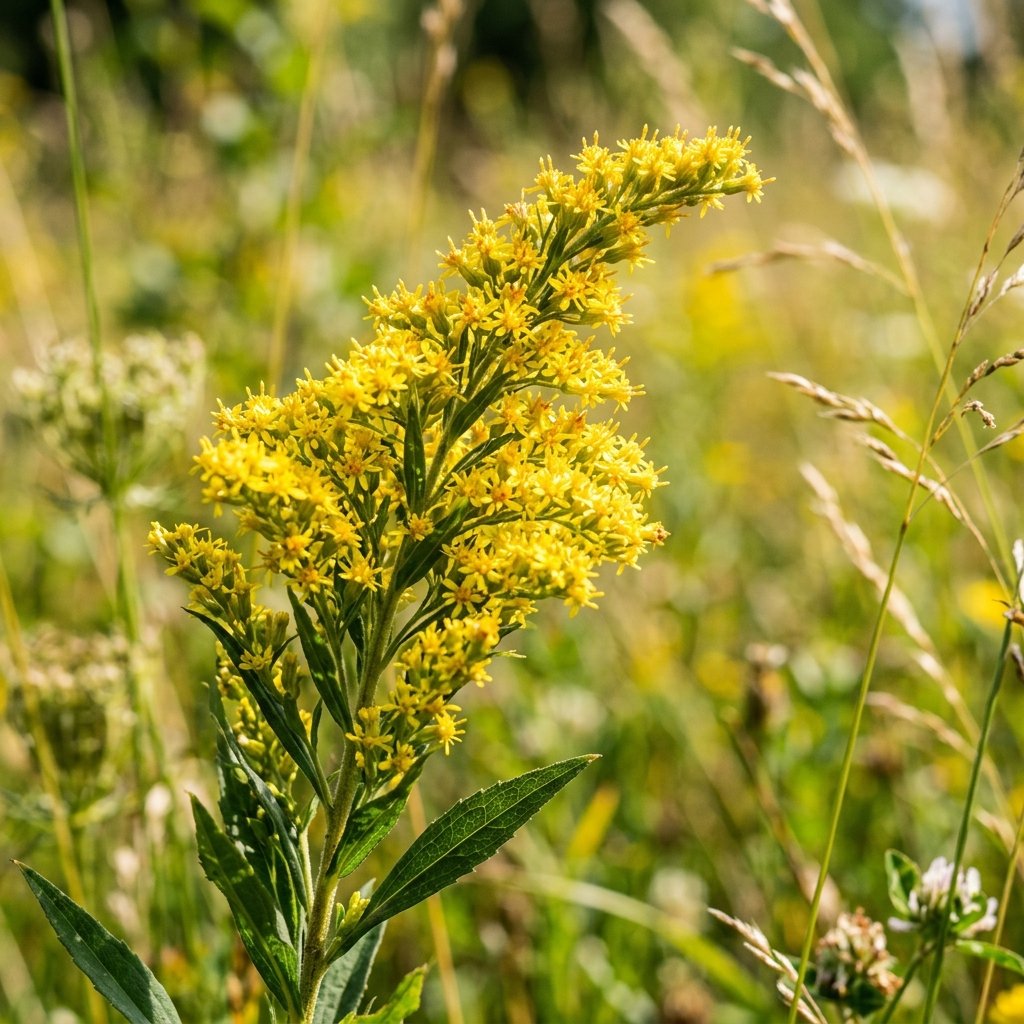
Goldenrod
Solidago canadensis
Goldenrod (*Solidago* spp.) is one of the most ecologically important and visually spectacular native wildflowers of North America, producing brilliant cascading plumes of tiny golden-yellow flowers from late summer through autumn. With over 100 species native to the Americas (most concentrated i...
Similar Characteristics
4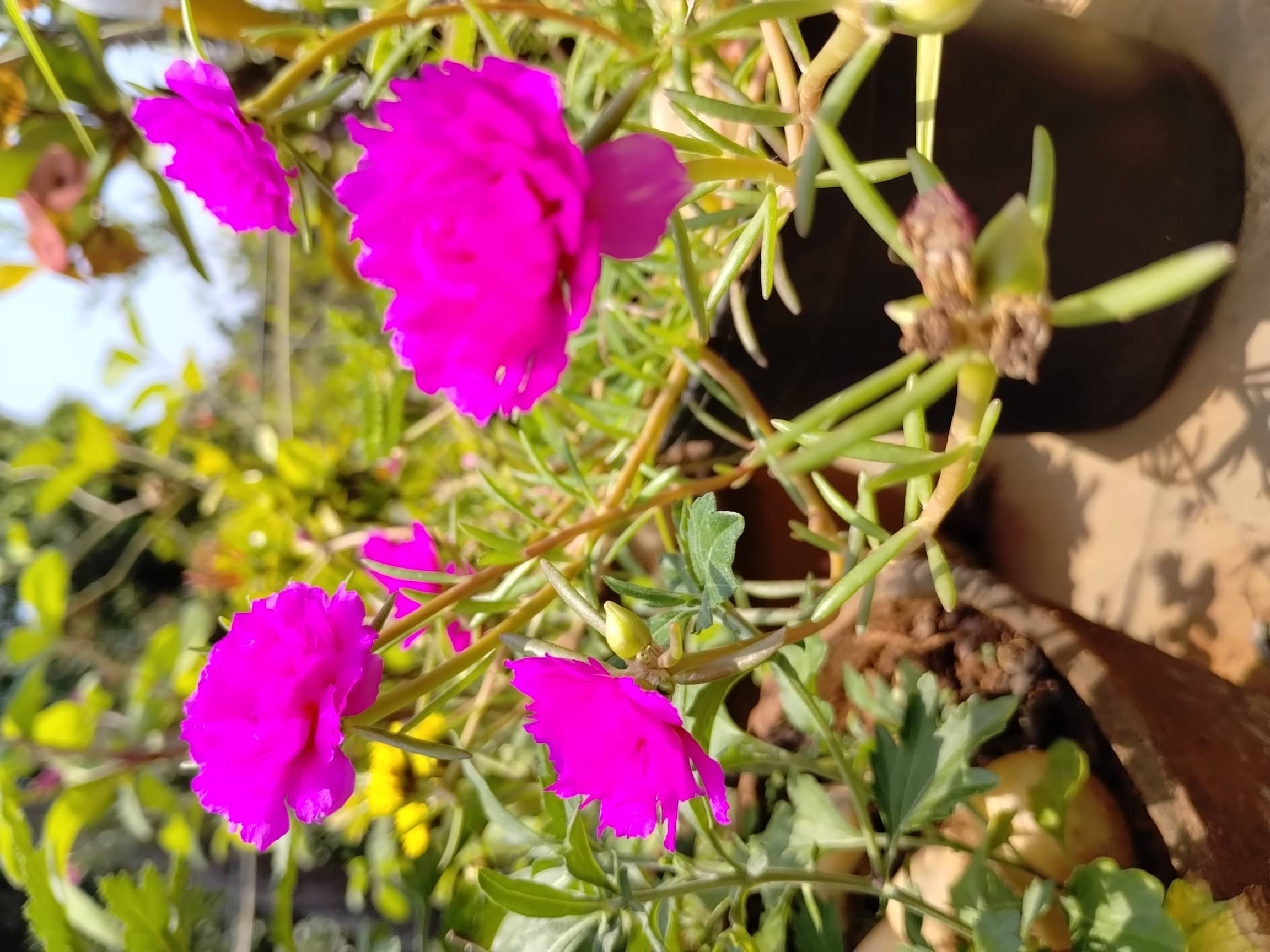
Moss Rose (Portulaca)
Portulaca grandiflora
Portulaca grandiflora, universally known as the Moss Rose, is a brilliantly colored, low-growing trailing annual belonging to the Portulacaceae family. Native to the hot, arid plains of Argentina, southern Brazil, and Uruguay, it is renowned globally as the ultimate survivalist plant for the summ...
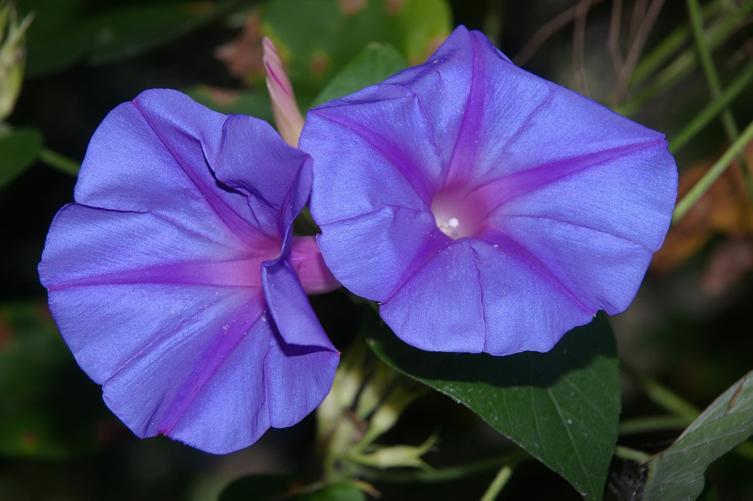
Morning Glory
Ipomoea tricolor
The Morning Glory, botanically designated as Ipomoea tricolor (and including the closely related *Ipomoea purpurea*), is an exceptionally vigorous, fast-growing climbing annual vine. Belonging to the family Convolvulaceae (the bindweed or morning glory family, tribe Ipomoeeae), this classic garde...
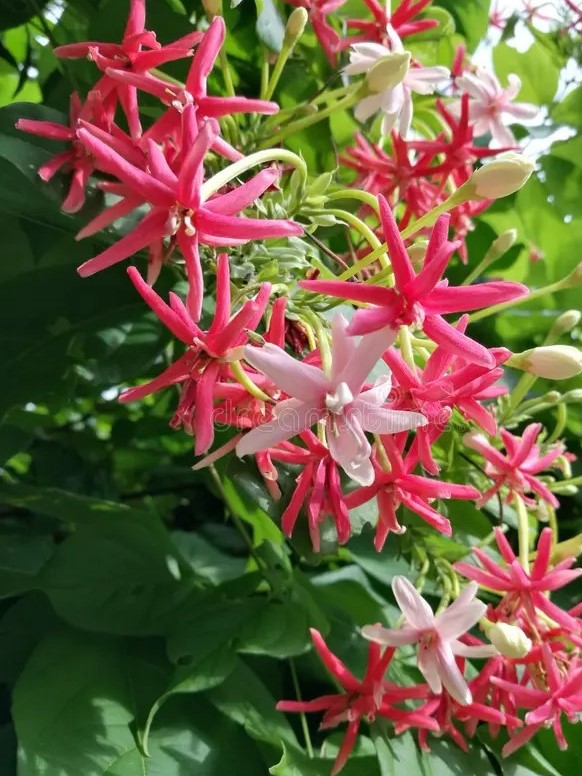
Rangoon creeper
Combretum indicum
Rangoon Creeper, botanically classified as Combretum indicum (historically known as Quisqualis indica), is an enchanting, woody climbing vine belonging to the Combretaceae (combretum) family. Native to the warm, moist tropical forests and riverbanks of South Asia, Southeast Asia, and the Pacific...
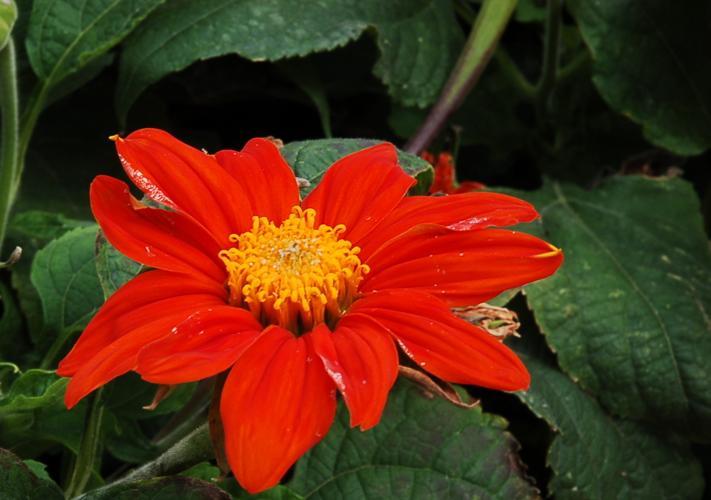
Orange Dahlia
Dahlia × hortensis
The Orange Dahlia, botanically designated under the genus *Dahlia* (particularly hybrids of *Dahlia pinnata*), is an exceptionally spectacular, highly vibrant tuberous perennial. Belonging to the family Asteraceae (the daisy or sunflower family, tribe Coreopsideae), this high-color classic is nat...