
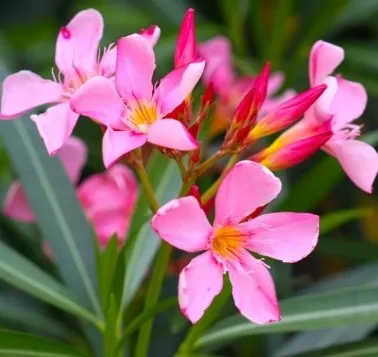
Oleander (Rosebay)
Nerium oleander
How to Identify Oleander (Rosebay)
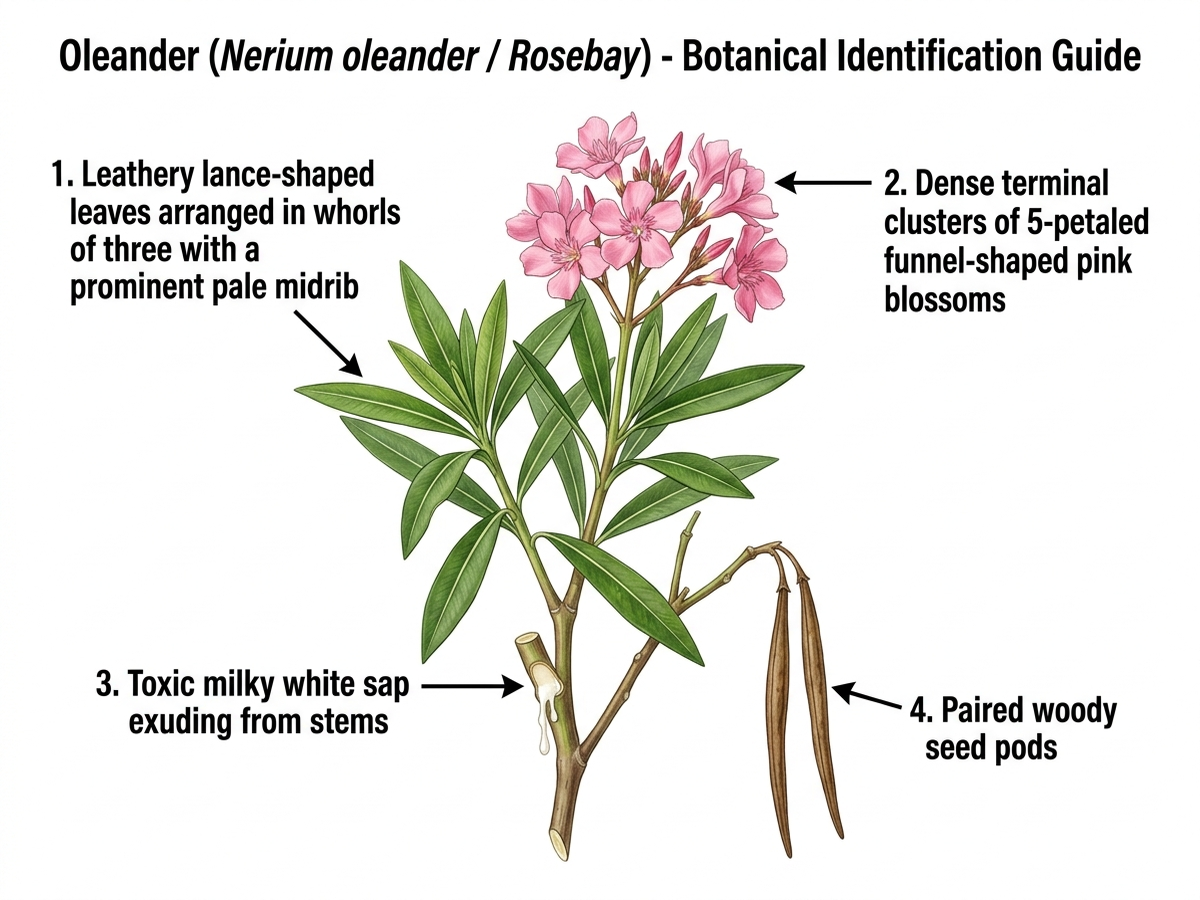
A detailed guide to identifying Oleander (Nerium oleander / Rosebay) by its key botanical features:
- Leathery Whorled Leaves: Narrow, lance-shaped leaves measuring 4 to 6 inches, arranged in distinctive whorls of three along erect stems.
- Terminal Flower Clusters: Dense clusters of 5-petaled, funnel-shaped blossoms in pink, white, red, peach, or yellow.
- Toxic Milky Sap: Broken stems exude a sticky, white milky latex containing lethal cardiac glycosides.
- Paired Seed Pods: Long, narrow, woody paired seed pods that split open to release wind-borne hairy seeds.
Care & Growing Guide
Oleander (Rosebay) Care & Growing Guide:
- Light: Full direct sun (at least 6 hours daily) for maximum flowering and dense growth.
- Soil: Highly adaptable to poor, sandy, clay, or salty soils; requires good drainage.
- Watering: Exceptionally drought-tolerant once established; water moderately during first season.
- Pruning: Prune heavily in late winter or early spring to maintain shape (wear protective gloves!).
Seasonal Blooming & Hardiness
Seasonal Blooming Calendar:
- Peak Bloom: Spring to early summer (typically April through June).
- Planting Time: Sow seeds directly outdoors in early spring after the last frost, or transplant nursery starts in late spring.
Bloom Timeline
About Oleander (Rosebay)
The Oleander, botanically designated as Nerium oleander and belonging to the family Apocynaceae (the dogbane family), is a fast-growing, highly resilient, and multi-stemmed evergreen shrub or small tree. Native to the rocky streambeds, coastal valleys, and warm river banks of the Mediterranean basin, North Africa, and parts of the Middle East, this robust species has naturalized widely across warm-temperate, subtropical, and tropical regions globally. It is commonly referred to as Oleander, Rosebay, or Rose Laurel, and is highly favored for its exceptional toughness and brilliant year-round floral displays.
Oleander typically grows between 6 and 20 feet tall, with a spreading canopy that spans 6 to 10 feet. It features erect, flexible branches covered with thick, leathery, narrow, lance-shaped leaves. These leaves measure 4 to 6 inches in length, have a prominent pale midrib, and are arranged in distinctive whorls of three. In warm climates, the plant blooms continuously, producing dense, terminal clusters of showy, five-petaled blossoms that measure 1 to 2 inches across. Flowers appear in a beautiful range of colors, including soft pinks, pure whites, deep reds, soft peaches, and light yellows, in both single and double forms.
The reproductive morphology of this species is described by the botanical floral formula EBr ⊕ ⚥ K5 C(5) A5 G(2). This formula states that the flowers are ebracteate (lacking bracts immediately beneath the calyx), radially symmetrical (actinomorphic), and bisexual. The calyx consists of 5 free, narrow sepals, and the corolla features 5 fused petals that form a distinct funnel-shaped tube with five spreading lobes. The androecium consists of 5 stamens fused to the inner corolla tube (epipetalous) with long, hairy, twisting appendages. The gynoecium contains 2 fused carpels with a superior ovary, which develops into paired, woody seed pods.
Horticulturally, Oleander is legendary for its extreme toughness, drought tolerance, and low maintenance. It requires full, direct sunlight (6+ hours daily) and performs beautifully in poor, sandy, gravelly, or heavy clay soils. It is highly tolerant of intense heat, prolonged dry periods, severe air pollution, and high soil salinity, making it an ideal choice for coastal landscaping and highway medians. It is cold hardy in USDA zones 8 through 11, and can be pruned heavily in late winter or early spring to shape the plant or promote denser growth.
The genus name Nerium is derived from the ancient Greek word 'neros', which means 'water,' referencing the plant's native riverside habitats, while the specific epithet 'oleander' refers to the close resemblance of its leathery leaves to those of the olive tree (Olea europaea). Famed in Sanskrit as Karavira (करवीर) or Hayamara (हयमार, meaning 'horse-killer') and in Hindi as Kaner (कनेर), the plant carries rich cultural and historical weight. Despite its severe hazards, it symbolizes beauty, caution, and resilience, and is extensively used in traditional Indian religious garland offerings.
For pet owners, gardeners, and livestock managers, the Oleander represents an EXTREMELY TOXIC hazard. Nerium oleander is one of the most poisonous ornamental plants in the world. All parts of the plant—including the leaves, flowers, seeds, stems, roots, milky sap, and even the smoke generated by burning its wood—contain highly lethal concentrations of cardiac glycosides, primarily oleandrin and neriine. Ingesting even a single leaf can cause fatal poisoning in cats, dogs, horses, livestock, and humans. Symptoms include severe drooling, intense vomiting, bloody diarrhea, extreme abdominal pain, a dangerous drop in heart rate, erratic heart arrhythmias, and sudden cardiovascular collapse. For detailed information on identifying symptoms and seeking veterinary care, visit our specific Pet Guard page.
Oleander is occasionally confused with the non-toxic sweet bay or olive tree. It is easily distinguished by its milky, toxic sap when a stem is broken, and its showy clusters of colorful flowers. Because of its intense toxicity, it must be grown with absolute care away from children and pets; we suggest planting it as a distant boundary screen alongside other heat-tolerant species like Pinwheel Jasmine or Mandevilla. To discover more resilient tropical and Mediterranean shrubs, explore our Flower Identifier.
Floral Formula & Features
Ebracteate, radially symmetrical, bisexual, 5 free sepals, 5 fused petals forming funnel, 5 stamens, 2 fused carpels with superior ovary
- Scientific Name & Classification: Nerium oleander (Apocynaceae). Famed as Oleander, Rosebay, and Rose Laurel.
- Identification Markers: Leathery lance-shaped leaves in whorls of three, toxic milky sap, and dense terminal clusters of 5-petaled flowers in pink, red, white, or yellow.
- Floral Formula (EBr ⊕ ⚥ K5 C(5) A5 G(2)): Radially symmetrical, bisexual flowers with 5 fused petals forming a funnel tube, 5 stamens, and superior ovary.
- Growing Requirements: Full sun; highly tolerant of drought, extreme heat, salt spray, and poor soil. Prune after flowering (Zones 8-11).
- Cultural Significance: Sanskrit name 'Hayamara' means horse-killer, highlighting its lethal properties. Name 'Nerium' comes from Greek 'neros' (water).
- Safety & Toxicity: EXTREMELY TOXIC. All parts contain lethal cardiac glycosides (oleandrin). Ingesting a single leaf can kill a pet or human.
- Common Look-alikes: Confused with sweet bay or olive trees, but easily distinguished by its toxic milky sap and vibrant, showy flowers.
- Internal Links: Plant as a safe boundary hedge beside other tough, heat-tolerant beauties like Pinwheel Jasmine or Mandevilla; find more in our Flower Identifier.
Names in Different Languages
Botanical Classification: Oleander (Rosebay) belongs to the Apocynaceae family. Learn how to identify its floral symmetry, stamen arrangement, and structural formulas in our Botanical Family Classification Guide.
Toxicity & Safety
Always keep toxic plants out of reach of children and pets. Consult a veterinarian or medical professional immediately if ingestion is suspected.
Pet Safety Guide: For detailed toxicity symptoms, first-aid measures, and safe garden alternatives, see our full Pet Guard Profile for Oleander (Rosebay).
Frequently Asked Questions
What is Floral Formula?
A floral formula is a symbolic representation of a flower's structure using letters, numbers, and special symbols. It provides a concise way to describe the arrangement and number of floral parts.
This formula describes the flower's symmetry, sepals, petals, stamens, and carpels in a standardized format.
Formula Sequence
- Bract: Br or Ebr
- Bracteole: Brl or Ebrl
- Symmetry: % (Radial) or ⊕ (Bilateral)
- Sex: ♀ (Female), ♂ (Male), or ⚥ (Bisexual)
- Calyx/Sepal: K<number> (Free or Fused)
- Corolla/Petal: C<number> (Free or Fused)
- Androecium: A<number> (Free or Fused)
- Gynaecium: G<number> (Superior or Inferior Ovary)
Symbol Meanings
- Numbers: Indicate quantity of parts
- Parentheses (): Parts are fused together
- Plus (+): Parts in different whorls
- Underline: Superior ovary position
- Overline: Inferior ovary position
- ∞: Numerous parts (too many to count)
Understanding floral formulas helps botanists quickly identify and classify flowers based on their structural characteristics.
Similar Flowers
Discover flowers that share botanical characteristics
Same Family
4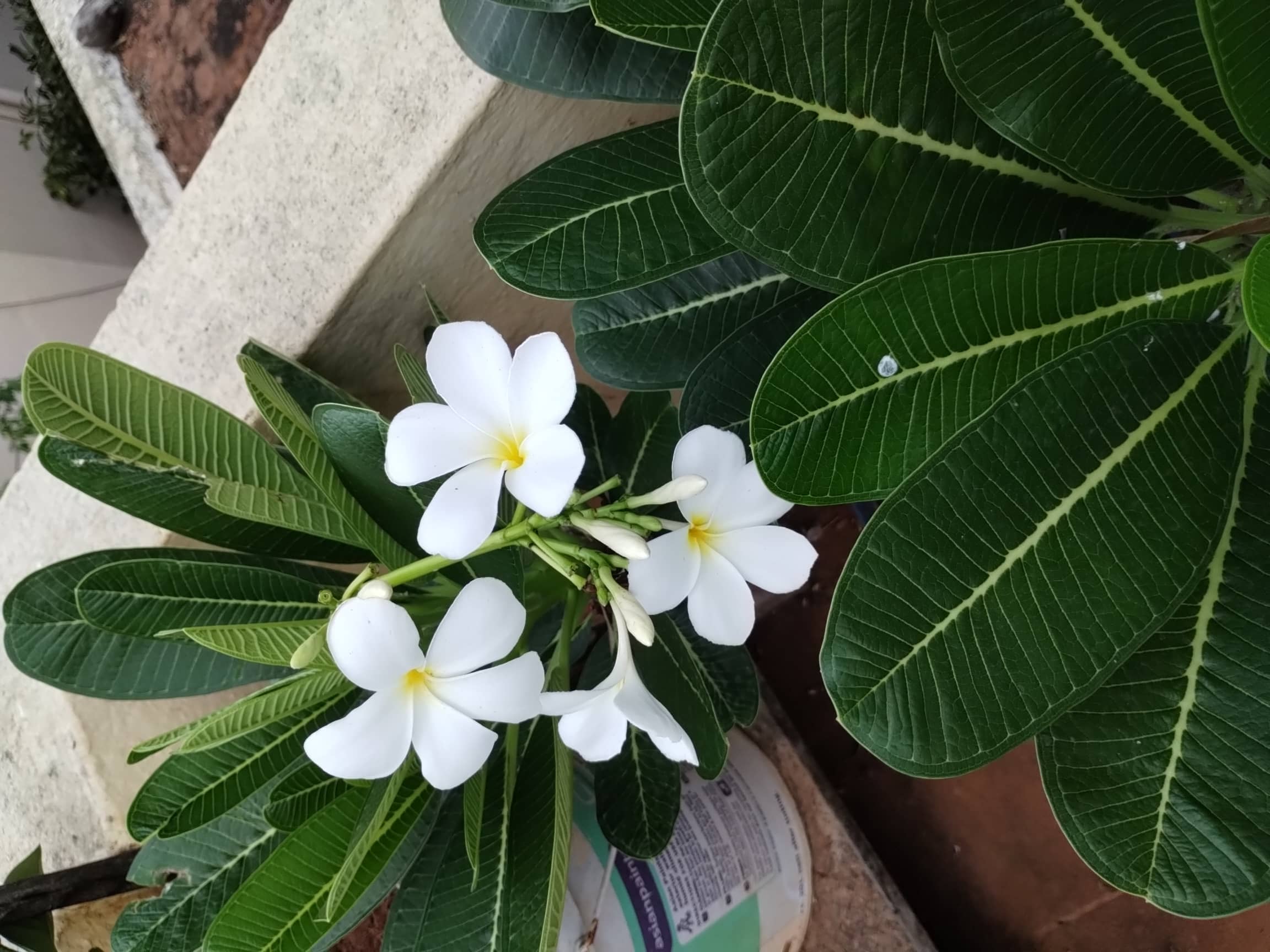
Plumeria
Plumeria Rubra
Plumeria, universally known as the Frangipani, is a genus of deciduous shrubs and small trees that serve as the quintessential symbol of tropical paradise. Belonging to the Apocynaceae (Dogbane) family, these plants are native to Mexico, Central America, and the Caribbean, but they have been embr...
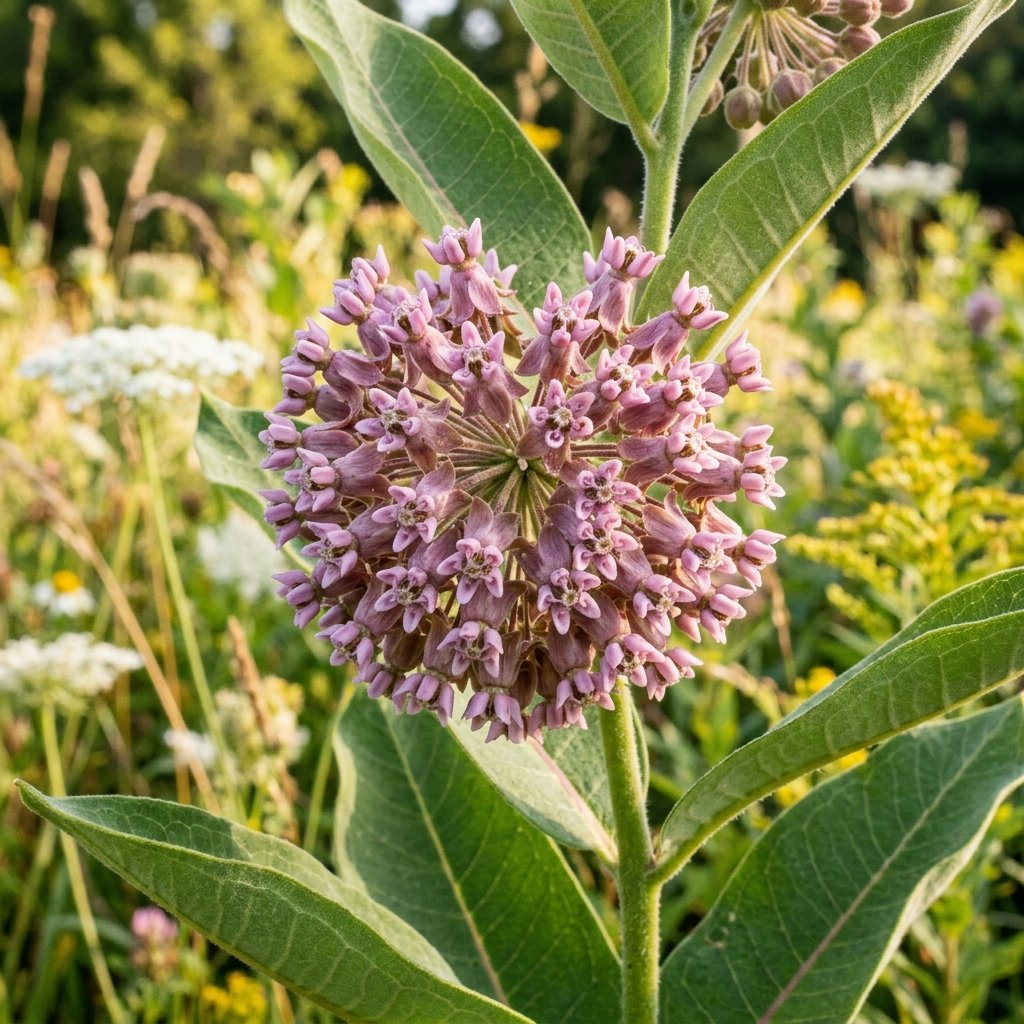
Common Milkweed
Asclepias syriaca
Common Milkweed (*Asclepias syriaca*) is the quintessential wildflower of eastern North American roadsides, meadows, and prairies — a robust, upright perennial producing large, globe-shaped clusters of dusky pink to mauve flowers with an intoxicating sweet fragrance in midsummer, followed by the...
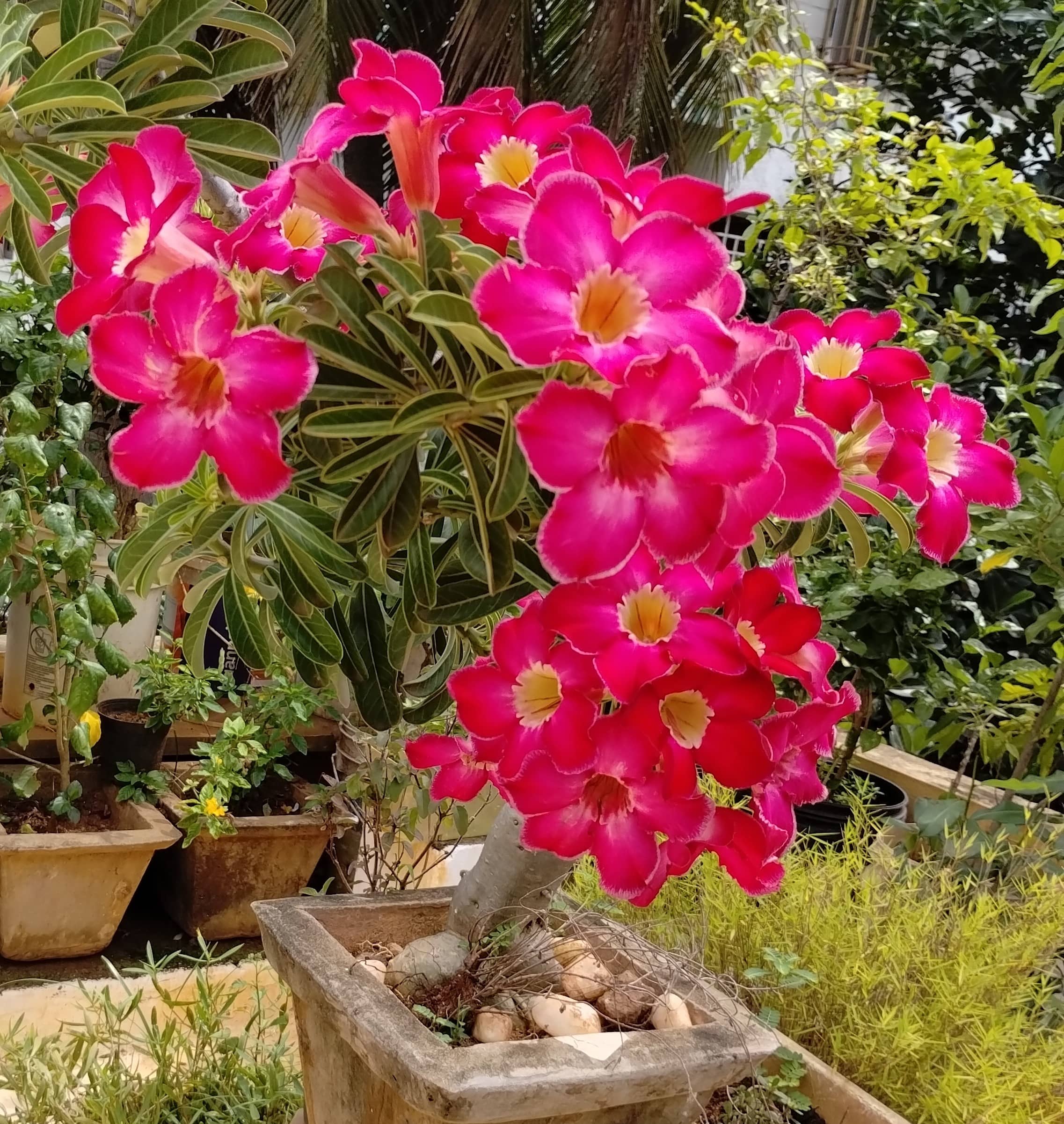
Desert Rose
Adenium obesum
The Desert Rose (Adenium obesum), a member of the Apocynaceae (Dogbane) family, is one of the most sculptural and striking succulent shrubs in the botanical world. Native to the arid regions of sub-Saharan Africa and the Arabian Peninsula, this plant has developed extraordinary adaptations to sur...
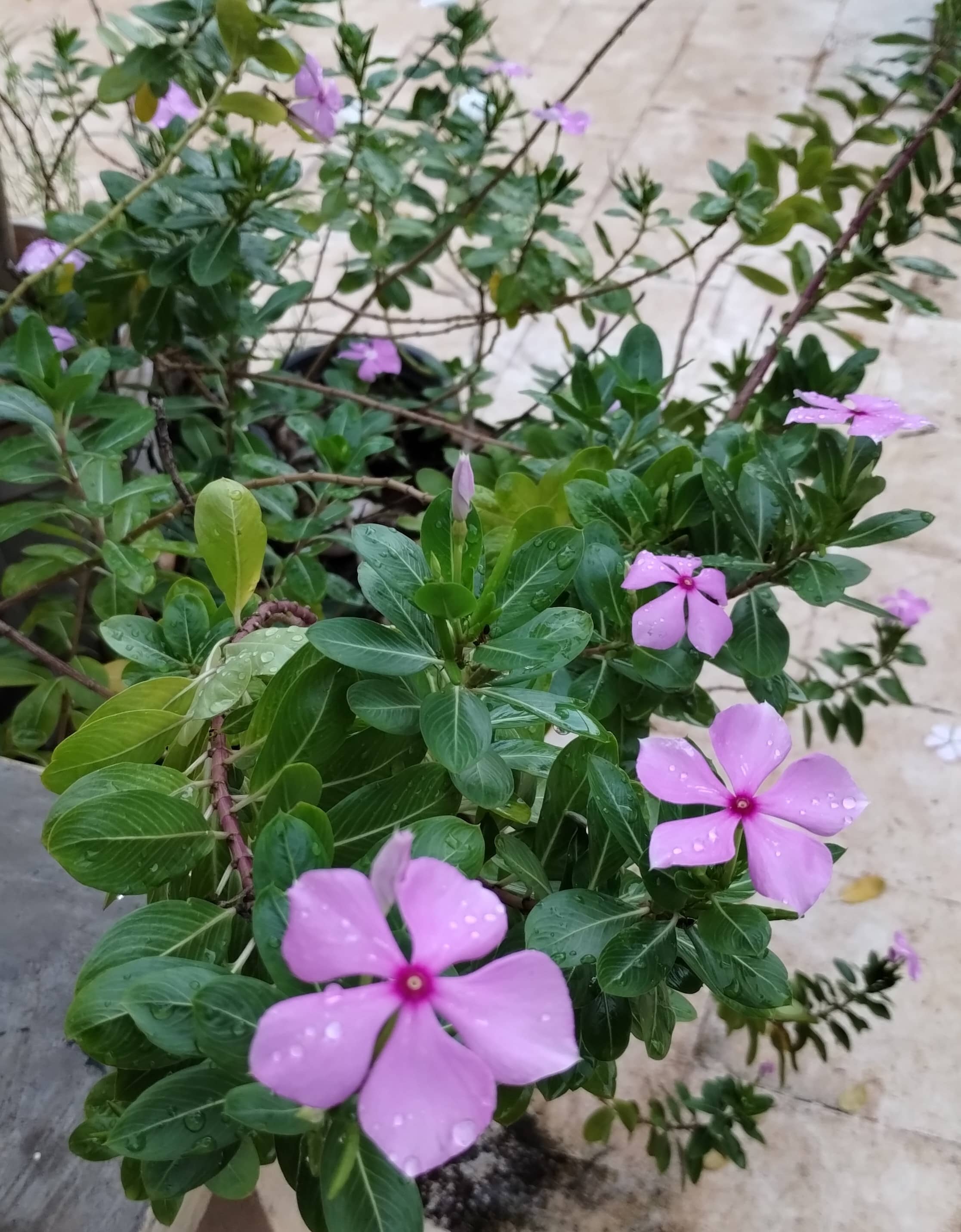
Vinca Rosea
Catharanthus roseus
Vinca Rosea (Catharanthus roseus), widely known as the Madagascar Periwinkle, is a plant of profound duality—equally celebrated as a resilient ornamental and a life-saving pharmaceutical powerhouse. Native to the dry forests of Madagascar but now naturalized across tropical regions worldwide, thi...
Similar Characteristics
4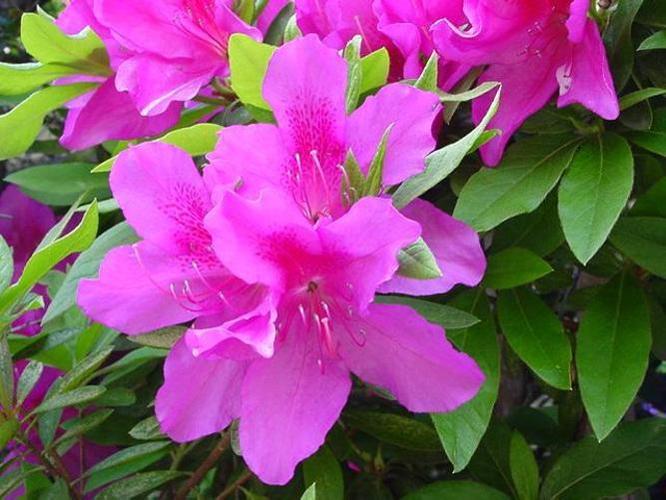
Azalea
Rhododendron (subgenus Tsutsusi)
The Azalea, botanically classified as Rhododendron (specifically under the subgenera Tsutsusi and Pentanthera) and belonging to the family Ericaceae (the heath family), is an exceptionally spectacular, heavy-blooming woody perennial shrub. Native primarily to the cool, damp woodlands, mountain sl...
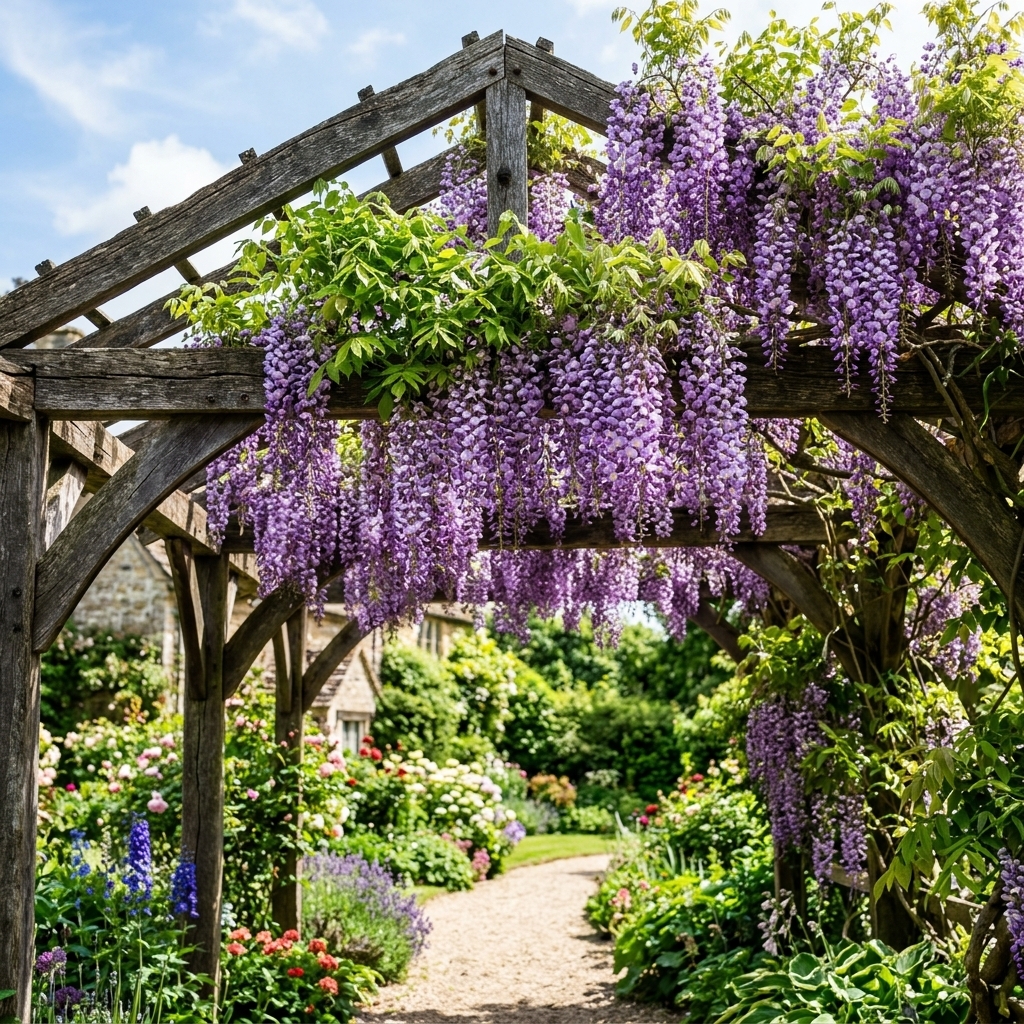
Wisteria
Wisteria
Wisteria, botanically classified within the genus Wisteria and most famously represented by Wisteria sinensis (Chinese Wisteria) and Wisteria floribunda (Japanese Wisteria), is a spectacular genus of woody, climbing deciduous vines in the Fabaceae (pea or legume) family. Native to the damp woodla...
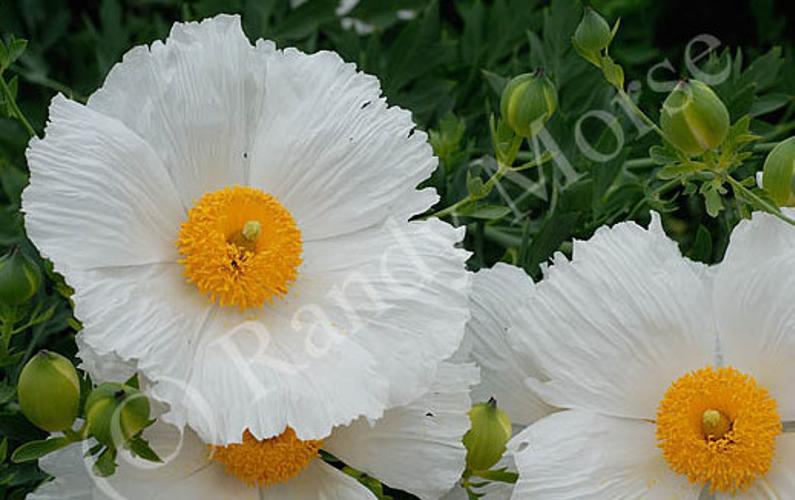
Tree Poppy
Dendromecon rigida
The Tree Poppy, scientifically known as Dendromecon rigida and commonly referred to as the Bush Poppy or California Tree Poppy, is a rare, spectacular evergreen shrub belonging to the Papaveraceae (poppy) family. Endemic to the dry, rocky chaparral slopes and coastal sage scrub of California and...
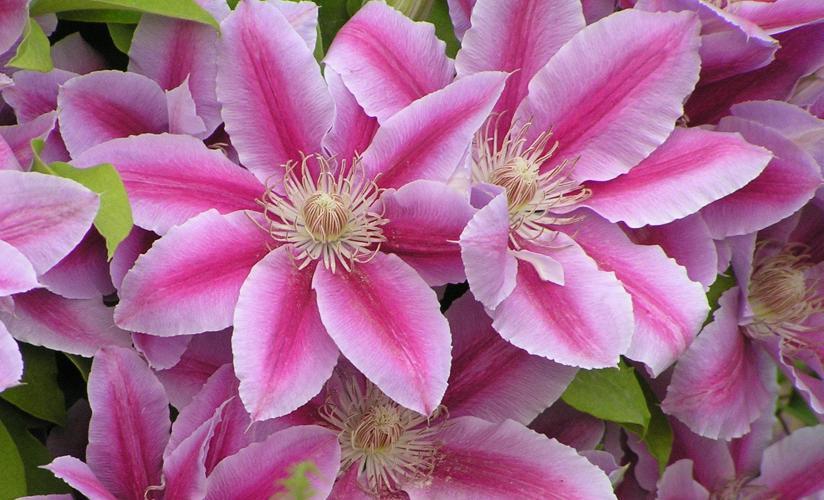
Clematis
Clematis
The Clematis, belonging to the genus Clematis within the family Ranunculaceae (the buttercup family), is a spectacular genus of perennial climbing vines widely hailed as the 'Queen of the Climbers.' Native to the temperate woodlands, rocky hillsides, and river hedgerows across the Northern Hemisp...