
Spring Crocus
Crocus vernus
How to Identify Spring Crocus
Care & Growing Guide
Seasonal Blooming & Hardiness
Seasonal Blooming Calendar:
- Peak Bloom: Common Look-alikes: Often confused with Colchicum (Autumn Crocus), but Colchicum blooms in the fall and has 6 stamens, whereas true Crocus has 3.
- Planting Time: Plant container-grown starts in early spring or autumn.
Bloom Timeline
About Spring Crocus
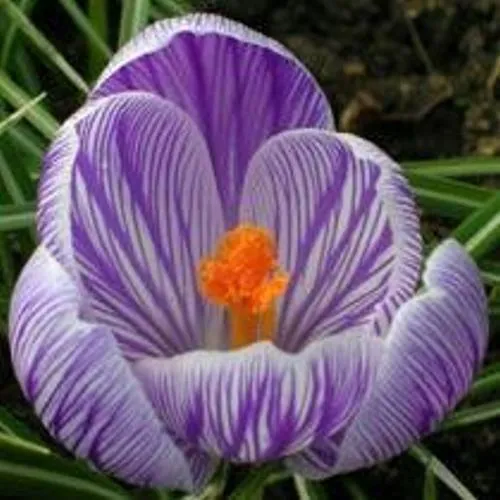
The Spring Crocus (Crocus vernus), also known as the Giant Crocus or Dutch Crocus, is a delicate, diminutive perennial belonging to the Iridaceae (Iris) family. Native to the alpine meadows and woodlands of central and southern Europe, it has become a globally beloved symbol of the end of winter. These incredibly hardy little plants are often the very first flowers to bloom in a garden, frequently pushing their vibrant cup-shaped blossoms straight up through the remaining late-winter snow.
Identification of the Spring Crocus is defined by its low-growing, ground-hugging habit. The plant grows from an underground corm (similar to a bulb) and rarely exceeds 4 to 6 inches in height. The flowers are cup or goblet-shaped and typically feature six petals in vivid shades of deep purple, lavender, striped lilac, pure white, or bright yellow. The center of the flower reveals a striking, bright orange, frilly stigma. The grass-like foliage is narrow and dark green, distinguished by a stark, thin silver or white stripe running directly down the center of each leaf.
The floral formula is ⊕ ⚥ P3+3 A3 G(3). It features a radially symmetrical, bisexual flower. The perianth consists of 6 tepals (3 identical sepals and 3 petals that are virtually indistinguishable). Typical of the Iridaceae family, it has exactly 3 stamens and an inferior ovary composed of 3 fused carpels.
Growing the Spring Crocus is exceptionally easy, making it a favorite for 'naturalizing' directly into lawns or under deciduous trees. They must be planted in the autumn before the ground freezes. They demand well-draining soil—corms will rot quickly in heavy, soggy clay—and prefer full sun to partial shade. Because they bloom so early, before trees have leafed out, they receive plenty of sun even in woodland settings. They are extremely cold-hardy, thriving in USDA zones 3-8.
Culturally, the crocus represents youthful gladness and the arrival of spring. It is important to note that while Crocus vernus is highly ornamental, it is a different species (Crocus sativus) that is laboriously harvested in autumn to produce the ultra-expensive culinary spice, Saffron.
Regarding toxicity, true Spring Crocuses are MILDLY TOXIC to pets, causing only mild gastrointestinal upset if the corms are dug up and eaten. However, they are frequently confused with the highly toxic 'Autumn Crocus' (Colchicum autumnale), which belongs to a completely different family and is lethal. To be safe, discourage pets from digging in crocus beds.
Pair these early bloomers with other cold-hardy early risers like the Lenten Rose (Hellebore) or explore more spring classics in the Flower Identifier.
Floral Formula & Features
Radially symmetrical, bisexual. 6 tepals in two whorls of 3 (indistinguishable sepals and petals), 3 stamens, 3 fused carpels with an inferior ovary.
- Scientific Name & Classification: Crocus vernus (Iridaceae). Commonly known as the Giant Crocus or Dutch Crocus.
- Identification Markers: Small, cup-shaped flowers emerging in early spring, often through snow. Grass-like leaves feature a distinct central white stripe.
- Floral Formula (⊕ ⚥ P3+3 A3 G(3)): Radially symmetrical. 6 identical tepals, 3 stamens, 3 fused carpels forming an inferior ovary.
- Growing Requirements: Plant corms in autumn in well-draining soil. Requires cold winter chill to bloom. USDA zones 3-8. Perfect for naturalizing in lawns.
- Cultural Significance: A universal symbol of spring's arrival. (Note: The expensive spice Saffron comes from a different autumn-blooming species, Crocus sativus).
- Safety & Toxicity: MILDLY TOXIC. Causes mild stomach upset in pets. However, do not confuse with the highly lethal 'Autumn Crocus' (Colchicum).
- Common Look-alikes: Often confused with Colchicum (Autumn Crocus), but Colchicum blooms in the fall and has 6 stamens, whereas true Crocus has 3.
- Internal Links: Compare its early blooming habit with the Hellebore or browse the Flower Identifier.
Names in Different Languages
Botanical Classification: Spring Crocus belongs to the Iridaceae family. Learn how to identify its floral symmetry, stamen arrangement, and structural formulas in our Botanical Family Classification Guide.
Toxicity & Safety
Always keep toxic plants out of reach of children and pets. Consult a veterinarian or medical professional immediately if ingestion is suspected.
Pet Safety Guide: For detailed toxicity symptoms, first-aid measures, and safe garden alternatives, see our full Pet Guard Profile for Spring Crocus.
Frequently Asked Questions
What is Floral Formula?
A floral formula is a symbolic representation of a flower's structure using letters, numbers, and special symbols. It provides a concise way to describe the arrangement and number of floral parts.
This formula describes the flower's symmetry, sepals, petals, stamens, and carpels in a standardized format.
Formula Sequence
- Bract: Br or Ebr
- Bracteole: Brl or Ebrl
- Symmetry: % (Radial) or ⊕ (Bilateral)
- Sex: ♀ (Female), ♂ (Male), or ⚥ (Bisexual)
- Calyx/Sepal: K<number> (Free or Fused)
- Corolla/Petal: C<number> (Free or Fused)
- Androecium: A<number> (Free or Fused)
- Gynaecium: G<number> (Superior or Inferior Ovary)
Symbol Meanings
- Numbers: Indicate quantity of parts
- Parentheses (): Parts are fused together
- Plus (+): Parts in different whorls
- Underline: Superior ovary position
- Overline: Inferior ovary position
- ∞: Numerous parts (too many to count)
Understanding floral formulas helps botanists quickly identify and classify flowers based on their structural characteristics.
Similar Flowers
Discover flowers that share botanical characteristics
Same Family
4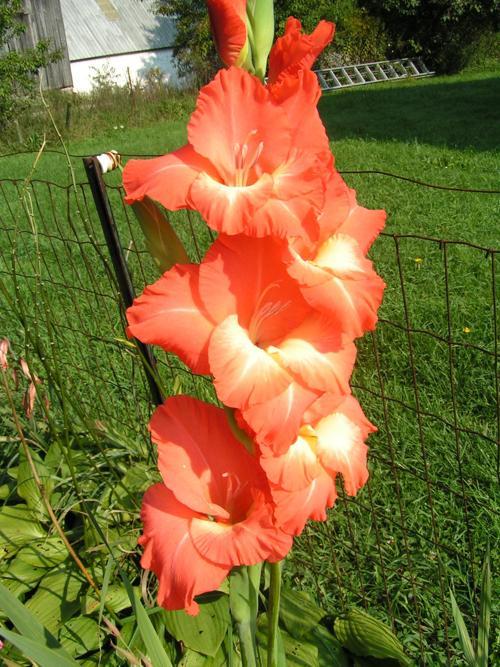
Gladiolus
Gladiolus
The Gladiolus, botanically designated as Gladiolus and commonly known as the Sword Lily or simply Glad, is a spectacular cormous perennial belonging to the family Iridaceae (the iris family). Native primarily to the warm, sun-drenched grasslands, savannas, and shrubby valleys (fynbos) of South Af...
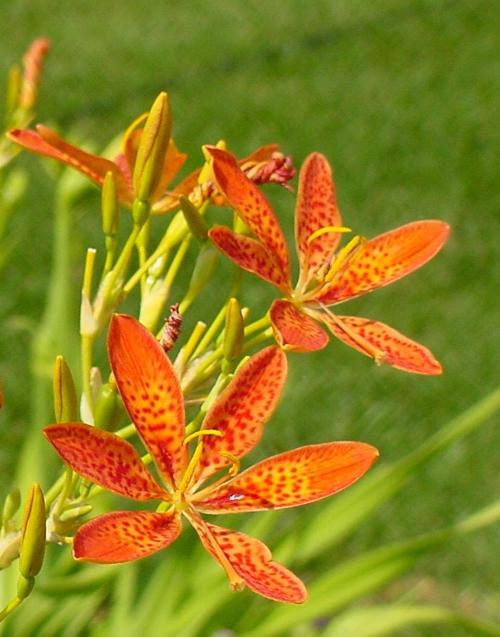
Leopard Lily
Iris domestica (syn. Belamcanda chinensis)
The Leopard Lily, botanically designated as *Iris domestica* (previously classified as *Belamcanda chinensis*, and commonly known as the Blackberry Lily or Leopard Flower), is an exceptionally distinct, highly ornamental perennial. Belonging to the family Iridaceae (the iris family, tribe Irideae...
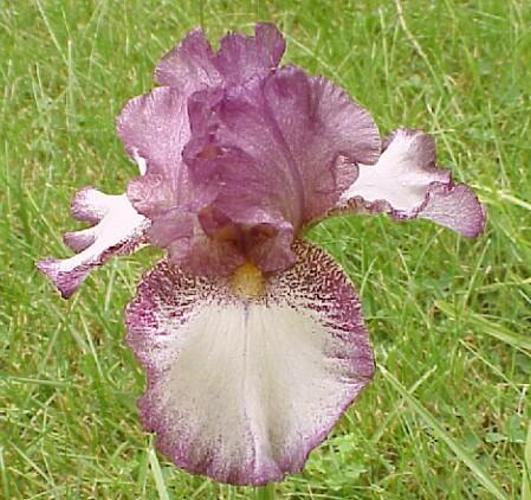
Bearded Iris
Iris germanica
The Bearded Iris, botanically designated under the genus *Iris* (particularly *Iris germanica*), is an exceptionally elegant, highly popular hardy perennial. Belonging to the family Iridaceae (the iris family, tribe Irideae), this spectacular garden favorite is native to the dry, sunny slopes and...
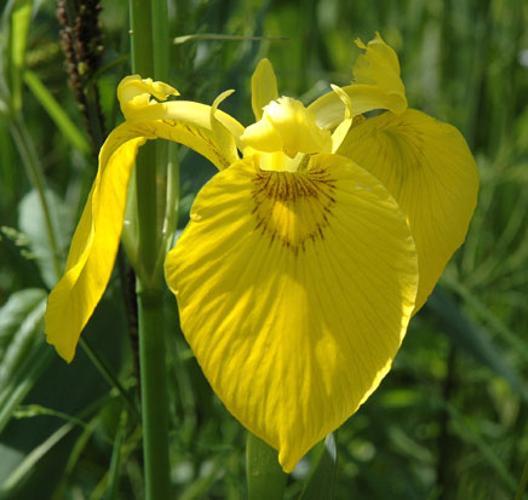
Yellow Iris
Iris pseudacorus
The Yellow Iris, scientifically classified as Iris pseudacorus and commonly known as the Yellow Flag or Water Flag, is a striking, highly vigorous wetland perennial plant belonging to the Iridaceae (iris) family. Native to Europe, Western Asia, and North Africa, this species thrives naturally in...