
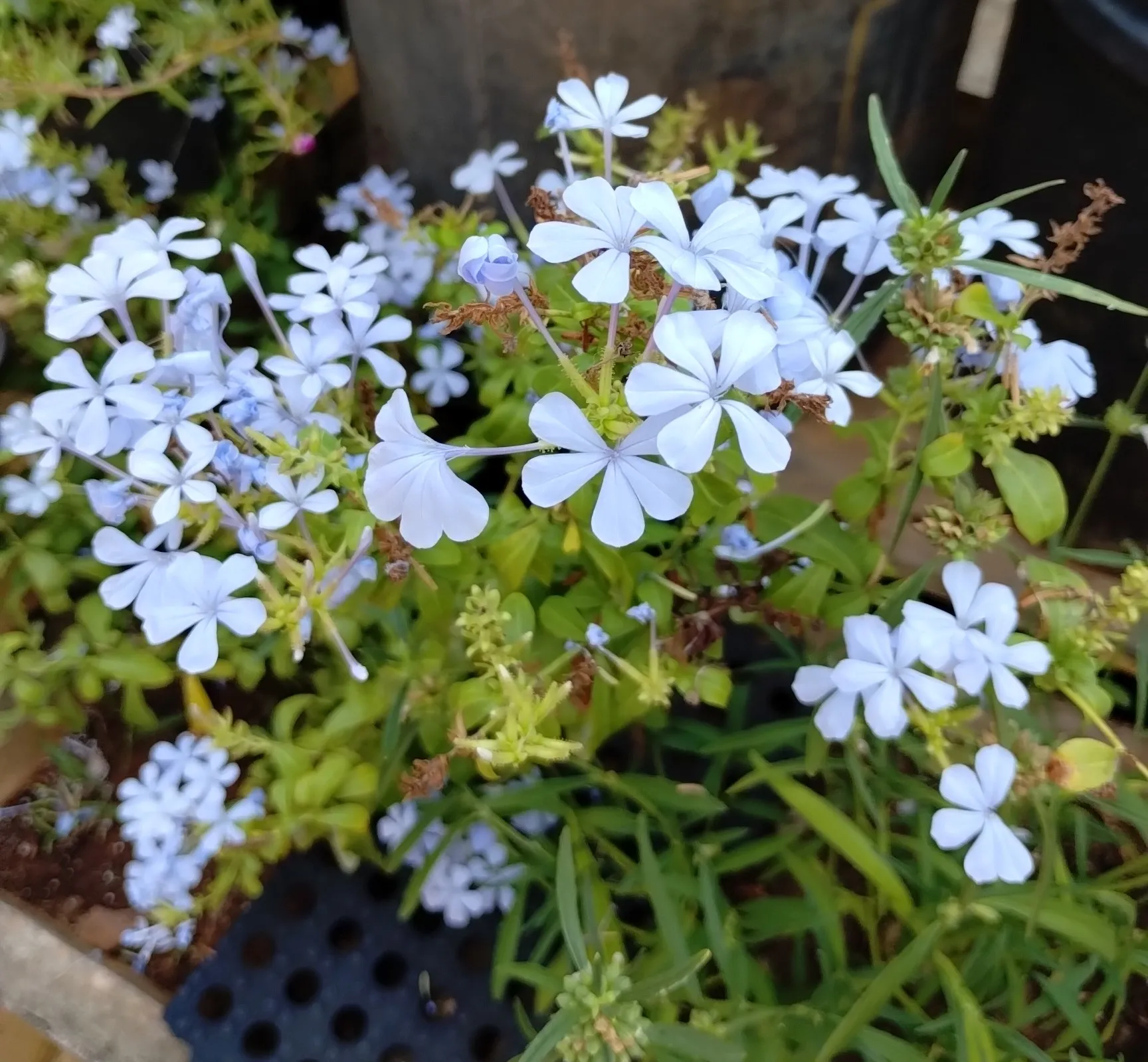
Leadwort
Plumbago auriculata
How to Identify Leadwort
NON-TOXIC. 100% safe for cats, dogs, and horses. Sticky glandular calyxes can adhere to pet fur or clothing but pose absolutely no toxic chemical risk.
Care & Growing Guide
Seasonal Blooming & Hardiness
Seasonal Blooming Calendar:
- Peak Bloom: Spring to early summer (typically April through June).
- Planting Time: Sow seeds directly outdoors in early spring after the last frost, or transplant nursery starts in late spring.
Bloom Timeline
About Leadwort
The Leadwort, botanically designated as Plumbago auriculata and commonly known as the Cape Leadwort, Blue Plumbago, or Sky Flower, is an exceptionally vigorous, sprawling evergreen shrub. Belonging to the family Plumbaginaceae (the leadwort family), this resilient and floriferous plant is native to the warm, sun-drenched coastal scrublands, rocky hillsides, and valley margins of South Africa. It is celebrated worldwide for its year-round display of delicate, sky-blue flowers.
This fast-growing woody shrub exhibits a highly flexible growth habit. If left unsupported, its long, arching green stems form a sprawling, mounded mass measuring 3 to 10 feet tall and wide; if provided with a sturdy trellis or fence, it can easily climb 15 to 20 feet high. It features light green, thin, oblong-to-spatulate leaves measuring 2 to 3 inches long, which typically possess small, ear-like appendages (auricles) at their base.
From late spring through late autumn (and year-round in hot tropical zones), the stem tips carry abundant, large, rounded clusters (racemes) of delicate, phlox-like flowers. Individual blossoms measure about 1 inch across, featuring a slender, sticky corolla tube opening into 5 flat, spreading lobes. While Plumbago auriculata displays a magnificent sky-blue shade, other species exist in snow-white (Plumbago zeylanica) or deep rose-pink (Plumbago indica) colors.
The reproductive morphology of Plumbago is summarized by the family-specific floral formula ⊕ ⚥ K(5) [C(5) A5] G(5). This formula states that the flowers are radially symmetrical (actinomorphic) and bisexual. The calyx consists of 5 fused sepals forming a narrow tubular structure covered in highly sticky, glandular hairs. The corolla comprises 5 fused petals forming the long tube. The androecium contains 5 free stamens opposite the petals, and the gynoecium contains 5 fused carpels with a superior ovary.
The genus name Plumbago is derived from the ancient Latin word 'plumbum,' meaning lead, referencing a historical, unproven belief that the plant could cure lead poisoning or lead to grey-blue skin staining if handled. Famed in Sanskrit as Chitraka (चित्रक, meaning 'spotted' or 'fire') and in Hindi as Chitrak (चित्रक) or Neela Chitrak (नीला चित्रक), its roots are highly valued in traditional Ayurvedic medicine for treating digestive, skin, and inflammatory ailments.
For pet owners and veterinarians, Leadwort represents a highly safe, low-risk, and pet-safe landscape choice. Plumbago auriculata is classified as completely NON-TOXIC to cats, dogs, and horses by major global animal safety databases. If a pet brushes against its arching stems or chews on the thin foliage, there is absolutely no danger of chemical poisoning. However, because the calyxes are covered in sticky glandular hairs, they can adhere to pet fur; visit our general Pet Guard page for tips.
Leadwort is occasionally confused with wild phlox or hardy groundcover leadworts (Ceratostigma). It is easily distinguished because true Plumbago species form large, sprawling woody shrubs and possess highly sticky, glandular calyxes, whereas Ceratostigma is a low-growing herbaceous groundcover with non-sticky calyxes. It makes a stunning specimen for trellises; we recommend pairing it alongside Mandevilla-rock trumpet or Allamanda. To discover more tropical climbing shrubs, browse our Flower Identifier.
For more botanical profiles and flower identification features, see our guides on King Protea and Leopard Lily.
Floral Formula & Features
Radially symmetrical (actinomorphic), bisexual, 5 fused sepals with sticky glandular hairs, 5 fused petals forming tube with spreading lobes, 5 stamens opposite the petals (often attached to corolla tube), 5 fused carpels with superior ovary. Characteristic of Plumbaginaceae
- Scientific Name & Classification: Plumbago auriculata (Plumbaginaceae). Famed as Cape Leadwort, Blue Plumbago, Sky Flower, and Blue Leadwort.
- Identification Markers: Sprawling woody green stems, thin light green leaves with auriculate bases, and dense terminal clusters of 1-inch sky-blue phlox-like flowers with highly sticky calyxes.
- Floral Formula (⊕ ⚥ K(5) [C(5) A5] G(5)): Radially symmetrical, bisexual flowers with 5 fused sticky sepals, 5 fused petals in a long tube, 5 free stamens, and superior ovary.
- Growing Requirements: Full direct sun (6-8 hours daily); average, slightly acidic, sandy-loam, highly well-draining soils. Highly drought, heat, and salt tolerant (Zones 9-11).
- Cultural Significance: Name comes from Latin 'plumbum' (lead). Highly sacred in Ayurvedic medicine as 'Chitraka,' valued for anti-inflammatory roots containing plumbagin.
- Safety & Toxicity: NON-TOXIC. 100% safe for cats, dogs, and horses. Sticky glandular calyxes can adhere to pet fur or clothing but pose absolutely no toxic chemical risk.
- Common Look-alikes: Confused with wild Phlox or Ceratostigma groundcovers, but easily distinguished by its sprawling shrub habit and highly sticky glandular calyxes.
- Internal Links: Cascades beautifully over sunny rock walls and trellises when planted beside other vigorous climbers like Mandevilla-rock trumpet or Allamanda; find more in our Flower Identifier.
Names in Different Languages
Toxicity & Safety
Frequently Asked Questions
What is Floral Formula?
A floral formula is a symbolic representation of a flower's structure using letters, numbers, and special symbols. It provides a concise way to describe the arrangement and number of floral parts.
This formula describes the flower's symmetry, sepals, petals, stamens, and carpels in a standardized format.
Formula Sequence
- Bract: Br or Ebr
- Bracteole: Brl or Ebrl
- Symmetry: % (Radial) or ⊕ (Bilateral)
- Sex: ♀ (Female), ♂ (Male), or ⚥ (Bisexual)
- Calyx/Sepal: K<number> (Free or Fused)
- Corolla/Petal: C<number> (Free or Fused)
- Androecium: A<number> (Free or Fused)
- Gynaecium: G<number> (Superior or Inferior Ovary)
Symbol Meanings
- Numbers: Indicate quantity of parts
- Parentheses (): Parts are fused together
- Plus (+): Parts in different whorls
- Underline: Superior ovary position
- Overline: Inferior ovary position
- ∞: Numerous parts (too many to count)
Understanding floral formulas helps botanists quickly identify and classify flowers based on their structural characteristics.
Similar Flowers
Discover flowers that share botanical characteristics
Similar Characteristics
4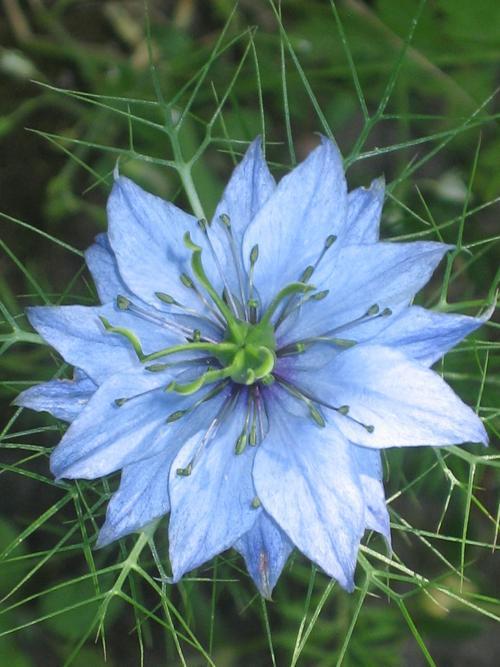
Love in a mist
Nigella damascena
The Love-in-a-mist, botanically designated as Nigella damascena and belonging to the family Ranunculaceae (the buttercup family), is a beloved, old-fashioned hardy annual flower. Native to the sunny hills, open meadows, and coastal fields of southern Europe, North Africa, and southwestern Asia—es...
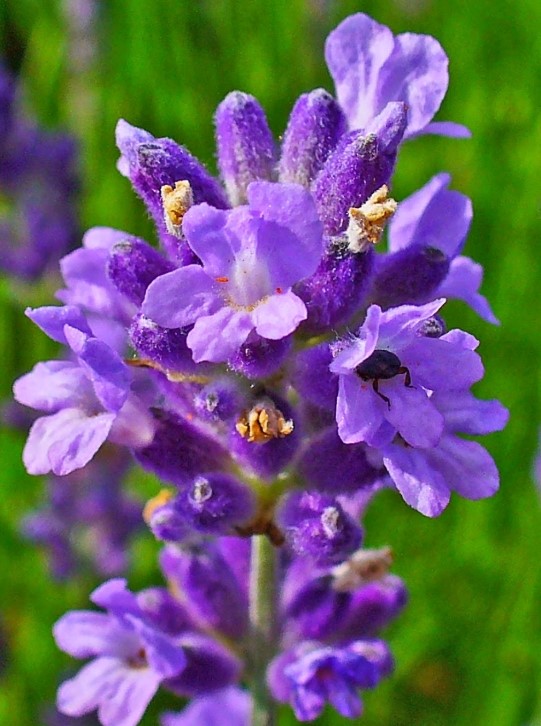
Lavender
Lavandula angustifolia
Lavender, botanically designated under the genus Lavandula and most widely represented by Lavandula angustifolia (English Lavender), is an exceptionally famous, highly aromatic evergreen perennial shrub belonging to the Lamiaceae (mint) family. Native to the sun-baked, rocky limestone hillsides a...
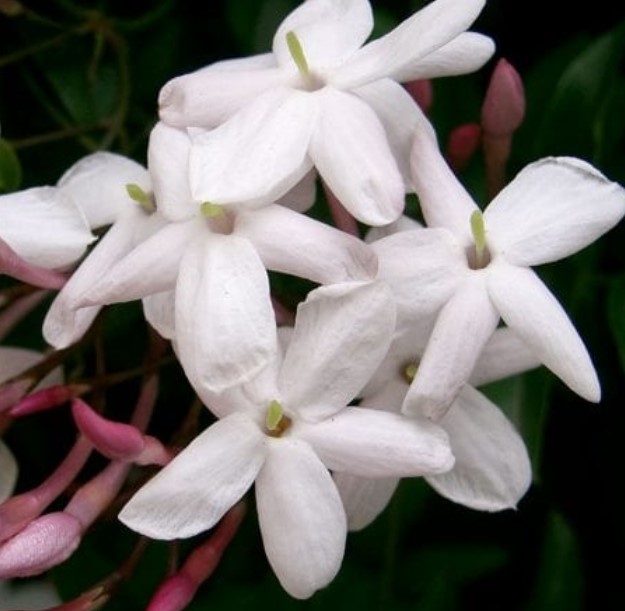
Spanish Jasmine (Royal Jasmine)
Jasminum grandiflorum
Spanish Jasmine, botanically classified as Jasminum grandiflorum and widely known as Royal Jasmine, Catalan Jasmine, or Scented Jasmine, is an exceptionally fragrant semi-evergreen woody vine belonging to the Oleaceae (olive) family. Believed to have originated in the high valleys of the Himalaya...
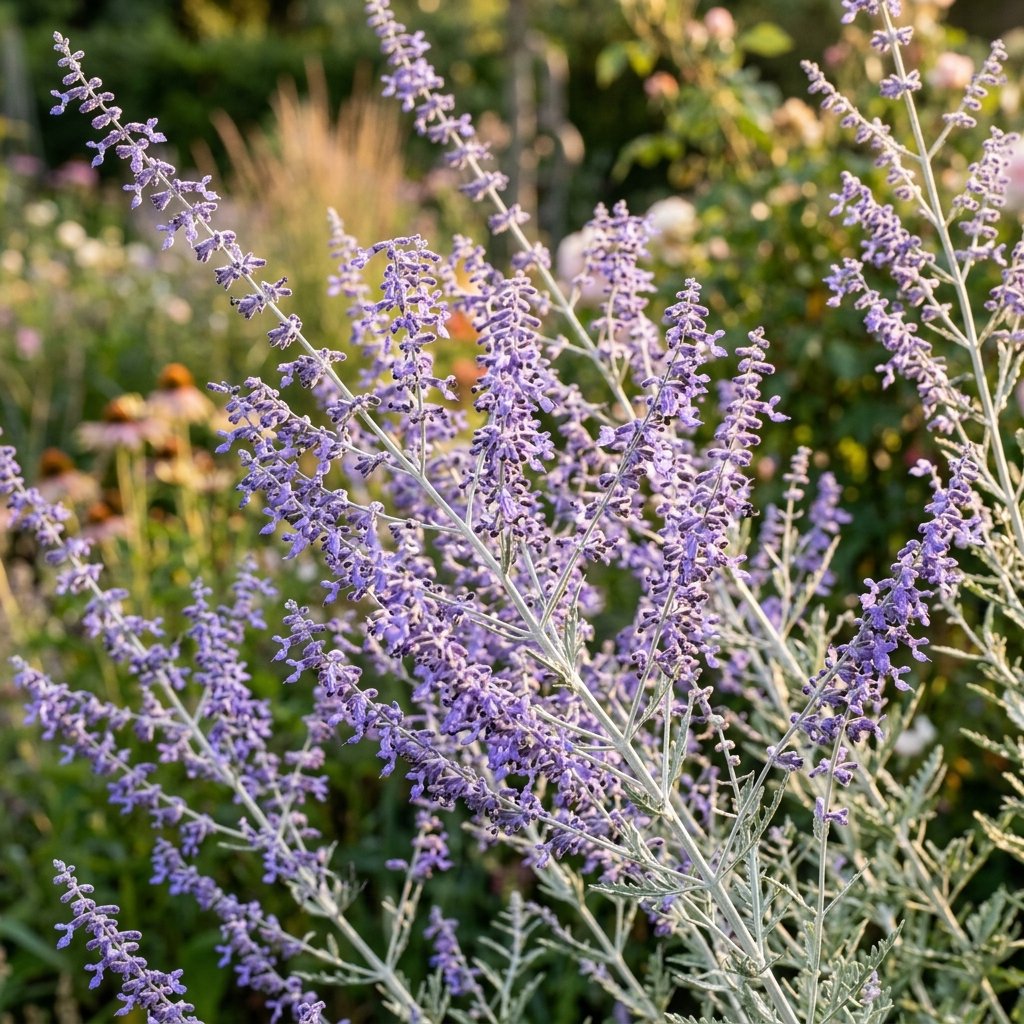
Russian Sage
Salvia yangii
Russian Sage, botanically reclassified as *Salvia yangii* (long celebrated under its classic horticultural synonym *Perovskia atriplicifolia*), is an exceptionally drought-tolerant, graceful, and cloud-like deciduous perennial subshrub. Belonging to the mint family Lamiaceae (tribe Mentheae), thi...