
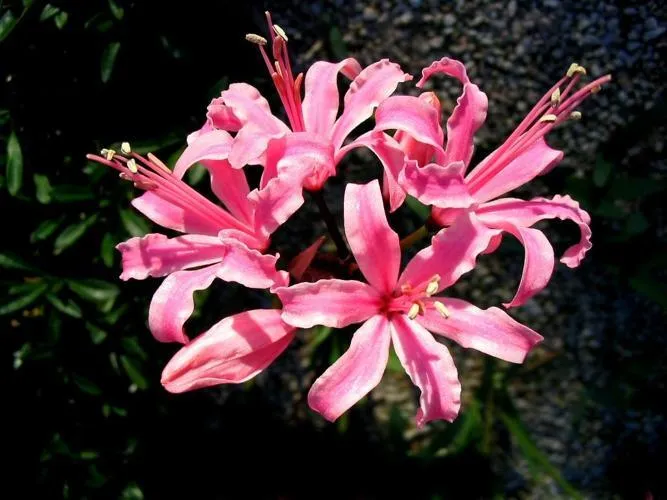
Cape Flower (Red Spider Lily)
Lycoris radiata
How to Identify Cape Flower (Red Spider Lily)
Care & Growing Guide
Seasonal Blooming & Hardiness
Seasonal Blooming Calendar:
- Peak Bloom: Spring to early summer (typically April through June).
- Planting Time: Sow seeds directly outdoors in early spring after the last frost, or transplant nursery starts in late spring.
Bloom Timeline
About Cape Flower (Red Spider Lily)
The Cape Flower, botanically designated as Lycoris radiata and globally celebrated as the Red Spider Lily, Japanese Spider Lily, Hurricane Lily, or Equinox Flower, is an exceptionally dramatic bulbous perennial. Belonging to the family Amaryllidaceae (the amaryllis family, tribe Lycorideae), this historic flower is native to China, Korea, and Japan, where it was introduced centuries ago and has naturalized extensively along riverbanks, terraced rice paddies, and temple grounds.
Standing 1 to 2 feet (30 to 60 cm) tall, this bulbous perennial exhibits a highly unusual growth cycle where the flower stems and leaves never appear together. In late summer or early autumn (often triggered by heavy rain, hence 'Hurricane Lily'), leafless, fleshy stems shoot rapidly from the soil. Each stem is topped by a spectacular umbel of 4 to 6 brilliant scarlet-red flowers. The blossoms are famous for their extremely long, upward-curving stamens and narrow, highly reflexed petals that project outward, closely resembling spider legs.
Once the spectacular red flowers fade, the plant produces narrow, strap-like, glaucous green leaves that remain green throughout the winter before dying back in late spring. The radially symmetrical reproductive morphology is summarized by the family formula ⊕ ⚥ P(3+3) A3+3 G̅(3). This states that the flowers are actinomorphic and bisexual. The perianth consists of 6 fused tepals forming a short tube. The androecium has 6 extremely long stamens, and the gynoecium contains 3 fused carpels forming an inferior ovary.
Thriving in full sun to partial afternoon shade, Red Spider Lilies require moderately fertile, well-draining, and sandy loam soils. They are exceptionally tough and drought-resistant once established, requiring minimal watering during their summer dormancy. Bulbs should be planted in late spring or early summer, placed shallowly with the neck of the bulb just at the soil surface. USDA hardiness zones 6 through 10.
Culturally, Lycoris radiata is deeply woven into Japanese folklore as Higanbana (彼岸花), the flower of the autumn equinox and Buddhist death ceremonies. It is traditionally planted around graves and rice paddies because its toxic bulbs deter borrowing rodents and pests. Famed in Sanskrit as Raktasutram (रक्तसूत्रम्) and in Hindi as Lal Makdi Lili (लाल मकड़ी लिली), it represents transition, lost memories, and reincarnation.
For pet owners, the Red Spider Lily demands extreme caution. The entire plant—most notably the underground bulb—is LETHAL & HIGHLY TOXIC to dogs, cats, and horses. It contains high levels of lycorine and other toxic phenanthridine alkaloids. Ingestion triggers severe vomiting, excessive drooling, bloody diarrhea, muscle tremors, respiratory difficulty, and paralysis. For complete safety guidelines, visit our general Pet Guard page. It is easily distinguished from true lilies by its leafless blooming stems. It pairs beautifully in autumn borders with Toad Lily or Anthurium. For more bulbs, search our Flower Identifier.
For more botanical profiles and flower identification features, see our guides on Peacock Flower (Caesalpinia) and Coltsfoot.
Floral Formula & Features
Ebracteate (no bracts), radially symmetrical (actinomorphic), bisexual, 6 tepals in 2 whorls of 3 (perianth, no distinction between sepals and petals), 6 free stamens, 3 fused carpels with inferior ovary
- Botanical Identity and Names: Scientifically known as Lycoris radiata, it belongs to the Amaryllidaceae family. Common names include Red Spider Lily, Hurricane Lily, Resurrection Lily, and Higanbana (Japan). The name 'Cape Flower' is sometimes used as a general descriptor for its showy, terminal blooms. It was introduced to the United States in the 1850s and has since become a staple of southern 'heirloom' gardens.
- Unique Identification: The most striking ID feature is the absence of foliage at the time of blooming. Flowers are 4–6 inches wide, bright scarlet red, with petals that curl backward and stamens that extend 2–3 inches beyond the petals. The flower stalks are smooth, green, and reach 12–24 inches in height. The bulb is large and tunicated, containing high concentrations of toxic alkaloids.
- Floral Formula: The typical floral formula is ⊕ ⚥ P3+3 A3+3 G(3). This indicates a radially symmetrical flower with six tepals in two whorls, six stamens (also in two whorls), and an inferior ovary composed of three fused carpels. The long stamens are the defining visual characteristic of the genus Lycoris.
- Growing Conditions: Red Spider Lilies thrive in USDA zones 6–10. they prefer well-drained, sandy loam and full sun to partial shade. A unique requirement is a period of dry summer dormancy; moisture during this stage can prevent the bulbs from flowering. They are exceptionally low-maintenance and will naturalize over time, creating spectacular drifts of red across the landscape.
- Cultural Symbolism: In Japan, the Higanbana blooms during 'Aki no Higan,' the week of the autumn equinox. It is widely planted in Buddhist cemeteries and along field edges to deter pests. Folklore suggests that if you see someone you may never meet again, these flowers will bloom along your path. In China, it is often associated with purity and the transition between seasons.
- Safety and Toxicity: IMPORTANT: The entire plant, especially the bulb, is TOXIC to humans and pets. It contains lycorine and other alkaloids that cause severe gastrointestinal distress, vomiting, and in high doses, neurological symptoms. Always handle with gloves if you have sensitive skin and keep away from pets. See our Pet Guard Hub section.
- Common Look-alikes: Often confused with Nerine sarniensis (Guernsey Lily), which also has red, spindly flowers. However, Nerine typically blooms later and has different foliage timing. It also bears some resemblance to the Tiger Lily, though the lacks the spider-like stamen structure and the leafless blooming habit of the Lycoris.
- Internal Links: Explore more unique bulbs in our Flower Identifier. You may also be interested in the Camellia, the Amaryllis, or the Japanese Anemone for late-season color.
Names in Different Languages
Botanical Classification: Cape Flower (Red Spider Lily) belongs to the Amaryllidaceae family. Learn how to identify its floral symmetry, stamen arrangement, and structural formulas in our Botanical Family Classification Guide.
Toxicity & Safety
Always keep toxic plants out of reach of children and pets. Consult a veterinarian or medical professional immediately if ingestion is suspected.
Frequently Asked Questions
What is Floral Formula?
A floral formula is a symbolic representation of a flower's structure using letters, numbers, and special symbols. It provides a concise way to describe the arrangement and number of floral parts.
This formula describes the flower's symmetry, sepals, petals, stamens, and carpels in a standardized format.
Formula Sequence
- Bract: Br or Ebr
- Bracteole: Brl or Ebrl
- Symmetry: % (Radial) or ⊕ (Bilateral)
- Sex: ♀ (Female), ♂ (Male), or ⚥ (Bisexual)
- Calyx/Sepal: K<number> (Free or Fused)
- Corolla/Petal: C<number> (Free or Fused)
- Androecium: A<number> (Free or Fused)
- Gynaecium: G<number> (Superior or Inferior Ovary)
Symbol Meanings
- Numbers: Indicate quantity of parts
- Parentheses (): Parts are fused together
- Plus (+): Parts in different whorls
- Underline: Superior ovary position
- Overline: Inferior ovary position
- ∞: Numerous parts (too many to count)
Understanding floral formulas helps botanists quickly identify and classify flowers based on their structural characteristics.
Similar Flowers
Discover flowers that share botanical characteristics
Same Family
3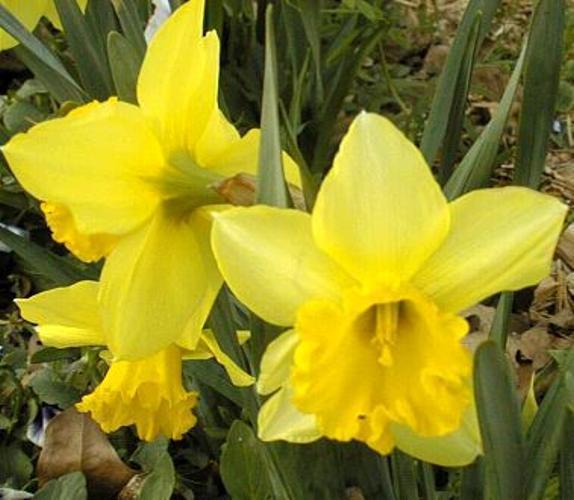
Daffodil
Narcissus pseudonarcissus
The Daffodil, botanically classified under the genus Narcissus and most famously represented by Narcissus pseudonarcissus (the wild daffodil), is a cheerful, spring-flowering bulbous perennial belonging to the Amaryllidaceae (amaryllis) family. Native to the damp meadows, light deciduous woodland...
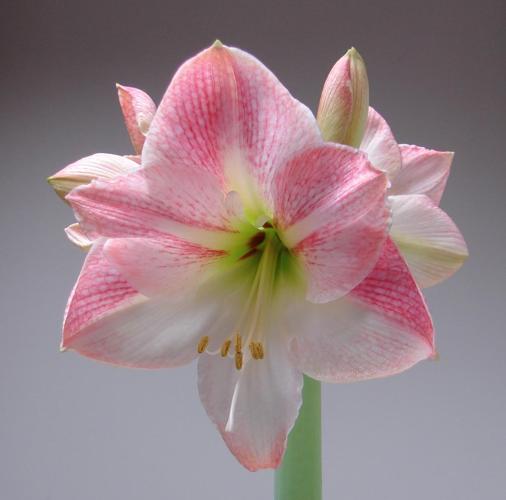
Amaryllis
Hippeastrum
The Amaryllis, botanically classified under the genus Hippeastrum and belonging to the family Amaryllidaceae (the amaryllis family), is an exceptionally spectacular and dramatic bulbous perennial. Native to the warm, tropical and subtropical scrublands, forest margins, and rocky slopes of South A...
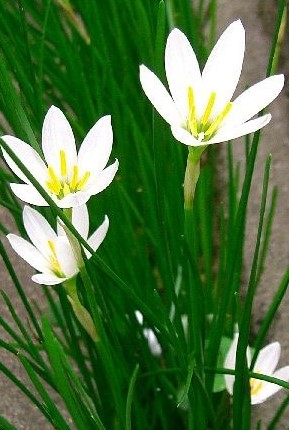
Zephyr Lily
Zephyranthes
The Zephyr Lily, botanically classified under the genus Zephyranthes and belonging to the family Amaryllidaceae (the amaryllis family, tribe Hippeastreae), is an exceptionally charming, low-growing bulbous herbaceous perennial. Commonly known as the Rain Lily, Fairy Lily, Magic Lily, or Atamasco...
Similar Characteristics
4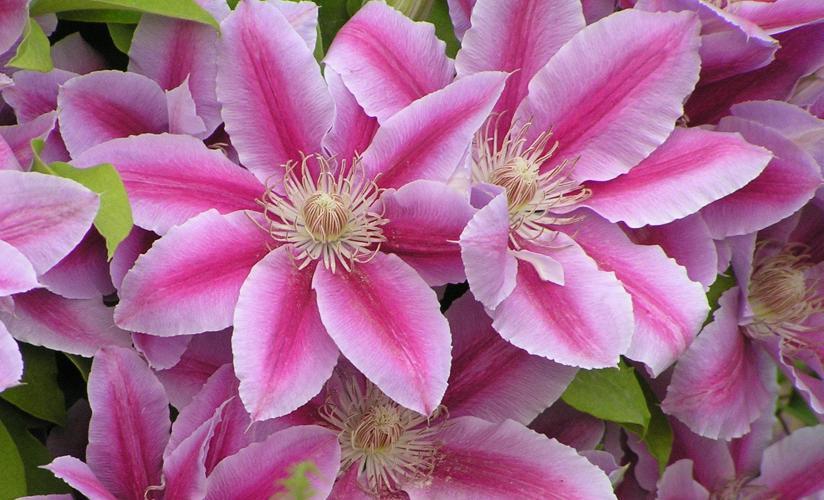
Clematis
Clematis
The Clematis, belonging to the genus Clematis within the family Ranunculaceae (the buttercup family), is a spectacular genus of perennial climbing vines widely hailed as the 'Queen of the Climbers.' Native to the temperate woodlands, rocky hillsides, and river hedgerows across the Northern Hemisp...
Oleander (Rosebay)
Nerium oleander
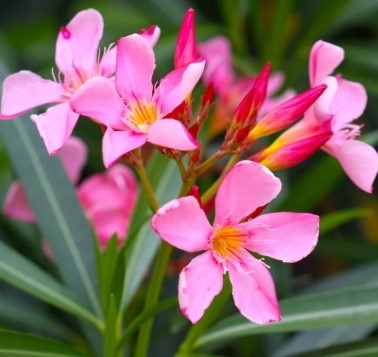
The Oleander, botanically designated as Nerium oleander and belonging to the family Apocynaceae (the dogbane family), is a fast-growing, highly resilient, and multi-stemmed evergreen shrub or small tree. Native to the rocky streambeds, coastal valleys, and warm river banks of the Mediterranean ba...
Black eyed Susan
Rudbeckia hirta
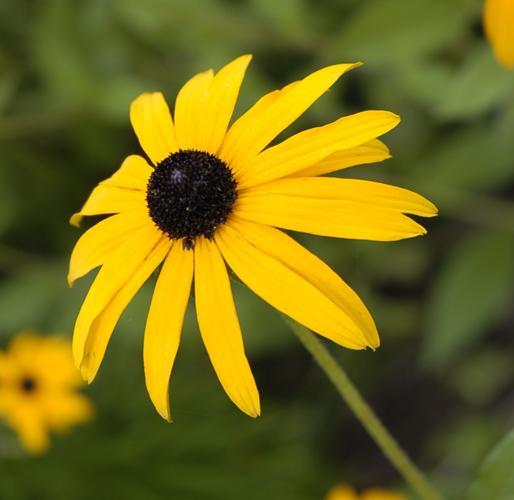
Rudbeckia hirta, famously known as the "Black-Eyed Susan" or "Yellow Ox-Eye Daisy," is a quintessentially American wildflower that brings a burst of radiant sunshine to North American landscapes. A member of the Asteraceae (Daisy) family, this resilient species is native to much of the central an...
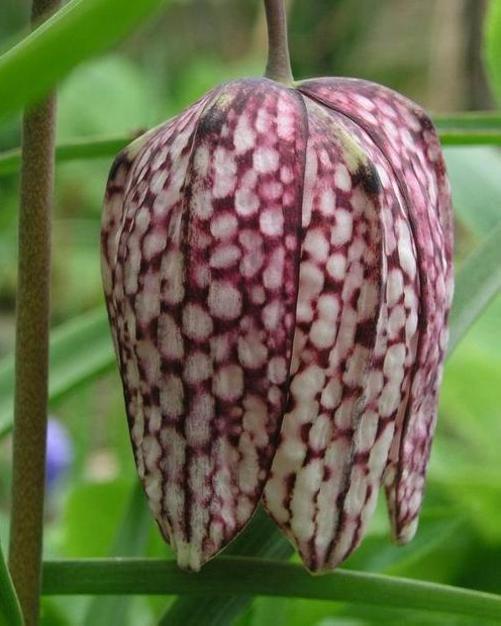
Fritillaria
Fritillaria
The Fritillaria, botanically designated as Fritillaria within the Liliaceae (lily) family, is an extraordinarily elegant and exotic genus of spring-flowering bulbous perennials. Native to the temperate latitudes of the Northern Hemisphere—spanning the grassy floodplains of Europe, the Mediterrane...