
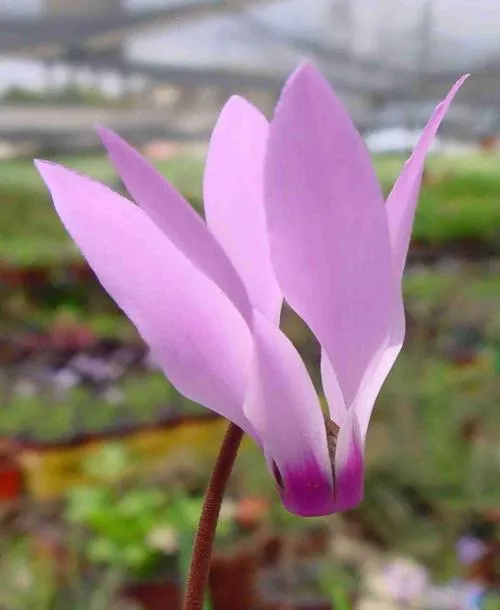
Cyclamen
Cyclamen persicum
How to Identify Cyclamen
Care & Growing Guide
Growing Conditions: Prefers cool temperatures (10-15°C), bright indirect light, and well-draining soil with edge-only watering.
Seasonal Blooming & Hardiness
Seasonal Blooming Calendar:
- Peak Bloom: Late winter to early spring.
- Planting Time: Sow seeds directly outdoors in early spring after the last frost, or transplant nursery starts in late spring.
Bloom Timeline
About Cyclamen
Cyclamen (Cyclamen persicum), often referred to as the Persian Cyclamen or Sowbread, is a captivating tuberous perennial that has enchanted gardeners for centuries with its unique, upswept blossoms and elegantly patterned foliage. Native to the rocky hillsides and woodlands of the Mediterranean region—stretching from Turkey and the Levant to North Africa and parts of Southern Europe—the Cyclamen is a master of adaptation, thriving in the cool, moist winters and retreating into dormancy during the parched summer heat. Unlike many typical garden flowers that reach for the sun with open faces, the Cyclamen presents its beauty in a more enigmatic fashion, with five delicate petals that sweep backward as if caught in a perpetual breeze, revealing a concentrated burst of color at the "nose" of the bloom.
Identifying a Cyclamen is a delightful exercise for any amateur botanist. The most striking feature is undoubtedly the petals, which are reflexed—a botanical term meaning they are bent sharply backward toward the stem. These petals range in hue from pure, snowy whites to deep magentas, soft lavenders, and vibrant bi-colors. Complementing the flowers is the foliage, which is just as ornamental. The heart-shaped leaves grow in a lush basal rosette, each one featuring intricate silver marbling or "halos" on a dark green background. This marbling is unique to each plant, acting almost like a botanical fingerprint. The undersides of the leaves often blush with a surprising shade of burgundy or purple, providing a stunning contrast when viewed from different angles.
Cultivating Cyclamen requires a departure from standard tropical plant care. These are cool-weather specialists; they despise the dry, central heating of modern homes and prefer temperatures that mimic a Mediterranean winter. Ideally, they should be kept in a spot with bright, indirect light where nighttime temperatures dip between 50°F and 60°F (10°C to 15°C). Watering is the most critical aspect of their survival; the moisture should be directed to the edges of the pot to avoid the central tuber, which is prone to rot if it stays wet. In their native habitats, they emerge from large, flattened tubers that can live for decades, slowly increasing in size and blooming potential each year.
While visually stunning, Cyclamen comes with a significant safety warning for pet owners. The entire plant, but specifically the underground tubers, contains a high concentration of cyclamine—a type of triterpenoid saponin. If ingested by curious cats or dogs, it can lead to severe gastrointestinal distress, heart rhythm abnormalities, and in large quantities, seizures. Because of this, we highly recommend keeping Cyclamen on high shelves or in rooms inaccessible to pets. For more detailed safety information and symptoms to watch for, you can consult our dedicated Pet Guard profile for Cyclamen.
Culturally, the Cyclamen carries a weight of symbolism. In Japanese culture, it is often associated with "resignation" or "the end," sometimes making it an inappropriate gift for certain occasions, yet its beauty is celebrated in winter floral arrangements. In Europe, its common name "Sowbread" refers to the historical observation that wild boars would dig up and consume the tubers without ill effect, despite their toxicity to humans and other domestic animals. Today, it stands as one of the most popular winter houseplants, providing a vibrant bridge of color through the darkest months of the year.
For more botanical profiles and flower identification features, see our guides on Coltsfoot and Daisy.
Floral Formula & Features
Ebracteate (no bracts), radially symmetrical (actinomorphic), bisexual, 5 fused sepals forming short tube, 5 fused petals with reflexed (swept-back) lobes, 5 stamens fused to base of corolla tube, 5 fused carpels with superior ovary and free-central placentation
Scientific Classification: Cyclamen persicum within the family Primulaceae, native to Mediterranean hillsides.
Petal Structure: Features 5 distinct reflexed petals that sweep sharply backward, exposing the inner floral structures.
Foliage Pattern: Heart-shaped leaves (basal rosette) with intricate silver or white marbling and purple undersides.
Floral Formula: ⊕ K(5) [C(5) A5] G(5) — denoting radial symmetry, fused sepals, and stamens fused to the corolla tube.
Growing Conditions: Prefers cool temperatures (10-15°C), bright indirect light, and well-draining soil with edge-only watering.
Toxicity Awareness: Contains cyclamine saponins; highly toxic to pets if ingested. View Pet Guard Profile
Common Look-alikes: Often confused with the Persian Violet (Exacum affine) or hardy Shooting Stars (Dodecatheon).
Names in Different Languages
Toxicity & Safety
Always keep toxic plants out of reach of children and pets. Consult a veterinarian or medical professional immediately if ingestion is suspected.
Pet Safety Guide: For detailed toxicity symptoms, first-aid measures, and safe garden alternatives, see our full Pet Guard Profile for Cyclamen.
Frequently Asked Questions
What is Floral Formula?
A floral formula is a symbolic representation of a flower's structure using letters, numbers, and special symbols. It provides a concise way to describe the arrangement and number of floral parts.
This formula describes the flower's symmetry, sepals, petals, stamens, and carpels in a standardized format.
Formula Sequence
- Bract: Br or Ebr
- Bracteole: Brl or Ebrl
- Symmetry: % (Radial) or ⊕ (Bilateral)
- Sex: ♀ (Female), ♂ (Male), or ⚥ (Bisexual)
- Calyx/Sepal: K<number> (Free or Fused)
- Corolla/Petal: C<number> (Free or Fused)
- Androecium: A<number> (Free or Fused)
- Gynaecium: G<number> (Superior or Inferior Ovary)
Symbol Meanings
- Numbers: Indicate quantity of parts
- Parentheses (): Parts are fused together
- Plus (+): Parts in different whorls
- Underline: Superior ovary position
- Overline: Inferior ovary position
- ∞: Numerous parts (too many to count)
Understanding floral formulas helps botanists quickly identify and classify flowers based on their structural characteristics.
Similar Flowers
Discover flowers that share botanical characteristics
Same Family
2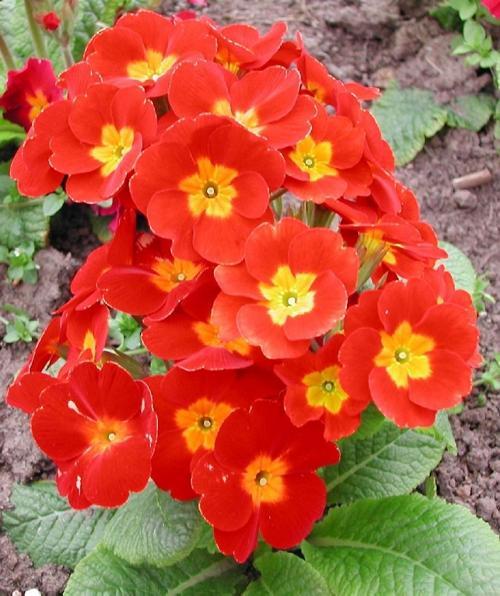
Primula (Common Primrose)
Primula vulgaris
The Primrose, botanically designated as Primula vulgaris and commonly known as the Common Primrose or English Primrose, is an exceptionally charming, early-blooming herbaceous perennial. Belonging to the family Primulaceae (the primrose family), this historic woodland flower is native to the cool...
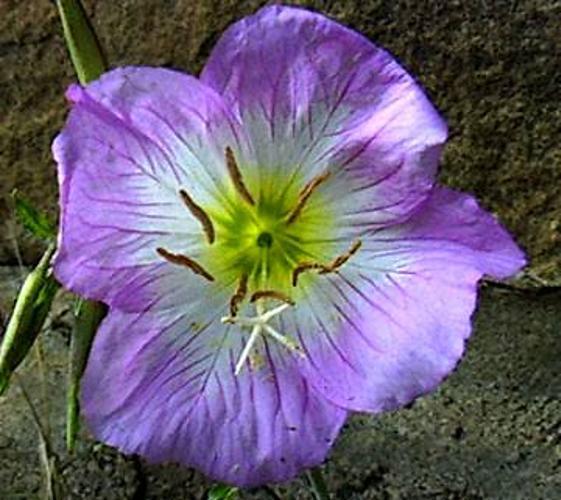
Primrose (Cowslip)
Primula veris
Cheerful spring wildflower with clusters of nodding yellow flowers on tall stems above rosettes of wrinkled leaves. One of first flowers to bloom in spring, earning name from Latin 'prima rosa' (first rose). Sweet honey scent attracts early bees. Used in herbal medicine for centuries. Popular in...
Similar Characteristics
4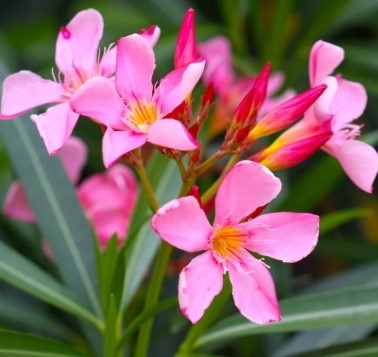
Oleander (Rosebay)
Nerium oleander
The Oleander, botanically designated as Nerium oleander and belonging to the family Apocynaceae (the dogbane family), is a fast-growing, highly resilient, and multi-stemmed evergreen shrub or small tree. Native to the rocky streambeds, coastal valleys, and warm river banks of the Mediterranean ba...
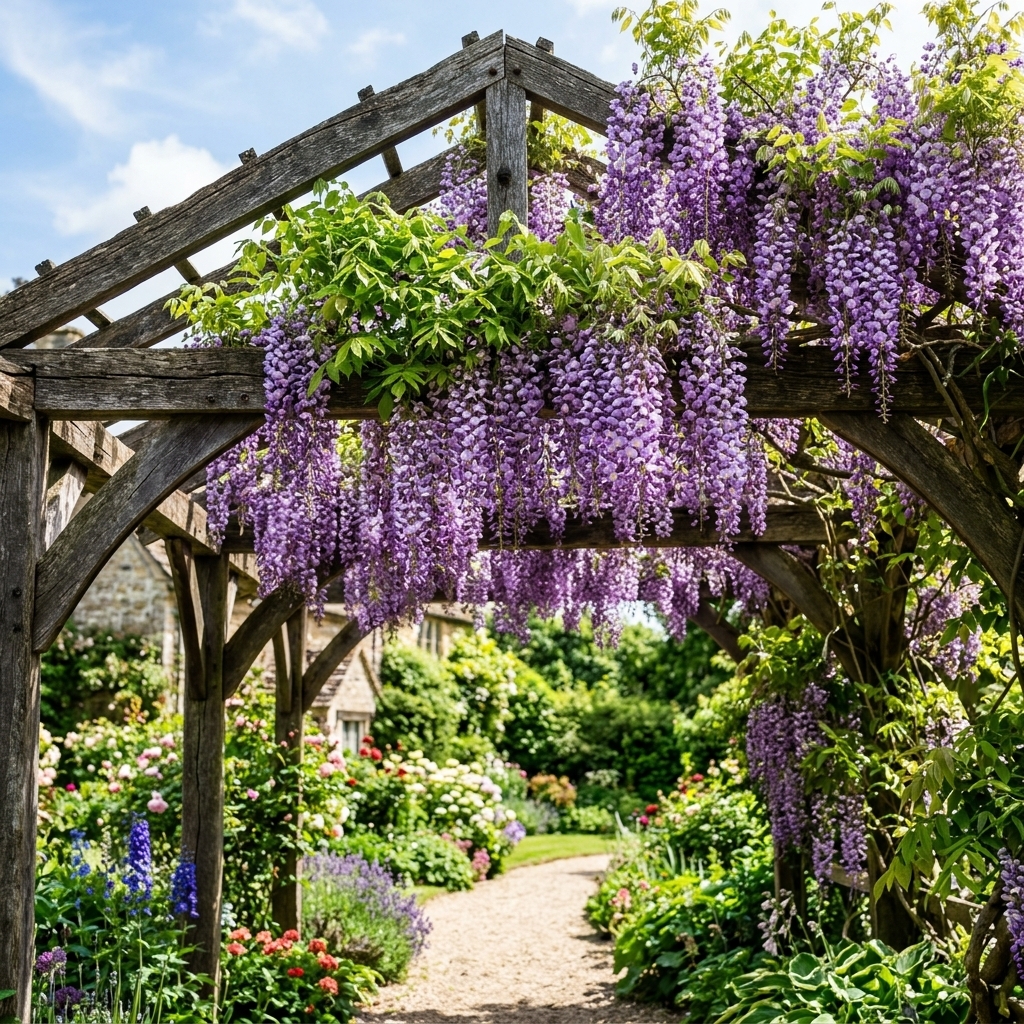
Wisteria
Wisteria
Wisteria, botanically classified within the genus Wisteria and most famously represented by Wisteria sinensis (Chinese Wisteria) and Wisteria floribunda (Japanese Wisteria), is a spectacular genus of woody, climbing deciduous vines in the Fabaceae (pea or legume) family. Native to the damp woodla...
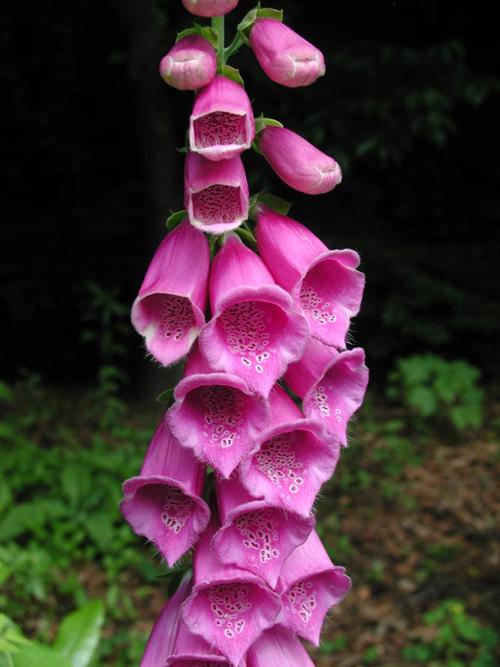
Foxglove
Digitalis purpurea
Digitalis purpurea, commonly known as Foxglove, is a majestic and iconic biennial plant belonging to the Plantaginaceae family. Native to the cool, temperate woodlands, hedgerows, and mountainous clearings of western and southwestern Europe, this striking species has naturalized throughout North...
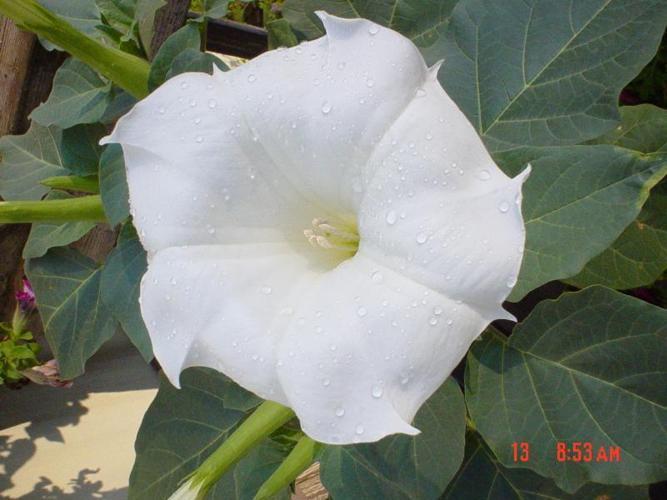
Thorn Apple
Datura stramonium
The Thorn Apple, botanically classified as Datura stramonium and widely known by folk names like Jimsonweed, Devil's Trumpet, or Hell's Bells, is an aggressive, fast-growing annual herb belonging to the Solanaceae (nightshade) family. Native to Mexico and Central America, this highly resilient sp...