
Camellia
Camellia japonica
How to Identify Camellia
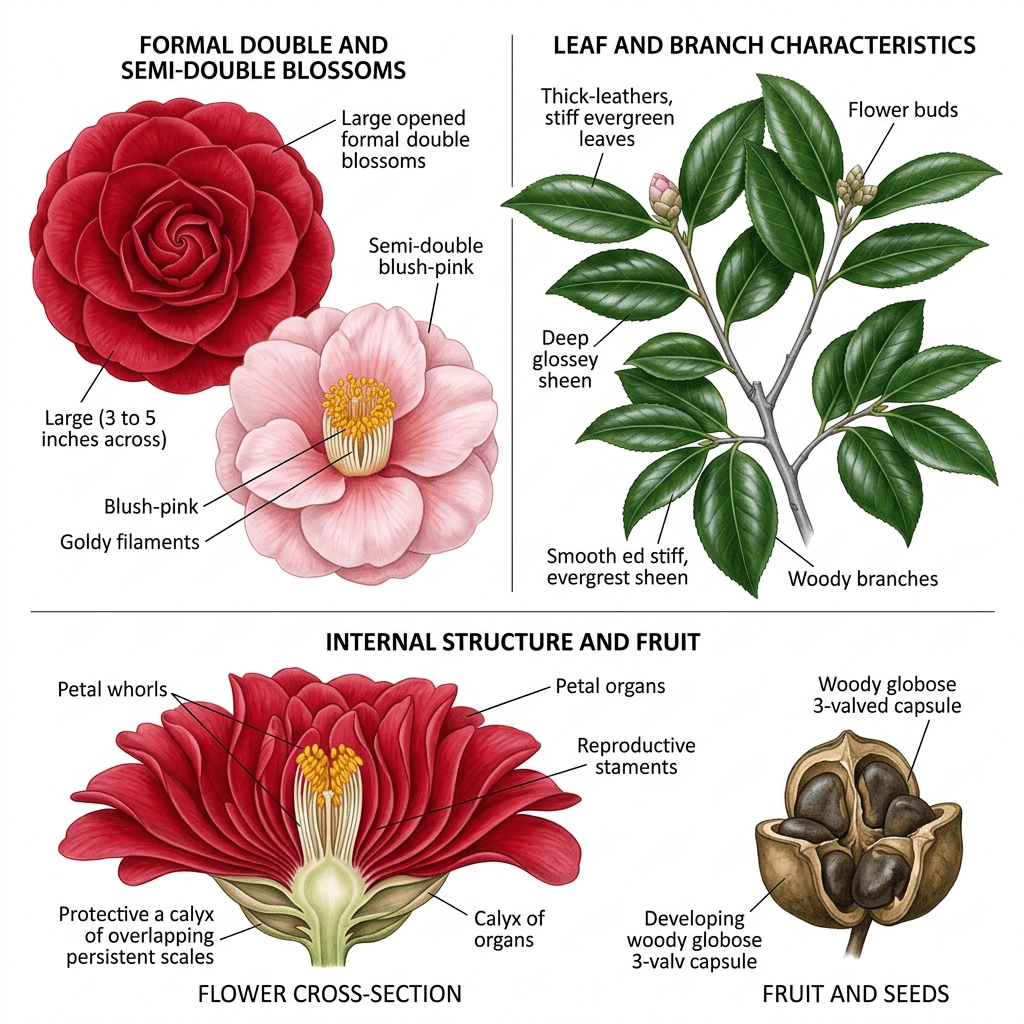
A detailed guide to identifying Camellias (Camellia japonica / Camellia sasanqua) by key botanical features:
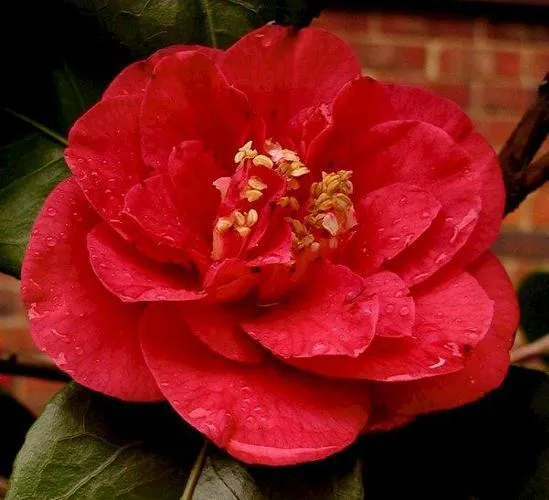
- Formal Double & Semi-Double Blossoms: Sumptuous, rose-like flowers measuring 2 to 5 inches across with spiraling, overlapping velvety petals in shades of red, pink, blush, white, and variegated bicolors surrounding a central crown of golden-yellow stamens.
- Thick, Leathery, Deeply Glossy Foliage: Broadleaf evergreen foliage that is stiff, thick, and lustrous dark emerald-green year-round with finely serrated leaf margins and smooth gray bark.
- Thornless Woody Shrub or Small Tree: Dense, multi-stemmed woody structure completely free of thorns or prickles, reaching 6 to 15 feet in height.
- Globose Woody Fruit Capsules: Hard, round, 3-chambered woody fruit capsules that crack open in autumn to reveal large, dark brown, oil-rich seeds.
Types & Sub-types of Camellias
Camellias belong to the Theaceae (Tea) family and are categorized into primary species and internationally recognized flower forms:
- By Major Horticultural Species:
- Japanese Camellia (Camellia japonica): The classic large-flowered garden camellia blooming in late winter and early spring (January–April) with large, broad, high-gloss leaves and formal blooms.
- Sasanqua Camellia (Camellia sasanqua): Autumn-to-early-winter blooming species (October–December) with smaller, more sun-tolerant leaves, fragrant blooms, and loose open flowers that drop petals cleanly.
- Tea Plant (Camellia sinensis): Small white and yellow nodding flowers whose young leaves are harvested to make green, black, white, and oolong tea.
- By Flower Form:
- Single & Semi-Double: 5 to 8 petals with a conspicuous central boss of stamens.
- Formal Double: Completely layered imbricated petals with no visible stamens.
- Peony & Anemone Form: Irregular, convex blooms packed with ruffled petaloids.
Care & Growing Guide
Seasonal Blooming & Hardiness
Seasonal Blooming Calendar:
- Peak Bloom: Spring to early summer (typically April through June).
- Planting Time: Sow seeds directly outdoors in early spring after the last frost, or transplant nursery starts in late spring.
Bloom Timeline
About Camellia
The Camellia, botanically designated under the genus Camellia and belonging to the family Theaceae (the tea family, tribe Theeae), is an exceptionally elegant, long-lived, and slow-growing evergreen shrub or small tree. Native to the cool, humus-rich woodland understories, shaded mountain slopes, and humid coastal valleys of eastern and southern Asia—spanning from southwestern China and Japan down to Taiwan, Korea, and the foothills of the Himalayas—this historic plant is highly valued for bringing majestic, rose-like colors to gardens.
This robust evergreen stands 3 to 15 feet (90 to 450 cm) tall and spreads 3 to 10 feet wide, slowly forming a dense, rounded, and upright architectural canopy. It features highly distinct, alternate, dark green, and deeply glossy leaves that are thick, leathery, and lance-shaped to elliptical, with finely serrated margins that remain vibrant and lush year-round. It is globally celebrated as the 'Queen of Winter Flowers' because it blooms in the dead of winter and early spring (October through April).
Individual flowers measure 2 to 6 inches (5 to 15 cm) across, showcasing radially symmetrical single, semi-double, anemone-form, peony-form, rose-form double, or formal double shapes. Blossoms exhibit brilliant, clear shades of snow-white, delicate shell-pink, deep rose, crimson-red, and striking variegated bicolors. In single-form flowers, a prominent, dense crown of yellow-tipped stamens rises in the center. The flowers drop intact from the branches when spent rather than shedding petals individually.
The reproductive morphology of Camellia is summarized by the family-specific floral formula EBr ⊕ ⚥ K5 C5-9 A∞ G(3-5). This formula states that the flowers are ebracteate (lacking bracts), radially symmetrical (actinomorphic), and bisexual. The calyx consists of 5 protective sepals that slowly grade into petals. The corolla consists of 5 to 9 free, fleshy petals (though many more in double horticultural varieties). The androecium features numerous (∞) stamens fused at their bases into a central collar, and the gynoecium contains 3 to 5 fused carpels with a superior ovary.
The genus name Camellia was designated by Carl Linnaeus in 1753 to honor Georg Joseph Kamel, a Jesuit lay brother and botanist who catalogued Philippine flora. Famed in Sanskrit as Syamaparni (स्यामपर्णि) and in Hindi as Kameelya (कमीलया), it is culturally revered in Japan as Tsubaki (ツバキ), representing endurance, devotion, and divine grace. Most importantly, the species Camellia sinensis is the source of all true teas, including green, black, oolong, and white teas.
For pet owners and veterinarians, the Camellia represents an exceptionally safe, low-risk, and pet-safe landscaping choice. Camellia japonica and its relatives are classified as completely NON-TOXIC to cats, dogs, and horses by major global animal safety databases, including the ASPCA. If a pet brushes against its branching stems or nibbles on the leathery evergreen leaves or colorful winter blossoms, there is absolutely no danger of chemical poisoning. For detailed safety guidance and a listing of safe cultivars, please visit our specific Pet Guard Camellia catalog.
Camellia is occasionally confused with wild roses or magnolias. It is easily distinguished because true Camellia possesses highly glossy, thick evergreen leaves without thorns and blooms primarily in winter, whereas roses possess thorns and deciduous leaves, and magnolias have larger flowers with undifferentiated tepals. It is a premier selection for shade borders; we recommend pairing it alongside Anthurium or Arum Lily-calla Lily. To explore more winter-blooming shrubs, browse our Flower Identifier.
Floral Formula & Features
Ebracteate, radially symmetrical (actinomorphic), bisexual, 5 sepals (often grading into petals), 5-9 free petals (more in double forms), numerous free stamens often fused at base into tube, 3-5 fused carpels with superior ovary. Typical of Theaceae
- Scientific Name & Classification: Camellia (Theaceae). Globally famed as Japanese Camellia, Sasanqua Camellia, Tea Plant, Tsubaki, and Winter Rose.
- Identification Markers: Upright evergreen habit, thick deeply glossy serrated leaves, and 2-6 inch rose-like flowers in white, pink, or red with a central boss of yellow stamens.
- Floral Formula (EBr ⊕ ⚥ K5 C5-9 A∞ G(3-5)): Radially symmetrical, bisexual flowers with 5 sepals, 5-9 free petals, numerous stamens fused at their base, and 3-5 fused carpels with superior ovary.
- Growing Requirements: Dappled or partial shade (avoid harsh afternoon sun); rich, organic, humus-heavy, consistently moist, well-draining acidic soils with a pH of 5.5-6.5 (Zones 6-10).
- Cultural Significance: Famed in Japan as 'Tsubaki' symbolizing divine grace. Named after botanist Georg Joseph Kamel. Cultivar Camellia sinensis leaves produce all commercial teas.
- Safety & Toxicity: NON-TOXIC. 100% safe for cats, dogs, and horses. Provides a majestic, lush evergreen structure that is completely pet-safe for shaded patios and garden borders.
- Common Look-alikes: Confused with Roses, but easily distinguished by its complete lack of thorns, highly glossy thick evergreen foliage, and its cold-season winter-blooming cycle.
- Internal Links: Invigorates shaded garden borders and woodland pathways when planted alongside other shade-loving standouts like Anthurium or Arum Lily-calla Lily; find more in our Flower Identifier.
- Internal Links: Compare key differences in our Camellia vs Rose comparison, or try our instant Flower Identifier.
Names in Different Languages
Cultural Etiquette & Gifting: Planning to gift or decorate with Camellia? Discover its symbolic meanings, festival traditions, and crucial cultural faux pas across 20+ countries in our comprehensive Global Flower Etiquette Guide.
Toxicity & Safety
Pet Safety Guide: For detailed toxicity symptoms, first-aid measures, and safe garden alternatives, see our full Pet Guard Profile for Camellia.
Frequently Asked Questions
What is Floral Formula?
A floral formula is a symbolic representation of a flower's structure using letters, numbers, and special symbols. It provides a concise way to describe the arrangement and number of floral parts.
This formula describes the flower's symmetry, sepals, petals, stamens, and carpels in a standardized format.
Formula Sequence
- Bract: Br or Ebr
- Bracteole: Brl or Ebrl
- Symmetry: % (Radial) or ⊕ (Bilateral)
- Sex: ♀ (Female), ♂ (Male), or ⚥ (Bisexual)
- Calyx/Sepal: K<number> (Free or Fused)
- Corolla/Petal: C<number> (Free or Fused)
- Androecium: A<number> (Free or Fused)
- Gynaecium: G<number> (Superior or Inferior Ovary)
Symbol Meanings
- Numbers: Indicate quantity of parts
- Parentheses (): Parts are fused together
- Plus (+): Parts in different whorls
- Underline: Superior ovary position
- Overline: Inferior ovary position
- ∞: Numerous parts (too many to count)
Understanding floral formulas helps botanists quickly identify and classify flowers based on their structural characteristics.
Similar Flowers
Discover flowers that share botanical characteristics
Similar Characteristics
4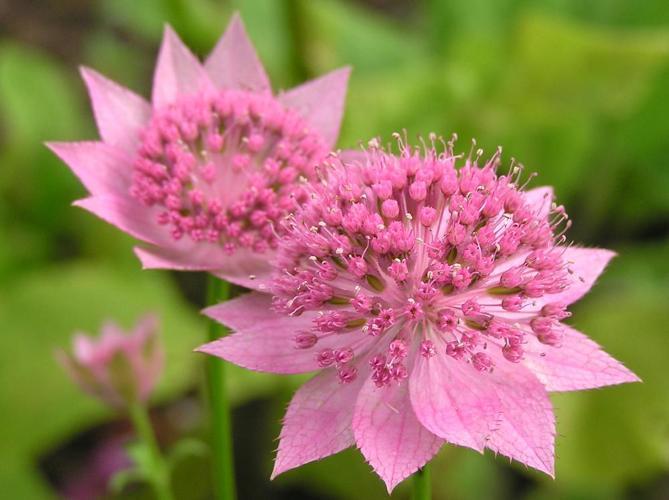
Masterwort
Astrantia
Distinctive perennial with star-shaped flower heads composed of tiny florets surrounded by prominent papery bracts that resemble a pincushion filled with decorative pins. The showy bracts come in shades of pink, white, cream, and red, creating a delicate star-like appearance. Popular cottage gard...
Salvia
Salvia
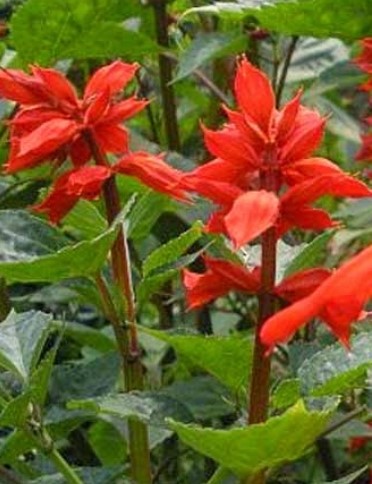
Salvia, botanically classified under the genus Salvia and commonly known as Sage, is an exceptionally diverse, versatile, and highly valuable plant genus. Belonging to the family Lamiaceae (the mint family, tribe Mentheae), this massive genus comprises nearly 1,000 distinct species distributed ac...
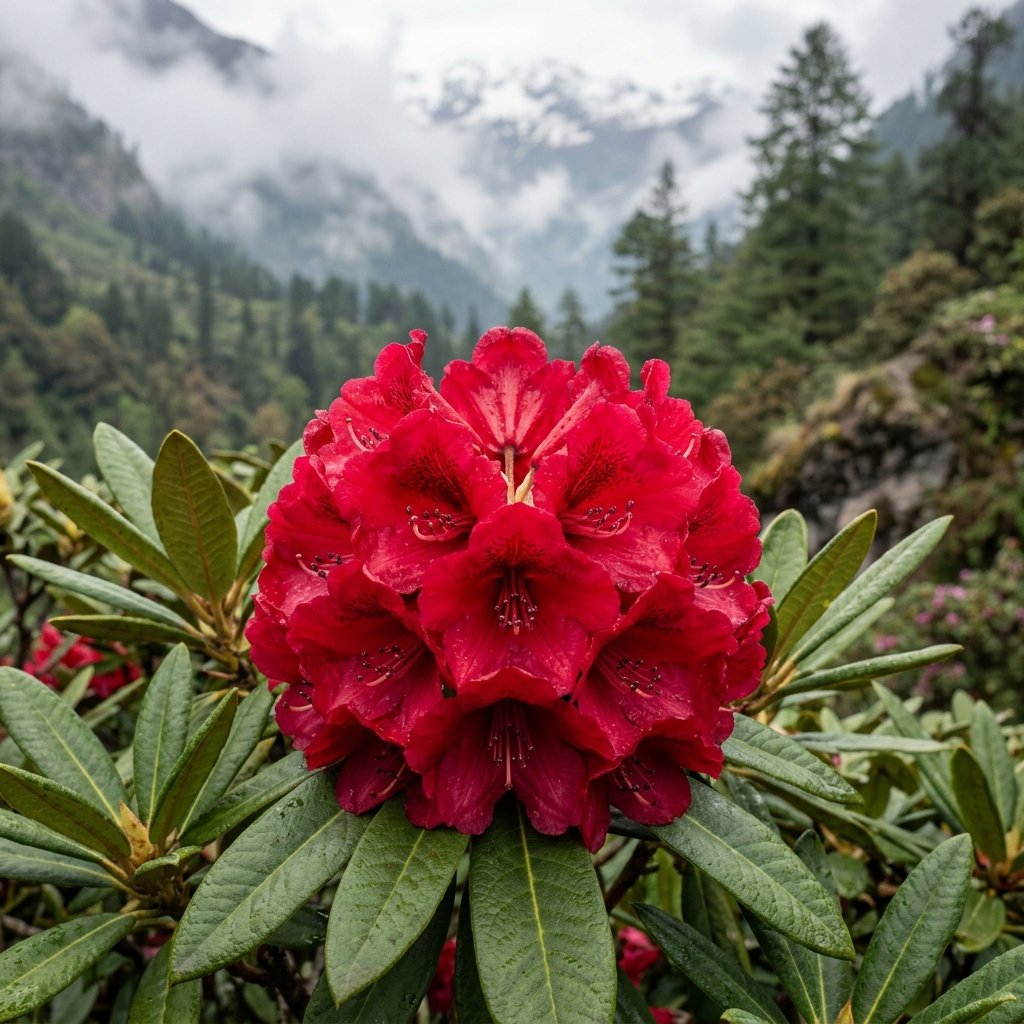
Rhododendron (Burans)
Rhododendron arboreum
Rhododendron, botanically classified within the grand genus *Rhododendron* (exemplified by the majestic tree species *Rhododendron arboreum*) and celebrated across the Himalayas as Burans or the Rose Tree, is an exceptionally magnificent, woody evergreen flowering tree or large shrub. Belonging t...
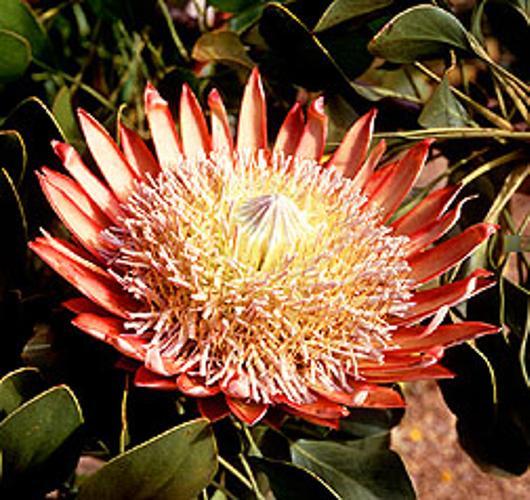
King Protea
Protea cynaroides
The King Protea, botanically known as Protea cynaroides and often called the King Sugar Bush or Cape Artichoke Flower, is a magnificent, evergreen woody shrub in the Proteaceae family. Endemic to the mountainous slopes and rocky sandstone ridges of South Africa's Western and Eastern Cape province...