
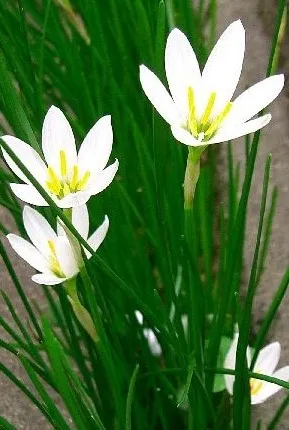
Zephyr Lily
Zephyranthes
How to Identify Zephyr Lily
LETHAL TO PETS. Underground bulbs contain highly concentrated lycorine alkaloids, causing severe vomiting, bloody diarrhea, tremors, and seizures in cats and dogs.
Care & Growing Guide
Seasonal Blooming & Hardiness
Seasonal Blooming Calendar:
- Peak Bloom: Late summer to autumn (August through October).
- Planting Time: Sow seeds directly outdoors in early spring after the last frost, or transplant nursery starts in late spring.
Bloom Timeline
About Zephyr Lily
The Zephyr Lily, botanically classified under the genus Zephyranthes and belonging to the family Amaryllidaceae (the amaryllis family, tribe Hippeastreae), is an exceptionally charming, low-growing bulbous herbaceous perennial. Commonly known as the Rain Lily, Fairy Lily, Magic Lily, or Atamasco Lily, this resilient wildflower is native to the warm, seasonally wet prairies, open grassy savannas, and rocky slopes of the Americas, spanning from the southern United States through Central America and the Caribbean down to Argentina.
This elegant clump-forming perennial stands 6 to 12 inches (15 to 30 cm) tall and spreads 4 to 8 inches wide. It features narrow, hollow, grass-like, and dark green leaves measuring 6 to 15 inches long that form dense, tidy, ground-hugging tufts. It is globally celebrated for its highly dramatic, synchronous blooming habit—exploding into flower almost overnight in direct response to heavy summer rainfall following a dry spell, creating spectacular carpets of color.
From these low-growing grass clumps, slender, hollow, upright flower scapes emerge, each topped by a solitary, star-shaped or funnel-shaped upright flower measuring 1.5 to 3 inches (4 to 8 cm) across. Blossoms feature 6 pointed, petal-like tepals in glowing shades of paper-white (as in Zephyranthes candida), soft pastel pink (as in Zephyranthes carinata), and bright golden-yellow. These flowers carry 6 prominent golden-orange stamens surrounding a central three-lobed style.
The radially symmetrical reproductive morphology of Zephyranthes is represented by the family-specific floral formula ⊕ ⚥ P(3+3) A(3+3) G̅(3). This formula states that the flowers are actinomorphic and bisexual. The perianth consists of 6 tepals arranged in two whorls of 3, fused at the base into a short, green or yellow funnel-shaped tube. The androecium contains 6 stamens fused to the inner base of the perianth tube, and the gynoecium contains 3 fused carpels forming an inferior ovary that matures into a three-lobed capsule containing flat, black seeds.
The genus name Zephyranthes combines the Greek Zephyrus (the god of the west wind, historically associated with rain-bearing clouds) and anthos (meaning flower), directly celebrating its rain-induced blooming. Famed in Hindi as Ren Lili (रेन लिली) or Tufan Lili (तूफ़ान लिली) and in Bengali as Brishti Phool (বৃষ্টিফুল), the common names 'Rain Lily' and 'Fairy Lily' poetically celebrate its sudden, magical appearance after warm summer rainstorms.
For pet owners and veterinarians, the Zephyr Lily requires extreme caution. All members of the Zephyranthes genus are classified as LETHAL & HIGHLY TOXIC to dogs, cats, and horses by veterinary toxicologists. The underground bulbs contain highly concentrated levels of toxic phenanthridine alkaloids, including lycorine and galantamine. Ingestion of the bulbs or foliage triggers severe gastrointestinal irritation (salivation, vomiting, hemorrhagic diarrhea), tremors, seizures, and severe lethargy. For detailed veterinary safety tips, browse our general Pet Guard page.
Zephyr Lily is occasionally confused with wild onions or chives due to its narrow, grass-like foliage. It is easily distinguished because it lacks any onion-like scent when crushed and produces magnificent 6-tepaled lily-like flowers, whereas wild onions produce globular clusters of tiny flowers. It is an outstanding choice for rockeries and walkway borders alongside other summer gems like Amaryllis-hippeastrum-star Lily or Gladiolus. To explore more summer-flowering bulbs, browse our Flower Identifier.
For more botanical profiles and flower identification features, see our guides on Windflower and Crepe Myrtle.
Floral Formula & Features
Radially Symmetrical, Bisexual, Perianth (3 Petals + 3 Sepals) fused together, 6 fused Stamens in two whorls of 3 each, 3 fused carpels with superior ovary. Note: Cultivated varieties show inferior ovary characteristic of Amaryllidaceae
- Scientific Name & Classification: Zephyranthes (Amaryllidaceae). Globally famed as Rain Lily, Fairy Lily, Magic Lily, and Atamasco Lily.
- Identification Markers: Low-growing grass-like foliage tufts, solitary upright funnel-shaped flowers in white, pink, or yellow with 6 tepals and 6 bright golden stamens.
- Floral Formula (⊕ ⚥ P(3+3) A(3+3) G̅(3)): Radially symmetrical, bisexual flowers with 6 tepals fused at the base, 6 stamens, and 3 fused carpels with an inferior ovary.
- Growing Requirements: Full direct sun to light partial shade; average, moderately fertile, moist, highly well-draining sandy loam soils. Exceptionally drought-resistant (Zones 7-10).
- Cultural Significance: Name combines Greek 'Zephyrus' (west wind) and 'anthos' (flower). Celebrated for its magical synchronous blooming immediately following summer rains.
- Safety & Toxicity: LETHAL TO PETS. Underground bulbs contain highly concentrated lycorine alkaloids, causing severe vomiting, bloody diarrhea, tremors, and seizures in cats and dogs.
- Common Look-alikes: Confused with wild onions or garlic chives, but easily distinguished by its lack of any onion-like scent when crushed and its large solitary star-shaped lilies.
- Internal Links: Naturalizes beautifully along gravelly pathways and alpine borders alongside other sun-loving seasonal stars like Amaryllis-hippeastrum-star Lily or Gladiolus; find more in our Flower Identifier.
Names in Different Languages
Botanical Classification: Zephyr Lily belongs to the Amaryllidaceae family. Learn how to identify its floral symmetry, stamen arrangement, and structural formulas in our Botanical Family Classification Guide.
Toxicity & Safety
Always keep toxic plants out of reach of children and pets. Consult a veterinarian or medical professional immediately if ingestion is suspected.
Frequently Asked Questions
What is Floral Formula?
A floral formula is a symbolic representation of a flower's structure using letters, numbers, and special symbols. It provides a concise way to describe the arrangement and number of floral parts.
This formula describes the flower's symmetry, sepals, petals, stamens, and carpels in a standardized format.
Formula Sequence
- Bract: Br or Ebr
- Bracteole: Brl or Ebrl
- Symmetry: % (Radial) or ⊕ (Bilateral)
- Sex: ♀ (Female), ♂ (Male), or ⚥ (Bisexual)
- Calyx/Sepal: K<number> (Free or Fused)
- Corolla/Petal: C<number> (Free or Fused)
- Androecium: A<number> (Free or Fused)
- Gynaecium: G<number> (Superior or Inferior Ovary)
Symbol Meanings
- Numbers: Indicate quantity of parts
- Parentheses (): Parts are fused together
- Plus (+): Parts in different whorls
- Underline: Superior ovary position
- Overline: Inferior ovary position
- ∞: Numerous parts (too many to count)
Understanding floral formulas helps botanists quickly identify and classify flowers based on their structural characteristics.
Similar Flowers
Discover flowers that share botanical characteristics
Same Family
3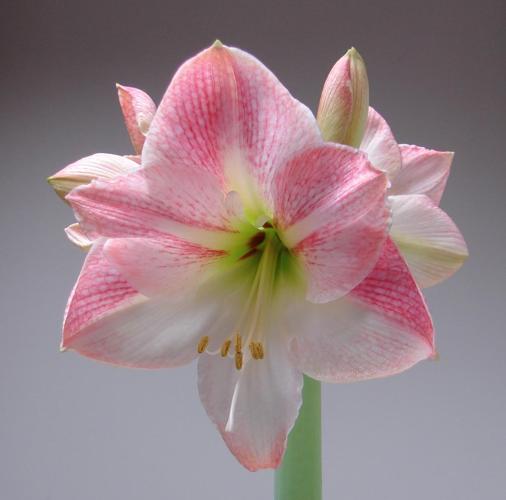
Amaryllis
Hippeastrum
The Amaryllis, botanically classified under the genus Hippeastrum and belonging to the family Amaryllidaceae (the amaryllis family), is an exceptionally spectacular and dramatic bulbous perennial. Native to the warm, tropical and subtropical scrublands, forest margins, and rocky slopes of South A...
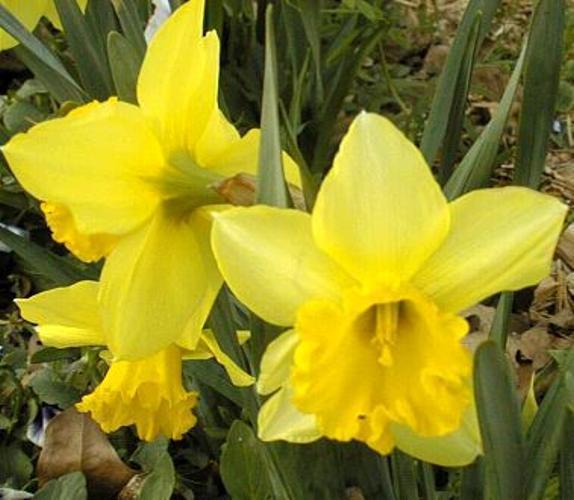
Daffodil
Narcissus pseudonarcissus
The Daffodil, botanically classified under the genus Narcissus and most famously represented by Narcissus pseudonarcissus (the wild daffodil), is a cheerful, spring-flowering bulbous perennial belonging to the Amaryllidaceae (amaryllis) family. Native to the damp meadows, light deciduous woodland...
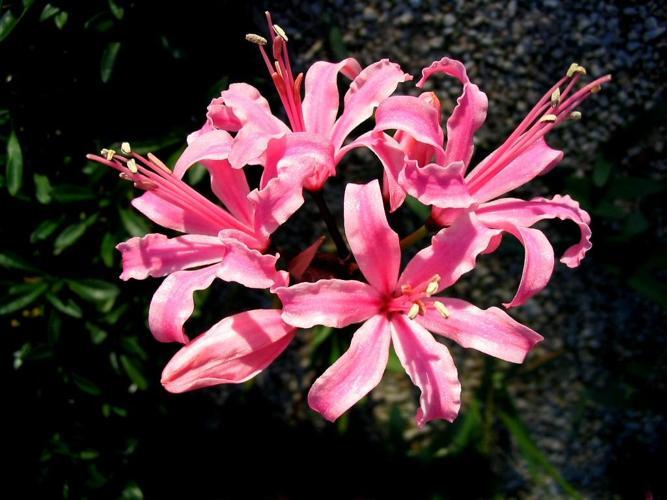
Cape Flower (Red Spider Lily)
Lycoris radiata
The Cape Flower, botanically designated as *Lycoris radiata* and globally celebrated as the Red Spider Lily, Japanese Spider Lily, Hurricane Lily, or Equinox Flower, is an exceptionally dramatic bulbous perennial. Belonging to the family Amaryllidaceae (the amaryllis family, tribe Lycorideae), th...