
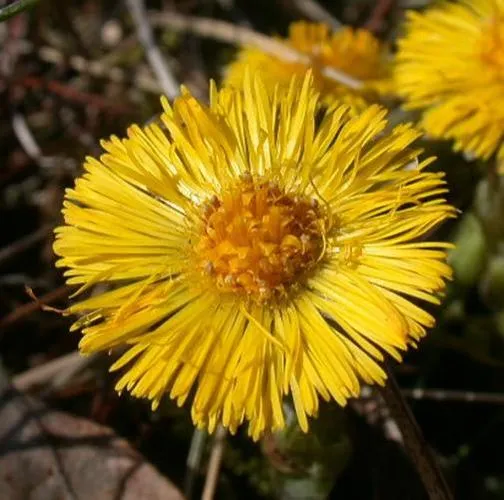
Coltsfoot
Tussilago farfara
How to Identify Coltsfoot
TOXIC TO PETS. Contains toxic hepatotoxic pyrrolizidine alkaloids that cause liver damage if eaten. Keep pets away from wild colonies.
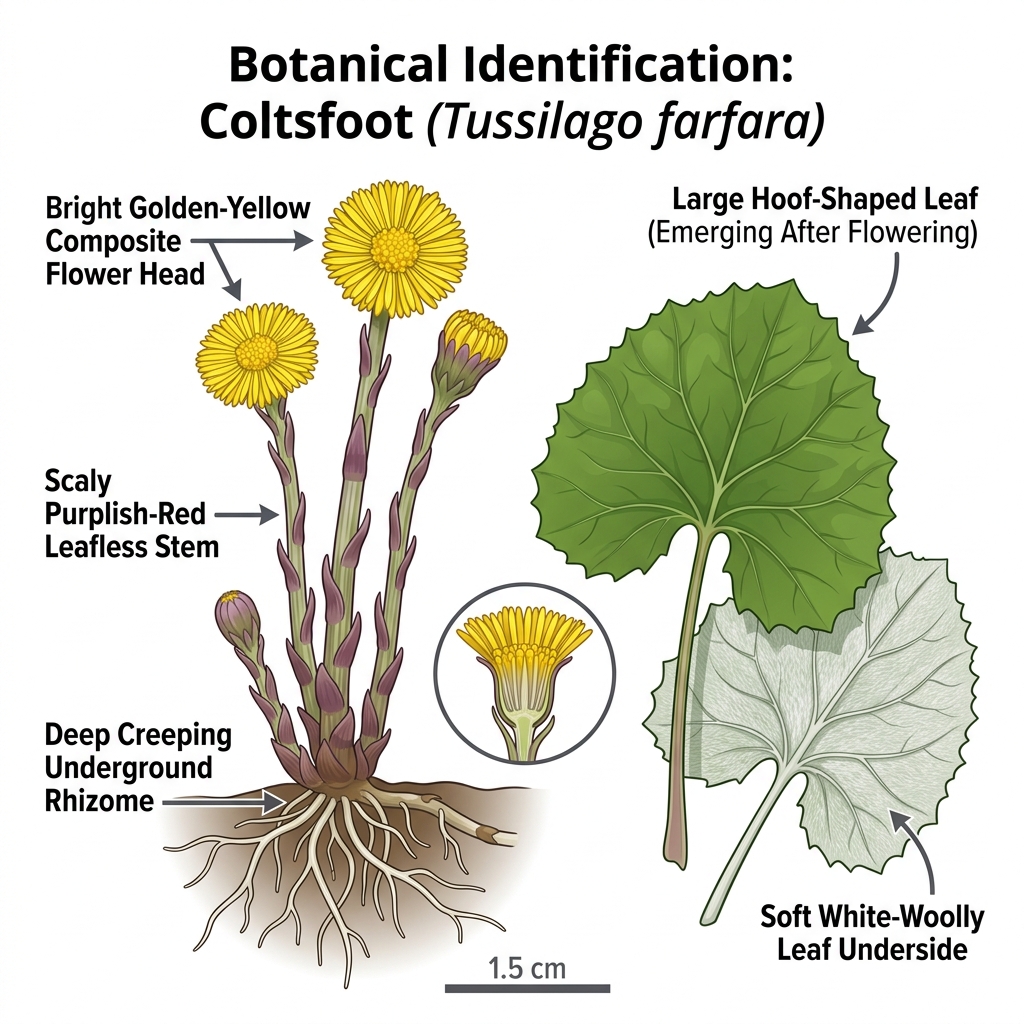
A detailed guide to identifying Coltsfoot (Tussilago farfara) by key botanical features:
- Bright Golden-Yellow Composite Flowers: Single dandelion-like flower heads measuring 0.5–1.5 inches across, blooming directly through melting snow.
- Scaly Purplish-Red Stems: Fleshy, leafless flower stalks (4–12 inches tall) densely covered in purplish scales.
- Sequential Hoof-Shaped Foliage: Large, heart-shaped or horse-hoof shaped leaves (4–8 inches wide) that emerge only AFTER flower heads fade.
- Soft Woolly Leaf Undersides: Dark green upper leaf surface contrasting with dense, white felted woolly hairs underneath.
Types & Sub-types of Early Composite Bloomers
Coltsfoot and its close Asteraceae relatives are categorized by bloom sequence, stem structure, and root systems:
- By Growth Habit & Sequential Blooming:
- Early Pre-Foliar Bloomers (Tussilago farfara): Flower stalks push through frozen soil weeks before any green leaves emerge.
- Basal Rosette Bloomers (Taraxacum officinale / Dandelion): Flowers arise simultaneously from a lush rosette of deeply lobed green leaves.
- By Root Architecture & Spreading Mechanism:
- Rhizomatous Underground Spreaders (Coltsfoot): Deep, aggressive underground root networks capable of stabilizing clay slopes.
- Deep Taproot Species (Dandelion): Long vertical taproots that anchor deeply into lawn turf.
- By Environmental Habitat Preference:
- Clay & Erosion Pioneer Species: Thrives in disturbed, heavy, poorly drained clay soils and rocky riverbanks.
- Meadow & Lawn Colonizers: Species adapted to turf grass and open pastures.
Care & Growing Guide
Coltsfoot Care & Growing Guide:
- Light: Full morning sun to partial shade (USDA Zones 3–9).
- Soil: Tolerates heavy, damp clay, alkaline soils, and gravel banks.
- Watering: Prefers moist, poorly drained soil; highly moisture-tolerant.
- Control: Deep rhizomatous spreaders; contain root boundaries to prevent aggressive garden spread.
Seasonal Blooming & Hardiness
Seasonal Blooming Calendar:
- Peak Bloom: Late winter to early spring (February through April).
- Planting Time: Best naturalized on clay banks via root cuttings in early autumn.
Bloom Timeline
About Coltsfoot
Coltsfoot, botanically classified as Tussilago farfara, is an intriguing and highly specialized perennial wildflower belonging to the Asteraceae (sunflower) family. Native to the damp clay-rich soils, disturbed riverbanks, and limestone cliffs of Europe, western and central Asia, and parts of North Africa, it was introduced to North America by European colonists for its highly esteemed medicinal properties. It is legendary as one of the very first botanical harbingers of spring, pushing its bright golden-yellow flower heads directly through frozen ground and melting snowbanks, often long before other wild perennials have even begun to break dormancy.
Physically identifying Tussilago farfara is straightforward because of its unique, sequential growth habit. In late winter or early spring (February to April), the plant produces scaly, reddish-purple or purplish-green flower stems measuring 4 to 12 inches tall, each topped with a single, golden-yellow composite head measuring 0.5 to 1.5 inches across. After these showy dandelionesque flowers have faded and transformed into fluffy white seed heads, the plant's true foliage emerges. Large, heart-shaped or hoof-shaped, sharply toothed leaves develop, measuring 4 to 8 inches in width and featuring a dark-green upper surface with white-woolly, soft velvet hairs on the underside.
The reproductive morphology of this early-blooming composite head is represented by the complex botanical floral formulas: Ray florets: Br % ♀ K0 C∞ A0 G(2) ; Disc florets: Br ⊕ ⚥ K0 C(5) A(5) G(2). This indicates that the outer ray florets are female, bilaterally symmetrical, and possess numerous strap-shaped petals with no stamens. The central disc florets are bisexual, radially symmetrical, and feature 5 fused petals forming a tubular yellow corolla with 5 stamens fused into a ring. In both cases, the sepals are completely modified into a ring of fine white bristles (the pappus) used for wind seed dispersal.
Horticulturally, Coltsfoot is an exceptionally tough, aggressive pioneer species that thrives in challenging, heavy, poorly drained clay or alkaline soils. It requires full morning sun to partial shade; dry, sandy soils are tolerated but will suppress its rapid spread via its massive, deep-creeping underground rhizomes. Because of its vigorous rhizomatous network, it is excellent at stabilizing loose, erosion-prone clay banks and roadsides. It is highly resistant to frost and cold temperatures, reliably surviving in USDA hardiness zones 3 through 9.
The genus name Tussilago is derived from the Latin nouns 'tussis,' meaning 'cough,' and 'agere,' meaning 'to drive out,' directly referring to its ancient 2,000-year historical reputation as a premier herbal cough remedy. Famed in Ayurvedic medicine as Vatpan and on the Indian subcontinent as Coltsfoot (कोलट्सफुट), its hoof-shaped leaves inspired its common names in Spanish as Pie de caballo or Uña de caballo. Culturally, it is prized as a symbol of early spring vitality, patient endurance under frost, and the quiet power of underground regeneration.
While Coltsfoot has a rich history in folk medicine, modern pet owners must practice strict caution. All parts of Tussilago farfara are highly TOXIC to dogs, cats, and horses due to significant concentrations of hepatotoxic pyrrolizidine alkaloids, including senecionine and senkirkine. Ingestion of the foliage, stems, or flowers by domestic animals leads to severe liver damage, accumulation of fluid in the abdomen (ascites), lethargy, and persistent vomiting. Because there is no specific coltsfoot safety page, we advise keeping pets strictly away from wild colonies; for safe, pet-friendly spring flowers, please visit our Pet Guard library.
Coltsfoot is frequently confused with the common Dandelion (Taraxacum officinale) or Butterbur (Petasites). It is easily distinguished because Tussilago farfara blooms on highly scaly, purplish stems before any leaves appear, whereas dandelions bloom on smooth, hollow green stems that emerge directly from an active basal rosette of green leaves. In naturalized meadows, it forms an early-season carpet alongside Dandelion or hardy Spring Crocus. Discover more wild Asteraceae species in our Flower Identifier.
For more botanical profiles and flower identification features, see our guides on Cape Flower (Red Spider Lily) and Cyclamen.
Floral Formula & Features
Ray florets - bilaterally symmetrical, female, no sepals, numerous petals forming a decorative strap, inferior ovary. Disc florets - radially symmetrical, bisexual, no sepals, 5 fused petals, 5 fused stamens, 2 fused carpels with inferior ovary
- Scientific Name & Classification: Tussilago farfara (Asteraceae). Famed as Coltsfoot, Coughwort, Horsefoot, and Vatpan.
- Identification Markers: Scaly, purplish-red stems blooming bright yellow heads in late winter before leaves. Leaves are large, hoof-shaped, and woolly underneath.
- Floral Formula (Ray: Br % ♀ K0 C∞ A0 G(2) ; Disc: Br ⊕ ⚥ K0 C(5) A(5) G(2)): Complex capitulum of female outer ray florets and bisexual tubular disc florets.
- Growing Requirements: Full sun to partial shade; prefers damp, heavy clay, roadsides, or gravel banks. Extremely cold-hardy and moisture-tolerant (Zones 3-9).
- Cultural Significance: Genus name means 'cough-dispeller' in Latin, referencing 2,000+ years of medicinal smoke and tea. Spanish name is Pie de caballo.
- Safety & Toxicity: TOXIC TO PETS. Contains toxic hepatotoxic pyrrolizidine alkaloids that cause liver damage if eaten. Keep pets away from wild colonies.
- Common Look-alikes: Confused with common dandelions, but distinguished by blooming on scaly leafless stalks weeks before dandelion leaves emerge.
- Internal Links: Naturalizes alongside other early spring bloomers like hardy Dandelion or cheerful Spring Crocus; find more varieties in our Flower Identifier.
Names in Different Languages
Botanical Classification: Coltsfoot belongs to the Asteraceae family. Learn how to identify its floral symmetry, stamen arrangement, and structural formulas in our Botanical Family Classification Guide.
Toxicity & Safety
Always keep toxic plants out of reach of children and pets. Consult a veterinarian or medical professional immediately if ingestion is suspected.
Frequently Asked Questions
Tussilago farfara (Asteraceae). Famed as Coltsfoot, Coughwort, Horsefoot, and Vatpan.
TOXIC TO PETS. Contains toxic hepatotoxic pyrrolizidine alkaloids that cause liver damage if eaten. Keep pets away from wild colonies.
What is Floral Formula?
A floral formula is a symbolic representation of a flower's structure using letters, numbers, and special symbols. It provides a concise way to describe the arrangement and number of floral parts.
This formula describes the flower's symmetry, sepals, petals, stamens, and carpels in a standardized format.
Formula Sequence
- Bract: Br or Ebr
- Bracteole: Brl or Ebrl
- Symmetry: % (Radial) or ⊕ (Bilateral)
- Sex: ♀ (Female), ♂ (Male), or ⚥ (Bisexual)
- Calyx/Sepal: K<number> (Free or Fused)
- Corolla/Petal: C<number> (Free or Fused)
- Androecium: A<number> (Free or Fused)
- Gynaecium: G<number> (Superior or Inferior Ovary)
Symbol Meanings
- Numbers: Indicate quantity of parts
- Parentheses (): Parts are fused together
- Plus (+): Parts in different whorls
- Underline: Superior ovary position
- Overline: Inferior ovary position
- ∞: Numerous parts (too many to count)
Understanding floral formulas helps botanists quickly identify and classify flowers based on their structural characteristics.
Similar Flowers
Discover flowers that share botanical characteristics
Same Family
4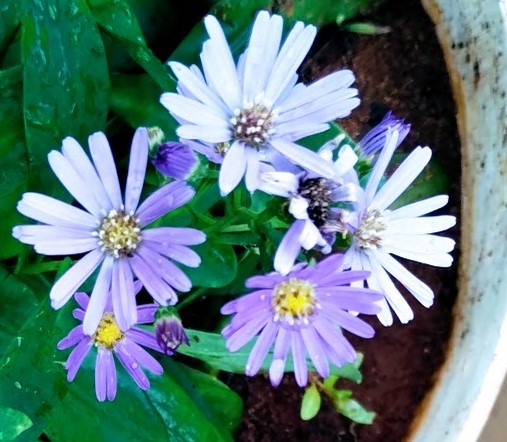
Aster (Michaelmas Daisy)
Symphyotrichum (formerly Aster)
The Aster, commonly known as the Michaelmas Daisy, is a quintessential late-summer and autumn bloomer belonging to the vast Asteraceae family. Native primarily to North America and Eurasia, these resilient perennials are absolute magnets for pollinators. Earning their name from the ancient Greek...
Daisy
Bellis perennis
The Common Daisy, botanically designated as *Bellis perennis* (and including related garden favorites like the English Daisy or Lawn Daisy), is an exceptionally cheerful, highly resilient herbaceous perennial. Belonging to the family Asteraceae (the daisy or sunflower family, tribe Astereae), thi...
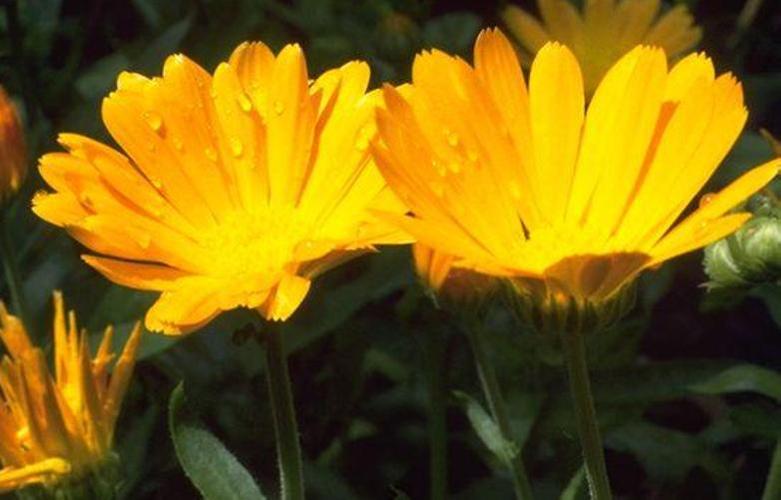
English Marigold (Calendula)
Calendula officinalis
The English Marigold (Calendula officinalis), widely known as the Pot Marigold, is a cheerful and incredibly versatile annual (or short-lived perennial in mild climates) belonging to the Asteraceae family. Native to southern Europe and the Mediterranean region, it has been a staple of traditional...
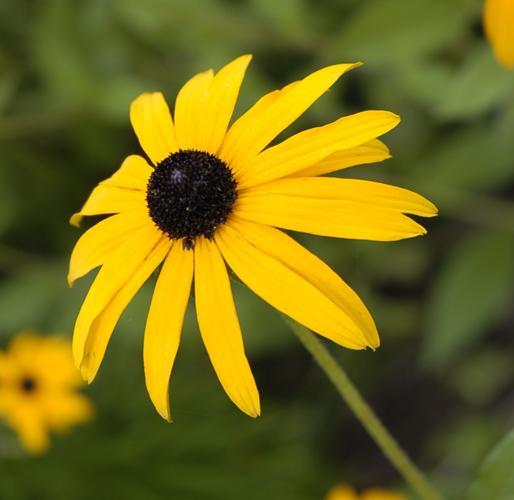
Black eyed Susan
Rudbeckia hirta
Rudbeckia hirta, famously known as the "Black-Eyed Susan" or "Yellow Ox-Eye Daisy," is a quintessentially American wildflower that brings a burst of radiant sunshine to North American landscapes. A member of the Asteraceae (Daisy) family, this resilient species is native to much of the central an...
Similar Characteristics
4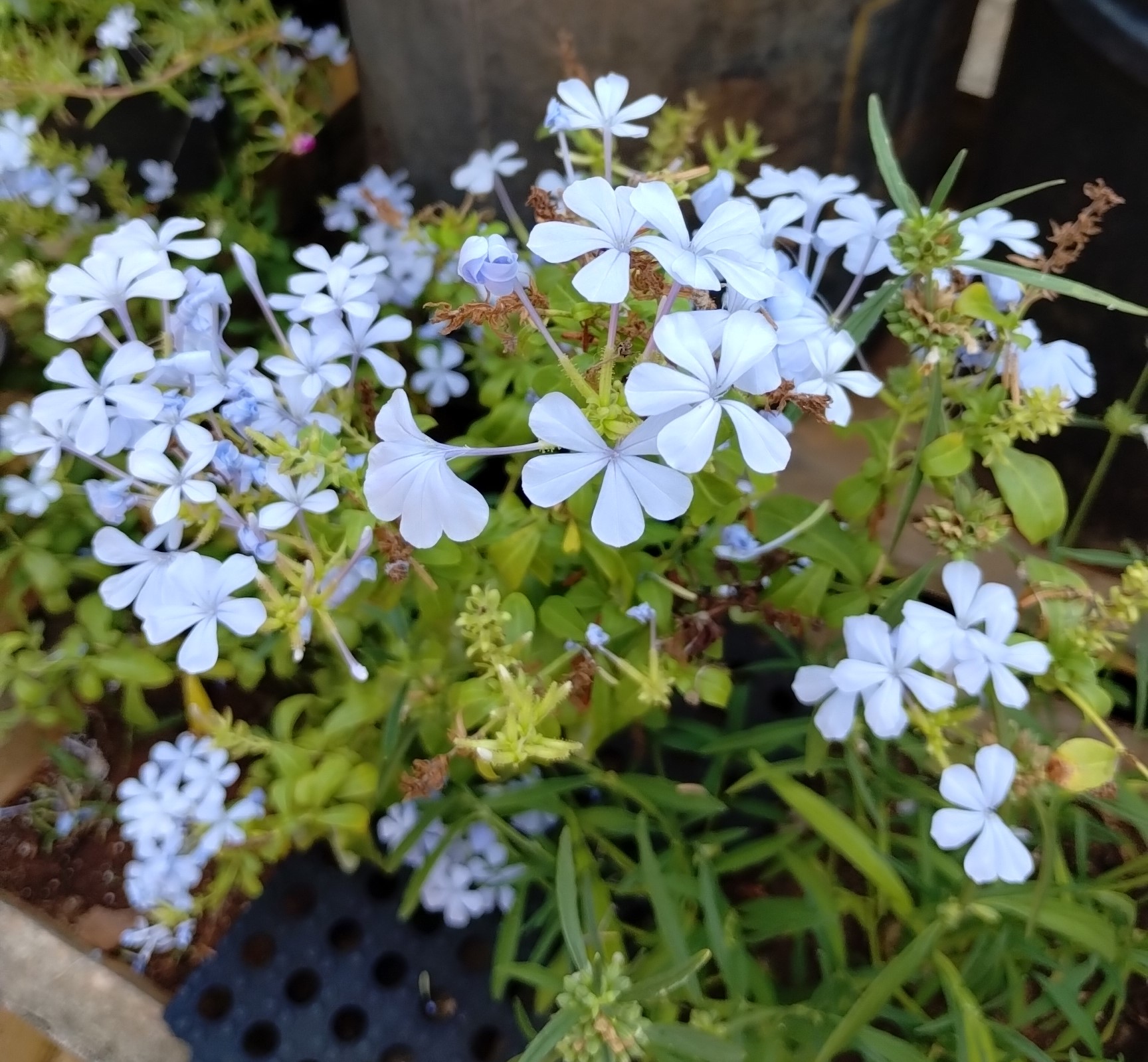
Leadwort
Plumbago auriculata
The Leadwort, botanically designated as Plumbago auriculata and commonly known as the Cape Leadwort, Blue Plumbago, or Sky Flower, is an exceptionally vigorous, sprawling evergreen shrub. Belonging to the family Plumbaginaceae (the leadwort family), this resilient and floriferous plant is native...
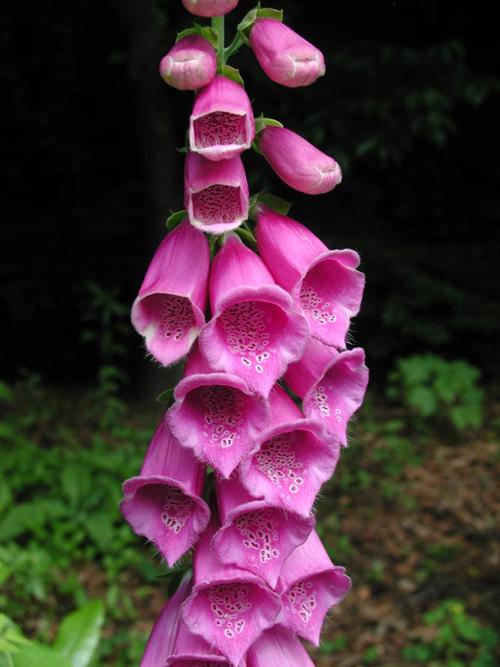
Foxglove
Digitalis purpurea
Digitalis purpurea, commonly known as Foxglove, is a majestic and iconic biennial plant belonging to the Plantaginaceae family. Native to the cool, temperate woodlands, hedgerows, and mountainous clearings of western and southwestern Europe, this striking species has naturalized throughout North...
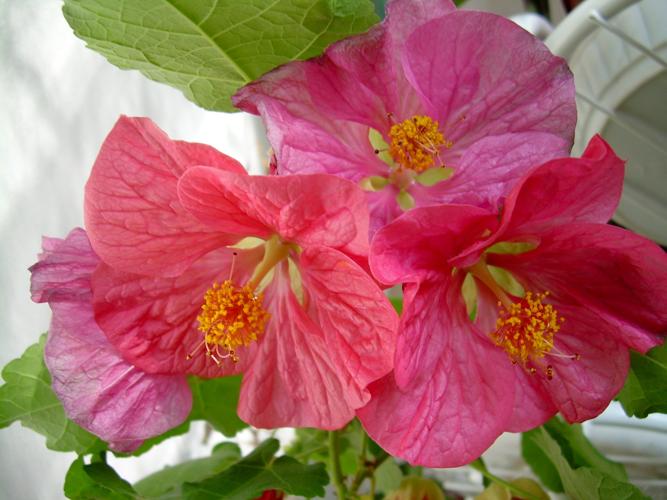
Mallow
Malva sylvestris
The Mallow, botanically designated as Malva sylvestris and commonly known as Common Mallow, High Mallow, Tall Mallow, or Cheeseweed, is an exceptionally versatile, hardy, and resilient biennial to short-lived perennial herb. Belonging to the family Malvaceae (the mallow family), this ancient plan...
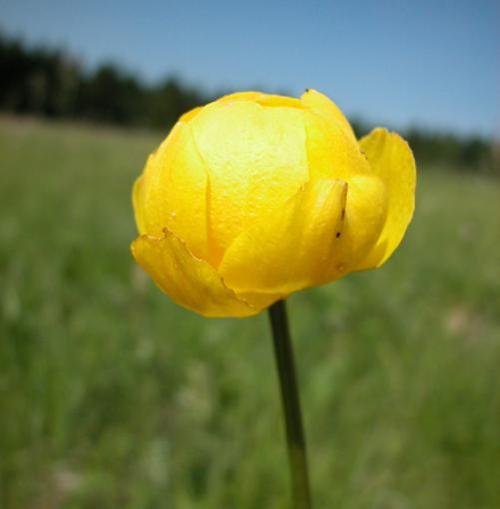
Globe flower
Trollius
The Globe Flower, botanically classified as Trollius and most famous as Trollius europaeus, is a whimsical, moisture-loving herbaceous perennial belonging to the Ranunculaceae (buttercup) family. Native to the cool temperate, alpine, and sub-boreal zones of Europe, northern Asia, and North Americ...