Tomatillo Quality & Safety Tests: Select Ripe & Non-Toxic Fruit
⚡ Quick 60-Second Tomatillo Freshness & Husk Verdict
Solanine & Sticky Sap Quality: Tomatillos (Physalis philadelphica) produce a natural sticky saponin/withanolide film beneath their papery husk. If harvested severely unripe or decayed, they accumulate bitter toxic glycoalkaloids (solanine).
A high-quality fresh tomatillo completely fills its dry, parchment-like husk. Avoid loose, shriveled husks with tiny shrunken fruit or damp, black moldy husks.
Peel back the husk: the skin should feel slightly sticky (natural protective coating) and rock-firm. If soft, squishy, or leaking sour fluid, internal bacterial soft rot is present.
Always wash peeled tomatillos under lukewarm water to dissolve the bitter sticky withanolide sap before culinary prep or salsa preparation.
Drop Tomatillo photo here to test purity
or click to browse • Supports JPG, PNG, WEBP • Paste with Ctrl+V
Inspection Guide
Click to enlarge
Tomatillo Ripeness & Safety Audit
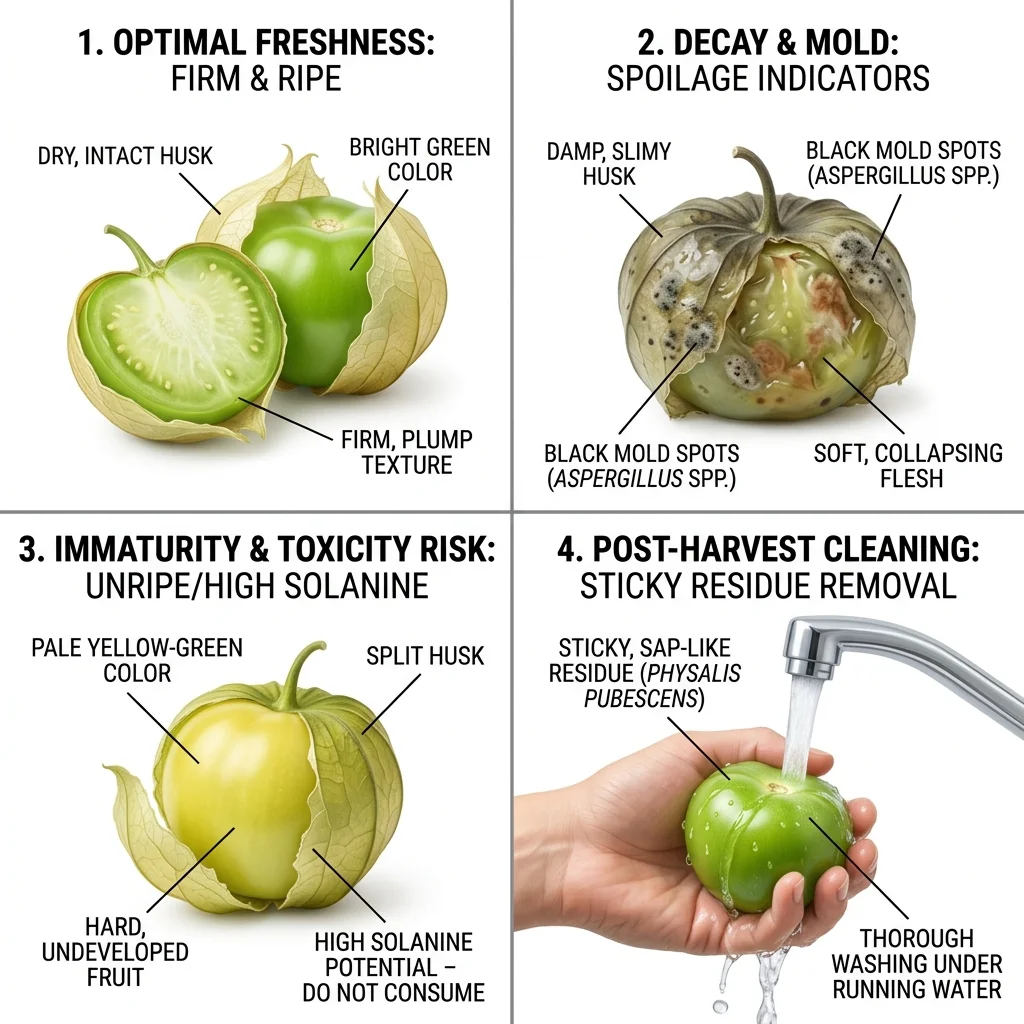
Tomatillos (Physalis philadelphica), a staple of Mexican cuisine, are unique green fruits enclosed in a papery husk. While delicious when ripe and cooked, raw unripe tomatillos contain high levels of solanine, a toxic glycoalkaloid that can cause stomach upset.
1. The Husk Tightness:
Inspect the husk. A fresh, ripe tomatillo has a dry, papery, straw-colored husk that fits tightly around the fruit, sometimes splitting open. If the husk is very loose, damp, or has black mold spots, the fruit inside is likely decaying.
2. The Firmness Test:
Gently squeeze the fruit through the husk. The tomatillo should feel firm, plump, and substantial. If it feels hollow, soft, or mushy, it is overripe, stale, or has collapsed due to internal rot.
3. The Sticky Film Check:
When you peel back the husk, you will feel a sticky, sap-like residue on the green skin. This is completely natural and contains solanine, which acts as a pest deterrent. It must be washed off thoroughly with warm water before preparing or cooking.
4. The Color and Taste Audit:
The skin of the fruit should be bright green or slightly purple. If the skin is fully yellow, the tomatillo is overripe and will taste unpleasantly sweet and bland instead of tart. Raw green tomatillos should be eaten in moderation; cooking neutralizes most solanine and improves digestibility.
Click to enlarge
Tomatillo Freshness & Husk Inspection
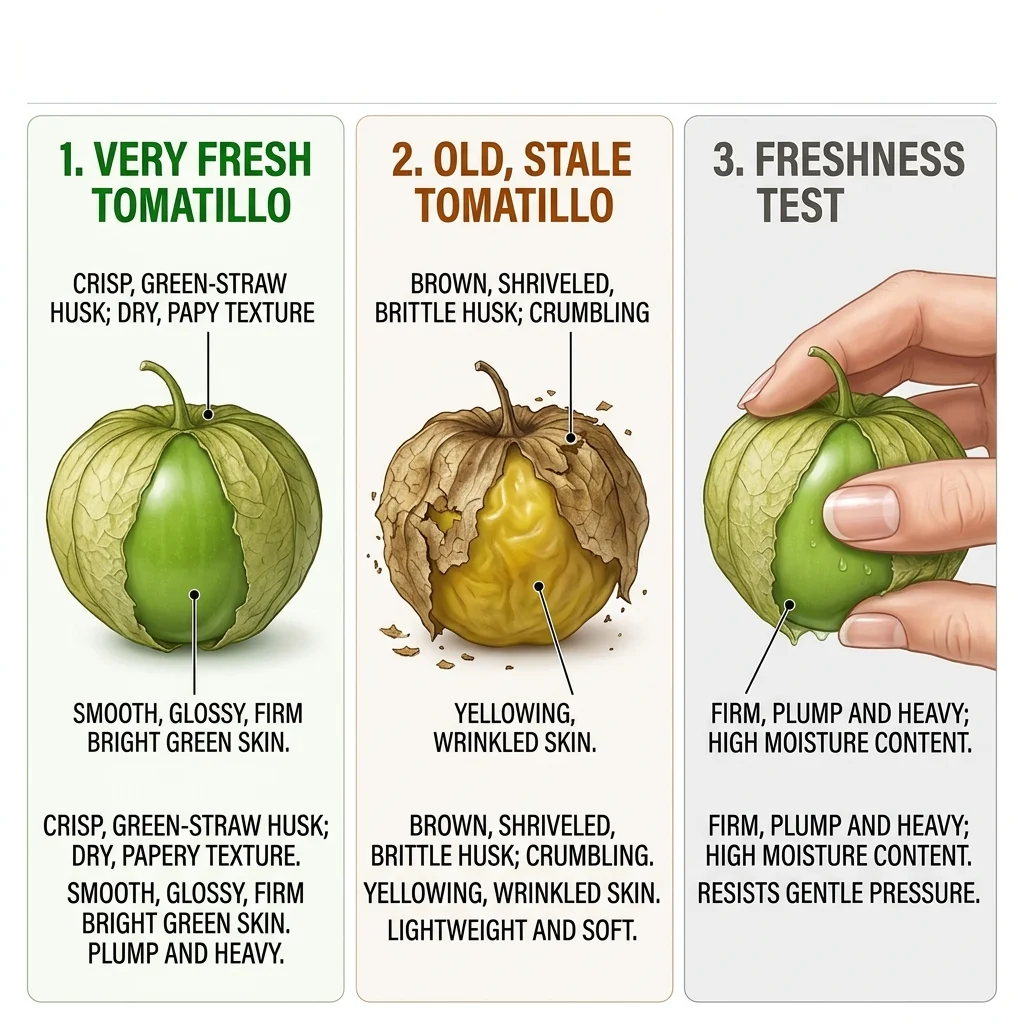
Freshness is indicated by the crispness of the husk and firmness of the fruit inside.
1. Husk Color & Texture:
Fresh tomatillos have light green to straw-colored husks that are dry and papery. Dry, brown, brittle husks that crumble easily indicate older stock.
2. Fruit Skin Gloss & Color:
Peel a small section. The skin should be smooth, glossy, and bright green. Dull, wrinkled, or yellowing skin indicates aging and loss of tartness.
3. Squeeze Firmness:
Fresh tomatillos are extremely firm and resilient. Mushy or spongy tomatillos are stale and should be avoided.
4. Weight Assessment:
Fresh tomatillos feel heavy for their size, indicating high moisture content. Light, hollow-feeling fruits have dried out inside.
Quick Safety Tips
- Ensure the husk is dry and tightly covers the fruit
- Always wash off the sticky residue on the skin before eating
- Cook green tomatillos to neutralize solanine and enhance digestibility
- Discard any tomatillos with black mold on the husk or soft, mushy flesh
Primary Chemical Concerns
Health Risks & Impacts
Multilingual Local Names
Common Storage Pests
Three-Lined Potato Beetle
low riskBeetles and larvae that feed on tomatillo leaves and soft husk tissues.
Detection
- Small circular holes in the papery husk
- Sticky larval residue or yellow-orange larvae visible under the husk
Prevention
- Select fruits with fully intact, undamaged husks
- Wash thoroughly under running water
Corrective Action: What to do?
Peel back the husk, discard any insect-damaged fruit, and wash the surface thoroughly.
Regulatory Corner: US FDA / SENASICA (Secretaría de Agricultura - Mexico)
Regulation: 21 CFR Part 112 (Standards for Produce Safety) / NOM-008-FITO-1995
Legal Limit:Chlorothalonil: Max 5 ppm; Permethrin: Max 2 ppm; Post-harvest synthetic wax/dyes: 0.0%
Report Adulteration to US FDA / SENASICA (Secretaría de Agricultura - Mexico)