Testes de Qualidade e Segurança do Tomatilho: Escolha Frutos Maduros e Seguros
⚡ Veredito Rápido de 60 Segundos: Tomatillo e Frescura
Seiva Protetora e Amargor: O tomatillo verde produz uma película viscosa natural sob a sua casca. Se colhido verde imaturo ou danificado, acumula glicoalcaloides amargos (solanina).
O fruto deve preencher totalmente a sua casca seca e fina. Evite cascas murchas ou com mofo preto úmido.
Ao descascar, a pele deve estar ligeiramente pegajosa e muito firme. Se estiver mole ou esponjoso, há decomposição bacteriana.
Lave sempre os tomatillos descascados sob água morna para dissolver a resina amarga antes do preparo de molhos e pratos.
Drop Tomatillo photo here to test purity
or click to browse • Supports JPG, PNG, WEBP • Paste with Ctrl+V
Inspection Guide
Click to enlarge
Auditoria de maturação e segurança de Tomatillo
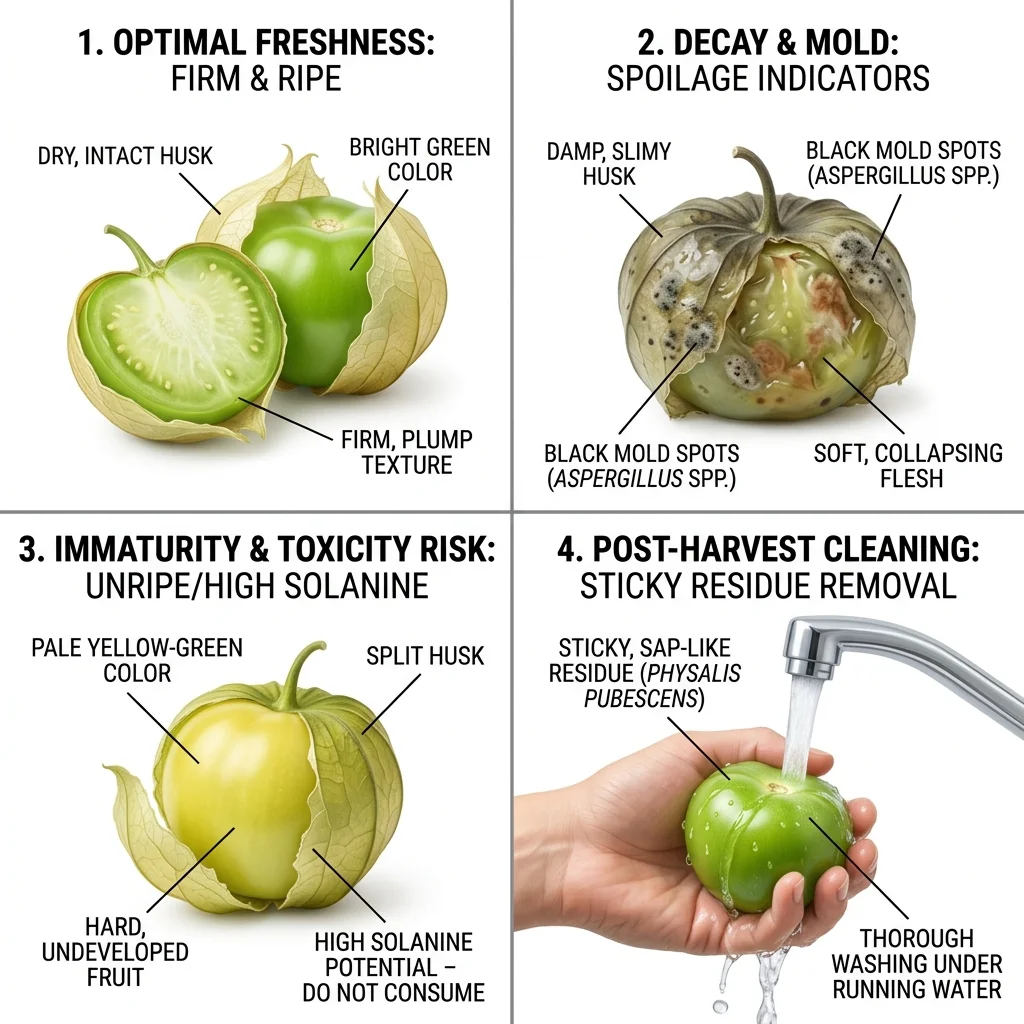
Tomatillos (Physalis philadelphica), um alimento básico da culinária mexicana, são frutas verdes únicas envoltas em uma casca de papel. Embora deliciosos quando maduros e cozidos, os tomatillos verdes crus contêm altos níveis de solanina, um glicoalcalóide tóxico que pode causar dores de estômago.
1. A estanqueidade da casca:
Inspecione a casca. Um tomatillo fresco e maduro tem uma casca seca, semelhante a papel e cor de palha que se ajusta perfeitamente à fruta, às vezes se abrindo. Se a casca estiver muito solta, úmida ou com manchas pretas de mofo, é provável que a fruta em seu interior esteja apodrecendo.
2. O teste de firmeza:
Esprema suavemente a fruta através da casca. O tomatillo deve ser firme, rechonchudo e substancial. Se parecer oco, macio ou pastoso, está maduro demais, velho ou desmoronou devido à podridão interna.
3. A verificação do filme pegajoso:
Ao descascar a casca, você sentirá um resíduo pegajoso e parecido com seiva na casca verde. É totalmente natural e contém solanina, que atua como dissuasor de pragas. Deve ser bem lavado com água morna antes de preparar ou cozinhar.
4. A auditoria de cor e sabor:
A casca da fruta deve ser verde brilhante ou levemente roxa. Se a casca estiver totalmente amarela, o tomatillo está maduro demais e terá um sabor desagradavelmente doce e suave, em vez de ácido. Os tomatillos verdes crus devem ser consumidos com moderação; cozinhar neutraliza a maior parte da solanina e melhora a digestibilidade.
Click to enlarge
Inspeção de frescor e casca de Tomatillo
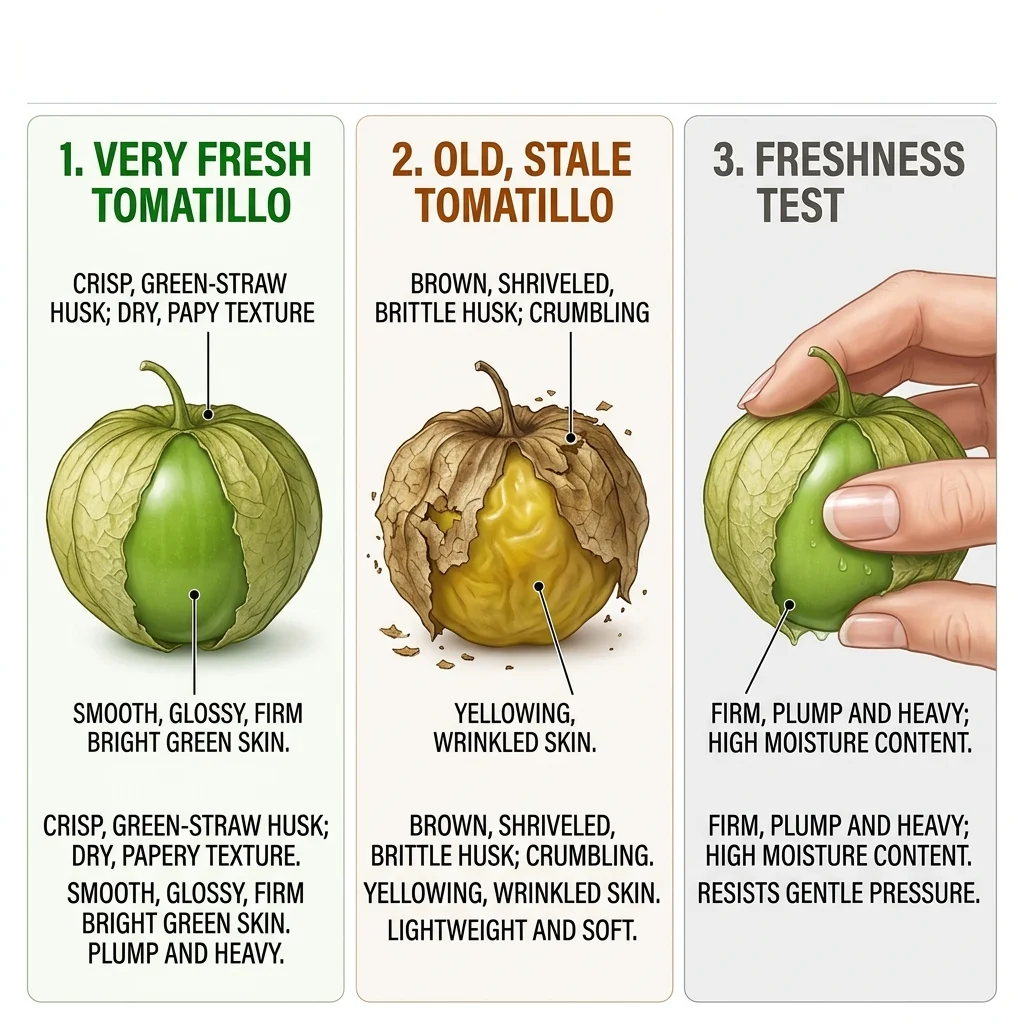
A frescura é indicada pela crocância da casca e firmeza do interior da fruta.
1. Cor e textura da casca:
Os tomatillos frescos têm casca verde clara a palha, seca e como papel. Cascas secas, marrons e quebradiças que se esfarelam facilmente indicam estoque mais antigo.
2. Brilho e cor da casca da fruta:
Descasque uma pequena seção. A pele deve ser lisa, brilhante e verde brilhante. Pele opaca, enrugada ou amarelada indica envelhecimento e perda de acidez.
3. Aperte a firmeza:
Os tomatillos frescos são extremamente firmes e resistentes. Tomatillos moles ou esponjosos estão estragados e devem ser evitados.
4. Avaliação de peso:
Os tomatillos frescos parecem pesados para seu tamanho, indicando alto teor de umidade. Frutas leves e com sensação de vazio secaram por dentro.
Quick Safety Tips
- Certifique-se de que a casca esteja seca e cubra bem a fruta
- Sempre lave o resíduo pegajoso da pele antes de comer
- Cozinhe tomatillos verdes para neutralizar a solanina e melhorar a digestibilidade
- Descarte todos os tomatillos com mofo preto na casca ou polpa macia e pastosa
Primary Chemical Concerns
Health Risks & Impacts
Multilingual Local Names
Common Storage Pests
Three-Lined Potato Beetle
low riskBeetles and larvae that feed on tomatillo leaves and soft husk tissues.
Detection
- Small circular holes in the papery husk
- Sticky larval residue or yellow-orange larvae visible under the husk
Prevention
- Select fruits with fully intact, undamaged husks
- Wash thoroughly under running water
Corrective Action: What to do?
Peel back the husk, discard any insect-damaged fruit, and wash the surface thoroughly.
Regulatory Corner: ANVISA (Brasil) / US FDA
Regulation: Normas de Inocuidade para Produtos Hortícolas Frescos
Legal Limit:Clorotalonil máx. 5 ppm; Ceras sintéticas e corantes pós-colheita: 0.0%
Report Adulteration to ANVISA (Brasil) / US FDA