
Cucumber Beetle
Acalymma vittatum, Diabrotica undecimpunctata
About Cucumber Beetle
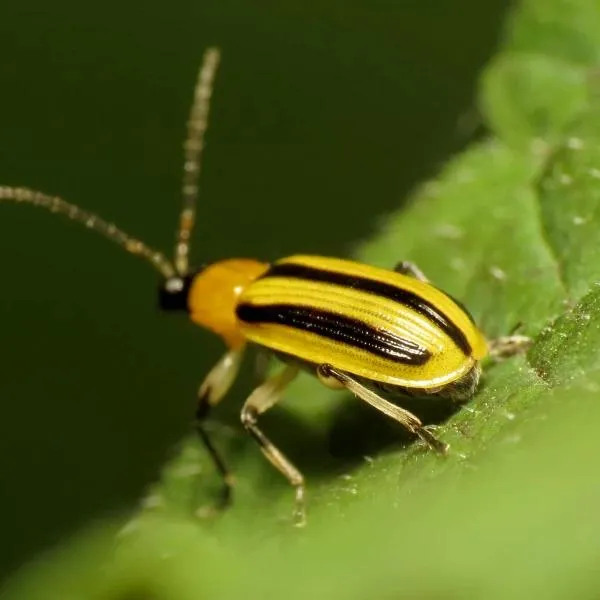
The Cucumber Beetle (featuring the Striped Cucumber Beetle, Acalymma vittatum, and the Spotted Cucumber Beetle, Diabrotica undecimpunctata) is a highly destructive, double-threat agricultural chewing insect pest belonging to the leaf beetle family Chrysomelidae. Globally recognized as premier cucurbit specialists, these beetles target cucumbers, squashes, pumpkins, and melons. The adult beetles, colored bright yellow-green with either bold black stripes or twelve spots, feed voraciously on foliage, cotyledons, flowers, and fruit skin. Meanwhile, their subterranean larval stage (often called corn rootworms) attacks plant roots. Crucially, they serve as the primary vector for the highly lethal bacterial wilt pathogen (Erwinia tracheiphila), which quickly kills cucurbit plants.
Identifying Cucumber Beetle damage involves looking for both direct chewing symptoms and systemic wilting. Above-ground, adult beetles chew irregular holes in leaves, strip the tender skin of young stems, and feed heavily inside blossoms, destroying fruit sets. On ripening squashes and melons, their surface scarring leaves dry, woody blemishes. The most catastrophic indicator, however, is sudden plant wilting: individual leaves or entire runners go completely limp during the day and fail to recover at night—a direct result of bacterial wilt infection transmitted through beetle bites. In the soil, larvae tunnel through roots, causing stunted growth.
Cucumber Beetles thrive in warm summer conditions (22°C to 30°C). Adults overwinter in nearby weedy areas and garden debris, emerging early in spring to feed on weeds before migrating to emerging cucurbits. Females lay up to 800 eggs in soil cracks at the base of host plants. The hatched larvae feed underground on roots for 2 to 3 weeks before pupating, emerging as new adults in mid-summer. The entire cycle completes in 30 to 45 days, yielding 2 to 3 generations per season.
| Crop/Plant Type | Severity Rating | Impact Description |
|---|---|---|
| Cucumbers & Cantaloupes | Extreme (⭐⭐⭐) | High susceptibility to fatal Bacterial Wilt, severe foliage and blossom feeding |
| Squash & Pumpkins | High (⭐⭐) | Severe leaf defoliation, stem girdling, and disfigured fruit skins |
| Sweet Corn & Zinnias | Medium (⭐) | Larval rootworm damage on corn roots, chewed flower petals |
Controlling Cucumber Beetles is critical to prevent the transmission of fatal bacterial wilt. Natural strategies rely on early physical row covers, kaolin clay coatings, and releasing soil nematodes to kill root larvae. Chemical control is effective when applying organic spinosad foliar sprays or using systemic neonicotinoids before blossoms open. For comprehensive agricultural disease resources, visit our Plant Disease Identifier Hub, or explore related threat profiles like Stink Bug, Leafhopper, and Colorado Potato Beetle. For specialized diagnosis of related crop threats, see our guide on Mexican Bean Beetle.
Taxonomy & Features
- Double Threat Biology: Adult leaf-chewers strip tender foliage and flowers, while subterranean larvae tunnel roots.
- Lethal Wilt Vector: Primary vector of the highly fatal Erwinia tracheiphila bacteria causing Bacterial Wilt.
- Distinct Yellow-Green Markings: Colored bright yellow-green with three bold black stripes or twelve spots.
- Cucurbit Family Specialist: Primarily targets squashes, cucumbers, pumpkins, and melons for food and breeding.
- Aggressive Flower Eating: Beetles swarm inside large yellow blossoms, destroying young fruit sets from the start.
- Sheltered Overwintering: Overwinters successfully as adult beetles in weedy margins and garden residues.
Seasonal Outbreak Calendar
Outbreak risk and activity timeline for Cucumber Beetle based on seasonal climate patterns:
Names in Different Languages
Affected Plant Species
Vegetables & Crops
- Cucumbers
- Zucchini
- Squash
- Pumpkins
- Sweet Corn
Flowers & Ornamentals
- Zinnias
- Marigolds
- Sunflowers
- Dahlias
- Roses
Fruits & Berries
- Watermelons
- Cantaloupes
Prevention & Cure
Natural & Organic Methods
- Physical Row Covers: Place floating row covers over young cucurbits to completely block adult beetles during critical early growth stages.
- Kaolin Clay Drench: Spray plants thoroughly with kaolin clay slurry to form an irritating, powdery white feeding deterrent.
- Predatory Nematodes: Apply beneficial soil nematodes (Steinernema carpocapsae) to kill cucumber beetle root larvae.
- Trap Cropping: Plant blue hubbard squash or mustard surrounding the main patch to attract and concentrate cucumber beetles.
Chemical & Professional Control
- Spinosad Foliar Spray: Spray organic-certified spinosad directly onto infested leaves and blossoms to kill chewing beetles.
- Acetamiprid Systemic: Spray systemic acetamiprid or other neonicotinoids under extreme agricultural infestations before blossoms open.
- Pyrethroid Spray Barrier: Apply permethrin or bifenthrin to foliage and soil borders to knock down active flying beetle populations.
Frequently Asked Questions
Why are Cucumber Beetles so dangerous to melons and squashes?
Besides directly eating leaves and flowers, Cucumber Beetles are the primary vectors of Erwinia tracheiphila, a highly lethal bacterium that causes irreversible Bacterial Wilt disease.
What is the difference between striped and spotted cucumber beetles?
The Striped Cucumber Beetle (Acalymma vittatum) has three distinct black longitudinal stripes on its yellow body, while the Spotted Cucumber Beetle (Diabrotica undecimpunctata) is greenish-yellow with twelve distinct black spots.
How do I test if my wilted cucumber plant has Bacterial Wilt?
Cut a wilted stem near the base, press the two cut ends together, and slowly pull them apart; if a sticky, white, thread-like bacterial slime stretches between the cut ends, Bacterial Wilt is confirmed.
Recommended diagnostics based on crop family and symptoms:
Remedy Disclaimer & Safety Notice
This disease guide is for educational screening purposes only. Pathogen behavior, severity, and host susceptibility can vary dramatically based on seed variety, weather conditions, and regional microclimates. Chemical pesticides and organic treatments are subject to strict regional environmental regulations and registration mandates. Please verify all chemical registrations and review manufacturer safety labels carefully with local certified agronomists or agricultural extension service offices before applying.