Cómo Probar la Pureza de la Mantequilla de Maní: Detectar Aflatoxinas y Aceites Hidrogenados
Detecte moho cancerígeno de aflatoxinas, cortes de aceite hidrogenado y rellenos de almidón/harina en mantequilla de maní orgánica.
Para obtener más información sobre la seguridad de los frutos secos, lea nuestras guías sobre Maní y Almendras.
Drop Manteca de cacahuete photo here to test purity
or click to browse • Supports JPG, PNG, WEBP • Paste with Ctrl+V
Inspection Guide
Click to enlarge
Auditoría de pureza y viscosidad de la mantequilla de maní
La mantequilla de maní es un alimento básico muy popular y rico en proteínas, pero también es susceptible a la aflatoxina, un compuesto tóxico producido por el moho Aspergillus en el maní crudo. Además, las marcas comerciales reemplazan con frecuencia los aceites de maní de alto valor con aceites vegetales hidrogenados baratos (grasas trans) o aceite de palma para evitar la separación, convirtiendo un alimento saludable en un riesgo cardiovascular. Muchas marcas económicas también utilizan almidón o harina como espesantes para darle volumen al producto.
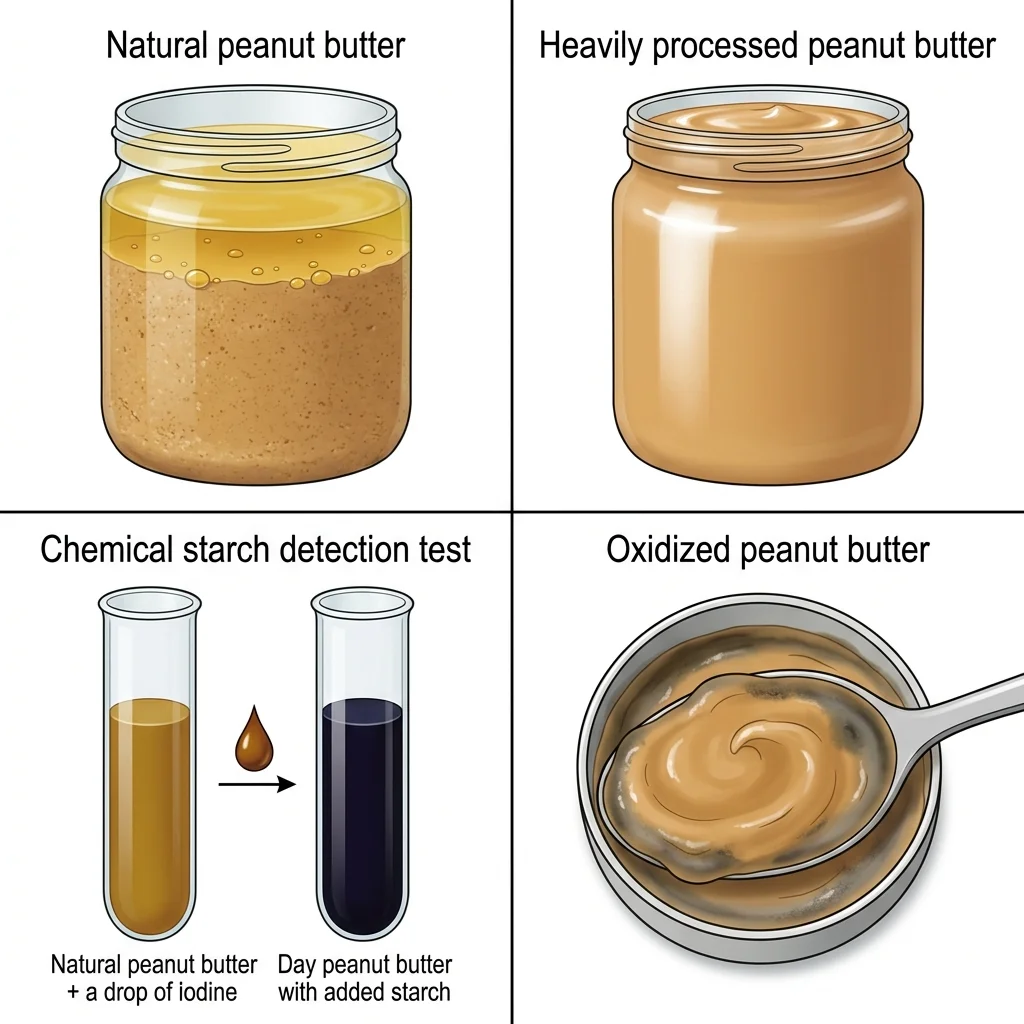
1. Separación de aceite frente a homogeneización (control de pureza):
La mantequilla de maní natural pura y orgánica contiene solo maní y un toque de sal. A temperatura ambiente, se someterá naturalmente a una sinéresis (separación de aceite), donde una capa de aceite de maní dorado líquido sube a la superficie, dejando debajo una pasta de nuez densa y seca. Si su mantequilla de maní permanece perfectamente suave, cremosa y completamente homogeneizada a temperatura ambiente sin ninguna separación de aceite, está adulterada con aceites hidrogenados, aceite de palma o emulsionantes químicos.
2. La prueba de licuefacción por calor:
Coloca una cucharada de mantequilla de maní en una sartén pequeña a fuego lento. La mantequilla de maní pura y natural se derrite suavemente y se licua hasta formar un almíbar líquido y brillante en 1 o 2 minutos. La mantequilla de maní procesada o adulterada que contiene aceites hidrogenados, aceite de palma o almidones se espesará, se aglutinará, se volverá gomosa o liberará un olor químico fuerte y dulce en lugar de derretirse limpiamente.
3. Adulteración de almidón y harina (prueba de yodo):
Disuelva una cucharadita de mantequilla de maní en una cucharada de agua tibia, mezcle bien y agregue 1-2 gotas de tintura de yodo. La mantequilla de maní pura contiene una cantidad mínima de almidón libre y permanecerá de color marrón o tostado. Si la mezcla se vuelve azul oscuro, negro azulado o morado intenso, la mantequilla de maní se ha adulterado con rellenos de almidón, harina o maltodextrina para aumentar su peso.
4. La Auditoría de Olor y Sabor de Rancidez:
La mantequilla de maní pura y de alta calidad tiene un rico aroma a nuez profundamente tostado y un sabor limpio, ligeramente dulce y sabroso. Debido a que los maníes contienen altos niveles de grasas insaturadas, se oxidan rápidamente cuando se exponen a la luz, el calor o el oxígeno. La mantequilla de maní rancia huele fuertemente a cartón, pintura o crayones y deja un sabor amargo, jabonoso o metálico en la boca. Deseche inmediatamente para evitar consumir peróxidos lipídicos tóxicos.
Click to enlarge
Auditoría de oxidación y frescura de la mantequilla de maní
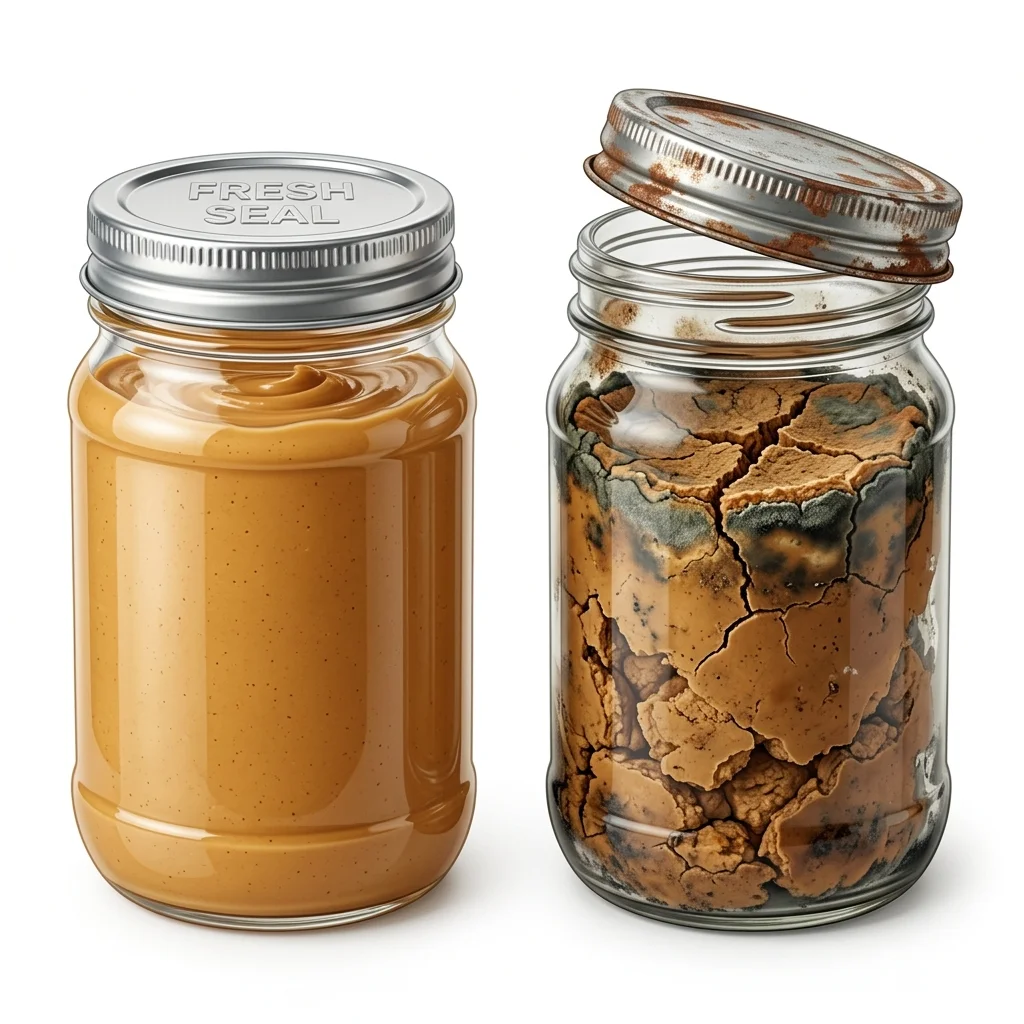
Garantizar la frescura de la mantequilla de maní es vital para evitar el consumo de grasas rancias y residuos tóxicos de moho.
1. Decoloración del borde oscurecido:
Inspeccione los bordes del frasco y la capa superficial. Una decoloración marrón oscura o gris indica oxidación lipídica avanzada y exposición al aire.
2. Integridad del sello del frasco:
Verifique que el sello de vacío debajo de la tapa esté apretado y presionado. Un sello suelto o perforado permite que entre humedad, lo que desencadena el crecimiento del moho invisible Aspergillus y la producción de aflatoxinas termoestables.
3. Flexibilidad de textura rancia:
La mantequilla de maní fresca y natural es muy untable. La mantequilla de maní rancia o altamente oxidada se vuelve seca, rígida, calcárea y pierde su rico aroma a nuez tostada.
Quick Safety Tips
- Busque la separación de aceite natural en la parte superior: es el mejor indicador de una mantequilla de maní pura y sin emulsionantes.
- Realice la prueba de yodo: un cambio de color azul-negro revela rellenos ocultos de almidón o harina
- Caliente una muestra: la mantequilla de maní pura debe derretirse y convertirse en un líquido suave en lugar de aglutinarse o volverse gomoso.
- Rechace cualquier mantequilla de maní que huela a crayones o pintura, lo que indica una oxidación dañina del aceite rancio.
Primary Chemical Concerns
Health Risks & Impacts
Multilingual Local Names
Regulatory Corner: US FDA (21 CFR 164.150 - Standards of Identity for Peanut Butter) / FSSAI (Food Products Standards) Reg. 2.2.16
Regulation: FDA 21 CFR 164.150 & Food Safety and Standards (Food Products Standards) Regulations 2011, Clause 2.2.16
Legal Limit:Peanut ingredients: Min 90.0%; Total fat: Max 55.0%; Hydrogenated vegetable fat / trans fat: Max 2.0% (Zero industrial trans fats); Total Aflatoxin: Max 15.0 ppb (FSSAI) / 20.0 ppb (FDA); Salmonella: Zero in 25g
Report Adulteration to US FDA (21 CFR 164.150 - Standards of Identity for Peanut Butter) / FSSAI (Food Products Standards) Reg. 2.2.16