Como Testar a Pureza da Manteiga de Amendoim: Detectar Aflatoxinas e Óleos Hidrogenados
Detecte mofo de aflatoxina cancerígena, cortes de óleo hidrogenado e enchimentos de amido/farinha em manteiga de amendoim orgânica.
Para saber mais sobre a segurança das nozes, leia nossos guias sobre Amendoins e Amêndoas.
Drop Manteiga de amendoim photo here to test purity
or click to browse • Supports JPG, PNG, WEBP • Paste with Ctrl+V
Inspection Guide
Click to enlarge
Auditoria de pureza e viscosidade da manteiga de amendoim
A manteiga de amendoim é um alimento básico altamente popular e rico em proteínas, mas também é suscetível à aflatoxina – um composto tóxico produzido pelo mofo Aspergillus em amendoins crus. Além disso, as marcas comerciais substituem frequentemente os óleos de amendoim de alto valor por óleos vegetais hidrogenados baratos (gorduras trans) ou óleo de palma para evitar a separação, convertendo um alimento saudável num perigo cardiovascular. Muitas marcas econômicas também usam amido ou farinha como espessantes para aumentar o volume do produto.
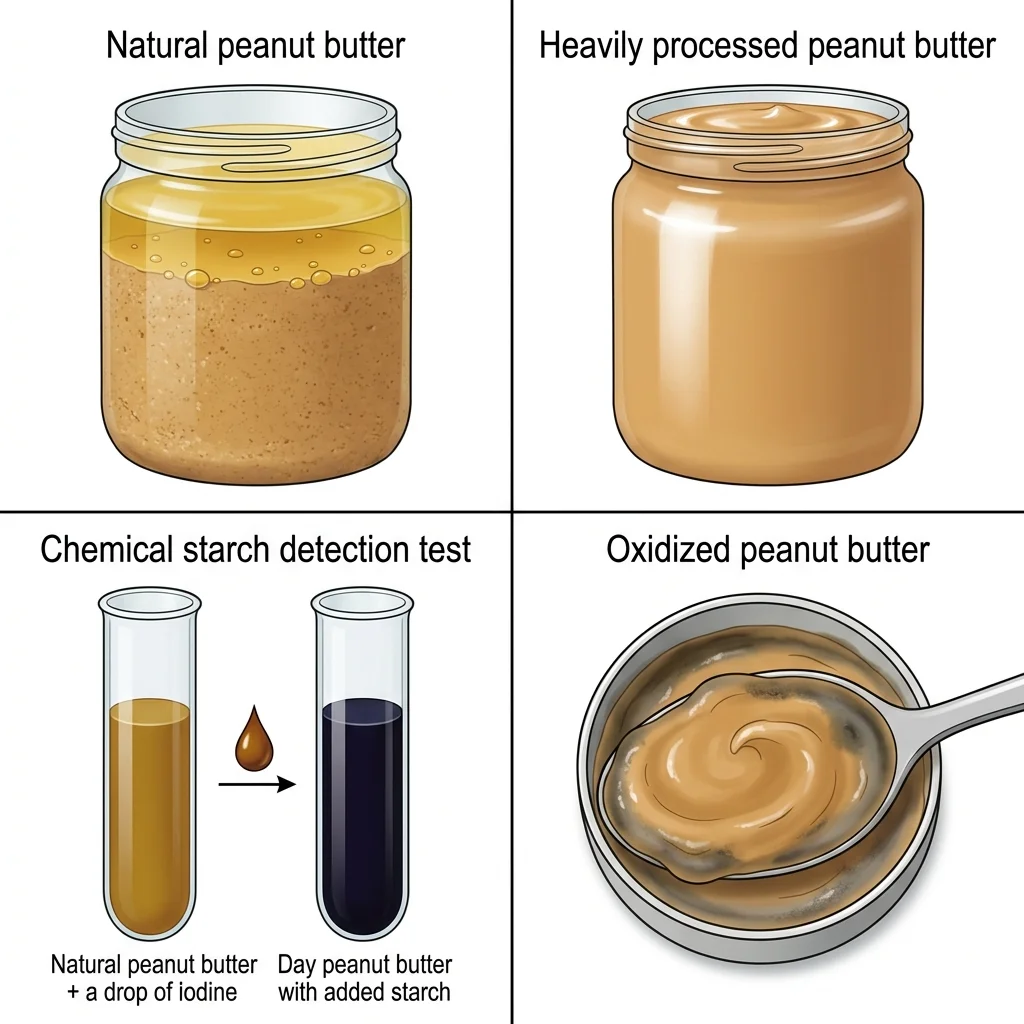
1. Separação de Óleo vs. Homogeneização (Verificação de Pureza):
A manteiga de amendoim natural pura e orgânica contém apenas amendoim e um toque de sal. À temperatura ambiente, ele sofrerá naturalmente sinérese (separação do óleo), onde uma camada de óleo de amendoim dourado e líquido sobe até o topo, deixando uma pasta de nozes densa e seca por baixo. Se a sua manteiga de amendoim permanecer perfeitamente lisa, cremosa e completamente homogeneizada à temperatura ambiente, sem qualquer separação de óleo, ela será adulterada com óleos hidrogenados, óleo de palma ou emulsificantes químicos.
2. O teste de liquefação por calor:
Coloque uma colher de sopa de manteiga de amendoim em uma panela pequena e leve ao fogo baixo. A manteiga de amendoim natural pura derrete suavemente, liquefazendo-se em um xarope brilhante e líquido em 1-2 minutos. Manteiga de amendoim processada ou adulterada contendo óleos hidrogenados, óleo de palma ou amidos irá engrossar, aglomerar-se, tornar-se borrachenta ou liberar um odor químico forte e doce em vez de derreter de forma limpa.
3. Adulteração de amido e farinha (teste de iodo):
Dissolva uma colher de chá de manteiga de amendoim em uma colher de sopa de água morna, misture bem e adicione 1-2 gotas de tintura de iodo. A manteiga de amendoim pura contém um mínimo de amido livre e permanecerá marrom ou bronzeada. Se a mistura ficar azul escura, preta azulada ou roxa profunda, a manteiga de amendoim foi adulterada com adição de amido, farinha ou enchimentos de maltodextrina para aumentar seu peso.
4. A auditoria de cheiro e sabor de ranço:
A manteiga de amendoim pura e de alta qualidade tem um aroma rico e profundamente torrado de nozes e um sabor limpo, levemente adocicado e saboroso. Como os amendoins contêm altos níveis de gorduras insaturadas, eles oxidam rapidamente quando expostos à luz, calor ou oxigênio. A manteiga de amendoim rançosa tem um forte cheiro de papelão, tinta ou giz de cera e deixa um gosto amargo, de sabão ou metálico na boca. Descarte imediatamente para evitar o consumo de peróxidos lipídicos tóxicos.
Click to enlarge
Auditoria de frescor e oxidação da manteiga de amendoim
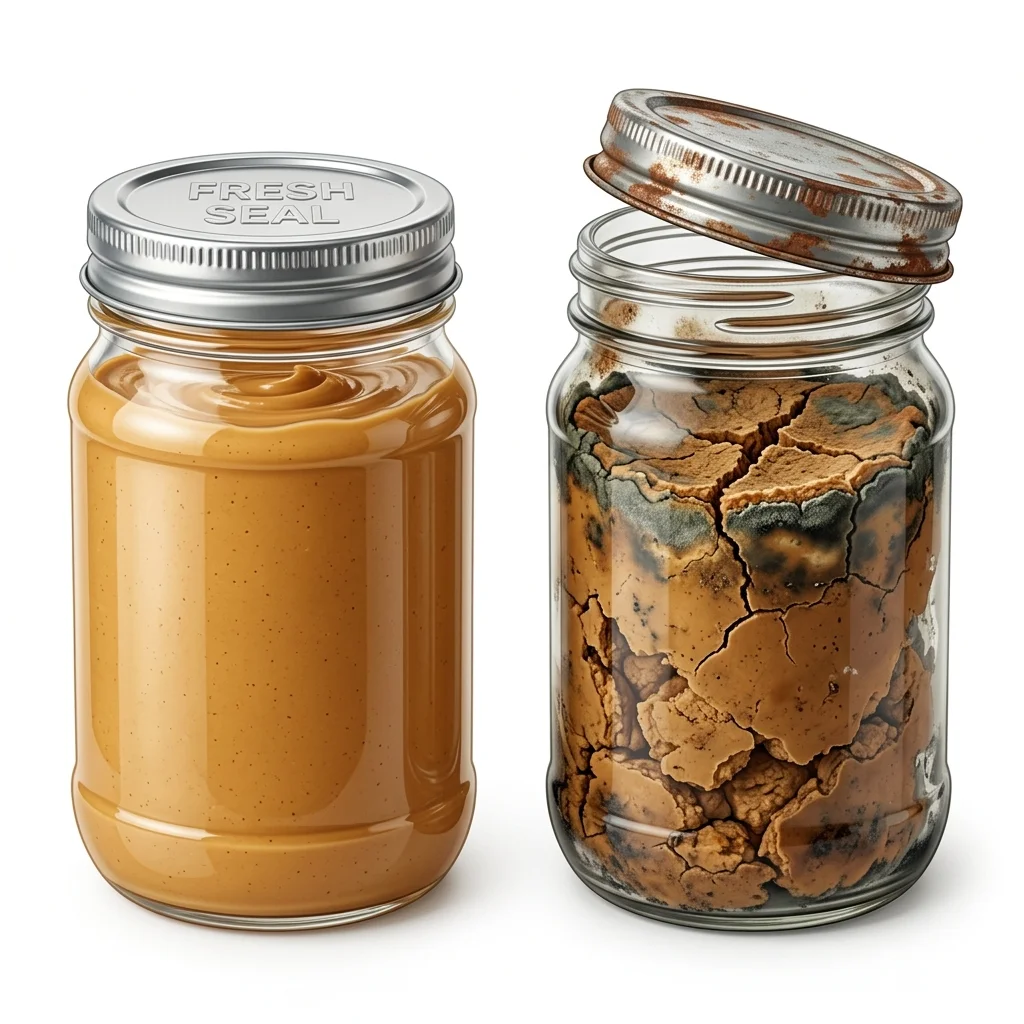
Garantir o frescor da manteiga de amendoim é vital para evitar a ingestão de gorduras rançosas e resíduos tóxicos de mofo.
1. Descoloração da borda escurecida:
Inspecione as bordas do frasco e a camada superficial. Uma descoloração marrom escura ou cinza indica oxidação lipídica avançada e exposição ao ar.
2. Integridade do selo do frasco:
Verifique se a vedação a vácuo sob a tampa está apertada e pressionada. Uma vedação solta ou perfurada permite a entrada de umidade, o que desencadeia o crescimento de mofo Aspergillus invisível e a produção de aflatoxinas estáveis ao calor.
3. Flexibilidade de textura obsoleta:
A manteiga de amendoim natural fresca é altamente espalhada. A manteiga de amendoim velha ou altamente oxidada torna-se seca, dura, farinácea e perde seu rico aroma de nozes torradas.
Quick Safety Tips
- Procure a separação natural do óleo na parte superior – é o melhor indicador de uma manteiga de amendoim pura e sem emulsificantes.
- Realize o teste de iodo - uma mudança de cor azul-preta revela amido oculto ou enchimentos de farinha
- Aqueça uma amostra: a manteiga de amendoim pura deve derreter e formar um líquido macio, em vez de grudar ou ficar emborrachado
- Rejeite qualquer manteiga de amendoim que cheire a giz de cera ou tinta, indicando oxidação prejudicial de óleo rançoso
Primary Chemical Concerns
Health Risks & Impacts
Multilingual Local Names
Regulatory Corner: US FDA (21 CFR 164.150 - Standards of Identity for Peanut Butter) / FSSAI (Food Products Standards) Reg. 2.2.16
Regulation: FDA 21 CFR 164.150 & Food Safety and Standards (Food Products Standards) Regulations 2011, Clause 2.2.16
Legal Limit:Peanut ingredients: Min 90.0%; Total fat: Max 55.0%; Hydrogenated vegetable fat / trans fat: Max 2.0% (Zero industrial trans fats); Total Aflatoxin: Max 15.0 ppb (FSSAI) / 20.0 ppb (FDA); Salmonella: Zero in 25g
Report Adulteration to US FDA (21 CFR 164.150 - Standards of Identity for Peanut Butter) / FSSAI (Food Products Standards) Reg. 2.2.16