How to Test Brinjal for Adulteration (Artificial Purple Dye, Pesticide, Chlorine Wash)
⚡ Quick 60-Second Brinjal Pesticide & Wax Verdict
Heavy Fruit & Shoot Borer Pesticide Overuse & Petroleum Wax: Eggplants receive up to 30 chemical sprays per season against the borer insect (Leucinodes orbonalis), and skins are rubbed with mineral oil.
Examine the green spiny cap (calyx) and the skin right below it. Look for tiny pinhead-sized entry holes with dark sawdust-like frass, indicating internal caterpillars.
Place brinjal in a bowl of water. Fresh, uninfested brinjal is light and floats buoyantly with firm skin. Brinjal with extensive internal larval decay feels spongy and waterlogged.
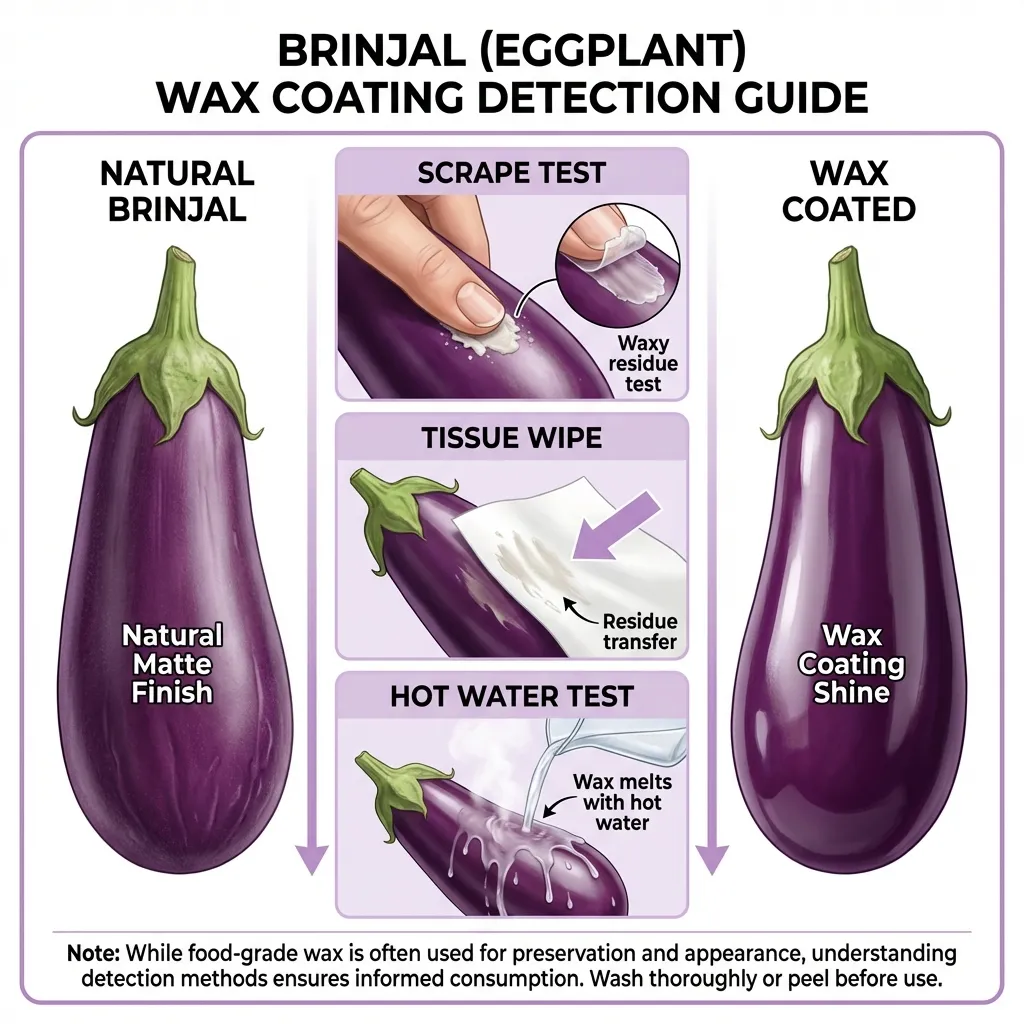
Rub a clean tissue across the purple skin. Natural brinjal has a deep, satiny purple sheen. A sticky, greasy residue indicates petroleum mineral oil applied to mimic freshness.
To learn more about food safety tests and home adulteration detection, read our guides on Okra (Ladyfinger) and Onion, and explore our guide to 10 Common Vegetables That Have a Dangerous Look-Alike.
Drop Brinjal (Eggplant) photo here to test purity
or click to browse • Supports JPG, PNG, WEBP • Paste with Ctrl+V
Inspection Guide
Click to enlarge
Brinjal (Eggplant) Purity & Pesticide Audit
Brinjals are often treated with artificial dyes to enhance their purple color or sprayed heavily with pesticides to prevent infestation by the fruit borer.
1. The Cotton Rub Test (Dye Check):
Soak a cotton ball in water or liquid paraffin and rub the purple skin of the brinjal. If the cotton picks up a purple or pinkish tint, artificial dye has been applied. Natural brinjal color does not rub off.
2. The Stem Color and Texture:
Examine the stem (calyx). A naturally fresh brinjal has a vibrant green, slightly prickly stem. If the brinjal body looks perfectly purple but the stem is dark brown, wilted, or feels "slimy," it has likely been chemically preserved or dyed.
3. The Internal Flesh Check:
Cut the brinjal in half. The flesh should be creamy white with small, tender seeds. If you see dark brown "tracks" inside, it indicates a fruit borer infestation. If the flesh looks unnaturally white or "bleached," suspect a sulfite or chlorine wash.
4. The Water Soak (Chemical Check):
Soak sliced brinjal in salt water for 15 minutes. If the water turns deep purple or brown immediately, suspect artificial coloring or high chemical load. (Note: slight browning is natural oxidation).
Quick Safety Tips
- Perform the cotton rub test for purple dye
- Check for internal borer tracks before cooking
- Select brinjals with a vibrant green stem and shiny skin
- Soak in salt water to reduce both bitterness and surface pesticides
Primary Chemical Concerns
Health Risks & Impacts
Multilingual Local Names
Common Storage Pests
Brinjal Fruit and Shoot Borer
high riskThe most destructive pest of eggplant.
Detection
- Small entry holes on the skin
- Brown internal tunnels and larvae
Prevention
- Inspect each fruit carefully before buying
- Store in a cool, well-ventilated place
Corrective Action: What to do?
Cut away and discard infested parts; ensure the remaining flesh is clean.
Ash Weevil (Myllocerus subfasciatus)
medium riskSmall grey snout beetles that chew scalloped leaf margins and shelter under the green fruit calyx caps in harvest crates.
Detection
- Adult ash-grey weevils hiding beneath the green calyx cap
- Small feeding wounds and surface rot on the fruit shoulder
Prevention
- Inspect and wipe calyx caps before storing in mesh crates
- Store produce in cool, well-ventilated areas (10°C to 12°C)
Corrective Action: What to do?
Remove and discard calyx; trim any surface feeding marks before cooking.
Regulatory Corner: FSSAI (Food Safety and Standards Authority of India) / Codex Alimentarius
Regulation: Food Safety and Standards (Contaminants, Toxins and Residues) Regulations 2011, Schedule 2: Solanaceous Vegetables
Legal Limit:Cypermethrin pesticide residue: Max 0.2 ppm; Chlorpyrifos: Max 0.05 ppm; Petroleum gloss paraffin wax: 0.0%; Internal insect-damaged fruit: Max 2.0%
Report Adulteration to FSSAI (Food Safety and Standards Authority of India) / Codex Alimentarius