Guia de Qualidade da Cebola: Detectar Podridão e Mofo Preto
Detecte inibidores de brotação e mofo em cebolas. As cebolas fazem parte dos “15 Limpos” a nível mundial devido ao crescimento subterrâneo e às defesas orgânicas naturais, apresentando um risco global baixo.
Para saber mais sobre testes de segurança alimentar e detecção de adulteração doméstica, leia nossos guias sobre Camarão, Brinjal (Berinjela) e Rabanete (Mooli).
Drop Cebola photo here to test purity
or click to browse • Supports JPG, PNG, WEBP • Paste with Ctrl+V
Inspection Guide
Click to enlarge
Auditoria de pureza e segurança da cebola
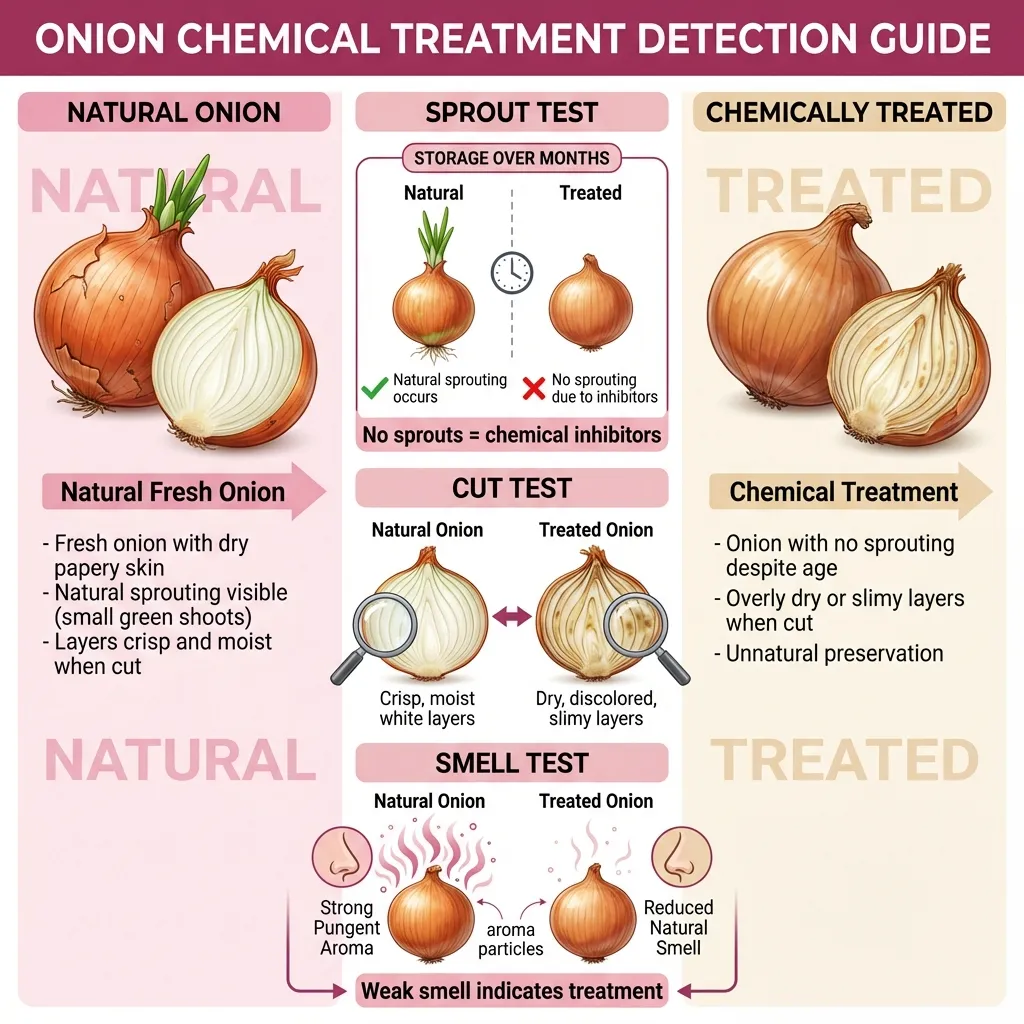
As cebolas são geralmente de baixo risco, mas podem ser tratadas com hidrazida maleica para evitar o surgimento durante o armazenamento ou podem abrigar mofo preto (Aspergillus niger), que produz toxinas.
1. A verificação de integridade do "pescoço":
Verifique o pescoço da cebola (onde as folhas estavam presas). Deve estar bem fechado, seco e duro. Se o pescoço for macio, "esponjoso" ou apresentar resíduos pretos e pulverulentos, a cebola está apodrecendo ou tem alta concentração de esporos de fungos.
2. O teste de germinação:
Cebolas naturalmente frescas começarão a brotar brotos verdes dentro de 1 a 2 semanas em temperatura ambiente. Se suas cebolas nunca brotarem mesmo depois de meses, elas foram fortemente tratadas com hidrazida maleica (um inibidor químico de crescimento).
3. A cor e a textura da pele:
A casca externa como papel deve ser nítida e ter uma cor natural e brilhante (rosa, vermelho ou branco). Se a pele estiver “pegajosa”, enrugada ou com uma aparência anormalmente “descolorida”, suspeite de limpeza química ou tratamento com sulfito.
4. O teste de compressão:
Esprema delicadamente a cebola. Deve ser duro como uma rocha. Se parecer macio ou tiver "líquido" sob a pele, está se deteriorando de dentro para fora, geralmente devido ao mau armazenamento ou overdose de produtos químicos.
Quick Safety Tips
- Escolha cebolas com pescoço firme e seco e corpo duro como pedra
- Evite cebolas com pó preto visível (mofo preto) sob a pele
- Se uma cebola nunca brotar, pode conter altos níveis de inibidores de crescimento
- Armazene em local fresco, escuro e bem ventilado - evite sacos plásticos
Primary Chemical Concerns
Health Risks & Impacts
Multilingual Local Names
Common Storage Pests
Onion Maggot
medium riskLarvae of the onion fly that tunnel into the bulb.
Detection
- Small entry holes at the base
- Internal browning and rotting
Prevention
- Store in a dry, ventilated area
- Avoid storing near moisture
Corrective Action: What to do?
Discard infested onions; the rot spreads quickly and affects the taste.
Regulatory Corner: FSSAI (Food Safety and Standards Authority of India) / Codex Alimentarius (CXS 296-2009)
Regulation: Food Safety and Standards (Contaminants, Toxins and Residues) Regulations 2011, Schedule 2: MRLs in Bulb Vegetables
Legal Limit:Maleic hydrazide (anti-sprouting agent): Max 15.0 ppm; Metalaxyl: Max 2.0 ppm; Aflatoxin / mold decay (Aspergillus niger black mold): Max 1.0% by weight; Artificial skin color wash: 0.0%
Report Adulteration to FSSAI (Food Safety and Standards Authority of India) / Codex Alimentarius (CXS 296-2009)