How to Test Asafoetida for Adulteration (Soapstone, Chalk Powder, Wheat/Maize Starch)
⚡ Quick 60-Second Hing (Asafoetida) Purity Verdict
Resin & Mineral Adulteration: Compounded and raw Asafoetida (Hing) is frequently bulked with cheap toxic Colophony resin (pine tree gum), soapstone/chalk powder, sand, and non-permitted coal tar dyes.
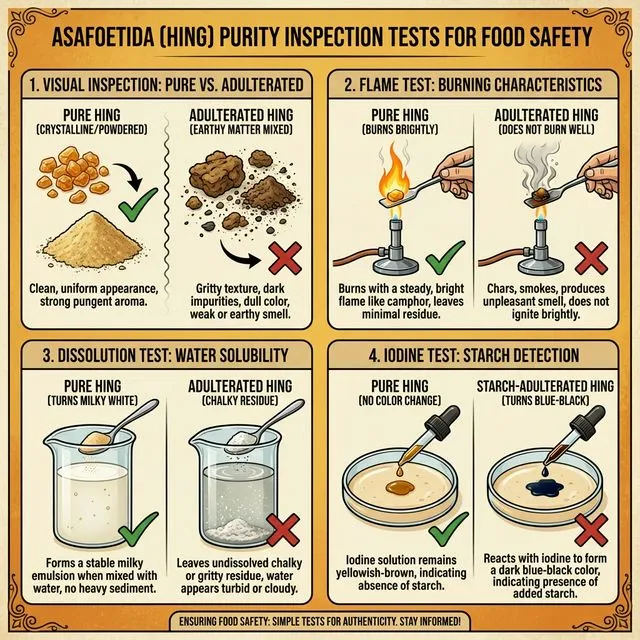
Add 1/2 tsp hing to warm water and shake. Pure hing dissolves completely into a uniform, milky-white emulsion with zero gritty sediment. Chalk or soapstone settles to the bottom.
Burn a small lump of hing over a spoon/candle. Pure hing burns cleanly with a bright, steady flame like camphor. Adulterated mineral hing sizzles, sparks, or leaves heavy grey ash.
Pure hing possesses an intense, pungent, volatile sulfurous aroma that lingers on the fingers after washing. Synthetic chemical hing smells faintly medicinal or flat.
Drop Asafoetida (Hing) photo here to test purity
or click to browse • Supports JPG, PNG, WEBP • Paste with Ctrl+V
Inspection Guide
Click to enlarge
Asafoetida (Hing) Purity & Filler Audit
Asafoetida (Hing) is high-risk for adulteration with mineral fillers like soapstone or chalk powder and excessive starch to increase volume and profit.
1. The Burning Test (Resin Purity):
Burn a small piece of Hing. Pure Asafoetida will burn like a bright flame, similar to a camphor candle, and leave behind a very fine white or grey ash. Adulterated Hing will sputter, produce a lot of black smoke, or leave behind a hard, glassy residue (synthetic resin/plastic).
2. The Water Solubility:
Dissolve a small amount of Hing in a glass of water. Pure Hing will create a milky white, opaque suspension. If the water remains relatively clear and a heavy white sediment (chalk/soapstone) settles at the bottom, it is adulterated.
3. The Texture and Brittle Check:
Pure Hing (especially in lump form) is slightly resinous and brittle. If it feels "waxy," "soapy," or "sticky" like plasticine, suspect adulteration with synthetic resins or mineral oils.
4. The Aroma Profile:
Pure Hing has an overwhelming, sharp, sulfurous, and pungent aroma even in small quantities. If the aroma is weak, has a "chemical" laboratory smell, or lacks its characteristic pungency when heated in oil, suspect excessive starch fillers.
Quick Safety Tips
- Perform the burning test - pure Hing burns with a clear flame
- Check for white sediment in the water solubility test
- Avoid Hing that feels "waxy" or "soapy"
- Select "Lump" Hing over powder for higher purity, as powders are more easily adulterated with starch
Primary Chemical Concerns
Health Risks & Impacts
Multilingual Local Names
Common Storage Pests
Spice Beetle
medium riskSmall beetles that can occasionally infest compounded Hing powder.
Detection
- Small holes in the packaging
- Musty odor
Prevention
- Store in an airtight glass jar
- Keep in a cool, dry place
Corrective Action: What to do?
Discard infested samples; the beetles can spread to other spices quickly.
Regulatory Corner: FSSAI (Food Safety and Standards Authority of India) / ISO 5564
Regulation: Food Safety and Standards (Food Products Standards) Regulations 2011, Clause 2.9.1: Compounded Asafoetida (Bandhani Hing)
Legal Limit:Total ash: Max 10.0%; Ash insoluble in dilute HCl: Max 1.5%; Alcohol-extractable matter: Min 5.0%; Colophony resin & Synthetic Coal-Tar Dyes: 0.0%
Report Adulteration to FSSAI (Food Safety and Standards Authority of India) / ISO 5564