Guia de Pureza de Ervilhas Verdes: Detectar Verde Malaquita e Amido
Detecte corante verde malaquita e enchimentos de amido em ervilhas verdes. Embora as ervilhas sejam um item 'Clean 15' nos EUA porque crescem em vagens protetoras fechadas, elas apresentam altos riscos locais em outros lugares devido aos corantes industriais usados para fazer as ervilhas velhas parecerem frescas.
Para saber mais sobre testes de segurança alimentar e detecção de adulteração doméstica, leia nossos guias sobre ketchup de tomate, Tomate e Batata
Drop Ervilhas Verdes photo here to test purity
or click to browse • Supports JPG, PNG, WEBP • Paste with Ctrl+V
Inspection Guide
Click to enlarge
Auditoria de pureza e corante de ervilhas verdes
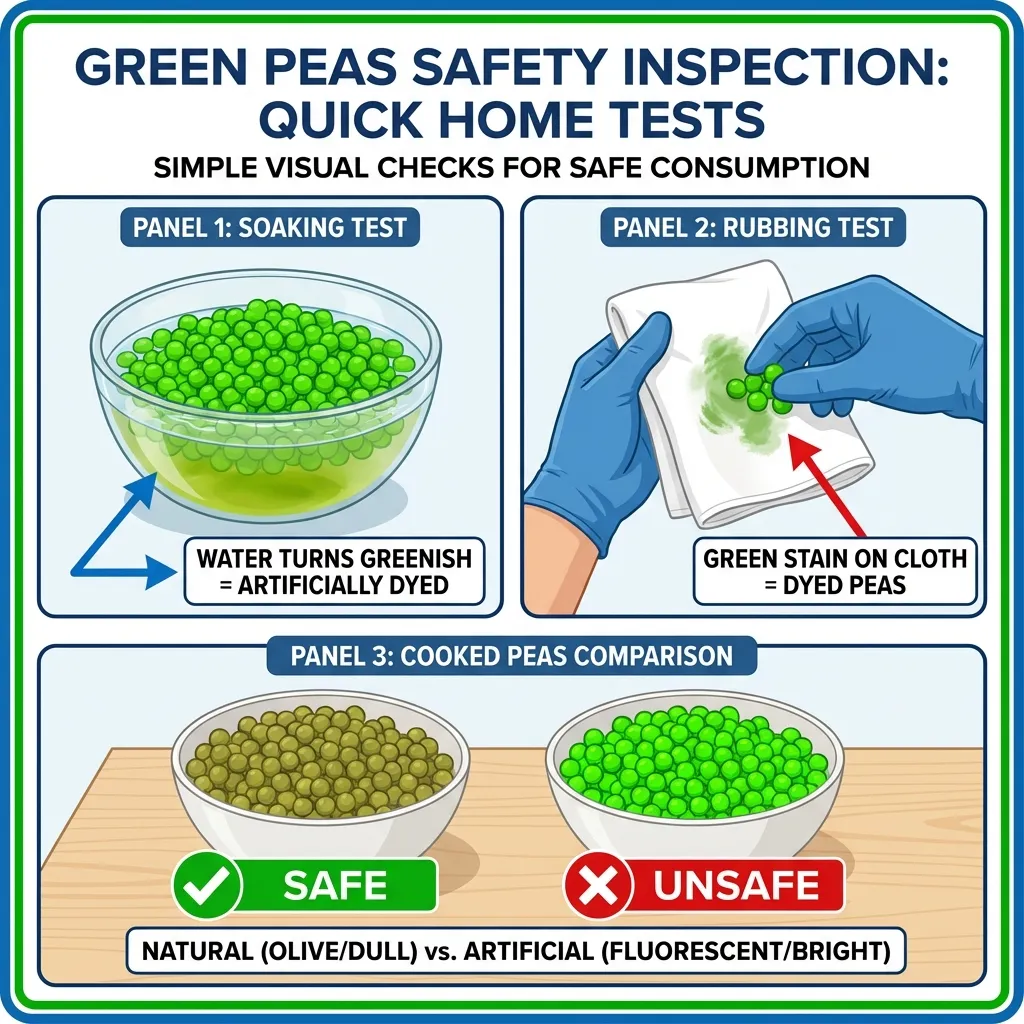
As ervilhas verdes, especialmente quando vendidas como grãos sem casca, são frequentemente tratadas com Verde Malaquita ou Sulfato de Cobre para manter uma cor verde anormalmente vibrante, mesmo depois de terem perdido a sua frescura.
1. O teste de esfregar algodão (grãos):
Pegue algumas ervilhas e esfregue-as com uma bola de algodão úmida. Se o algodão ficar verde ou verde-azulado, foi aplicada tinta artificial. A cor natural da ervilha não é transferida facilmente.
2. A lavagem com água (sangramento de cor):
Mergulhe um punhado de ervilhas em um copo de água morna por 15 minutos. Se a água ficar verde brilhante ou azulada, a coloração artificial (Verde Malaquita) está confirmada. A clorofila natural permanece dentro das células e não lixivia.
3. A verificação de textura:
Pressione suavemente uma ervilha. Uma ervilha naturalmente fresca é ligeiramente firme, mas produtiva. Se a ervilha parecer "dura" ou "emborrachada", embora seja de um verde vibrante, ela pode ser um caldo antigo quimicamente "refrescado".
4. O perfil de sabor:
As ervilhas frescas têm um sabor distinto, doce e de nozes. Se tiverem gosto de "giz", amargo ou sabor químico residual, suspeite de corantes ou tratamentos conservantes.
Quick Safety Tips
- Realize o teste de fricção de algodão para detecção de Verde Malaquita
- Evite ervilhas que pareçam verdes "néon" ou com um brilho anormal
- Lave bem e deixe de molho em água salgada por 20 minutos para reduzir os produtos químicos da superfície
- Selecione ervilhas "sem casca" para garantir o máximo frescor e falta de processamento
Primary Chemical Concerns
Health Risks & Impacts
Multilingual Local Names
Common Storage Pests
Pea Weevil
medium riskSmall beetles that lay eggs on the pods; the larvae tunnel into the seeds.
Detection
- Small entry holes in the seeds
- Presence of tiny larvae inside the kernels
Prevention
- Inspect for skin damage before buying
- Store in a cool, ventilated place
Corrective Action: What to do?
Discard infested peas; the internal rot can be bitter and harmful.
Regulatory Corner: FSSAI (Food Safety and Standards Authority of India) / US FDA
Regulation: Food Safety and Standards (Food Products Standards) Regulations 2011, Clause 2.3.6: Fresh Vegetables & FDA CPG Sec. 585.600
Legal Limit:Non-permitted synthetic colorants (Malachite Green, Fast Green FCF, Tartrazine): 0.0% (Strict zero tolerance); Dimethoate pesticide residue: Max 0.5 ppm; Monocrotophos: 0.0 ppm
Report Adulteration to FSSAI (Food Safety and Standards Authority of India) / US FDA