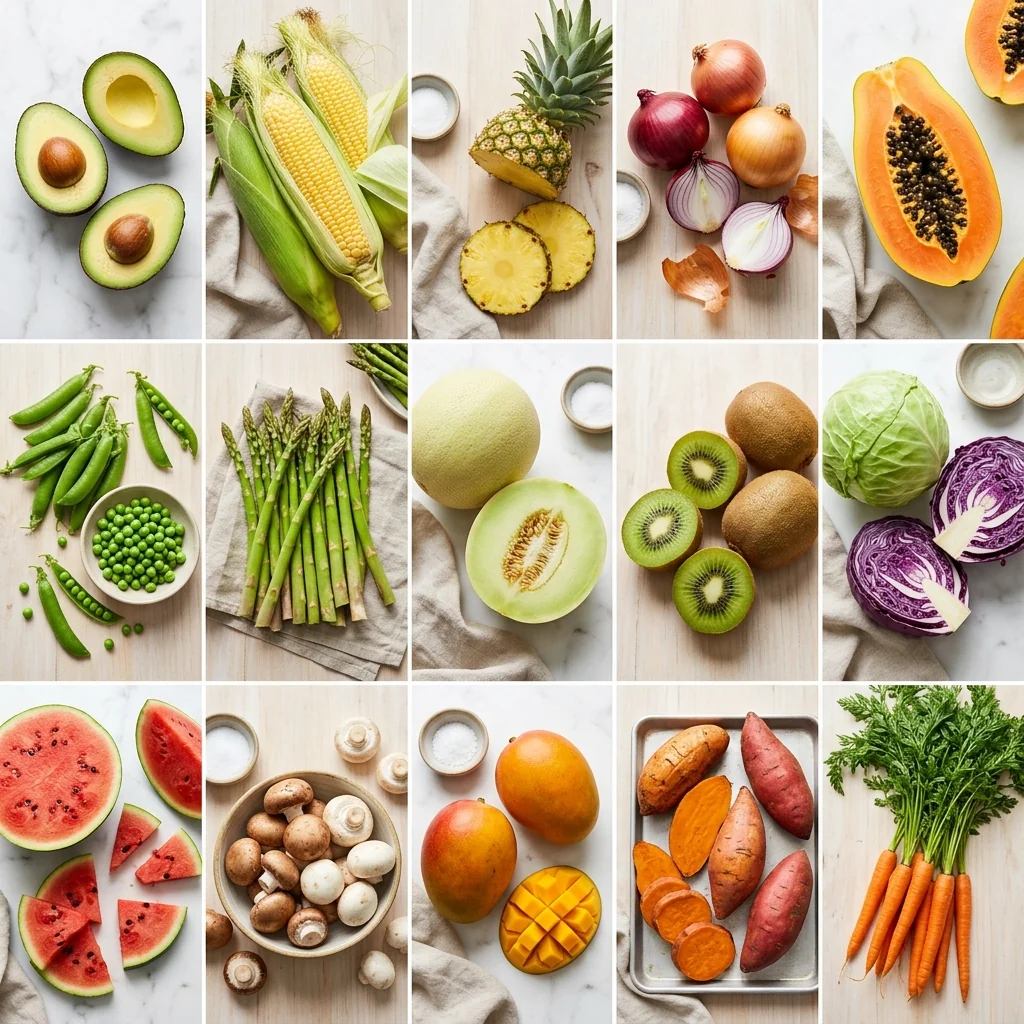
O melão é seguro? Detecção de Adoçantes e Amadurecimento
Os melões Honeydew têm uma casca externa espessa e protetora que evita que sprays de pesticidas atinjam a polpa interna doce, colocando-os na lista EWG Clean 15. No entanto, os melões comerciais podem ser submetidos a injeções de adoçantes químicos, tratamentos com corantes de alcatrão de carvão para melhorar a cor da casca e amadurecimento artificial de carboneto. Este guia ensina como inspecionar melões quanto a adulteração química, maturação e segurança.
Para saber mais sobre testes de segurança alimentar e produtos limpos, leia nossos guias sobre Melancia e Manga.
Drop Melão photo here to test purity
or click to browse • Supports JPG, PNG, WEBP • Paste with Ctrl+V
Inspection Guide
Click to enlarge
Inspeção de adulteração e maturação de melão Honeydew - 5 testes caseiros
Os melões são naturalmente doces e limpos, mas a adulteração pós-colheita e a colheita prematura podem comprometer a segurança. Veja como testá-los.
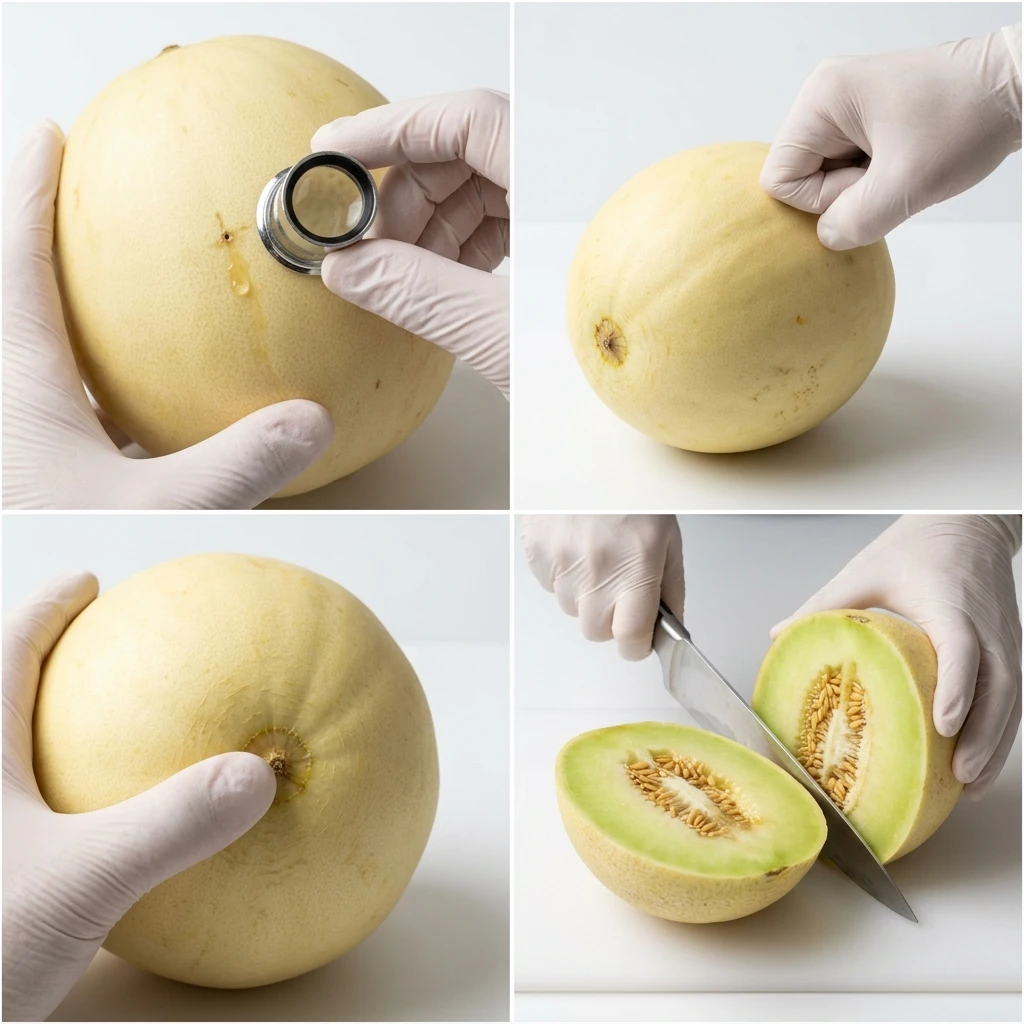
1. A inspeção de casca e furos (verificação do adoçante):
Inspecione a casca com atenção, especialmente perto da extremidade do caule. Procure por pequenas marcas circulares escuras ou resíduos de xarope pegajoso na pele. ✅ Casca lisa, seca e intacta. ❌ Seiva pegajosa ou furos indicam potencial injeção de adoçante químico.
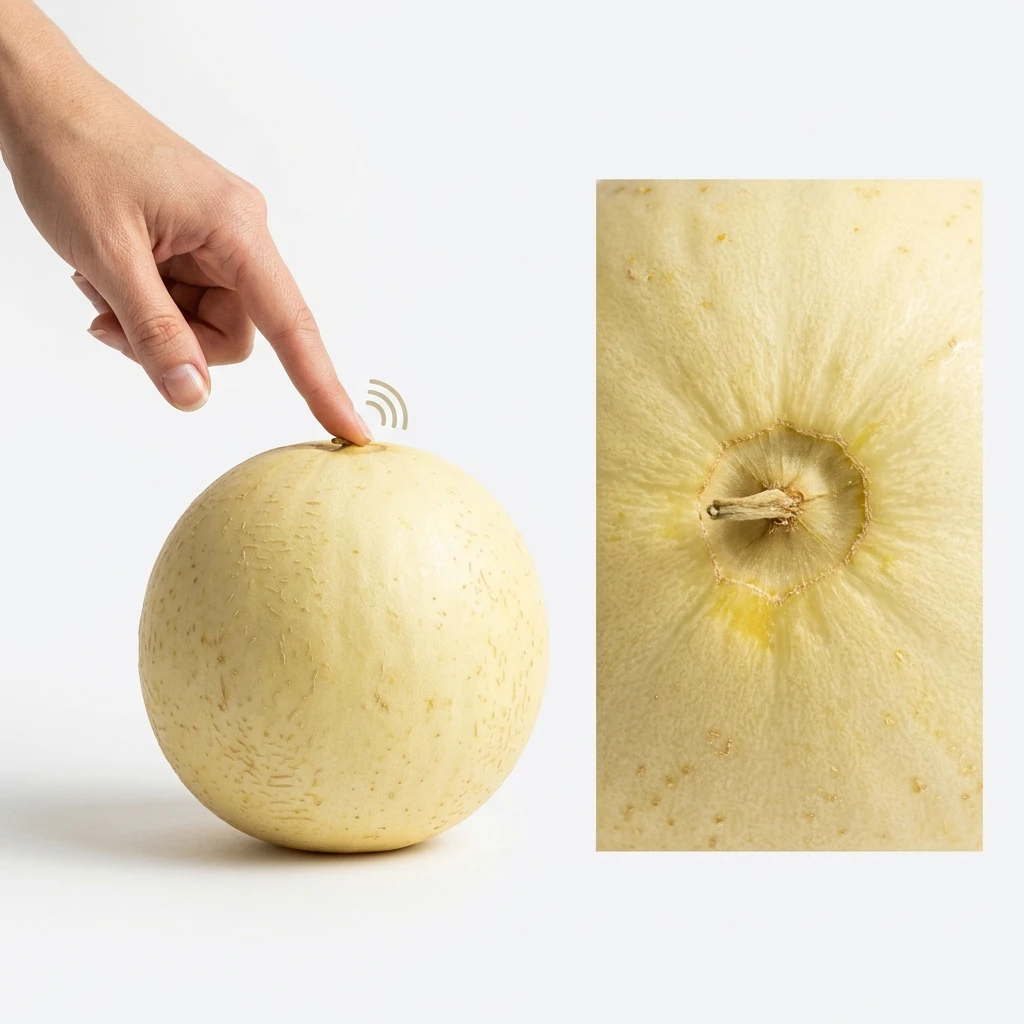
2. O teste de ressonância sonora (batida):
Bata no melão com os nós dos dedos. ✅ Som surdo, profundo e oco = maduro, suculento e cheio de água. ❌ Som agudo, metálico ou sólido = verde, seco ou farinhento.
3. O teste de pressão da extremidade da haste:
Pressione o polegar suavemente contra a reentrância circular onde a haste foi fixada. ✅ Rende levemente e tem aroma adocicado = naturalmente maduro. ❌ Duro como pedra = verde. ❌ Mushy ou escorrendo = maduro demais ou começando a apodrecer.
4. O teste de fricção de superfície (verificação de cera):
Esfregue a casca com uma toalha de papel escura ou raspe com a unha. ✅ Uma sensação seca, ligeiramente cerosa, mas não pegajosa. ❌ Um resíduo espesso, pegajoso e gorduroso indica tratamento pesado com cera de parafina.
5. A verificação do corte interno:
Corte o melão. ✅ Polpa verde clara, suculenta e de cheiro adocicado com sementes frouxamente suspensas na cavidade central. ❌ Polpa branca pálida, dura e sem cheiro, com sementes firmemente grudadas = verdes ou gaseificadas quimicamente para mudar a cor da casca.
Click to enlarge
Como selecionar uma melada doce e quando descartar
Os melões não ficam mais doces após a colheita. Selecionar um melão maduro é fundamental.
Indicadores de maturação:
✅ Casca amarela cremosa: Procure uma cor amarelo-creme quente. Uma casca verde significa que o melão foi colhido imaturo e nunca adoçará.
✅ Textura de casca cerosa: Uma melada madura tem uma sensação ligeiramente pegajosa ou cerosa na casca. Uma sensação suave e empoeirada significa que não está maduro.
❌ Pontos moles ou manchas profundas: Início da podridão fúngica. Descarte imediatamente, pois o alto teor de água permite que os esporos de mofo se desloquem rapidamente pela polpa.
❌ Cheiro azedo ou alcoólico: Fermentação de açúcares. Descartar.
Quick Safety Tips
- Sempre lave bem a casca externa com água e vinagre antes de fatiar para evitar a transferência de contaminantes superficiais para a polpa.
- Os melões estão no Clean 15, o que significa que têm baixas cargas de pesticidas: verifique o <a href='/blog/clean-15-pesticide-guide/'>Guia de pesticidas do Clean 15</a>
- Leve à geladeira o melão cortado dentro de duas horas para evitar o crescimento de Listeria
Primary Chemical Concerns
Health Risks & Impacts
Multilingual Local Names
Common Storage Pests
Fusarium Rot (Fusarium spp.)
medium riskA common storage rot in melons that causes sunken spots covered in white or pink mold.
Detection
- Circular, sunken, soft spots on the rind during storage
- White or pink powdery mold growth over the soft spots
- Flesh beneath the spots turns mushy, bitter, and decays rapidly
Prevention
- Store melons in a dry, cool area with good air circulation
- Keep cut melon wrapped and refrigerated at all times
Corrective Action: What to do?
Discard the melon if soft spots have penetrated to the pulp. If restricted to a tiny superficial skin spot, cut it out generously, but check pulp quality before eating.
Regulatory Corner: FSSAI (Food Safety and Standards Authority of India) / US FDA / Codex Alimentarius (Codex Stan 193-1995)
Regulation: Food Safety and Standards (Prohibition and Restrictions on Sales) Regulations 2011, Regulation 2.3.5 & FSS Act 2006
Legal Limit:Calcium carbide (acetylene gas): Completely prohibited (0.0 ppm); Artificial non-nutritive sweeteners: Prohibited in fresh melons (0.0 ppm); Ethephon MRL: Max 2.0 ppm; Lead MRL: Max 0.1 ppm
Report Adulteration to FSSAI (Food Safety and Standards Authority of India) / US FDA / Codex Alimentarius (Codex Stan 193-1995)