Como identificar carbureto e amadurecimento artificial no mamão: 3 testes práticos para fazer em casa
⚡ Veredito Rápido em 60 Segundos: Segurança do Mamão
Perigo do Carbureto de Cálcio e Corantes: Em entrepostos e feiras livres, mamões Formosa e Papaia colhidos excessivamente verdes são frequentemente forçados com carbureto de cálcio ou etefom e maquiados com corantes amarelos sintéticos para aparentar maturação precoce.
Aranhe de leve a casca perto do pedúnculo. O mamão amadurecido de forma natural na planta exsuda um látex branco leitoso e espesso. Se não sair nada ou apenas um líquido ralo e aquoso, o fruto foi forçado quimicamente.
Coloque o mamão num balde com água. O mamão maduro natural, rico em açúcares e denso, submerge até o fundo ou fica bem assentado na água. Frutas verdes colhidas cedo e amarelecidas por carbureto boiam no topo.
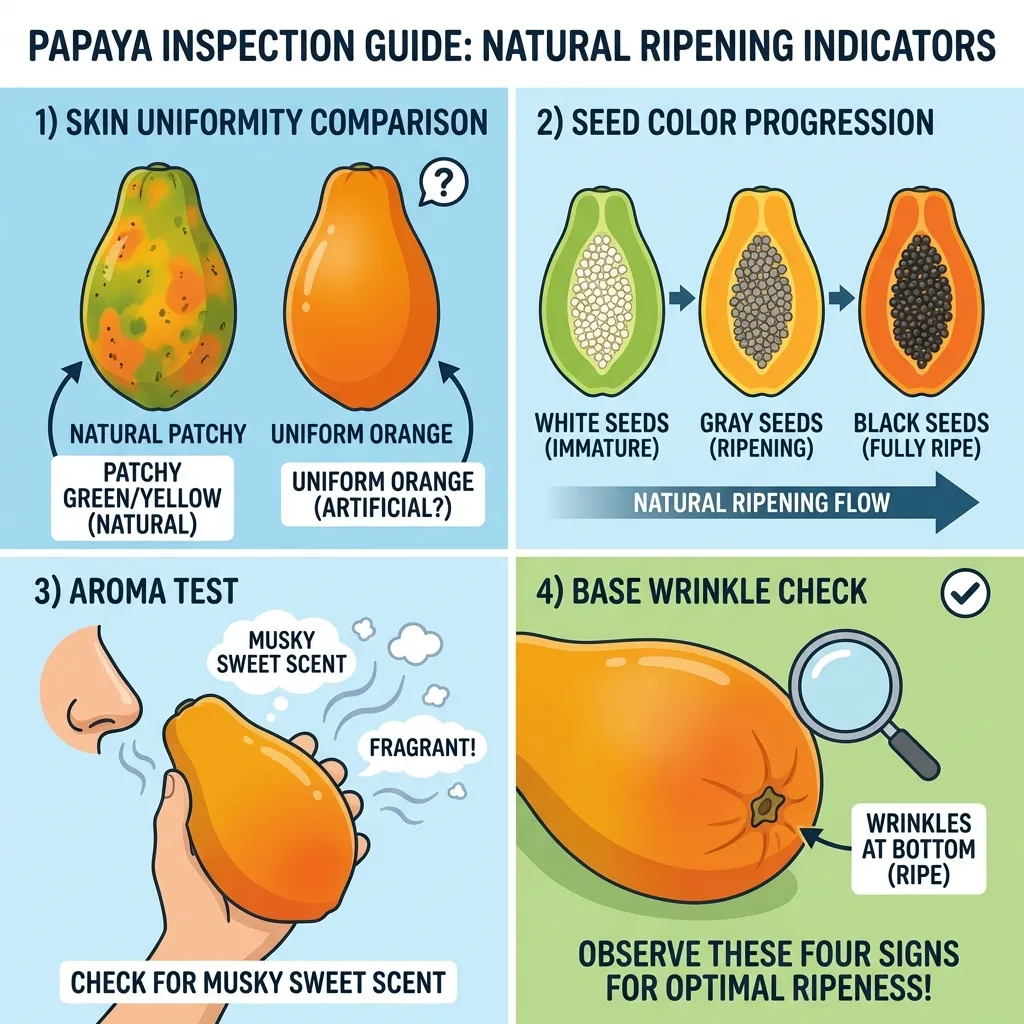
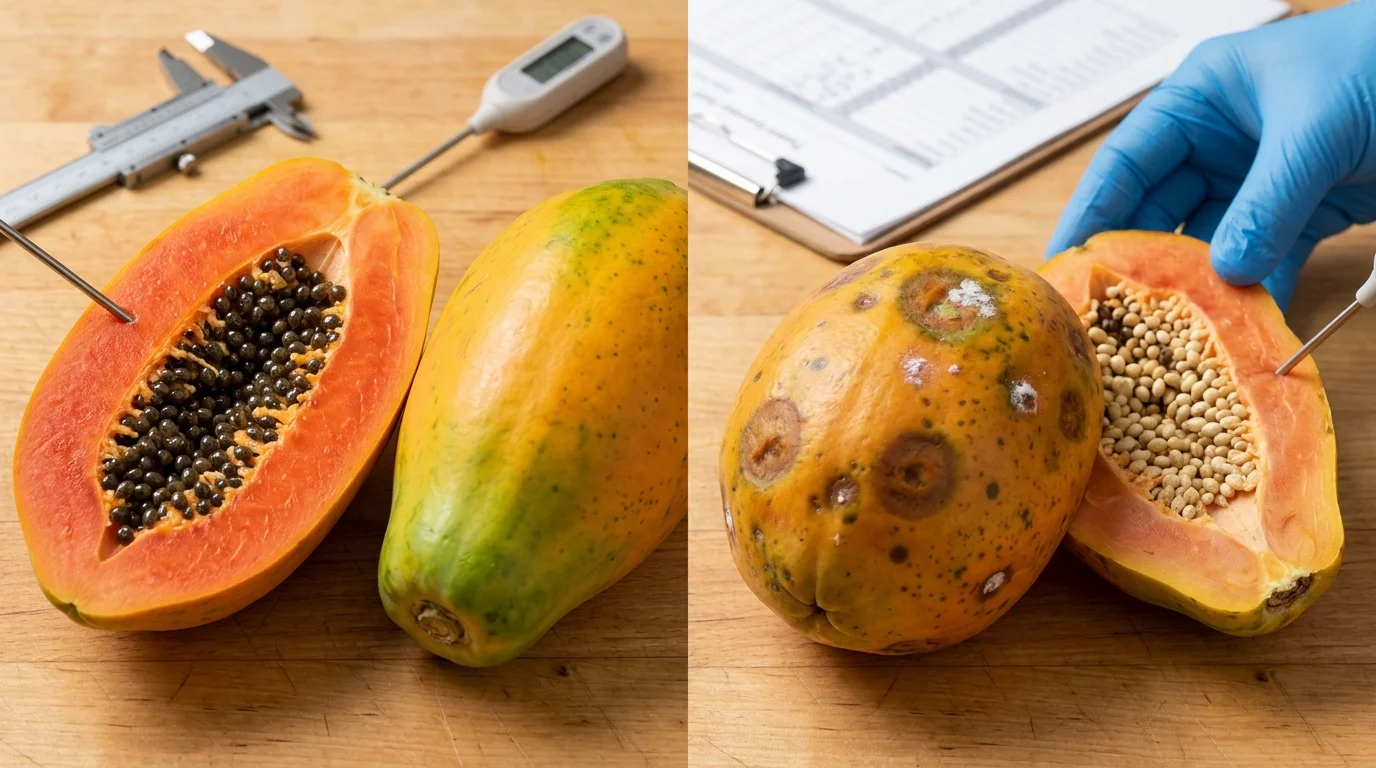
Ao cortar, as sementes devem ser pretas, lustrosas e envolvidas em gelatina transparente. Sementes esbranquiçadas ou amarronzadas e polpa dura e sem sabor junto ao centro denunciam maturação a gás.
Consulte também nossos guias de pureza alimentar para banana e manga.
Drop Mamão / Papaya (Mamão / Papaya) photo here to test purity
or click to browse • Supports JPG, PNG, WEBP • Paste with Ctrl+V
Inspection Guide
Click to enlarge
Como escolher mamão doce, seguro e de alta qualidade
Dicas práticas para escolher mamão fresco em feiras e supermercados:
1. Gradiente de cor natural:
O mamão que amadurece naturalmente apresenta uma transição suave de cor do fundo (laranja-dourado) até a ponta (com estrias esverdeadas). Mamões com carbureto exibem um amarelo berrante e artificialmente uniforme.
2. Aroma doce e floral no pedúnculo:
Cheire a base do cabinho do fruto. O mamão autêntico exala um aroma adocicado inconfundível. Frutas induzidas com produtos químicos não possuem aroma ou apresentam cheiro acre que lembra querosene ou remédio.
3. Firmeza e consistência da polpa:
Pressione delicadamente com o polegar. A fruta deve ceder de maneira homogênea e elástica. Se a casca estiver macia mas o miolo central estiver duro como pau, houve amadurecimento acelerado artificial.
Click to enlarge
Frescor, antracnose fúngica e cuidados de conservação do mamão
Orientações para conservar seu mamão e prevenir podridões:
1. Manchas circulares de Antracnose:
Manchas escuras arredondadas e deprimidas na casca são provocadas pelo fungo Colletotrichum gloeosporioides. Se atingirem a polpa interna, provocam amargor e deterioração rápida.
2. Danos por frio na geladeira (Chilling Injury):
Nunca guarde mamão verde ou semi-maduro na geladeira abaixo de 10 °C. O frio excessivo paralisa as enzimas de amadurecimento, deixando a polpa fibrosa, dura e borrachuda.
3. Amadurecimento caseiro seguro:
Deixe o mamão em temperatura ambiente enrolado em papel jornal ou saco de papel kraft. Só coloque na geladeira quando atingir cerca de 80% de coloração amarela.
Quick Safety Tips
- Evite mamões com casca amarela fluorescente e uniforme sem perfume doce
- Lave muito bem a casca sob água corrente antes de fazer o corte
- Descarte mamões com sementes pálidas, brancas ou desidratadas
- Mulheres grávidas devem evitar mamões verdes ou com cheiro químico suspeito
Primary Chemical Concerns
Health Risks & Impacts
Multilingual Local Names
Common Storage Pests
Fruit Flies
low riskSmall insects that can lay eggs in the soft skin or entry points.
Detection
- Small soft spots on the skin
- Tiny insects around the fruit
Prevention
- Store in a cool, well-ventilated area
- Keep dry
Corrective Action: What to do?
Cut away soft spots; discard if internal rot is visible.
Regulatory Corner: FSSAI (Food Safety and Standards Authority of India) / Codex Alimentarius (CXS 183-1993)
Regulation: Food Safety and Standards (Prohibition and Restrictions on Sales) Regulations 2011, Regulation 2.3.5: Artificial Ripening & Contaminants
Legal Limit:Calcium Carbide (CaC2): 0.0% (Zero tolerance); Ethephon max residue limit: 2.0 ppm; Thiabendazole post-harvest fungicide: Max 5.0 ppm; Papaya seeds as black pepper adulterant: 0.0%
Report Adulteration to FSSAI (Food Safety and Standards Authority of India) / Codex Alimentarius (CXS 183-1993)