Pruebas de Seguridad y Calidad de los Nopales: Eliminar Espinas y Preparar Seguro
Inspeccione las almohadillas de cactus (nopales) para eliminar de forma segura las espinas microscópicas (gloquidios) y evitar las especies silvestres tóxicas.
Para explorar más sobre la seguridad de los vegetales, explore nuestros perfiles en repollo y pepino.
Drop nopales photo here to test purity
or click to browse • Supports JPG, PNG, WEBP • Paste with Ctrl+V
Inspection Guide
Click to enlarge
Auditoría de Seguridad de la Columna Vertebral y Gloquidios de Nopales
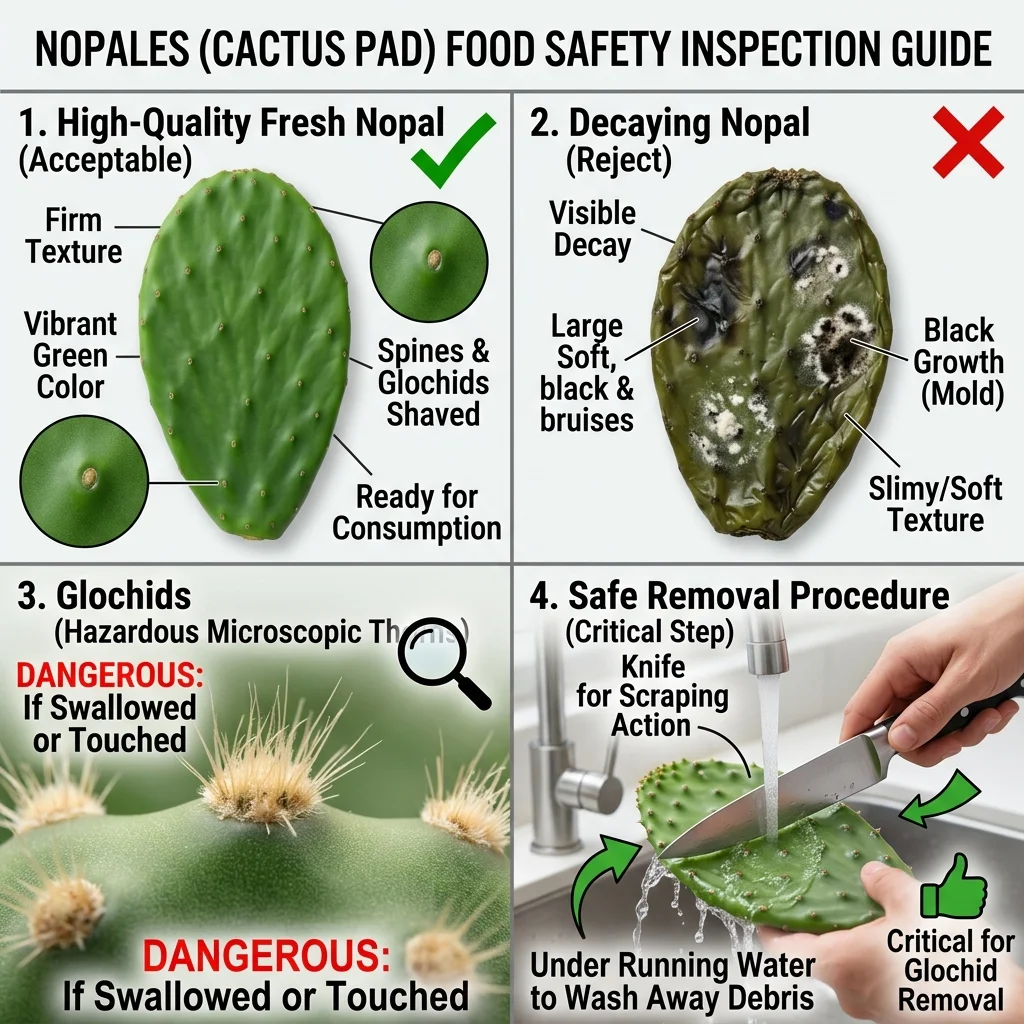
Los nopales son las almohadillas comestibles del nopal (Opuntia ficus-indica), un alimento básico de la cocina mexicana. Si bien son muy nutritivos, requieren una preparación cuidadosa para evitar tragar espinas o gloquidios, espinas microscópicas casi invisibles con forma de pelos que causan lesiones mecánicas graves e irritación de la garganta.
1. El nodo Glochid Verificar:
Inspeccione los nudos (las protuberancias elevadas donde crecen las espinas). Incluso si se han eliminado las grandes espinas, los nudos contienen cientos de pequeños gloquidios translúcidos. Debes afeitar estos nudos por completo con un cuchillo afilado en un ángulo de 30 grados.
2. La prueba de textura y flexión:
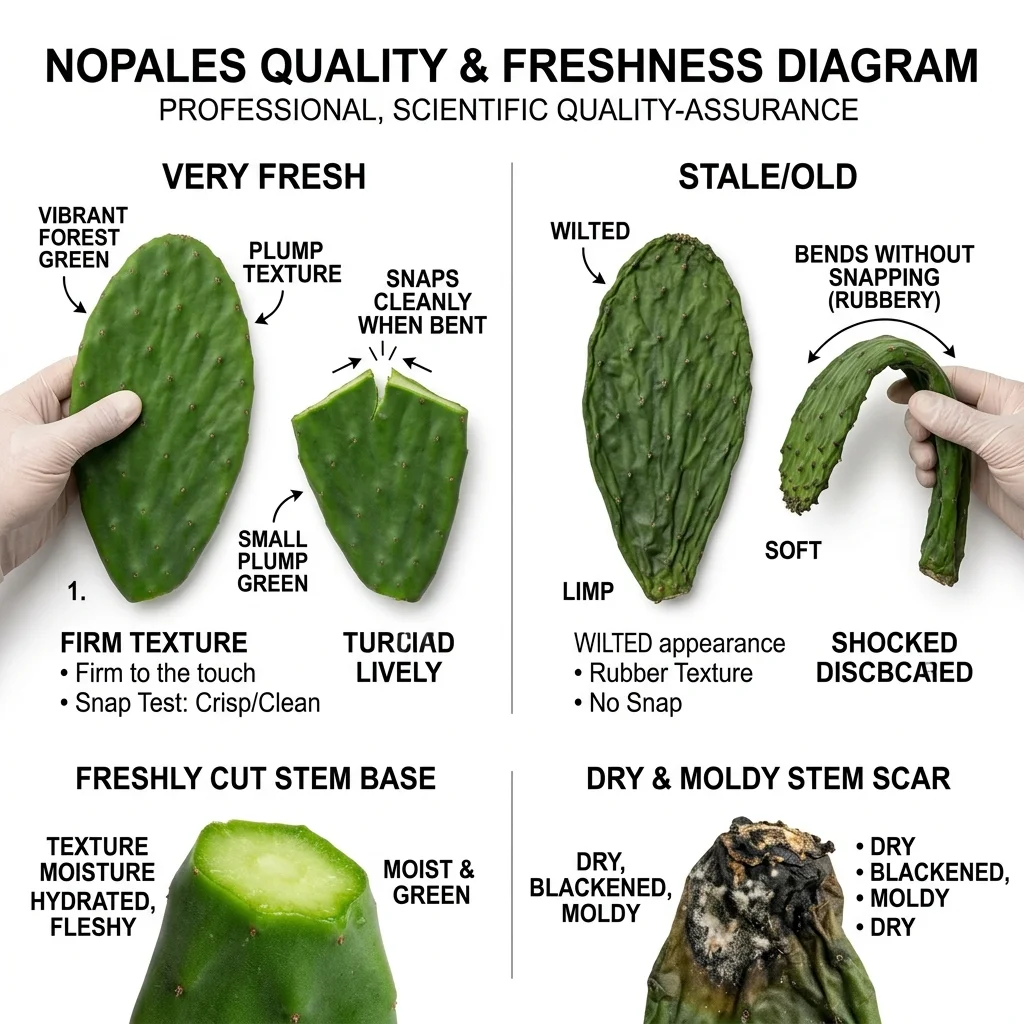
Doble suavemente la almohadilla. Los nopales frescos son firmes, regordetes y crujientes, y se rompen limpiamente cuando se doblan. Si se sienten gomosos, flácidos o muestran la piel arrugada, están deshidratados, rancios y estarán duros y fibrosos.
3. La comprobación del mucílago superficial (babosidad):
Si bien los nopales exudan naturalmente un mucílago espeso y viscoso cuando se cortan o se cocinan (similar a la okra), la piel de la almohadilla cruda debe estar seca y limpia. Una superficie viscosa, pegajosa o húmeda en las almohadillas sin cortar indica pudrición y descomposición bacteriana.
4. La auditoría de especies y similares:
Consuma únicamente nopales provenientes de variedades cultivadas de Opuntia. Nunca coseche cactus silvestres, ya que varias especies parecidas no comestibles y tóxicas contienen altos niveles de alcaloides amargos y tóxicos que causan vómitos, diarrea o alucinaciones.
Click to enlarge
Chequeo de frescura e hidratación de Nopales
La frescura determina la ternura y el sabor del nopal.
1. Vibrancia de la piel:
Los nopales frescos son de color verde brillante uniforme. Las manchas amarillentas, pálidas o marrones por quemaduras solares indican almohadillas más viejas y duras.
2. Cicatriz del tallo cortado:
Revisa la base de la almohadilla donde se cortó de la planta. Debe estar limpio, húmedo y verde. Un corte seco, ennegrecido, arrugado o mohoso indica un material viejo.
3. Grosor de la almohadilla:
Las almohadillas frescas son gruesas y están llenas de humedad. Las almohadillas finas, planas y huecas se han secado y han perdido su textura crujiente.
Quick Safety Tips
- Siempre raspe o afeite los ganglios de la almohadilla con agua corriente para eliminar los gloquidios casi invisibles.
- Asegúrese de que las almohadillas estén firmes y se rompan limpiamente en lugar de doblarse como si fueran de goma.
- Lave bien el mucílago pegajoso después de cortarlo o hervirlo.
- Compre únicamente en minoristas confiables para evitar especies de cactus silvestres tóxicas
Primary Chemical Concerns
Health Risks & Impacts
Multilingual Local Names
Regulatory Corner: US FDA (Compliance Policy Guide Sec. 570.450) / Codex Alimentarius (Codex Stan 185-1993)
Regulation: Codex Standard for Nopales (Codex Stan 185-1993) & FDA Food Safety Modernization Act Guidelines
Legal Limit:Copper sulfate / synthetic dyes: Prohibited (0.0 ppm - Zero tolerance); Lead MRL: Max 0.1 ppm; Cadmium MRL: Max 0.05 ppm; Pesticide residues: Compliant with 40 CFR 180
Report Adulteration to US FDA (Compliance Policy Guide Sec. 570.450) / Codex Alimentarius (Codex Stan 185-1993)