Is Asparagus Safe to Eat? Dye Baths, Freshness & Heavy Metal Tests — Complete Guide
⚡ Quick 60-Second Asparagus Purity & Chemical Verdict
Copper Sulfate Greening & Dehydration Masking: Aging, wilted asparagus spears are soaked in copper sulfate baths to restore bright emerald color, and sprayed with water to artificially plump dried stems.
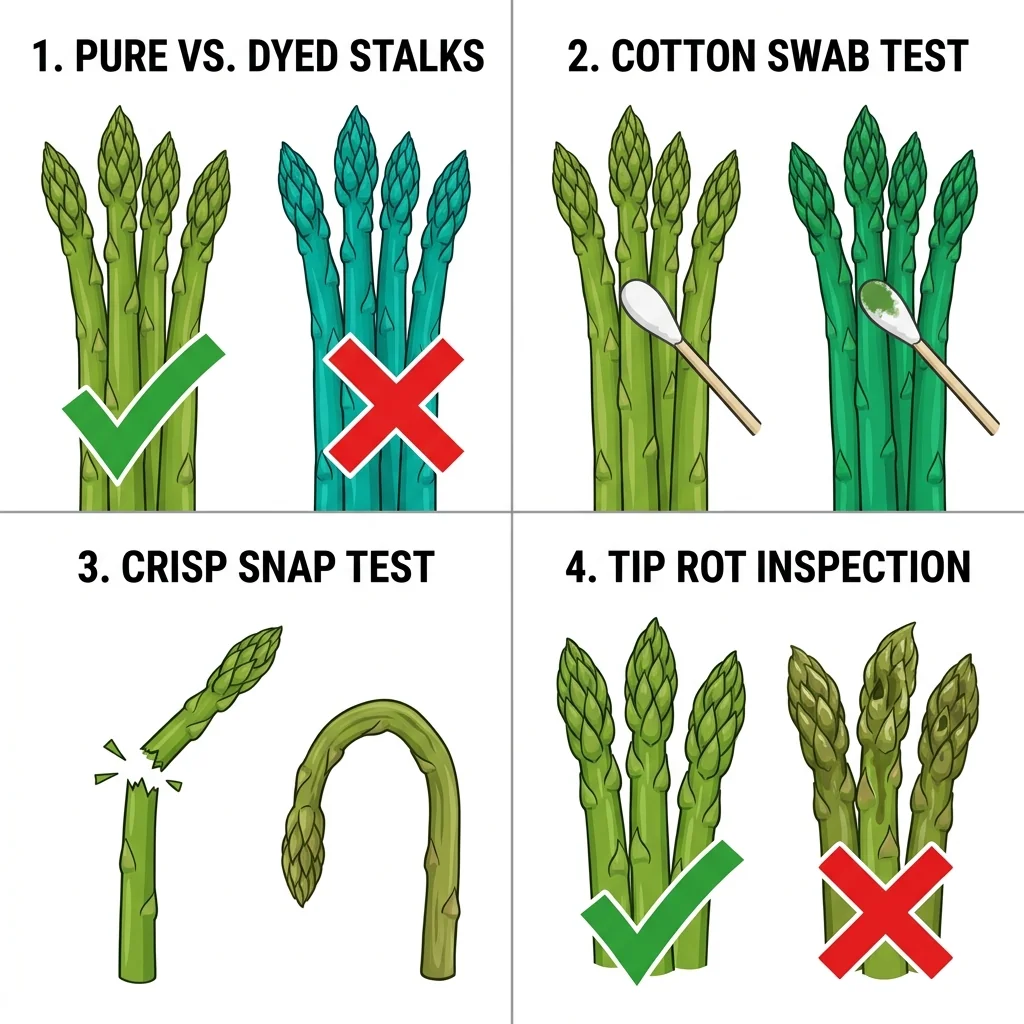
Inspect the spear tips and rub gently with a white tissue. Fresh asparagus tips are tightly closed, compact, and dry; if green dye stains the tissue or tips are wet and slimy, chemical dye baths have been applied.
Bend the bottom third of the spear until it snaps. Fresh asparagus snaps cleanly and effortlessly with a loud, crisp pop and juicy break. Limp, rubbery spears that bend into a curve are stale and dehydrated.
Place 2 spear tips in warm water for 5 minutes. If the water turns bluish-green, copper sulfate has been used to artificially preserve the green appearance of aging stock.
To learn more about food safety tests and clean produce, read our guides on Cabbage and Broccoli.
Drop Asparagus photo here to test purity
or click to browse • Supports JPG, PNG, WEBP • Paste with Ctrl+V
Inspection Guide
Click to enlarge
Asparagus Quality & Dye Inspection — 5 Home Tests
Asparagus is a highly nutritious, low-pesticide vegetable. However, it can be chemically dyed or stored in poor water. Here is how to test it.
1. The Cotton Swab Test (Artificial Dye Check):
Moisten a clean cotton swab with warm water or rubbing alcohol. Rub it firmly along the green stalks and tips. ✅ Swab stays white = natural chlorophyll. ❌ Swab turns green or blue-green = artificially dyed with copper sulfate or chemical greening agents.
2. The Smell Test (Water Quality & Rot Check):
Sniff the tips and the base of the spears. ✅ Clean, earthy, grass-like aroma. ❌ Sour, swampy, or chemical smell = irrigated with contaminated water or treated with sulfur-based preservatives.
3. The Snap Test (Freshness Audit):
Hold a spear at both ends and bend it until it snaps. ✅ Snaps cleanly with a crisp sound near the bottom third = fresh and full of moisture. ❌ Bends like rubber without snapping = old, dehydrated, and woody.
4. The Tip Inspection (Mold & Pest Check):
Examine the small bud-like scales at the tips. ✅ Tightly closed, firm, and pointed. ❌ Open, mushy, slimy, or covered in grey mold = decaying and unsafe.
5. The Bottom Cut Check:
Look at the cut ends of the spears. ✅ Moist, round, and slightly pale. ❌ Dry, hollow, split, or brown-black = harvested long ago, lacking nutritional value.
Click to enlarge
How to Store Asparagus and When to Discard
Asparagus has a high respiration rate and degrades quickly. Use these guidelines to maintain freshness.
Freshness Stages:
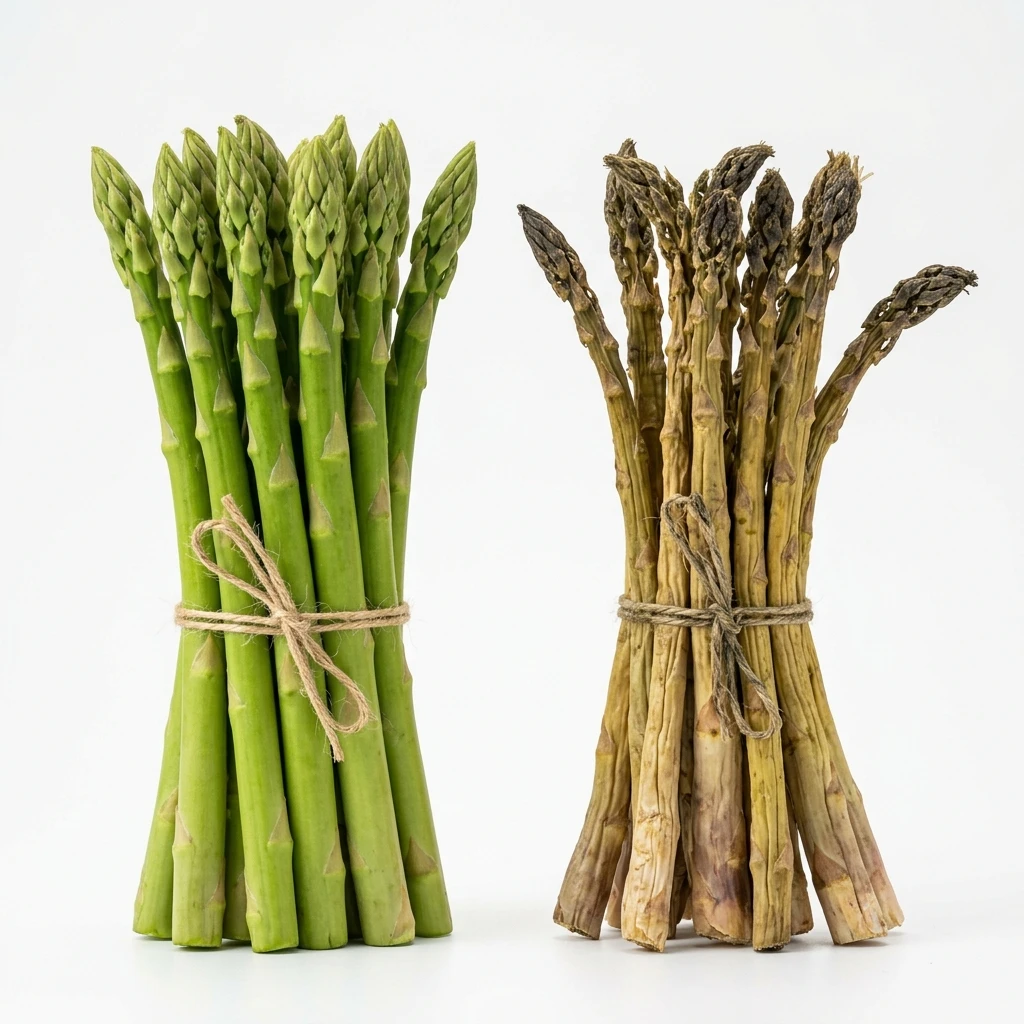
✅ Firm, upright, closed tips: Excellent quality. Use within 2-4 days. Store upright in a jar with 1 inch of water in the fridge.
⚠️ Dehydrated stalks (wrinkled skin): Still safe but will be woody and fibrous. Best for soups or purees.
❌ Slimy or wet tips: Initial stage of bacterial soft rot. Discard the affected spears immediately as it spreads rapidly.
❌ Grey-white mold on tips: Fungal decay. Discard immediately.
Quick Safety Tips
- Asparagus is in the Clean 15, meaning conventional asparagus is generally safe from pesticides: check the <a href='/blog/clean-15-pesticide-guide/'>Clean 15 Pesticide Guide</a>
- Always snap off the woody bottom ends before cooking
- Wash asparagus under cool running water, paying close attention to the tips where grit can accumulate
Primary Chemical Concerns
Health Risks & Impacts
Multilingual Local Names
Common Storage Pests
Bacterial Soft Rot (Erwinia carotovora)
high riskA destructive bacteria that attacks asparagus tips in warm, wet conditions, turning them into a smelly slime.
Detection
- Water-soaked, slimy tips that collapse when touched
- A foul, sour, decaying smell from the tips
- Rapid spreading of the rot to adjacent spears in the bunch
Prevention
- Keep asparagus dry in storage; never bag them wet
- Store upright in the refrigerator with ends in a tiny amount of fresh water
Corrective Action: What to do?
Discard any slimy spears immediately. Do not cook them, as the bacterial rot changes the taste and is unsafe.
Regulatory Corner: US FDA (21 CFR 173.315) / Codex Alimentarius (Codex Stan 193-1995)
Regulation: FDA 21 CFR 173.315 (Chemicals used in washing fresh produce) & Codex MRL Standards
Legal Limit:Copper sulfate / synthetic dyes: Strictly prohibited (0.0 ppm); Lead MRL: Max 0.1 ppm; Cadmium MRL: Max 0.05 ppm; Chlorpyrifos pesticide MRL: Max 0.01 ppm; Imidacloprid MRL: Max 0.5 ppm
Report Adulteration to US FDA (21 CFR 173.315) / Codex Alimentarius (Codex Stan 193-1995)