How to Test Black Pepper for Adulteration (Papaya Seeds, Mineral Oil, Synthetic Color)
⚡ Quick 60-Second Black Pepper Purity Verdict
Papaya Seed & Mineral Oil Adulteration: Whole black peppercorns are adulterated with dried papaya seeds, light berries, and mineral oil to impart artificial dark gloss.
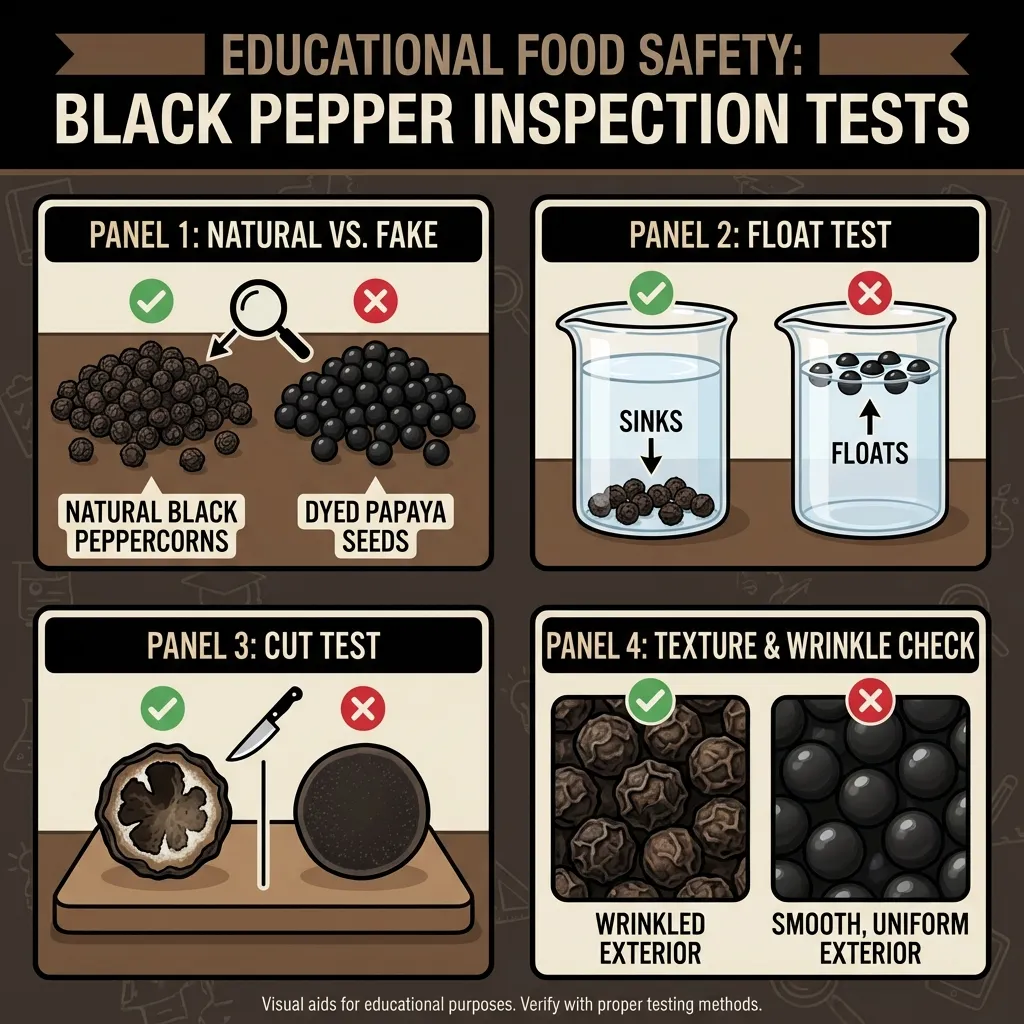
Drop peppercorns into water (or alcohol). Pure heavy peppercorns sink straight to the bottom. Hollow berries and papaya seeds float on the surface.
Press a berry firmly with your thumb or table knife. Pure black peppercorn is hard and crushes into aromatic spicy powder. Papaya seed crushes easily into a tasteless mush.
Sniff a handful. If you detect faint petro-chemical or kerosene odors, berries were polished with toxic mineral oil for cosmetic black shine.
To learn more about food safety tests and home adulteration detection, read our guides on Cumin Seeds (Jeera) and Salt.
Drop Black Pepper (Whole) photo here to test purity
or click to browse • Supports JPG, PNG, WEBP • Paste with Ctrl+V
Inspection Guide
Click to enlarge
Black Pepper Purity & Papaya Audit
Whole black pepper is one of the most frequently adulterated spices, commonly mixed with dried papaya seeds which look identical but lack the characteristic pungency.
1. The Alcohol/Water Float Test:
Drop a handful of black pepper into a glass of water or 70% alcohol (rubbing alcohol). Pure black pepper is dense and will sink to the bottom. Adulterants like dried papaya seeds and hollow/inferior pepper berries will float on the surface.
2. The Crush Test:
Take a peppercorn and crush it with your thumb or a heavy object. Pure black pepper is hard to crush and breaks into large, oily, and highly aromatic fragments. Papaya seeds are softer, crush into a yellowish-brown powder, and have a repulsive, non-pungent smell.
3. The Rub Test (Mineral Oil Detection):
Rub a few peppercorns vigorously on a piece of white paper. If the paper develops a greasy, translucent stain that does not evaporate, the pepper has been coated with mineral oil (Paraffin) to give it an unnaturally glossy "premium" look.
4. The Color Wash:
Soak peppercorns in warm water for 15 minutes. If the water turns black or dark brown, synthetic coal-tar dyes have been used to color inferior berries.
Quick Safety Tips
- Perform the float test - papaya seeds always float
- Avoid peppercorns with an unnaturally glossy, greasy finish
- Select peppercorns that are hard to crush and very pungent
- Wash whole pepper and dry it before grinding at home for maximum safety
Primary Chemical Concerns
Health Risks & Impacts
Multilingual Local Names
Common Storage Pests
Cigarette Beetle (Lasioderma serricorne)
medium riskA common pest that can infest stored spices, including black pepper.
Detection
- Small round holes in the peppercorns
- Fine dust at the bottom of the container
Prevention
- Store in an airtight glass jar
- Keep in a cool, dry place
Corrective Action: What to do?
Discard infested samples; clean the storage area thoroughly.
Regulatory Corner: FSSAI (Food Safety and Standards Authority of India) / US FDA
Regulation: Food Safety and Standards (Food Products Standards) Regulations 2011, Clause 2.9.3: Black Pepper Whole and Powder & FDA Defect Action Levels (Sec. 585.625)
Legal Limit:Piperine content: Min 4.0%; Light berries: Max 5.0% by weight; Pinheads: Max 0.5%; Papaya seeds & foreign seeds: 0.0% (Strictly Prohibited); Mineral oil polish: 0.0%
Report Adulteration to FSSAI (Food Safety and Standards Authority of India) / US FDA