How to Test Henna for Adulteration (Para-phenylenediamine, Industrial Green Dye, Kerosene)
⚡ Quick 60-Second Henna Purity & Toxic PPD Verdict
Carcinogenic Para-Phenylenediamine (PPD) & Heavy Metals: Natural henna powder is spiked with toxic coal-tar dye PPD (black henna), sodium picramate, and lead chromate to produce instant dark stains, causing severe chemical burns and kidney damage.
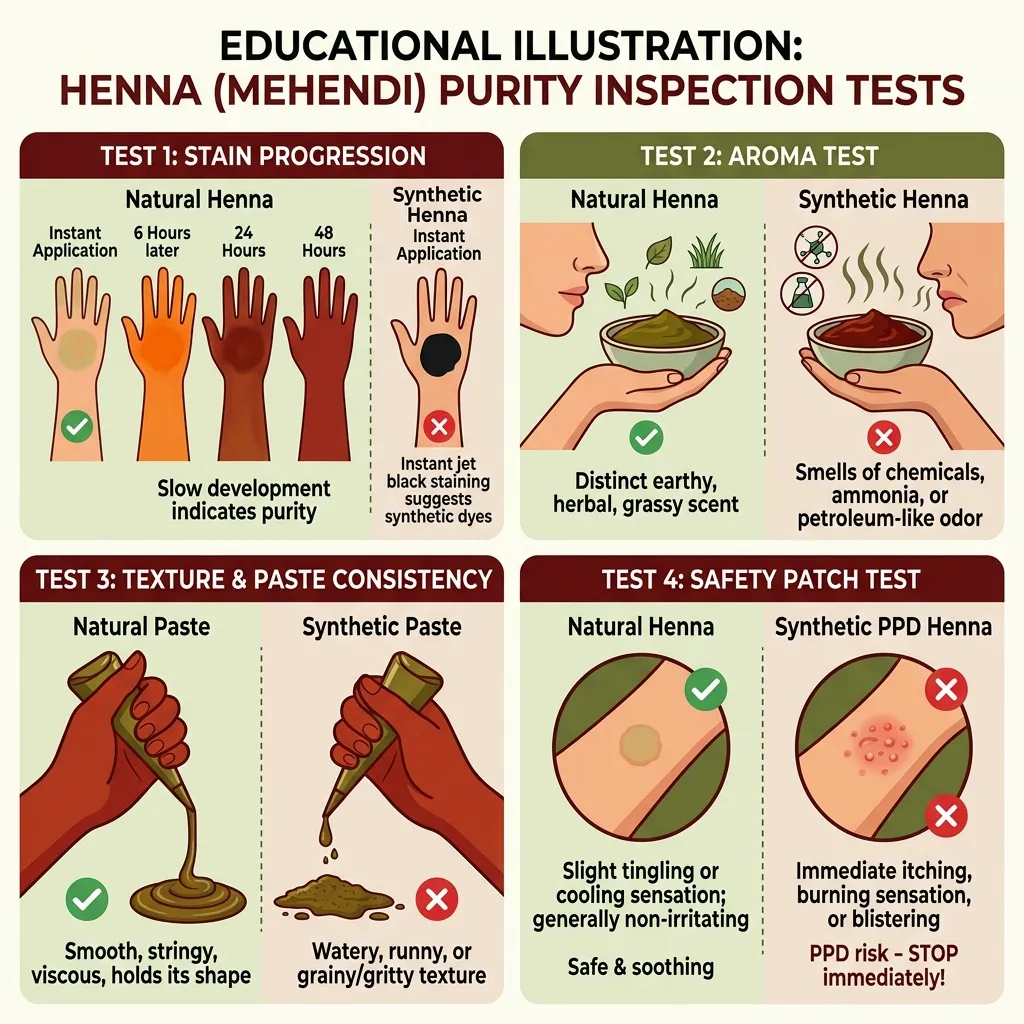
Pure henna powder mixed with water creates a brownish-green paste that stains bright orange initially and oxidizes to deep mahogany over 48 hours. Paste that turns jet-black in 30 minutes contains toxic PPD.
Mix 1 tsp henna in water. Pure Lawsonia inermis smells like fresh cut grass or dry hay. A chemical, bleach-like, or ammonia odor confirms synthetic dye additives.
Stir 1 tsp henna in water. Pure fine henna creates a uniform, silky gel-like suspension. Heavy gritty sand, sawdust, or synthetic dye rings at the meniscus indicate fillers.
To learn more about food safety tests and home adulteration detection, read our guides on Tamarind and Curry Leaves.
Drop Henna (Mehendi) photo here to test purity
or click to browse • Supports JPG, PNG, WEBP • Paste with Ctrl+V
Inspection Guide
Click to enlarge
Henna (Mehendi) Purity & PPD Audit
Natural henna powder is yellowish-green and takes hours to stain the skin deep brown. "Instant" or "Black" henna is extremely dangerous, often containing PPD (a toxic hair dye) and industrial chemicals.
1. The Color and Smell Test:
Natural henna powder is olive green or dull yellowish-green and smells like dried grass or hay. If the powder is "vibrant green" or "neon green," it contains industrial green dye. If it smells like kerosene or turpentine, it has been treated for faster color release.
2. The Solubility Test:
Drop a spoonful of henna powder into water. Pure henna will stay green or turn brownish. If the water instantly turns bright green, blue, or red, artificial dyes have been added.
3. The Stain Test (Speed and Color):
Natural henna takes at least 4-6 hours to produce a dark stain, which starts orange and turns reddish-brown. If a henna cone produces a deep maroon or black stain within 10-30 minutes, it contains toxic PPD.
4. The Patch Test (Safety Check):
Always apply a small amount behind the ear or on the inner arm. If you feel any burning, itching, or redness within 24 hours, do not use the product. Natural henna is cooling; PPD-heavy henna is irritating.
Quick Safety Tips
- Avoid "Black Henna" - it almost always contains toxic PPD
- Perform a patch test 24 hours before full application
- Check for grass-like aroma; avoid kerosene/chemical scents
- Select "Triple Sifted" organic henna powder for maximum purity
Primary Chemical Concerns
Health Risks & Impacts
Multilingual Local Names
Common Storage Pests
Not Applicable
low riskHenna powder is usually pest-resistant, but moisture can lead to mold.
Detection
- Musty odor
- Clumping or greyish fuzz in the powder
Prevention
- Store in a dry, dark, airtight container
- Keep away from direct sunlight
Corrective Action: What to do?
Discard moldy henna powder immediately.
Regulatory Corner: Drugs and Cosmetics Rules 1945 (Schedule S) / US FDA
Regulation: Bureau of Indian Standards IS 11142: Henna Powder & FDA 21 CFR 73.2120 (Henna Standards)
Legal Limit:Natural Lawsone pigment: Min 1.0% on dry weight; p-Phenylenediamine (PPD), synthetic coal-tar diamines, and toxic aromatic amines: 0.0% (Strictly Prohibited in natural henna); Total heavy metals (as Lead): Max 20 ppm
Report Adulteration to Drugs and Cosmetics Rules 1945 (Schedule S) / US FDA