Basmati Rice Purity Guide: Spot Grain Blending & Synthetic Aromas
⚡ Quick 60-Second Basmati Rice Purity & Elongation Verdict
Common Rice Blending & Synthetic Aroma Spray: Premium aged Basmati is frequently blended with ordinary non-fragrant long-grain rice (PR-106 / Sharbati) and sprayed with synthetic 2-acetyl-1-pyrroline (2-AP) fragrance compounds to simulate natural perfume.
Boil 20 grains. Genuine aged Basmati elongates by at least 1.8× to 2.2× its raw length without swelling much in thickness. Ordinary rice swells primarily in width and becomes sticky.
Rinse grains in cold water. Natural Basmati retains its delicate aroma after washing and cooking. Artificially scented rice loses its perfume completely after the first water rinse.
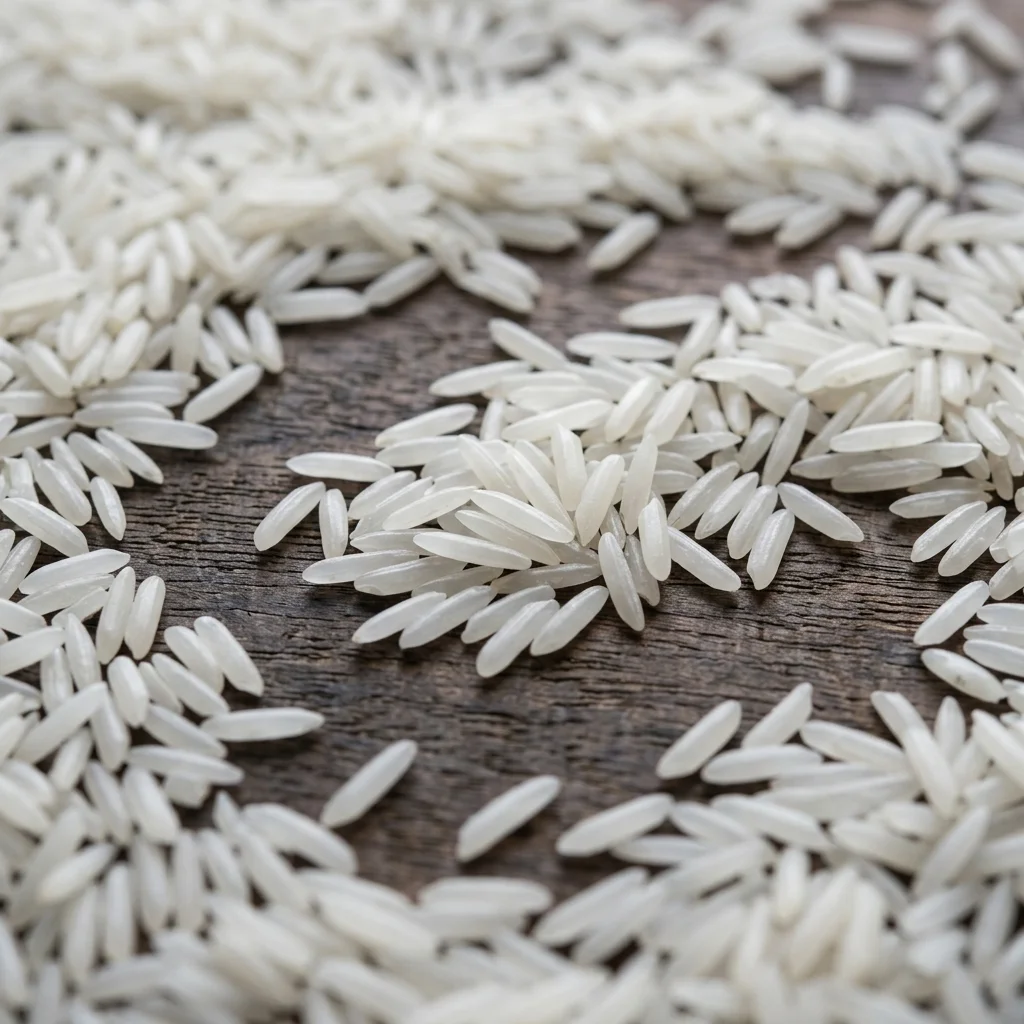
Examine raw grains. Authentic Basmati grains have tapered pointed ends with a translucent creamy flinty texture. Ordinary rice grains have blunt, rounded ends with chalky white bellies.
To test standard white, parboiled, or brown rice varieties for fillers and industrial coatings, refer to the Standard Rice Safety Guide. For details on crop diseases, check our guide on Rice Blast Disease. Also check our guide on Cloves.
Drop Basmati Rice photo here to test purity
or click to browse • Supports JPG, PNG, WEBP • Paste with Ctrl+V
Inspection Guide
Click to enlarge
Basmati Rice Purity, Aging & Aroma Audit
Basmati rice is a premium, geographically protected (GI) crop grown in the foothills of the Himalayas. Due to its high market price, it is heavily targeted by specialized frauds: variety blending with cheap long grains, synthetic aroma sprays, and false aging claims.
1. Natural vs. Synthetic Aroma (2-AP Palm Friction Test):
Pure Basmati contains the natural compound 2-Acetyl-1-pyrroline inside the grain structure. When rubbed vigorously between your dry palms for 15 seconds, the friction heat releases a mild, nutty, toasted popcorn fragrance that intensifies. If raw Basmati smells intensely perfume-like (like soap or cologne), but the scent disappears completely after a single cold water wash, it has been sprayed with synthetic aromatic chemicals.
2. Cooked Elongation & Slenderness (Elongation Ratio):
True Basmati grains are extremely slender and have pointed ends. When cooked, pure 1-2 year aged Basmati grains double in length (elongation ratio >= 1.8 to 2.2) while remaining thin and completely separate. Adulterated or mixed long-grains swell in width, appearing "fat" or "puffy," and clump together in a sticky mass.
3. Moisture & Aging Check (Chalky Belly Scan):
Spread a cup of raw Basmati on a dark surface under bright light. Authentic Basmati is aged for 1-2 years to reduce moisture below 12% and stabilize starch, resulting in a uniform, translucent, flinty creamy grain. If you spot grains with opaque milky white centers ("chalky bellies") or blunt rounded ends, it indicates an un-aged new crop or non-Basmati adulterant.
4. Water Sinking & Flame Burning Test:
Drop 1 tbsp rice into a glass of cold water; dense genuine rice (density ~1.4 g/cm³) sinks immediately to the bottom, whereas hollow or synthetic rice floats. Place 10 grains on a metal spoon over a flame; pure rice chars into black popcorn-like residue, whereas plastic rice melts into sticky black drops with a toxic acrid odor.

Click to enlarge
Basmati Rice Aging, Hardness & Cooking Elongation Stages
Unlike ordinary table rice, fine Basmati rice dramatically improves when aged in well-ventilated godowns for 12 to 24 months. Aging decreases grain moisture and stabilizes the starch matrix, preventing clumps and ensuring each grain cooks up separate, dry, and fluffy.
| Aging / Grain Stage | Visual Appearance & Raw Hardness | Cooking Performance | Freshness & Quality Verdict |
|---|---|---|---|
| 1. Vintage Aged (1–2 Years) | Translucent creamy ivory, sharply pointed ends, flinty hard grain | Doubles in length, 100% individual grains, zero stickiness | ✅ Optimal Premium Grade |
| 2. New Harvest / Un-Aged | Chalky white belly, higher residual moisture (>14%) | Swells wide, releases excess free amylose, turns sticky & clumped | ⚠️ Low Culinary Grade (Unsuitable for Biryani) |
| 3. Moisture Damaged & Weevils | Round bore holes, powdery white dust at container base, webbing | Musty stale odor, fragile grains shatter during stirring | ❌ Discard — Insect & Mold Damage |
| 4. Mineral Oil Polish / Synthetic | Unnatural glossy sheen, slippery greasy feel on fingers | Oil slick on boil water, toxic plastic odor on flame test | ❌ Do Not Consume — Adulterated Fraud |
Quick Safety Tips
- Look for the extra-long slender profile with pointed tapered ends and creamy translucent texture
- Avoid rice with an overwhelming, artificial perfume smell that disappears after washing
- Verify that grains double in length while remaining slender and individual after cooking
- Soak grains in cold water for 30 to 45 minutes prior to cooking for optimal starch hydration and elongation
Primary Chemical Concerns
Health Risks & Impacts
Multilingual Local Names
Common Storage Pests
Rice Weevil (Sitophilus oryzae)
medium riskSmall dark-brown snout beetles that bore into hard aged rice grains to lay eggs and consume the starchy endosperm.
Detection
- Small round pinholes in grains
- Fine white powdery starch dust settling at the container base
Prevention
- Airtight glass or food-grade metal containers
- Insert dried bay leaves, cloves, or neem leaves
Corrective Action: What to do?
Discard heavily infested packages; sun-drying on a hot clean tarp can drive away beetles in minor infestations.
Lesser Grain Borer (Rhyzopertha dominica)
high riskHard-bodied beetles with powerful chewing mouthparts capable of reducing hard dry grains into hollow shells and flour.
Detection
- Irregular jagged grain tunneling
- Faint sweetish, stale, or sour odor in the storage vessel
Prevention
- Maintain grain moisture below 12%
- Keep storage areas strictly cool, dark, and dry
Corrective Action: What to do?
Quarantine infested grain immediately and sanitize storage shelves with vinegar solution.
Indian Meal Moth (Plodia interpunctella)
medium riskPantry moths whose cream-colored larvae spin dense silken webs connecting rice grains into sticky clumps.
Detection
- Rice grains webbed together in suspended clusters
- Small white caterpillars crawling near lid rims
Prevention
- Avoid keeping open paper or thin plastic bags
- Store in tightly sealed containers
Corrective Action: What to do?
Discard webbed grain immediately to prevent colonization of nearby flour, pasta, and spices.
Regulatory Corner: FSSAI (Food Safety and Standards Authority of India)
Regulation: Food Safety and Standards (Food Products Standards and Food Additives) Regulations 2011, Clause 2.4.6(17): Identity Standards for Basmati Rice
Legal Limit:Average grain length before cooking: Min 6.61 mm; Length-to-breadth ratio: Min 3.5; Elongation ratio on cooking: Min 1.7; Non-basmati rice blending: Max 15.0%; Synthetic artificial aroma sprays: 0.0%
Report Adulteration to FSSAI (Food Safety and Standards Authority of India)