How to Test Chili Powder for Adulteration (Sudan Red, Rhodamine B, Brick Dust)
⚡ Quick 60-Second Chili Powder Purity Verdict
Sudan Dye & Brick Dust Contamination: Red chili powder is notoriously adulterated with non-permitted, carcinogenic Sudan I–IV industrial dyes, brick powder, sawdust, and soapstone.
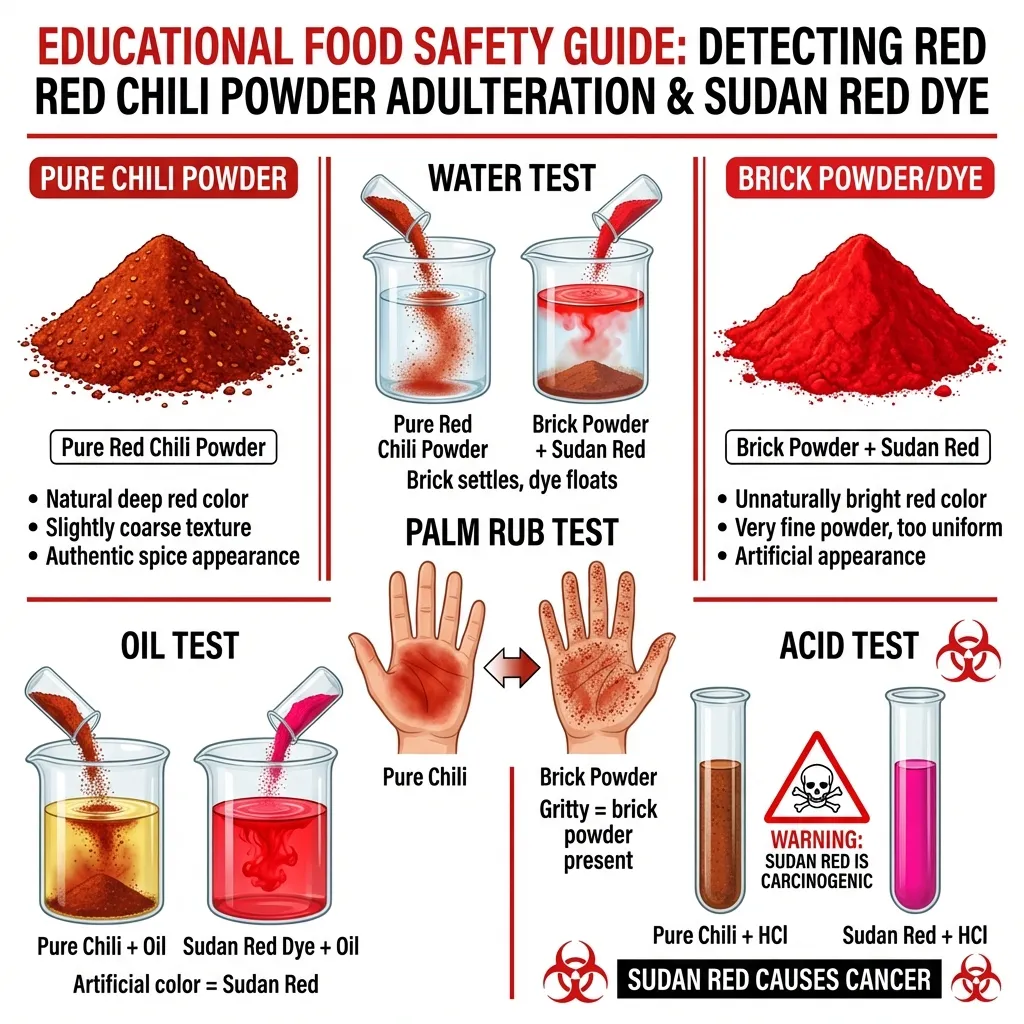
Add 1 tsp chili powder to a glass of water without stirring. Pure chili floats or slowly sinks leaving clear water. Brick dust sinks instantly leaving a gritty red deposit.
Shake 1/2 tsp chili in water. Pure chili color does not bleed into cold water immediately. If the water instantly turns vivid blood-red, artificial dyes are present.
Rub a pinch between dry fingertips. Pure chili feels smooth. Brick dust or sand feels distinctly rough, gritty, and abrasive.
To learn more about food safety tests and home adulteration detection, read our guides on Dried Chili and Cumin Seeds (Jeera).
Drop Chili Powder (Lal Mirch) photo here to test purity
or click to browse • Supports JPG, PNG, WEBP • Paste with Ctrl+V
Inspection Guide
Click to enlarge
Chili Powder Purity & Dye Audit
Chili powder is frequently adulterated with brick dust to increase weight or treated with industrial red dyes like Sudan Red to look vibrant and "spicy."
1. The Water Sediment Test (Brick Dust Detection):
Add 1 tsp of chili powder to a glass of water. Pure chili powder will float on the surface or settle slowly. If a heavy, gritty red sediment (brick dust) settles instantly at the bottom, it is adulterated.
2. The Rub Test (Dye Detection):
Take a small amount of chili powder and rub it on a piece of white paper. If the powder leaves a bright red or pink stain that is hard to rub off, suspect artificial dyes. Natural chili leaves a brownish-red stain.
3. The Glass of Water Check:
Sprinkle chili powder on the surface of water. Pure powder stays on top. If you see bright red "streaks" or color leaching rapidly into the water as the powder sinks, suspect artificial coloring.
4. The Taste Profile:
Pure chili powder has a sharp, pungent heat that builds up. If it tastes "earthy," "chalky," or has a chemical after-taste without much heat, it contains brick dust or fillers.
Quick Safety Tips
- Avoid chili powder that looks "too vibrant" or neon red
- Check for heavy grit or brick dust in the water sediment test
- Look for rapid color leaching in water - indicates artificial dye
- Prefer buying whole dried chilies and grinding them at home for 100% purity
Primary Chemical Concerns
Health Risks & Impacts
Multilingual Local Names
Common Storage Pests
Spice Beetle
medium riskSmall beetles that can survive in spicy environments like chili powder.
Detection
- Small holes in the packaging
- Fine dust at the bottom of the container
Prevention
- Store in an airtight glass jar
- Keep in a cool, dry place
Corrective Action: What to do?
Discard infested samples; they lose all flavor and pungency.
Regulatory Corner: FSSAI (Food Safety and Standards Authority of India) / US FDA
Regulation: Food Safety and Standards (Food Products Standards) Regulations 2011, Clause 2.9.5: Chillies and Capsicums Whole and Powder & FDA Import Alert 99-47
Legal Limit:Total ash: Max 8.0%; Acid insoluble ash: Max 1.25%; Non-volatile ether extract: Min 12.0%; Non-permitted synthetic azo dyes (Sudan I, II, III, IV, Para Red, Rhodamine B): 0.0 ppb (Zero tolerance); Brick dust: 0.0%
Report Adulteration to FSSAI (Food Safety and Standards Authority of India) / US FDA