How to Test Lychee for Adulteration (Erythrosine, Sulfur Dioxide, Pesticide)
⚡ Quick 60-Second Lychee Sulfur Fumigation & Dye Verdict
Sulfur Dioxide Gas Bleaching & Synthetic Red Dyes: Lychees are heavily fumigated with sulfur dioxide gas to prevent skin browning and sprayed with synthetic coal-tar red dyes, leaving asthma-triggering chemical residues.
Sniff the stem attachment point and shell surface. A sharp, choking, burnt-matchstick or brimstone odor indicates recent sulfur dioxide gas fumigation used to chemically maintain pink rind coloration.
Rub the bumpy red rind with a damp white cotton ball. Authentic lychee rind retains its natural anthocyanin pigments; a pink or red dye smear on the cotton proves synthetic coal-tar dyeing (Carmoisine/Red 40).
Peel the fruit and inspect the pulp (aril). Pure fresh lychee pulp is translucent, pearly white, and fragrant. If the aril is brownish, watery, or smells fermented and sour, sulfur gas was used to conceal decaying pulp.
To learn more about food safety tests and home adulteration detection, read our guides on Gooseberry (Amla) and Avocado.
Drop Lychee photo here to test purity
or click to browse • Supports JPG, PNG, WEBP • Paste with Ctrl+V
Inspection Guide
Click to enlarge
Lychee Purity & Dye Audit
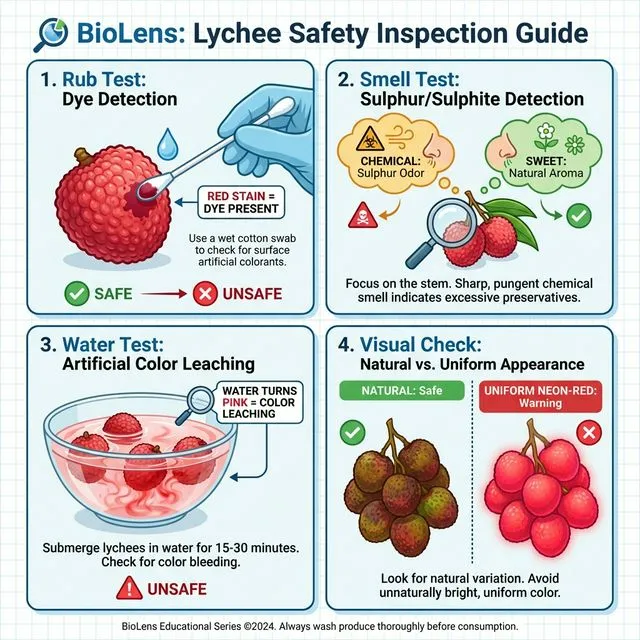
Lychees are often treated with red dyes to make their skins look vibrant and fumigated with Sulfur Dioxide to prevent the skin from browning during transport.
1. The Cotton Rub Test (Skin Dye):
Rub a wet cotton ball on the red skin of the lychee. If the cotton picks up a pink or red color, the fruit has been artificially dyed. Natural lychee skin color does not rub off easily.
2. The Smell Test (Sulfur):
Sniff the fruit. If it has a sharp, "burning match," or acidic chemical odor, it has been heavily fumigated with Sulfur Dioxide. Pure lychees have a delicate, floral, and sweet aroma.
3. The Water Soak:
Soak lychees in a glass of water for 15 minutes. If the water turns pink or red, artificial dyes have been used.
4. The Internal Freshness:
Peel the lychee. The flesh should be translucent white and juicy. If the flesh looks greyish, "shriveled," or has a chemical taste despite a bright red skin, it indicates old stock chemically "refreshed" or dyed.
Quick Safety Tips
- Perform the skin rub test for red dyes (Erythrosine)
- Avoid lychees with a sharp, sulfurous (burning match) smell
- Select lychees with a natural floral scent and firm skin
- CRITICAL: Avoid eating unripe lychees on an empty stomach due to MCPG toxin risk
Primary Chemical Concerns
Health Risks & Impacts
Multilingual Local Names
Common Storage Pests
Lychee Fruit Borer
medium riskSmall caterpillars that bore into the fruit near the stem and eat the internal flesh.
Detection
- Small entry holes near the stem
- Internal rot and presence of larvae
Prevention
- Inspect each fruit before buying
- Store in a cool, ventilated place
Corrective Action: What to do?
Discard infested lychees as they rot quickly and the rot is toxic.
Regulatory Corner: FSSAI (Food Safety and Standards Authority of India) / US FDA (21 CFR 182.3862) / Codex Stan 196-1995
Regulation: Food Safety and Standards (Food Products Standards) Regulations 2011, Clause 2.3.1 & Codex Stan 196
Legal Limit:Sulfur dioxide (SO2) in edible pulp: Max 10.0 ppm (Codex whole fruit limit: Max 250 ppm); Synthetic food colors on fresh fruit: Prohibited (0.0 ppm); Calcium carbide: Completely banned (0.0 ppm)
Report Adulteration to FSSAI (Food Safety and Standards Authority of India) / US FDA (21 CFR 182.3862) / Codex Stan 196-1995